Condom manufacturing is a specialized medical-device production process that combines polymer materials, precision forming, automated machinery, packaging technology, and rigorous quality testing. Most condoms are produced using latex, while non-latex products can use materials such as polyurethane or synthetic polyisoprene.
Modern condom production involves controlled material preparation, dipping or forming, curing, washing, electronic inspection, testing, lubrication, packaging, and final quality control. Manufacturing facilities must maintain consistent process conditions because product dimensions, elasticity, strength, package integrity, and barrier performance are important characteristics.
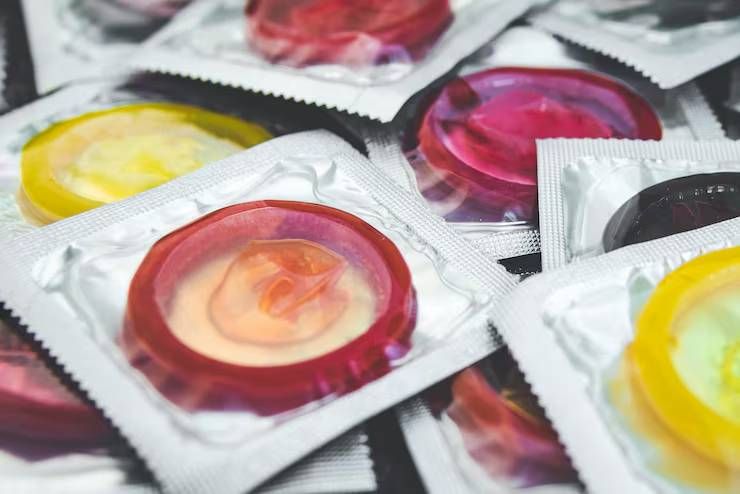
What Is Condom Manufacturing?
Condom manufacturing is the industrial process used to produce single-use barrier contraceptive devices from elastomeric or polymeric materials.
The manufacturing sequence varies according to material and product design, but a latex production line commonly includes:
Latex compound preparation
Former preparation
Dipping
Beading
Curing or vulcanization
Washing
Drying
Electronic inspection
Lubrication
Packaging
Sterilization or applicable finishing processes
Final quality testing
Manufacturers can produce different sizes, shapes, textures, colors, lubrication levels, and surface configurations.
Types of Condoms
Condoms can be classified according to material, design, texture, shape, and intended application.
Latex Condoms
Natural rubber latex is widely used because it provides elasticity, flexibility, and mechanical strength.
Latex formulations can be modified with different compounding ingredients to achieve required processing and performance characteristics.
Polyurethane Condoms
Polyurethane is a synthetic polymer used in some non-latex condom designs.
It has different physical characteristics from natural rubber latex and can be suitable for users who need a non-latex material.
Synthetic Polyisoprene Condoms
Synthetic polyisoprene is an elastomer designed to provide properties similar to natural rubber while being produced synthetically.
Textured Condoms
Textured products may include ribs, dots, or other surface patterns.
These features are formed during the manufacturing process through controlled former or mold geometry.
Thin Condoms
Thin designs use carefully controlled material thickness while maintaining required mechanical and barrier characteristics.
Lubricated Condoms
Lubricant can be applied during the finishing or packaging stages according to product specifications.
Specialty Designs
Manufacturers may produce products with different:
Shapes
Widths
Lengths
Tip configurations
Textures
Colors
Lubrication systems
Packaging formats
Materials Used in Condom Manufacturing
Material selection affects elasticity, strength, processing conditions, and final product characteristics.
Natural Rubber Latex
Natural rubber latex is a primary material for conventional latex condoms.
It is typically supplied as a liquid dispersion and undergoes compounding before forming.
Synthetic Polyisoprene
Synthetic polyisoprene provides an alternative elastomeric material.
Its formulation and processing requirements differ from natural latex.
Polyurethane
Polyurethane is a thermoplastic polymer that can be processed into thin films.
Its manufacturing process differs considerably from latex dipping.
Lubricants
Finished condoms may receive compatible lubricants based on the product specification.
Lubrication systems need to be compatible with the condom material and packaging.
Packaging Materials
Individual packaging commonly uses multilayer films or foil-based structures designed to protect the product from environmental exposure.
Condom Manufacturing Process
Latex condom manufacturing generally uses a continuous dipping process.
1. Latex Compound Preparation
Raw latex is blended with carefully controlled compounding ingredients.
These may include materials used to regulate:
Vulcanization
Stability
Viscosity
Processing behavior
Mechanical properties
Storage characteristics
The compound is mixed and conditioned before entering the dipping process.
2. Former Preparation
Glass, ceramic, or other suitable formers are cleaned before entering the production line.
Former dimensions determine the basic shape and dimensions of the finished condom.
3. Dipping
Formers are immersed into the prepared latex compound.
A controlled layer of latex adheres to the former surface.
The dipping parameters influence the resulting film thickness.
4. Beading
The open end of the condom is rolled to create a reinforced rim.
Automated beading equipment controls the dimensions and consistency of the rolled edge.
5. Drying and Curing
The coated formers pass through controlled heating zones.
Heat promotes vulcanization and converts the latex film into a stable elastomeric structure.
Temperature, residence time, and formulation must be controlled carefully.
6. Washing
The formed condoms can undergo washing processes designed to remove residual processing chemicals and water-soluble materials.
Multiple washing stages may be incorporated depending on the production system.
7. Stripping
After curing and washing, the finished condoms are removed from the formers.
Automated stripping equipment helps maintain production consistency and reduce mechanical damage.
8. Electronic Inspection
Automated inspection systems can detect selected defects.
Electrical water-leak testing is widely associated with condom inspection, while additional visual and dimensional inspection may also be performed.
9. Lubrication
A specified quantity of compatible lubricant can be applied to the finished product.
10. Packaging
Each condom is individually sealed in a primary package.
Packaging equipment controls filling, sealing, coding, and package integrity.
11. Final Inspection
Finished products undergo additional inspection and quality-control procedures before release.
Condom Manufacturing Machinery
A modern production facility can contain numerous specialized machines.
Latex Mixing Systems
These systems prepare and condition the latex compound before dipping.
Condom Dipping Machines
Automated dipping machines move formers through controlled latex tanks and processing zones.
Production parameters can include:
Dipping speed
Immersion depth
Dwell time
Tank temperature
Compound viscosity
Former movement
Beading Machines
Beading equipment rolls the open end of the condom into a consistent rim.
Vulcanization Systems
Controlled heating systems cure the latex and establish the required elastomeric characteristics.
Washing Equipment
Industrial washing systems remove selected residual materials following curing.
Stripping Machines
Automated stripping equipment removes finished products from formers.
Electronic Testing Machines
Electrical inspection equipment can identify certain leaks or defects in finished condoms.
Lubrication Systems
Automated lubrication systems apply controlled quantities of compatible lubricant.
Packaging Machines
High-speed packaging equipment can perform:
Product feeding
Film forming
Sealing
Date coding
Batch coding
Lot identification
Package inspection
Condom Production Technologies
Modern production increasingly relies on automation and process monitoring.
Automated Dipping Technology
Automated former handling improves consistency in immersion depth, speed, and processing time.
Precision Temperature Control
Temperature monitoring is important during drying and curing.
Automated Former Handling
Conveyor systems coordinate the movement of formers through multiple production stages.
Vision Inspection
Machine-vision systems can inspect selected dimensional, surface, and packaging characteristics.
Electronic Leak Testing
Electrical testing systems can identify certain film defects by detecting electrical conductivity through a wet testing medium.
Automated Packaging
Automated packaging lines can coordinate product handling, film sealing, coding, inspection, and secondary packaging.
Manufacturing Data Systems
Production-monitoring systems can record process parameters, equipment status, batch information, and quality data.
Condom Production Line Layout
A typical latex production line can be organized into sequential zones:
Material Preparation → Former Cleaning → Dipping → Beading → Curing → Washing → Drying → Stripping → Electronic Inspection → Lubrication → Packaging → Final Quality Control
The exact layout depends on production capacity, equipment configuration, regulatory requirements, facility design, and product specifications.
Quality Testing in Condom Manufacturing
Quality testing is a critical part of condom production.
Testing requirements depend on the applicable regulatory framework and product standards.
Water Leak Testing
A water-filled condom can be examined for leakage after being filled with a specified quantity of water.
This test can identify certain holes and leakage defects.
Electrical Conductivity Testing
Electronic testing equipment can detect certain defects by monitoring electrical conductivity under controlled test conditions.
Burst Testing
Burst testing evaluates how much air or pressure a condom can withstand before failure.
Measurements can include:
Burst volume
Burst pressure
Tensile Testing
Tensile testing evaluates mechanical characteristics such as:
Tensile strength
Elongation
Force at break
Dimension Testing
Finished products may be evaluated for:
Length
Width
Thickness
Rim dimensions
Shape consistency
Package Integrity Testing
Individual packages can be tested for sealing and integrity to ensure that packaging provides the required protective barrier.
Visual Inspection
Visual inspection can identify defects such as:
Surface irregularities
Foreign material
Visible holes
Incorrect forming
Packaging defects
Contamination
Quality Control Parameters
Manufacturers typically monitor multiple variables throughout production.
| Parameter | Manufacturing Importance |
|---|---|
| Latex viscosity | Influences dipping behavior |
| Film thickness | Affects product dimensions and performance |
| Curing temperature | Influences elastomer properties |
| Curing time | Affects vulcanization |
| Former dimensions | Determines product geometry |
| Bead dimensions | Affects rim consistency |
| Lubricant quantity | Supports product specification |
| Package seal | Protects individual product |
| Tensile properties | Evaluates mechanical performance |
| Leakage performance | Identifies selected defects |
Standards and Regulatory Considerations
Condoms are regulated products in many markets, and manufacturers must comply with applicable requirements.
Depending on the market, requirements can address:
Manufacturing controls
Material specifications
Quality management
Product testing
Labeling
Packaging
Traceability
Batch records
Storage conditions
Post-market monitoring
International and national standards may specify testing methods and acceptance criteria.
Manufacturers should determine the applicable requirements for each market before commercial production and distribution.
Global Condom Manufacturers and Suppliers
The global condom manufacturing sector includes companies involved in raw materials, production machinery, finished products, packaging, testing equipment, and private-label production.
The supply chain can include:
Raw Material Suppliers
Companies supplying latex, synthetic polymers, additives, lubricants, and packaging materials.
Machinery Manufacturers
Equipment manufacturers can supply:
Dipping machines
Vulcanization systems
Washing equipment
Stripping systems
Electronic testing machines
Packaging machinery
Finished Product Manufacturers
Condom producers manufacture products under their own brands or through contract and private-label arrangements.
Testing Equipment Suppliers
Specialized equipment suppliers provide instruments for dimensional, electrical, tensile, burst, package, and other quality tests.
For international procurement, manufacturers commonly evaluate equipment specifications, production capacity, automation level, regulatory compatibility, technical documentation, spare parts availability, and installation requirements.
Condom Manufacturing Plant Requirements
A production facility requires carefully planned infrastructure.
Important areas can include:
Raw material storage
Latex preparation
Production floor
Curing area
Washing systems
Quality laboratory
Packaging area
Finished-product storage
Environmental controls
Utility systems
Waste-management systems
Production areas must be designed around hygiene, process control, worker safety, material flow, and applicable regulatory requirements.
Automation in Condom Manufacturing
Automation can be integrated throughout the production line.
Production Automation
Automated conveyors and former-handling systems coordinate continuous production.
Process Monitoring
Sensors can monitor temperature, speed, pressure, flow, and other process variables.
Quality Automation
Electronic testing and machine vision can reduce dependence on manual inspection for selected quality checks.
Packaging Automation
Automated packaging systems can increase throughput while maintaining controlled sealing and coding processes.
Data Integration
Manufacturing execution and industrial control systems can connect production equipment with quality and operational data.
Factors to Consider When Selecting Condom Manufacturing Equipment
Production Capacity
Equipment should match the required production volume and operating schedule.
Automation Level
Facilities can select manual, semi-automatic, or highly automated equipment depending on production requirements.
Product Range
Equipment should support the required condom sizes, shapes, textures, materials, and specifications.
Quality Control
Integrated inspection and testing capabilities can support consistent production.
Energy Consumption
Heating, curing, drying, compressed air, water treatment, and other utilities contribute to overall plant requirements.
Maintenance
Equipment accessibility, replacement parts, preventive maintenance requirements, and technical support should be evaluated.
Regulatory Compatibility
Machinery and manufacturing processes should support the applicable product and quality requirements of the intended market.
Applications of Condom Manufacturing
Condom manufacturing primarily supports reproductive health and disease-prevention products.
Products can be distributed through:
Pharmacies
Healthcare channels
Public health programs
Retail channels
Institutional procurement
Online distribution
Hospitality and personal-care channels
Manufacturers can also produce products for different market segments based on size, material, texture, lubrication, packaging, and labeling requirements.
Condom Manufacturing Process Comparison
| Manufacturing Stage | Primary Function | Typical Equipment |
|---|---|---|
| Compound preparation | Prepare material | Mixing systems |
| Dipping | Form latex film | Dipping machine |
| Beading | Create reinforced rim | Beading system |
| Curing | Vulcanize material | Heating/curing system |
| Washing | Remove selected residues | Washing system |
| Stripping | Remove product | Stripping machine |
| Inspection | Detect selected defects | Electronic tester/vision system |
| Lubrication | Apply lubricant | Lubrication system |
| Packaging | Individually seal product | Packaging machine |
| Quality testing | Verify specifications | Laboratory equipment |
Frequently Asked Questions
What materials are used in condom manufacturing?
Natural rubber latex is widely used. Other materials include synthetic polyisoprene and polyurethane for selected non-latex products.
What machines are used to manufacture condoms?
A production line can include latex mixing systems, dipping machines, beading equipment, curing systems, washing equipment, stripping machines, electronic inspection systems, lubrication equipment, and packaging machines.
How are latex condoms manufactured?
Latex is compounded and applied to formers through controlled dipping. The coated formers undergo beading, curing, washing, drying, stripping, inspection, lubrication, and packaging.
How are condoms tested for quality?
Testing can include water leak testing, electronic inspection, burst testing, tensile testing, dimensional checks, visual inspection, and package integrity testing, depending on the applicable requirements.
What factors affect condom manufacturing quality?
Material formulation, film thickness, former dimensions, dipping conditions, curing parameters, washing, inspection, lubrication, packaging integrity, and final quality testing can all affect finished-product consistency.
Conclusion
Condom manufacturing is a highly controlled production process involving specialized polymer materials, automated forming machinery, curing systems, inspection technologies, packaging equipment, and laboratory testing.
Latex remains an important material, while synthetic polyisoprene and polyurethane provide alternatives for specific product designs. Modern production lines combine automated dipping, beading, curing, washing, stripping, electronic inspection, lubrication, and packaging to maintain consistent manufacturing conditions.
Quality testing remains essential throughout the process. Dimensional checks, visual inspection, electrical testing, water leak testing, tensile evaluation, burst testing, and package integrity assessment can provide different forms of quality verification. Manufacturers must also consider applicable standards, regulatory requirements, traceability, facility design, equipment specifications, and production capacity when developing or expanding a condom manufacturing operation.