
Screws and bolts are among the most widely used mechanical fasteners in modern engineering, manufacturing, construction, transportation, electronics, and industrial assembly. They are designed to securely join two or more components while allowing structures and equipment to maintain strength, stability, and serviceability. From household appliances to bridges, aircraft, automobiles, renewable energy systems, and heavy industrial machinery, screws and bolts play a fundamental role in assembling products across nearly every industry.
Modern screw and bolt manufacturing combines precision metal forming, automated machining, heat treatment, surface finishing, robotics, Industrial Internet of Things (IIoT), artificial intelligence (AI), and advanced quality inspection systems. Global manufacturers and suppliers continue developing fastening technologies that improve durability, precision, corrosion resistance, and manufacturing efficiency while supporting increasingly complex industrial applications.
Context
What Are Screws and Bolts?
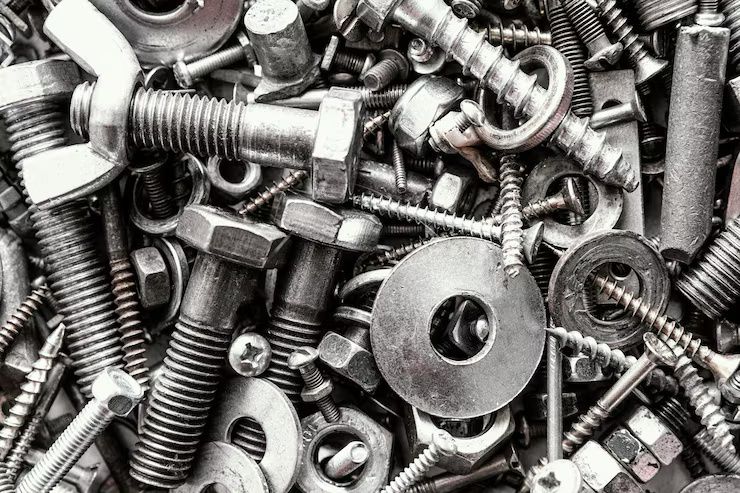
Screws and bolts are threaded mechanical fasteners designed to connect materials securely. Although they perform similar functions, they differ in their method of installation and typical applications.
- Screws usually create or engage threads as they are installed into materials or threaded holes.
- Bolts generally pass through unthreaded holes and are secured using matching nuts.
These fastening technologies are used in numerous industries, including:
- Construction
- Automotive manufacturing
- Aerospace engineering
- Industrial machinery
- Electronics manufacturing
- Railway systems
- Marine engineering
- Renewable energy
- Furniture production
- Agricultural equipment
Different fastener designs are selected according to load requirements, environmental conditions, and assembly methods.
How Screws and Bolts Are Manufactured
Modern manufacturing follows several carefully controlled production stages.
A typical workflow includes:
- Raw material preparation
- Wire drawing
- Cold heading
- Thread rolling
- Heat treatment
- Surface finishing
- Dimensional inspection
- Mechanical testing
- Packaging
- Distribution
Automated manufacturing systems continuously monitor production parameters to maintain dimensional accuracy and consistent product quality.
Major Fastening Technologies
Several manufacturing technologies are used during screw and bolt production.
| Technology | Primary Function | Typical Applications |
|---|---|---|
| Cold Heading | Forming fastener heads | High-volume production |
| Thread Rolling | Creating external threads | Industrial fasteners |
| CNC Machining | Precision fastener production | Aerospace and specialty components |
| Heat Treatment | Improving strength | Structural fasteners |
| Surface Coating | Corrosion protection | Outdoor applications |
| Laser Inspection | Quality verification | Precision manufacturing |
| Automated Sorting Systems | Product classification | Mass production |
| Robotic Packaging | Automated handling | Distribution facilities |
Each manufacturing technology contributes to the performance and reliability of finished fasteners.
Manufacturing Equipment
Modern fastener manufacturing facilities use highly automated production equipment.
Common equipment includes:
- Wire drawing machines
- Cold heading machines
- Thread rolling machines
- CNC turning centers
- Heat treatment furnaces
- Surface coating equipment
- Zinc plating systems
- Shot blasting machines
- Laser measuring systems
- Optical inspection equipment
- Hardness testing machines
- Tensile testing equipment
- Automated packaging systems
- Industrial robots
Many facilities operate high-speed production lines capable of manufacturing millions of fasteners annually.
Importance
Why Screws and Bolts Matter
Mechanical fasteners provide reliable and removable connections between components in countless products and structures. Their standardized designs allow engineers to assemble, maintain, repair, and replace equipment efficiently throughout its operating life.
Advances in fastening technologies have also improved structural performance, corrosion resistance, manufacturing precision, and production efficiency across numerous industries.
Supporting Industrial Manufacturing
Screws and bolts contribute to many industrial sectors.
Common applications include:
- Building construction
- Automotive assembly
- Aircraft manufacturing
- Wind turbine installation
- Railway infrastructure
- Electronic products
- Industrial machinery
- Heavy equipment
- Consumer appliances
- Solar energy systems
Each application requires fasteners with specific material properties, dimensions, and mechanical characteristics.
Global Manufacturers and Suppliers
Global manufacturers and suppliers design and manufacture screws, bolts, nuts, washers, threaded fasteners, structural fasteners, precision fasteners, and fastening systems across North America, Europe, Asia-Pacific, the Middle East, Africa, and South America.
Manufacturing activities commonly include:
- Product engineering
- Precision wire processing
- Cold forming
- CNC machining
- Heat treatment
- Surface finishing
- Automated inspection
- Mechanical testing
- Quality certification
- Factory acceptance testing
International supply chains support industries ranging from construction and transportation to electronics and renewable energy.
Industrial Applications
Fastening technologies support numerous industries.
Construction Industry: Structural bolts and anchor fasteners connect steel frameworks, bridges, buildings, and infrastructure.
Automotive Industry: Vehicles contain thousands of screws and bolts securing engines, transmissions, suspension systems, body panels, and interior components.
Aerospace Industry: Precision fasteners support aircraft structures, engines, avionics, and landing gear assemblies.
Electronics Manufacturing: Small precision screws secure circuit boards, electronic housings, communication devices, and consumer electronics.
Renewable Energy: Wind turbines, solar mounting systems, and energy infrastructure rely on specialized corrosion-resistant fastening systems.
Advantages of Modern Fastening Technologies
Modern manufacturing technologies provide several operational advantages.
These include:
- High dimensional accuracy
- Consistent thread quality
- Automated production
- Improved corrosion resistance
- Precision inspection
- Digital manufacturing control
- High-volume production
- Smart quality monitoring
Overall fastener performance depends on material selection, manufacturing processes, installation practices, and operating conditions.
Recent Updates
Artificial Intelligence Integration
Between 2024 and 2026, fastener manufacturers have increasingly integrated artificial intelligence into production facilities for predictive maintenance, automated inspection, process optimization, and production analysis.
AI assists manufacturing personnel by identifying production trends and supporting quality management.
Smart Manufacturing
Modern fastener factories increasingly incorporate:
- Industrial Internet of Things (IIoT)
- Manufacturing Execution Systems (MES)
- Enterprise Resource Planning (ERP)
- Digital production dashboards
- Automated reporting
- Cloud-based manufacturing platforms
These technologies improve production visibility and operational efficiency.
Advanced Surface Technologies
Manufacturers continue developing improved surface treatments that enhance:
- Corrosion resistance
- Wear resistance
- Surface durability
- Environmental performance
- Product lifespan
Advanced coatings support fasteners used in demanding industrial environments.
Sustainable Manufacturing
Manufacturers increasingly implement sustainability initiatives including:
- Energy-efficient production equipment
- Recycled steel utilization
- Water recycling systems
- Waste reduction programs
- Digital energy monitoring
- Resource optimization
These developments contribute to environmentally responsible manufacturing.
Laws or Policies
Product Standards
Screws and bolts are commonly manufactured according to internationally recognized standards that define dimensions, thread profiles, material properties, mechanical performance, and testing procedures.
Machinery Safety Regulations
Fastener manufacturing equipment generally complies with machinery safety standards covering:
- Machine guarding
- Emergency stop systems
- Electrical protection
- Operational safety
- Equipment maintenance
Requirements vary according to jurisdiction.
Quality Management Standards
Many manufacturers implement internationally recognized quality management systems covering:
- Production control
- Material traceability
- Product inspection
- Documentation
- Continuous improvement
These systems support consistent manufacturing quality.
Environmental Regulations
Manufacturing facilities generally comply with regulations related to:
- Industrial emissions
- Waste management
- Water treatment
- Resource conservation
- Environmental monitoring
These regulations support responsible industrial production.
Tools and Resources
Manufacturing Execution Systems (MES)
MES platforms assist manufacturers with:
- Production scheduling
- Equipment monitoring
- Batch tracking
- Performance reporting
- Quality management
- Process documentation
These systems improve manufacturing oversight.
Computer-Aided Design Software
Engineering software supports:
- Fastener design
- Product simulation
- Manufacturing planning
- Technical drawings
- Engineering documentation
These tools assist product development.
Quality Inspection Systems
Digital inspection platforms monitor:
- Thread dimensions
- Surface finish
- Product geometry
- Mechanical characteristics
- Production consistency
These systems improve manufacturing quality management.
Material Testing Equipment
Testing systems evaluate:
- Tensile strength
- Hardness
- Dimensional accuracy
- Surface integrity
- Mechanical performance
These evaluations support product verification.
Educational Resources
People interested in screws and bolts often learn from:
- Mechanical engineering associations
- Manufacturing engineering organizations
- Fastener industry associations
- Materials engineering institutions
- Industrial standards organizations
- Technical education platforms
These resources explain fastening technologies, manufacturing processes, material science, engineering standards, and industrial applications.
FAQs
What are screws and bolts?
Screws and bolts are threaded mechanical fasteners used to securely connect components in construction, manufacturing, transportation, machinery, and many other industrial applications.
Which industries use screws and bolts?
Screws and bolts are widely used in construction, automotive manufacturing, aerospace, electronics, renewable energy, railway systems, marine engineering, industrial machinery, and consumer product manufacturing.
What materials are commonly used to manufacture screws and bolts?
Common materials include carbon steel, alloy steel, stainless steel, aluminum, brass, titanium, and other engineered metals selected according to application requirements.
How do global manufacturers and suppliers produce screws and bolts?
Global manufacturers and suppliers use wire drawing, cold heading, thread rolling, heat treatment, surface finishing, automated inspection, and precision testing to produce industrial fasteners.
Why is thread rolling important in screw and bolt manufacturing?
Thread rolling forms strong, accurate threads while improving dimensional consistency, production efficiency, and mechanical performance for many industrial fastening applications.
Conclusion
Screws and bolts are essential mechanical fasteners that support modern manufacturing, construction, transportation, energy infrastructure, and industrial engineering. Through advanced fastening technologies, automated manufacturing processes, intelligent quality inspection, and precision engineering, manufacturers continue improving fastener performance, production efficiency, and reliability. As artificial intelligence, smart manufacturing, advanced materials, and sustainable production continue to evolve, screws and bolts remain fundamental components of industrial assembly and mechanical design worldwide.