
Industrial coating machines are used to apply controlled layers of paint, powder, metal, polymers, adhesives, or other materials to the surfaces of manufactured products. These coatings can protect components from corrosion, reduce wear, improve electrical or thermal properties, provide insulation, or change a product's appearance.
Coating equipment is used in automotive manufacturing, construction materials, electronics, furniture production, metal fabrication, packaging, and many other industries. The equipment varies from simple spray systems to automated production lines with surface preparation, coating application, drying, curing, and inspection stages.
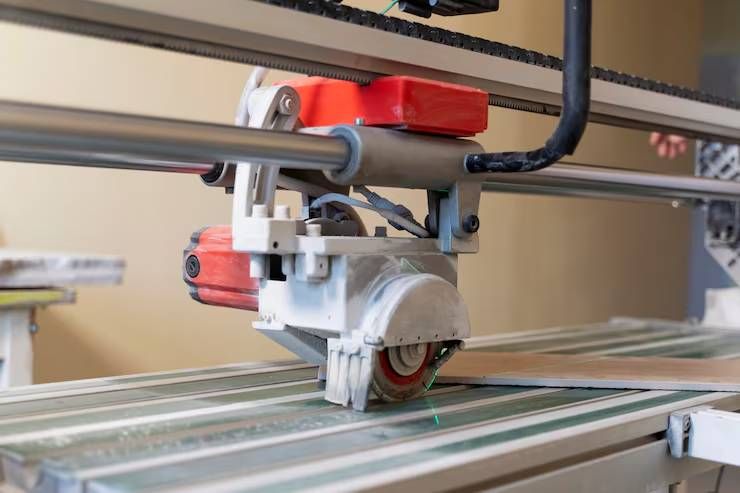
The purpose of a coating determines the technology required. A steel component exposed to moisture may need corrosion protection, while a plastic part may require a decorative finish or a functional surface layer. Electronic components may need specialized thin films with particular electrical or optical characteristics.
How industrial coating systems work
Most industrial coating processes follow several stages. First, the product surface is prepared to remove contaminants and improve adhesion. The coating material is then applied using a suitable method, followed by drying, curing, or another treatment that develops the required surface properties.
A typical production sequence includes:
Surface preparation through cleaning, degreasing, sanding, or chemical pretreatment.
Material preparation, including mixing, filtering, or conditioning where required.
Coating application using spray guns, rollers, immersion tanks, or deposition equipment.
Drying or curing using controlled heat, ultraviolet light, or another suitable method.
Quality inspection to check coating thickness, coverage, adhesion, and surface defects.
Not every process requires all these stages. Powder coating, liquid painting, electroplating, and vacuum deposition use different materials and processing conditions.
Importance of Industrial Coating Technology
Industrial coating technology is important because product surfaces often determine how components perform under environmental and operating conditions. Exposure to moisture, chemicals, friction, ultraviolet radiation, and temperature changes can damage untreated materials or shorten their useful life.
A suitable coating can create a protective barrier, improve surface hardness, control friction, or provide electrical insulation. The result depends on the coating chemistry, substrate, application process, and operating environment. A coating alone does not guarantee protection under every condition.
Industrial applications
Industrial coating machines support a wide range of production activities.
Industry | Typical coating applications |
|---|---|
Automotive | Body paint, corrosion protection, component finishes |
Construction | Protective coatings for steel, panels, and structural materials |
Electronics | Insulating films, conductive layers, protective coatings |
Furniture | Decorative finishes on wood, boards, and molded surfaces |
Metal fabrication | Powder coating, primers, protective paint layers |
Packaging | Barrier coatings, printed layers, adhesive application |
Aerospace | Specialized protective and functional surface treatments |
Renewable energy | Protective finishes for selected turbine, frame, and equipment components |
The exact coating requirements depend on the product's design and intended environment. For example, a component exposed to saltwater may need a different protective system from an indoor furniture panel.
Benefits and operational challenges
Coating systems can improve manufacturing consistency by controlling material flow, application speed, temperature, and curing conditions. Automated equipment can also reduce variation between parts when correctly configured and maintained.
However, coating production involves several challenges. Uneven application, poor adhesion, contamination, incorrect curing, and surface defects can result in rejected components or additional processing. Equipment operators must also manage ventilation, material handling, maintenance, and workplace safety.
The complete production line matters as much as the coating machine itself. Inadequate cleaning or curing can affect the final product even when the coating application equipment is operating correctly.
Types of Industrial Coating Machines
Coating machines are classified according to how they apply materials and the properties of the resulting layer. The following technologies cover several major categories used in industrial manufacturing.
Spray coating machines
Spray coating machines use nozzles or spray guns to distribute liquid coating material over a surface. They are suitable for products with complex shapes, edges, curves, and recessed areas.
Some systems use manual spray guns, while automated systems use reciprocating mechanisms or robotic arms to control the application path. Spray equipment is widely used for vehicle components, metal parts, furniture, and molded plastic products.
Powder coating machines
Powder coating systems apply dry coating particles, commonly using electrostatic charging to attract powder to a suitably prepared component. The coated part is then heated according to the material specification so the powder melts, flows, and cures into a continuous layer.
These systems are commonly used for metal furniture, electrical enclosures, appliance components, and fabricated steel products. The process requires appropriate powder handling, grounding, ventilation, and temperature control.
Roller coating machines
Roller coating machines transfer coating material onto a surface using rotating rollers. They are particularly suitable for flat or relatively uniform substrates such as metal sheets, wood panels, boards, and certain plastic materials.
The coating thickness depends on factors including roller settings, material viscosity, line speed, and surface characteristics. Roller systems are often integrated into continuous production lines.
Dip coating machines
Dip coating equipment immerses a component in a liquid coating bath and then withdraws it under controlled conditions. The coating layer develops as the material drains, levels, or dries on the surface.
This method can cover complex shapes and is used in selected metal finishing, wire coating, laboratory processes, and protective treatment applications. Bath chemistry, immersion time, withdrawal speed, and drainage behavior influence the final result.
Electroplating and electrocoating equipment
Electroplating uses an electrical current to deposit a metal layer onto a conductive surface. Depending on the materials and process, the deposited metal can improve corrosion resistance, wear characteristics, appearance, or electrical properties.
Electrocoating applies an electrically deposited paint film to conductive components immersed in a suitable coating bath. It is used in some high-volume industrial finishing operations, including automotive component production.
These processes require controlled chemical conditions, electrical systems, pretreatment, and appropriate management of process liquids and waste.
Vacuum coating and physical vapor deposition
Vacuum coating systems create thin layers inside a controlled low-pressure environment. Physical vapor deposition (PVD) uses physical processes such as evaporation or sputtering to deposit material onto a substrate.
These technologies are used for selected cutting tools, decorative components, optical products, and electronic applications. The equipment can include vacuum chambers, pumps, material sources, fixtures, and monitoring systems.
Manufacturing Processes and Equipment Integration
Industrial coating machinery is manufactured through mechanical fabrication, precision machining, electrical assembly, control-system integration, and functional testing. The design varies according to the coating method and the intended production environment.
Main manufacturing stages
Mechanical design and fabrication: Engineers design frames, enclosures, conveyors, tanks, rollers, spray assemblies, or vacuum chambers. Components are fabricated and machined to meet the required dimensions and operating conditions.
Electrical and control integration: Sensors, motors, controllers, temperature instruments, and safety devices are installed. Programmable logic controllers (PLCs) may coordinate conveyor speed, coating application, heating, and other process variables.
Assembly and commissioning: Mechanical, electrical, and process components are assembled and tested. Commissioning checks may include equipment movement, control responses, ventilation, heating performance, and safety interlocks.
Performance verification: The system is evaluated using suitable test materials and operating conditions. Depending on the application, checks may examine coating uniformity, film thickness, adhesion, curing, and repeatability.
Components of a coating production line
An industrial coating line may contain several connected units:
Pretreatment equipment for cleaning and preparing surfaces.
Conveyors or handling systems for moving components.
Application equipment such as spray guns, rollers, or deposition chambers.
Drying or curing ovens, where required.
Ventilation, filtration, and material recovery systems.
Inspection equipment for evaluating coating quality.
Control panels and software for monitoring process conditions.
The arrangement depends on the coating technology, product dimensions, production rate, and factory layout.
Recent Developments in Industrial Coating Technology
Developments during 2024–2026 have emphasized process automation, material efficiency, digital monitoring, and coating formulations designed to meet specific environmental or performance requirements. Adoption varies across industries, and no single technology is suitable for every coating application.
Automation and intelligent process control
Automated coating systems increasingly use programmable controls, sensors, machine vision, and robotic handling. These technologies can help regulate spray paths, conveyor speed, application conditions, and inspection procedures.
Machine vision systems can identify visible surface defects, such as uneven coverage or certain types of contamination. Their effectiveness depends on lighting, camera configuration, surface characteristics, and the quality of the inspection model.
Low-emission coating processes
Water-based coatings, powder coatings, and certain high-solids formulations are used in applications where reducing volatile organic compound (VOC) emissions is an objective. Each technology has different material requirements and environmental considerations.
Powder coating can reduce some forms of solvent-related emissions, but its curing stage requires energy, and powder handling must be controlled. Water-based coatings also require suitable drying conditions. Environmental performance therefore depends on the complete process rather than the coating material alone.
Digital monitoring and production data
Connected coating equipment can record temperatures, line speeds, application settings, and maintenance information. These records help operators investigate defects and compare production batches.
Digital monitoring can also support preventive maintenance by identifying unusual operating patterns. However, automated alerts and inspection systems still require validation and appropriate human oversight.
Laws, Standards, and Safety Requirements
Industrial coating operations may be subject to regulations covering chemical handling, air emissions, fire safety, electrical equipment, worker exposure, and industrial waste. The applicable requirements depend on the process, substances used, facility location, and production scale.
Regulatory considerations in India
Manufacturers in India may need to comply with applicable factory and occupational safety requirements, environmental regulations, and local approvals. Facilities that use solvents, chemical pretreatment baths, electroplating processes, or powder coating systems should assess the specific hazards and regulatory obligations associated with their operations.
The Central Pollution Control Board and relevant State Pollution Control Boards administer environmental requirements within their respective responsibilities. Depending on the activity, a facility may need applicable pollution-control consents and suitable arrangements for emissions, wastewater, or hazardous waste.
The Occupational Safety, Health and Working Conditions Code, 2020, forms part of India's occupational safety and labour-law framework. Its applicable provisions, commencement status, and implementing rules should be verified for the relevant establishment.
Technical standards and workplace safety
Relevant standards may address coating performance, equipment safety, quality management, and environmental management. ISO 9001 covers quality management systems, while ISO 14001 provides a framework for environmental management. Specific coating processes may also require industry-specific technical standards.
Important safety considerations include appropriate ventilation, control of ignition sources where flammable materials are present, personal protective equipment, machine guarding, and safe chemical storage. Electrostatic and powder coating systems require suitable grounding and controls against fire or dust-related hazards.
Tools and Resources
Selecting industrial coating machinery involves reviewing technical specifications, production requirements, and the properties of the intended coating material.
Equipment selection checklist
Factor | What to examine |
|---|---|
Substrate | Metal, plastic, wood, glass, or composite |
Coating material | Liquid paint, powder, adhesive, or deposited film |
Product geometry | Flat panels, curved parts, or complex shapes |
Production volume | Batch processing or continuous production |
Curing requirements | Ambient drying, oven curing, or UV curing |
Quality criteria | Thickness, adhesion, coverage, and surface appearance |
Environmental controls | Ventilation, filtration, emissions, and waste handling |
Maintenance | Cleaning access, replacement parts, and inspection needs |
Technical datasheets, coating thickness gauges, adhesion testing equipment, and process-monitoring instruments can help assess coating performance. The measurement method must match the substrate, coating system, and applicable specification.
Frequently Asked Questions
What is an industrial coating machine used for?
It applies a controlled layer of material to a product surface for protection, appearance, or functional performance. Applications include corrosion protection, wear resistance, insulation, and decorative finishing.
What are the main types of industrial coating machines?
Common types include spray coating, powder coating, roller coating, dip coating, electrocoating, electroplating, and vacuum deposition equipment. Selection depends on the substrate, coating material, product shape, and required surface properties.
Which industrial coating machine is suitable for metal parts?
Powder coating and liquid spray coating are widely used for metal parts. Electroplating or vacuum deposition may be appropriate for particular functional requirements. The choice depends on the metal, required finish, operating environment, and production process.
How is coating quality measured?
Coating quality may be evaluated through film-thickness measurements, adhesion tests, visual inspection, curing checks, and tests for corrosion or wear resistance. The appropriate method depends on the coating specification and intended application.
What factors influence industrial coating equipment selection?
Important factors include substrate material, coating chemistry, product dimensions, production volume, curing conditions, safety requirements, maintenance needs, and applicable standards.
Conclusion
Industrial coating machines apply protective, decorative, and functional layers to products used across manufacturing industries. Spray, powder, roller, dip, electrochemical, and vacuum coating technologies serve different material and production requirements. Automation and digital monitoring support process control, while appropriate surface preparation, curing, safety measures, and quality testing remain essential. Equipment selection depends on the product, coating specification, operating conditions, and relevant regulations.