Coworking spaces are shared work environments designed for individuals, teams, startups, companies, consultants, and remote professionals. Instead of operating from a conventional private office, users can work within a professionally managed environment that provides desks, meeting areas, connectivity, common facilities, and technology infrastructure.
Modern coworking environments have developed beyond shared desks. They can include private offices, collaborative zones, conference rooms, virtual office arrangements, event areas, business lounges, and technology-enabled workspaces. These environments are used across technology, consulting, finance, creative industries, education, healthcare administration, and other business sectors.
Context
What Are Coworking Spaces?
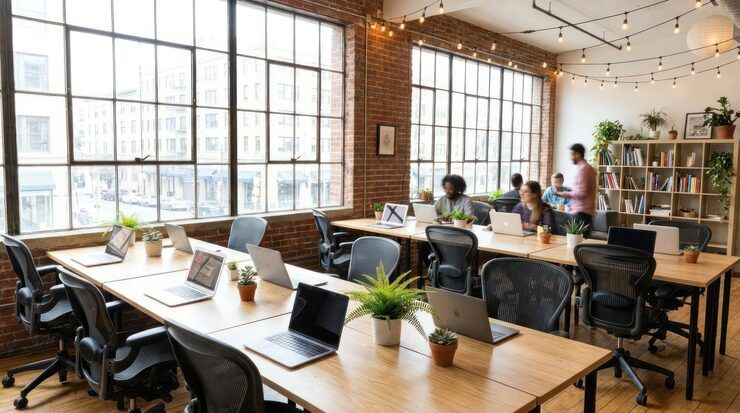
A coworking space is a shared commercial workspace where multiple individuals or organizations use a common office environment. The workspace may provide flexible seating, private rooms, meeting facilities, internet connectivity, reception areas, printing infrastructure, and shared amenities.
Coworking models can accommodate a single independent professional as well as larger teams. Space allocation may range from an individual desk to dedicated rooms or larger private office suites.
The operating model typically separates the physical workplace from the traditional long-term office structure. This allows organizations to select workspace arrangements according to team size, location requirements, project duration, and working patterns.
Main Coworking Workspace Types
Coworking environments are available in several configurations. Open-plan areas generally use shared desks arranged across a common floor. These areas support flexible seating and interaction among different users.
Dedicated desks provide an assigned workstation within a shared environment. They are suitable for professionals who require a consistent physical workspace while still using common facilities.
Private offices provide enclosed areas for individuals or teams. These spaces can support confidential discussions, focused work, and team collaboration.
Meeting rooms and conference rooms are designed for presentations, client discussions, interviews, workshops, and internal meetings. Some coworking facilities also include training rooms and event spaces.
Virtual office arrangements provide a business address and related administrative facilities without requiring continuous physical occupancy. They can be useful for organizations that operate remotely while maintaining a formal business presence in a particular location.
Office Design in Coworking Spaces
Office design plays an important role in how coworking environments function. A typical layout combines different zones rather than using a single standardized floor arrangement.
Open work areas encourage collaboration and flexible seating. Private rooms provide acoustic separation for focused work and confidential conversations. Lounge areas can create informal spaces for discussions and breaks.
Modern coworking designs may also include phone booths, quiet rooms, project rooms, presentation areas, reception zones, kitchens, and wellness spaces. Furniture selection commonly emphasizes flexibility, allowing layouts to change as workspace requirements evolve.
Lighting, acoustics, ventilation, ergonomic furniture, and circulation patterns are important design considerations. Good acoustic planning is particularly relevant when open areas and private meeting spaces operate within the same floor.
Common Amenities and Facilities
Coworking spaces generally combine workplace infrastructure with shared amenities. Common facilities may include high-speed internet, workstations, meeting rooms, printing equipment, kitchen areas, reception facilities, lockers, and common lounges.
Some locations also provide access-control systems, visitor management, mail handling, event areas, video conferencing equipment, and dedicated collaboration rooms.
The availability of particular amenities varies according to the building, workspace model, location, and operating structure.
Coworking Technologies
Technology is an important part of modern coworking infrastructure. Workspace management platforms can handle reservations, desk allocation, room scheduling, visitor registration, access permissions, and facility management.
Wireless networks, structured cabling, video conferencing systems, smart access controls, digital signage, and workplace applications can connect different parts of the environment.
IoT-enabled systems can also monitor occupancy, environmental conditions, energy consumption, and meeting-room utilization. Data from these systems can help facility managers understand how different areas are being used.
| Coworking Element | Typical Function | Supporting Technology |
|---|---|---|
| Open Work Area | Shared individual work | Wi-Fi, access control |
| Dedicated Desk | Assigned workstation | Desk management software |
| Private Office | Enclosed team work | Access systems, networking |
| Meeting Room | Meetings and presentations | Video conferencing |
| Phone Booth | Private calls | Acoustic treatment |
| Event Space | Workshops and events | AV systems, digital displays |
| Lounge | Informal collaboration | Wi-Fi, flexible furniture |
| Virtual Office | Remote business presence | Communication platforms |
| Reception | Visitor management | Digital check-in systems |
Importance
Why Coworking Spaces Matter
Coworking spaces provide an alternative to conventional office arrangements. They can accommodate organizations with changing workforce patterns, distributed teams, project-based operations, and hybrid work models.
For independent professionals, shared work environments can provide access to workplace infrastructure without requiring a complete conventional office setup. For companies, coworking environments can support temporary teams, regional expansion, satellite operations, or flexible workspace requirements.
The physical environment can also influence communication. Shared areas, meeting rooms, and collaboration zones provide different settings for individual work and group activities.
Key Components of a Modern Coworking Environment
A coworking facility usually combines several infrastructure layers. The physical layer includes furniture, partitions, lighting, electrical systems, HVAC equipment, networking infrastructure, and acoustic materials.
The technology layer includes connectivity, access control, workplace applications, video conferencing, digital signage, and security systems. A management layer coordinates reservations, occupancy, maintenance, visitor access, and workspace utilization.
Security is another important consideration. Depending on the facility, systems can include electronic access cards, mobile credentials, surveillance systems, visitor registration, and network security controls.
Business Applications
Coworking environments are used by a wide range of business groups. Startups can use flexible offices while developing their organizational structure. Established organizations may use shared workspaces for distributed teams or temporary projects.
Consultants, freelancers, remote professionals, researchers, creative teams, and small businesses may also use shared environments. Larger organizations can use coworking locations as satellite workplaces when employees operate across multiple cities.
Coworking environments can also support business events, training sessions, workshops, interviews, networking activities, product demonstrations, and professional meetings.
Location Considerations
Location affects how a coworking facility is used. Central business districts can support organizations that require access to corporate offices, financial institutions, transportation hubs, and commercial areas.
Other locations may focus on residential neighborhoods, technology districts, university areas, or mixed-use developments. Accessibility, public transportation, parking, building infrastructure, and surrounding commercial facilities can influence workspace selection.
The location model has also expanded beyond major business centers. Coworking environments can be found in smaller cities, suburban areas, hospitality properties, and specialized commercial developments.
Recent Updates
Hybrid Work and Flexible Offices
Hybrid work has influenced coworking design by increasing demand for environments that support both individual and collaborative activities. Employees may require workstations on some days and meeting or project spaces on others.
This has encouraged the development of flexible layouts, reservable desks, shared meeting rooms, and technology-enabled collaboration spaces.
Smart Workspace Management
Digital workplace platforms are increasingly integrated into coworking operations. Users can reserve desks and rooms through applications, while facility teams can monitor occupancy and resource utilization.
Smart access systems can connect entry permissions with user profiles and reservations. This can simplify movement through different areas while creating digital records for facility management.
Artificial Intelligence and Data Analytics
AI and analytics can be applied to workspace utilization data. Systems may identify occupancy patterns, meeting-room usage, energy consumption, and space demand.
These insights can help organizations adjust layouts and resource allocation according to actual usage rather than relying entirely on fixed assumptions.
Sustainability Technologies
Energy-efficient lighting, occupancy sensors, smart HVAC controls, building-management systems, and energy monitoring technologies are increasingly relevant to commercial workspaces.
Sustainable materials, waste management systems, natural lighting, and efficient space utilization can also influence modern coworking design.
Laws or Policies
Coworking spaces operate within the building, workplace, accessibility, fire-safety, data-protection, and occupational safety requirements applicable to their jurisdiction.
Fire detection, emergency exits, electrical systems, ventilation, occupancy limits, and accessibility provisions are important considerations during workspace planning.
Data protection can become particularly relevant when coworking facilities use digital access systems, visitor management platforms, surveillance equipment, or workplace applications that process user information.
Organizations operating within shared workspaces may also establish internal policies covering acceptable technology use, network access, visitor management, confidential information, meeting-room usage, and workplace conduct.
Specific regulatory requirements vary by country, city, building type, and intended occupancy, so local authorities and qualified professionals should be consulted when planning or modifying a commercial workspace.
Tools and Resources
Coworking facilities commonly use several categories of technology and workplace equipment. Workspace management platforms coordinate desks, rooms, users, and reservations. Access-control systems manage entry into designated areas.
Video conferencing equipment supports remote meetings, while digital displays can communicate room schedules and facility information. Networking infrastructure provides connectivity for computers, mobile devices, conferencing systems, and IoT equipment.
Other useful resources include workplace design software, floor-planning tools, occupancy sensors, environmental monitoring equipment, visitor-management platforms, and building-management systems.
FAQs
What is a coworking space?
A coworking space is a shared workplace used by individuals, teams, and organizations. It can include open desks, dedicated workstations, private offices, meeting rooms, common areas, and technology infrastructure.
What types of coworking spaces are available?
Common types include open-plan workspaces, dedicated desks, private offices, meeting rooms, virtual office arrangements, team suites, event spaces, and specialized collaboration areas.
What technologies are used in coworking spaces?
Common technologies include wireless networking, workspace management platforms, access-control systems, video conferencing, visitor-management systems, occupancy sensors, digital signage, and building-management technologies.
How are coworking spaces used by businesses?
Businesses can use coworking environments for team operations, remote work, project teams, meetings, regional offices, workshops, training, events, and distributed workforce arrangements.
What factors influence coworking office design?
Important factors include workspace capacity, acoustics, lighting, ventilation, furniture flexibility, connectivity, privacy, accessibility, security, meeting requirements, and expected patterns of occupancy.
Conclusion
Coworking spaces have evolved into technology-enabled workplace environments that combine shared infrastructure with flexible office configurations. Open work areas, private offices, meeting rooms, event spaces, and virtual workspace models can accommodate different professional requirements.
Office design, digital access systems, workplace management software, connectivity, occupancy analytics, and smart building technologies are shaping the development of modern coworking environments. Their applications extend across independent professionals, startups, established organizations, project teams, and distributed workforces.
As workplace models continue to evolve, coworking environments are likely to remain an important part of commercial real estate and flexible workplace planning.