A dedicated home theater can transform an unused room into an immersive space for watching films, sports, television, and other entertainment.
However, creating a successful cinema room involves more than installing a large screen and comfortable seating. Room dimensions, acoustics, lighting, image quality, sound placement, ventilation, and technology integration all influence the final experience.
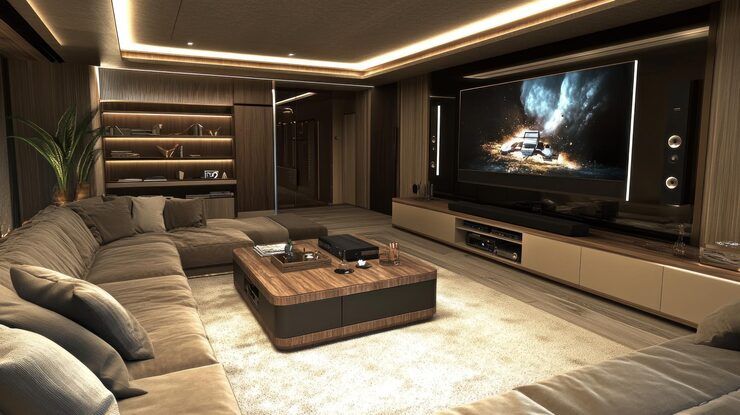
Custom home theater design focuses on bringing these elements together in a balanced way. The goal is to create a room where technology supports the viewing experience without making the space feel complicated or uncomfortable. Whether designing a compact media room or a dedicated cinema, careful planning can help create a more enjoyable and functional environment.
This guide explains the key considerations involved in designing a home theater, from selecting the room and display technology to managing sound, seating, lighting, and future upgrades.
What Is a Dedicated Home Theater?
A dedicated home theater is a room designed primarily for cinematic entertainment. Unlike a general living room with a television, a dedicated cinema room allows the design to focus specifically on viewing and listening conditions.
A custom home theater may include:
- A large projection screen or display
- Surround sound or immersive audio
- Theater-style seating
- Acoustic treatment
- Controlled lighting
- Media equipment
- Smart automation
- Dedicated ventilation
The design should reflect the room's dimensions and the household's entertainment habits. A smaller room may benefit from a simple, carefully calibrated setup, while a larger space may support multiple seating rows and a larger projection system.
Choosing the Right Room
Room selection is one of the first decisions in a custom home theater design project.
A suitable room should provide enough space for comfortable seating, screen placement, speaker positioning, and equipment. Rooms with minimal natural light are often easier to control because external light can affect projected images.
Basements and spare rooms are frequently considered for dedicated theaters, but other areas can also work when properly designed.
Important factors include:
- Room dimensions
- Ceiling height
- Window placement
- Door location
- Electrical access
- Ventilation
- Noise transmission
- Distance between seating and screen
The room's shape also matters. Extremely narrow or irregular spaces can make speaker placement and seating alignment more challenging.
Planning the Screen and Viewing Distance
The screen is the visual center of a home cinema. Its size should be selected according to the room dimensions and viewing distance rather than simply choosing the largest possible option.
A screen that is too large for a short viewing distance may cause visual discomfort, while a screen that is too small may reduce immersion.
Consider the following when planning the display:
- Screen size
- Aspect ratio
- Seating distance
- Viewing angle
- Screen height
- Projector placement
- Room lighting
A balanced design allows viewers to see the entire image comfortably without excessive head movement.
Understanding a 4K Home Theater Projector
A 4K Home Theater Projector can provide a large, cinematic image and is often considered for dedicated cinema rooms where screen size is a major priority.
4K projection technology provides high image detail, making it suitable for large screens and high-resolution content. However, image quality depends on more than resolution alone.
Other important factors include:
- Brightness
- Contrast
- Color accuracy
- Lens quality
- Throw distance
- HDR compatibility
- Room lighting
- Screen material
A projector should be selected according to the specific room rather than based solely on resolution. A carefully matched projector and screen can produce a more consistent viewing experience than a high-resolution projector placed in an unsuitable environment.
Home Theater Audio and Acoustics
Sound is just as important as the image in a dedicated cinema room.
A well-designed audio system creates a sense of depth and direction, helping viewers feel more immersed in the content. Depending on the room and equipment, a home theater may use multiple speakers positioned around the seating area, along with subwoofers for low-frequency sound.
Acoustic treatment also plays a significant role.
Common acoustic solutions include:
- Absorption panels
- Bass management
- Wall treatments
- Ceiling treatments
- Carpeting or area rugs
- Acoustic curtains
The objective is not necessarily to make the room completely silent. Instead, acoustic design aims to control unwanted reflections, echoes, and excessive reverberation.
Speaker placement should be considered during the room design stage because seating position and wall construction can influence the final sound experience.
Seating and Room Layout
Comfortable seating is essential for long viewing sessions.
The layout should provide clear sightlines to the screen while leaving enough space for movement. In larger rooms, multiple seating rows may be possible, but the height difference between rows must be carefully planned to prevent obstructed views.
Common seating options include:
- Individual theater chairs
- Reclining seats
- Sofas
- Modular seating
- Tiered seating platforms
The choice should reflect how the room will be used. A family-oriented space may benefit from flexible seating, while a dedicated cinema may prioritize fixed theater-style arrangements.
Lighting Design for a Cinema Room
Lighting can significantly affect the viewing experience.
Bright ambient lighting may reduce perceived image contrast, particularly with projection systems. For this reason, dedicated theaters often use controlled and adjustable lighting.
Useful lighting features may include:
- Dimmable ceiling lights
- Wall sconces
- Step lighting
- Recessed lighting
- LED accent lighting
- Automated blackout shades
Lighting should be positioned so that it does not create reflections on the screen or distract viewers.
A layered lighting system allows the room to serve different purposes. Low-level lighting may be suitable during a film, while brighter lighting can be used when entering, leaving, or cleaning the room.
Acoustic Isolation and Noise Control
A dedicated home theater should consider both sound quality inside the room and noise transmission to other areas of the home.
Sound isolation can involve:
- Wall insulation
- Specialized wall construction
- Sealed doors
- Acoustic flooring
- Ceiling treatments
The effectiveness of sound isolation depends on the construction of the entire room. Small gaps around doors, vents, and electrical penetrations can affect performance.
Planning noise control early is particularly important when the cinema room is located near bedrooms, offices, or other quiet areas.
Equipment Placement and Cable Management
A clean installation helps maintain the visual quality of a custom home theater.
Audio-video equipment may include:
- AV receivers
- Media players
- Streaming devices
- Gaming consoles
- Amplifiers
- Network equipment
Equipment should be positioned where it can receive adequate ventilation and remain accessible for maintenance.
Cable management should also be planned before walls and ceilings are finished. Concealed wiring can create a cleaner appearance, while accessible pathways make future upgrades easier.
Smart Home Theater Integration
Modern cinema rooms can integrate with broader smart home systems.
Automation may allow users to control:
- Lighting
- Projector
- Screen
- Audio system
- Curtains
- Temperature
- Media sources
A single control interface can simplify operation and reduce the need for multiple remote controls.
However, automation should remain practical. A complicated system can create unnecessary frustration if basic functions become difficult to operate.
Ventilation and Temperature Management
A home theater can generate significant heat from projectors, amplifiers, receivers, and other electronics. Comfortable temperature control is therefore important.
The room should have appropriate airflow without creating excessive background noise that interferes with audio.
Equipment cabinets should also provide adequate ventilation. Enclosed spaces without sufficient airflow may cause electronic components to operate at higher temperatures.
Common Home Theater Design Mistakes
Several planning mistakes can affect the final result.
Choosing Equipment Before Designing the Room
Technology should be selected according to the room's dimensions, viewing distance, and acoustic characteristics.
Ignoring Acoustics
Even excellent audio equipment may perform poorly in a room with excessive echo and uncontrolled reflections.
Using Too Much Ambient Light
Uncontrolled light can reduce image quality, particularly with projection systems.
Poor Seating Placement
Seats positioned too close to walls or at unsuitable viewing angles can reduce comfort and sound quality.
Forgetting Future Upgrades
Technology changes quickly. Accessible cabling and flexible equipment layouts can make future improvements easier.
Creating a Balanced Home Theater Design
The best custom home theater design is not necessarily the one with the most equipment. It is the design where every component works together.
A balanced approach considers:
- Room size
- Screen dimensions
- Viewing distance
- Audio configuration
- Acoustic treatment
- Seating comfort
- Lighting control
- Ventilation
- Equipment access
- Future technology needs
The real difference appears when these elements are planned as one connected system rather than as separate purchases or installations.
Frequently Asked Questions
What is the most important factor in custom home theater design?
Room planning is one of the most important factors because dimensions, seating positions, screen size, acoustics, and equipment placement all depend on the available space.
Is a 4K Home Theater Projector suitable for every cinema room?
Not necessarily. A 4K projector can work well in a dedicated room with appropriate screen size, viewing distance, lighting control, and projector placement. The room should be evaluated before selecting the equipment.
How important is soundproofing in a home theater?
Sound isolation can be important when the cinema is located near bedrooms or other quiet areas. It helps reduce sound transmission, while acoustic treatment inside the room focuses on improving sound quality.
Should lighting be included in the original design?
Yes. Planning lighting early helps prevent reflections, supports comfortable viewing, and allows electrical and automation requirements to be integrated more effectively.
Can a home theater be upgraded later?
Yes, but future upgrades are easier when the original design includes accessible cable pathways, adequate electrical capacity, ventilation, and flexible equipment placement.
Conclusion
A successful custom home theater design brings together visual quality, immersive sound, comfortable seating, controlled lighting, acoustic performance, and reliable technology. The process begins with understanding the room and then selecting equipment and design features that suit its specific characteristics.
Whether the centerpiece is a large projection screen, a 4K Home Theater Projector, or another display technology, the best results come from treating the cinema room as an integrated environment. Thoughtful planning can create a dedicated entertainment space that is comfortable, visually engaging, easy to operate, and adaptable to changing technology for years to come.