If you've ever wondered how plastic pipes, aluminum window frames, or even certain snack foods get their exact shape, the answer usually involves extrusion. It's one of those manufacturing processes that quietly shapes a huge part of the products around us, yet most people have never heard of it.
In this guide, we'll walk through what extrusion equipment actually does, the different types available, how the process works, and what to consider when selecting the right machine for a specific application.
What Is Extrusion?
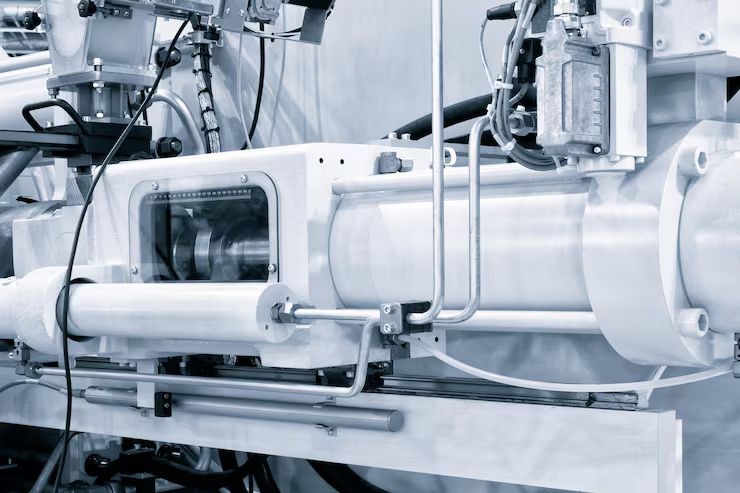
Extrusion is a manufacturing process where raw material, often in the form of pellets, powder, or granules, is pushed through a shaped opening called a die. As the material passes through, it takes on the cross-sectional shape of the die, creating a continuous profile that can be cut to length.
Think of it like squeezing dough through a shaped nozzle to make pasta. Industrial extrusion works on a similar principle, just with far greater precision, pressure, and temperature control.
Extrusion is widely used across industries because it allows manufacturers to produce long, uniform shapes efficiently and with minimal material waste.
How Extrusion Equipment Works
While different extrusion machines vary in design, most follow a similar core process.
1. Material Feeding
Raw material, whether plastic pellets, metal billets, or rubber compounds, is fed into the extruder through a hopper.
2. Heating and Melting
The material moves through a heated barrel where it gradually melts or softens. Temperature control at this stage is critical, since inconsistent heating can affect the final product's quality.
3. Screw Mechanism
Inside the barrel, a rotating screw pushes the material forward while mixing it evenly. This ensures consistent material properties throughout the extruded product.
4. Die Shaping
The molten or softened material is forced through a die, which shapes it into the desired profile, such as a pipe, sheet, rod, or custom cross-section.
5. Cooling and Cutting
Once shaped, the extruded product passes through a cooling system to solidify its form. It's then cut to the required length or wound onto rolls, depending on the application.
Types of Extrusion Equipment
Different industries rely on different types of extrusion machines, depending on the material and desired output.
1. Single-Screw Extruders
These are among the most common extrusion machines, especially in plastic manufacturing. A single rotating screw pushes material through the barrel, making this design simple, reliable, and widely used for pipes, sheets, and films.
2. Twin-Screw Extruders
Twin-screw extruders use two interlocking screws, allowing better mixing and more consistent output. They're often preferred for compounding materials, such as blending plastics with additives or fillers.
3. Ram Extruders
Instead of a rotating screw, ram extruders use a hydraulic ram to push material through the die. This type is commonly used for materials that are difficult to process using screw-based systems, such as certain high-performance polymers.
4. Hot Extrusion Machines
Used primarily for metals like aluminum, copper, and steel alloys, hot extrusion involves heating the metal above its recrystallization temperature before pushing it through the die. This method is common for manufacturing structural components and window frames.
5. Cold Extrusion Machines
Cold extrusion shapes metal at or near room temperature, which increases the material's strength through work hardening. It's often used for producing fasteners, automotive parts, and certain metal fittings.
6. Sheet and Film Extruders
These machines are designed specifically for producing flat plastic sheets or thin films, widely used in packaging, agriculture, and construction industries.
7. Pipe and Profile Extruders
Specialized for continuous shapes like pipes, tubing, and custom architectural profiles, these machines are common in construction and plumbing industries.
Industrial Applications of Extrusion Equipment
Extrusion equipment plays a role in producing an incredibly wide range of everyday and industrial products.
Plastic Manufacturing
- PVC pipes for plumbing and irrigation systems
- Plastic sheets used in packaging and signage
- Insulated wiring and cable coatings
- Plastic profiles for window and door frames
Metal Manufacturing
- Aluminum extrusions for construction framing and automotive parts
- Copper rods used in electrical applications
- Structural components for machinery and equipment
Food Processing
Extrusion isn't limited to plastics and metals. In food manufacturing, extrusion equipment shapes products like:
- Breakfast cereals
- Pasta
- Snack foods
- Pet food pellets
Rubber Manufacturing
Rubber extrusion is used to produce seals, gaskets, hoses, and weatherstripping used in automotive and construction industries.
Construction Industry
Extruded profiles are widely used for door and window frames, structural aluminum components, and various building materials that require consistent, precise shapes.
How to Select the Right Extrusion Equipment
Choosing the right extrusion machine depends on several important factors. Here's what manufacturers typically consider.
1. Material Type
Different materials require different extrusion methods. Plastics generally use screw-based extruders, while metals often require hot or cold extrusion systems depending on the desired strength and finish.
2. Desired Output Shape and Size
The complexity of the cross-sectional profile influences die design and the type of extruder needed. Simple shapes like rods may need less complex tooling compared to intricate architectural profiles.
3. Production Volume
For high-volume manufacturing, twin-screw extruders or continuous production lines are often more efficient. Smaller-scale operations may find single-screw extruders more practical.
4. Temperature Control Requirements
Materials that are sensitive to heat fluctuations require extruders with precise and stable temperature control systems to maintain consistent quality.
5. Automation Level
Modern extrusion lines increasingly incorporate automated monitoring systems that track temperature, pressure, and output consistency in real time, reducing manual oversight and improving efficiency.
6. Maintenance and Durability
Since extrusion equipment often runs continuously for long production cycles, durability and ease of maintenance play a major role in long-term operational efficiency.
Benefits of Extrusion as a Manufacturing Process
Extrusion remains a preferred manufacturing method across industries for several reasons:
- Continuous production – Enables long, uniform shapes without interruptions
- Material efficiency – Minimal waste compared to other shaping methods
- Versatility – Works with plastics, metals, rubber, and even food products
- Consistency – Produces uniform cross-sections throughout the entire length
- Scalability – Suitable for both small-batch and large-scale industrial production
Final Thoughts
Extrusion equipment might not be something most people think about daily, but it plays a quiet, essential role in manufacturing everything from plumbing pipes to snack foods. Understanding the different types of extruders, how the process works, and what factors matter during equipment selection helps manufacturers make informed decisions that improve efficiency and product quality.
As industries continue to demand more precise, sustainable, and efficient production methods, extrusion technology will keep evolving, remaining a foundational process across plastics, metals, food, and construction manufacturing for years to come.