Flotation laboratory equipment consists of machines and instruments used to investigate the separation of minerals through interactions between air bubbles and mineral particles. In froth flotation, selected particles attach to bubbles and rise into a froth layer, while other particles remain in the slurry.
Laboratory flotation tests help researchers understand mineral behavior, compare chemical reagents, estimate recovery, evaluate concentrate quality, and develop process conditions before industrial implementation. Test results can also support the design and improvement of mineral-processing circuits.
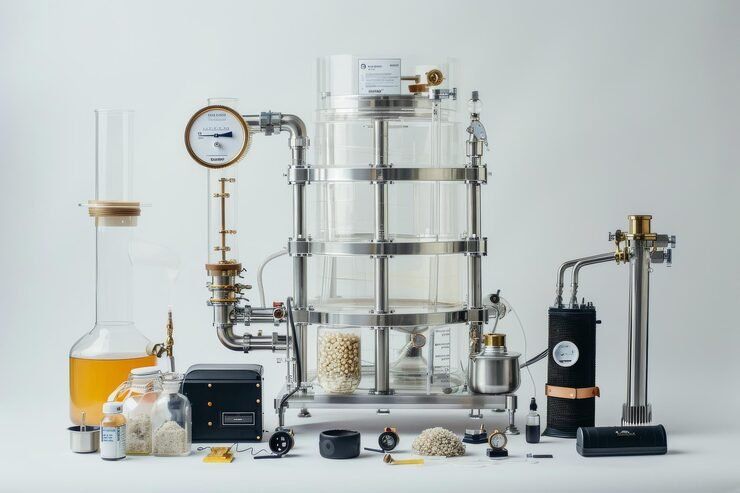
A typical laboratory setup includes a flotation cell, motor-driven impeller or air-dispersion mechanism, air supply, slurry vessel, froth collection arrangement, and controls for operating parameters. Depending on the test objective, laboratories may also use grinding mills, sample preparation equipment, pH meters, analytical balances, reagent dosing systems, and filtration equipment.
Laboratory flotation machines are available in different capacities and configurations. Small cells support preliminary mineral studies, while larger bench-scale and pilot systems help evaluate more representative process conditions. Reproducible results require controlled sample preparation, reagent dosage, air flow, agitation, pulp level, and concentrate collection. <Cite refs={["turn983071search0","turn983071search4"]}/>
Major Types of Flotation Laboratory Equipment
1. Mechanical Laboratory Flotation Machines
Mechanical flotation machines use an impeller to agitate the slurry and disperse air bubbles. The impeller promotes contact between mineral particles and bubbles while keeping particles suspended.
These machines are commonly used for batch flotation tests involving sulfide ores, industrial minerals, coal, and other mineral samples. Adjustable impeller speed and air flow help researchers evaluate different operating conditions.
2. Bench-Scale Flotation Cells
Bench-scale cells are used for routine mineral beneficiation studies and reagent evaluation. They are available in different working volumes, allowing laboratories to test sample quantities suited to their experimental procedures.
Interchangeable cells and impellers can help researchers evaluate different pulp volumes, mineral types, and flotation stages. Some models include digital speed controls, air regulation, and automated froth removal.
3. Laboratory Flotation Columns
Laboratory flotation columns reproduce selected aspects of industrial column flotation. Air enters through a distributor near the bottom, and bubbles rise through the slurry to collect suitable mineral particles.
These systems are useful for studying bubble behavior, froth washing, separation selectivity, and the effects of operating variables on concentrate quality. Their tall geometry also allows researchers to investigate interactions between the collection zone and froth zone.
4. Microflotation Equipment
Microflotation equipment uses small cells or tubes to study the flotation response of limited quantities of mineral samples. It is useful when researchers need to investigate surface chemistry, collector performance, pH effects, and interactions between minerals and reagents.
Specialized laboratory cells can support experiments involving carefully prepared mineral particles and controlled chemical conditions.
5. Pneumatic Flotation Laboratory Systems
Pneumatic systems introduce air into the slurry without relying on a conventional mechanical impeller as the primary aeration mechanism. Their designs vary according to how air and slurry are combined.
These systems can help researchers investigate alternative bubble-generation methods, particle attachment, and flotation behavior under different hydrodynamic conditions.
6. Continuous Laboratory Flotation Systems
Continuous flotation equipment processes a steady feed stream rather than relying exclusively on separate batch tests. It can help researchers study material flow, residence time, process stability, and the interaction between flotation stages.
Such systems are useful when developing flowsheets or investigating conditions that are difficult to represent through isolated batch tests.
7. Pilot-Scale Flotation Equipment
Pilot-scale flotation systems process larger material quantities and can include multiple interconnected cells, reagent dosing equipment, pumps, classifiers, and process monitoring instruments.
Pilot trials help evaluate how laboratory findings translate to more representative operating conditions. However, pilot results still require engineering interpretation before they are applied to a full-scale plant.
Supporting Laboratory Equipment
Flotation tests often depend on equipment beyond the flotation machine itself.
Laboratory grinding mills: Prepare mineral samples to a specified particle-size range.
Sieve shakers and particle-size analyzers: Measure particle-size distribution.
Sample splitters: Produce representative portions from bulk samples.
pH and oxidation-reduction potential meters: Monitor chemical conditions in the slurry.
Reagent dosing equipment: Measures and introduces collectors, frothers, modifiers, and other reagents.
Analytical balances: Measure samples, concentrates, and tailings.
Filtration and drying equipment: Prepare flotation products for subsequent analysis.
Chemical analysis instruments: Determine the composition of feed, concentrate, and tailings samples.
The equipment required depends on the minerals under investigation, the laboratory's testing objectives, and the analytical methods used.
Comparison of Flotation Laboratory Equipment Types
| Equipment type | Main function | Common applications |
|---|---|---|
| Mechanical flotation machine | Agitates slurry and disperses air | Batch flotation and reagent studies |
| Bench-scale flotation cell | Tests mineral separation at controlled volume | Metallurgical laboratory research |
| Flotation column | Studies column flotation behavior | Fine-particle separation and concentrate cleaning |
| Microflotation cell | Tests small mineral samples | Surface chemistry and reagent evaluation |
| Pneumatic flotation system | Uses specialized air-dispersion methods | Alternative flotation process studies |
| Continuous flotation system | Processes a steady material stream | Flowsheet development and process control |
| Pilot-scale flotation system | Evaluates larger-scale process conditions | Process development and scale-up |
Importance of Flotation Laboratory Equipment
Flotation laboratory equipment helps mineral-processing teams evaluate separation performance before changing or designing an industrial circuit. Laboratory tests can identify which minerals respond to flotation, how reagent combinations affect selectivity, and which operating conditions influence recovery.
These tests are important because mineral deposits differ in composition, liberation characteristics, particle size, and surface chemistry. A reagent combination that works for one ore may not produce the same result for another.
Laboratory testing also helps compare concentrate grade and mineral recovery. Concentrate grade indicates the proportion of the target mineral or valuable component in the recovered product, while recovery measures how much of that component has been transferred from the feed into the concentrate.
Results must be interpreted together. A higher concentrate grade may coincide with lower recovery, while aggressive flotation may increase recovery but also carry more unwanted material into the concentrate.
Repeatable laboratory procedures help researchers distinguish genuine process changes from experimental variation. Consistent sample preparation, equipment settings, reagent measurements, and product collection are therefore essential.
Manufacturing Processes
Flotation laboratory equipment manufacturing combines mechanical fabrication, electrical engineering, air-control systems, instrumentation, and final performance testing.
1. Design and Engineering
Manufacturing begins by defining the intended tests, sample quantities, operating range, and laboratory environment. Engineers select the cell volume, vessel geometry, impeller arrangement, motor capacity, air supply, and control interface.
Some systems require interchangeable vessels or impellers, while others include automatic froth removal, digital speed control, or measurement instruments.
Computer-aided design helps define dimensions, component clearances, mounting arrangements, and assembly requirements.
2. Material Selection
The materials used in laboratory flotation equipment must withstand slurry abrasion, chemical exposure, and repeated cleaning.
Common construction materials include stainless steel, acrylic, engineering plastics, and coated metal components. Transparent acrylic vessels can help researchers observe slurry and froth behavior, while stainless steel may be suitable for particular chemical, thermal, or durability requirements.
Material selection depends on the test chemistry, operating temperature, cleaning procedure, and expected wear.
3. Vessel and Mechanical Component Fabrication
Cell vessels, supports, shafts, impellers, guards, and mounting brackets are manufactured using processes such as cutting, machining, forming, polishing, and welding.
Precision is important because impeller dimensions, shaft alignment, vessel geometry, and component clearances can influence mixing and air dispersion.
Interchangeable parts must fit consistently to support repeatable experimental setups.
4. Motor and Air-System Assembly
The motor and drive assembly provides controlled impeller rotation. Depending on the design, speed may be adjusted through a variable-speed controller or a digital control interface.
Air may be supplied through a compressor, pump, flow-control device, or integrated air-dispersion mechanism. Flow meters and valves help regulate the quantity of air entering the cell.
The impeller, diffuser, and air inlet must work together to generate the intended mixing and bubble conditions.
5. Instrumentation and Control Integration
Modern laboratory systems may include digital speed displays, timers, air-flow controls, pulp-level indicators, temperature sensors, pH instruments, and automated froth-removal mechanisms.
Electronic controllers coordinate the selected operating parameters. The level of automation depends on the testing requirements and the complexity of the equipment.
6. Assembly and Quality Inspection
After fabrication, the mechanical and electrical components are assembled and inspected.
Quality checks may include:
Verification of vessel dimensions and capacity
Inspection of shaft alignment and impeller clearance
Motor-speed and control-function checks
Air-flow regulation tests
Electrical safety checks
Verification of interchangeable components
Inspection of vessel integrity and material finish
Review of operating instructions and technical documentation
7. Functional Testing and Calibration
The completed equipment is tested to verify that it operates within the specified range. Air flow, impeller speed, timers, sensors, and automated mechanisms are checked where applicable.
Laboratories may also conduct repeatability trials to assess whether the machine can maintain consistent operating conditions across repeated tests. The machine's mechanical performance alone does not guarantee repeatable metallurgical results; sample preparation and experimental procedures must also be controlled.
Global Manufacturers and Suppliers
The flotation laboratory equipment sector includes specialist laboratory instrument manufacturers, mineral-processing equipment producers, and organizations that provide testing or pilot-plant systems.
GTEK: Supplies laboratory mineral-processing equipment, including flotation machines and interchangeable flotation cells used for mineral separation and laboratory research. <Cite refs={["turn983071search10","turn983071search11"]}/>
ARK Scientific: Provides laboratory flotation machines with options such as digital controls, different cell capacities, and interchangeable cell materials. <Cite refs={["turn983071search2"]}/>
Star Trace: Manufactures laboratory mineral beneficiation equipment, including flotation cells and other mineral testing machines. <Cite refs={["turn983071search6","turn983071search9"]}/>
JXSC: Supplies mineral-processing machinery, including flotation equipment and laboratory-related equipment for mineral separation applications. <Cite refs={["turn983071search3"]}/>
Metso: Provides mineral-processing technologies and flotation equipment for mining operations. The suitability and availability of particular laboratory configurations should be confirmed with the company.
Eriez: Develops mineral processing and separation technologies, including flotation systems for selected applications. Specific laboratory equipment options should be checked against the current product range.
SGS: Provides mineral-processing testing and pilot-plant capabilities that include flotation equipment for metallurgical evaluation and process development. Its laboratory capabilities can be relevant when a facility requires testing rather than purchasing an instrument. <Cite refs={["turn983071search13"]}/>
University and research laboratories: Institutions such as McGill University and NTNU operate flotation equipment for mineral-processing research, microflotation experiments, and process evaluation. These facilities provide examples of the different testing scales used in mineral research. <Cite refs={["turn983071search4","turn983071search5"]}/>
Not every organization listed manufactures and supplies all equipment types. Some specialize in equipment production, while others focus on mineral testing, research, or pilot-scale evaluation.
When evaluating suppliers, consider cell capacity, speed range, air-flow control, vessel material, available accessories, measurement accuracy, technical documentation, replacement-part availability, and suitability for the intended mineral samples.
Mineral Processing Applications
1. Copper Ore Flotation
Laboratory flotation machines are used to evaluate copper sulfide ores and selected oxide-mineral processing routes. Researchers examine collector selection, pH, grinding conditions, air flow, and flotation time to determine their effects on copper recovery and concentrate grade.
Testing can also identify interactions between copper minerals and other sulfide minerals.
2. Gold Ore Processing
Gold may be associated with sulfide minerals that respond to flotation. Laboratory tests can help determine whether flotation is suitable for concentrating gold-bearing minerals before subsequent treatment.
The appropriate process depends on gold occurrence, mineral associations, liberation, and the characteristics of the ore.
3. Iron Ore Beneficiation
Laboratory flotation equipment supports testing of iron ore separation methods, including reverse flotation for removing silica and other impurities from selected iron-bearing materials.
Researchers investigate reagent combinations, particle size, pH, and operating conditions to evaluate concentrate quality and iron recovery.
4. Coal Preparation
Flotation tests can help separate fine coal particles from mineral matter. Laboratory equipment is used to investigate coal particle surface properties, reagent selection, pulp conditions, and the effects of particle size on separation performance.
5. Lead and Zinc Processing
Lead-zinc laboratories use flotation tests to evaluate the separation of sulfide minerals and investigate reagent schemes for selective recovery. Test results can support the development of cleaner, rougher, and scavenger stages in a processing circuit.
6. Phosphate and Industrial Minerals
Laboratory flotation systems are used to evaluate phosphate beneficiation and the removal of unwanted mineral impurities from selected industrial minerals.
The results help determine whether flotation can achieve the required material quality and identify conditions that influence mineral selectivity.
7. Reagent Development
Flotation equipment supports research into collectors, frothers, depressants, activators, and pH modifiers. Controlled tests help researchers compare reagent combinations and assess how chemical conditions affect particle attachment, froth stability, recovery, and selectivity.
8. Flowsheet Development and Pilot Testing
Laboratory results can be used to develop preliminary process flowsheets and identify operating conditions for pilot trials. Pilot testing provides additional information about continuous operation, material flow, and interactions between flotation stages.
Scale-up requires careful evaluation because laboratory cells do not reproduce every hydrodynamic and process characteristic of industrial equipment.
Recent Developments
Flotation laboratory equipment continues to develop through improvements in digital control, measurement, automation, and data recording.
Digital interfaces allow operators to set and monitor variables such as impeller speed, air flow, test duration, and selected process conditions. Automated froth removal can reduce differences caused by manual collection and help standardize experimental procedures.
Some systems support temperature measurement, pH monitoring, programmable settings, and data export. These capabilities can help researchers maintain organized experimental records and compare results across test programs.
Advances in laboratory imaging and sensor technology also support the study of bubble size, froth structure, and particle behavior. Process modeling can complement physical testing by helping researchers investigate possible explanations for observed separation results.
Despite these developments, laboratory data quality still depends on representative sampling, consistent grinding, accurate reagent measurement, and appropriate experimental design.
Laws or Policies
Flotation laboratory equipment must be operated according to applicable laboratory safety, electrical safety, chemical handling, and environmental requirements.
Laboratories should establish procedures for handling flotation reagents, preparing mineral samples, controlling dust, managing slurry spills, and disposing of chemical residues. Personal protective equipment should be selected according to the materials and hazards involved.
Equipment with rotating impellers requires suitable guarding and safe operating procedures. Electrical components should be appropriate for the laboratory environment, and maintenance should be performed with the equipment isolated from power sources.
Where testing involves hazardous reagents, ventilation, storage arrangements, exposure controls, and emergency procedures may be necessary. Wastewater and chemical residues should be managed under applicable environmental requirements.
ISO and IEC standards may apply to selected aspects of laboratory management, electrical safety, and equipment design. Specific obligations depend on the jurisdiction, laboratory activity, and equipment configuration.
Tools and Resources
Several tools help researchers conduct reliable flotation experiments and interpret their results.
Sample preparation equipment: Crushers, grinding mills, splitters, and sieves prepare representative mineral samples.
Flotation test worksheets: Record feed mass, cell volume, reagent dosage, air flow, impeller speed, pH, and test duration.
pH and redox meters: Monitor chemical conditions during testing.
Particle-size analyzers: Evaluate grinding and mineral liberation requirements.
Analytical balances: Measure feed, concentrate, and tailings samples.
Filtration and drying equipment: Prepare products for mass balance and chemical analysis.
Laboratory chemical analysis: Determines the composition of flotation products.
Statistical and process-analysis software: Helps compare repeated experiments and identify relationships between operating conditions and flotation results.
A sound testing program should include documented procedures, repeat trials where appropriate, and analysis of both concentrate grade and recovery.
FAQs
1. What is flotation laboratory equipment used for?
It is used to investigate mineral separation, compare flotation reagents, measure recovery, evaluate concentrate quality, and develop mineral-processing flowsheets before industrial implementation.
2. What is the difference between a laboratory flotation cell and a flotation column?
A conventional laboratory flotation cell generally uses mechanical agitation to mix the slurry and disperse air. A flotation column is typically a taller vessel that uses controlled air injection and may incorporate froth washing. Each design supports different testing objectives.
3. Which industries use flotation laboratory equipment?
Mining, mineral processing, metallurgical research, coal preparation, and industrial mineral processing use flotation laboratory equipment. Universities and research organizations also use these systems for mineral science and process development.
4. What factors should be considered when selecting a laboratory flotation machine?
Important factors include sample quantity, cell capacity, adjustable impeller speed, air-flow control, vessel material, reagent compatibility, measurement requirements, and the type of flotation test being performed.
5. Can laboratory flotation results predict industrial performance?
Laboratory results can support process design and provide useful estimates of mineral response, but they do not guarantee industrial performance. Pilot testing, process modeling, mineralogical evaluation, and scale-up analysis may be needed before full-scale implementation.
Conclusion
Flotation laboratory equipment is an important part of mineral-processing research, metallurgical testing, and process development. Mechanical flotation machines, bench-scale cells, microflotation units, flotation columns, and pilot systems help researchers investigate mineral behavior under controlled conditions.
Selecting suitable equipment requires consideration of sample size, mineral properties, operating controls, reagent requirements, and the intended research objective. Consistent test procedures, accurate measurements, and appropriate analysis help laboratories produce useful information for mineral recovery, concentrate quality, and process design.