The food industry plays a central role in everyday life, transforming agricultural ingredients and raw materials into safe, nutritious, and convenient products for consumers.
Behind every packaged food item is a complex network of activities that may include sourcing, processing, preservation, packaging, storage, transportation, and quality management.
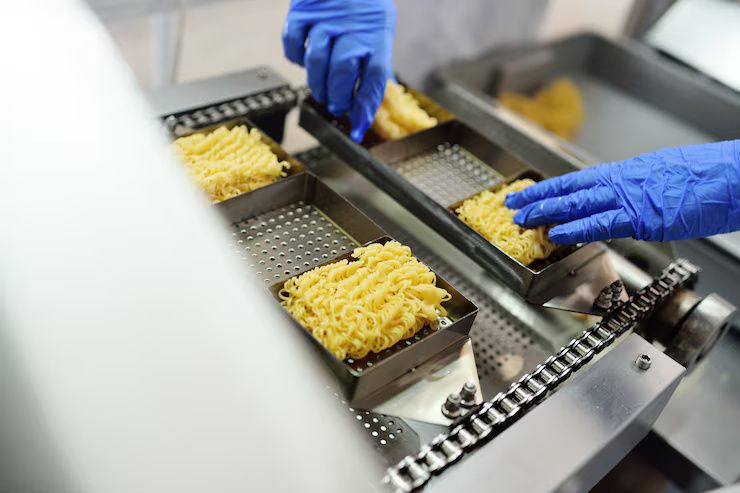
Modern food manufacturing has become increasingly sophisticated as producers respond to changing consumer expectations, stricter safety requirements, sustainability concerns, and advances in technology. At the same time, food businesses must maintain consistent quality while managing complex production environments and supply chains.
Understanding how the food industry operates provides valuable insight into the systems that help move food from raw materials to finished products. This guide explores the main stages of food processing, the role of packaging, quality management practices, emerging technologies, and the trends shaping the modern food production industry.
What Is the Food Industry?
The food industry includes the broad network of businesses and activities involved in producing, processing, packaging, distributing, and preparing food products.
It connects agriculture with consumers through multiple stages of the supply chain.
Major areas include:
- Agricultural production
- Ingredient sourcing
- Food processing
- Food manufacturing
- Packaging
- Cold-chain logistics
- Warehousing
- Distribution
- Food retail and food service
Each stage contributes to the safety, quality, availability, and consistency of food products.
The Food Manufacturing Industry is particularly important because it transforms raw ingredients into products that can be stored, transported, and consumed conveniently.
Understanding the Food Processing Industry
The Food Processing Industry uses physical, thermal, chemical, or biological methods to transform raw ingredients into finished or semi-finished food products.
Processing methods vary significantly depending on the type of food.
Common processes include:
- Washing and cleaning
- Sorting and grading
- Cutting and slicing
- Grinding and milling
- Mixing and blending
- Cooking
- Pasteurization
- Fermentation
- Freezing
- Drying
- Canning
The purpose of processing is not limited to creating convenience. It can also help improve food safety, extend shelf life, maintain consistency, and make certain ingredients easier to use.
For example, thermal processing can reduce harmful microorganisms, while freezing can help preserve food quality over extended storage periods.
Key Stages of Food Production
Food production involves a series of interconnected steps. Although processes differ between sectors, a typical production system follows a structured sequence.
Raw Material Handling
Production begins with the selection and handling of raw ingredients. Quality at this stage can significantly influence the final product.
Ingredients may be inspected for freshness, physical condition, contamination risks, and compliance with established specifications.
Preparation and Processing
Raw materials are prepared according to the product's requirements. This may involve cleaning, cutting, grinding, blending, cooking, or other processing techniques.
Automated equipment is increasingly used to improve consistency and reduce variations between production batches.
Quality Checks
Quality control activities take place throughout production rather than only at the end.
Measurements may include:
- Temperature
- Moisture
- Texture
- Weight
- Appearance
- Microbiological characteristics
Continuous monitoring helps identify deviations before they affect larger quantities of finished products.
Packaging
After processing, food products are packaged in materials designed to protect them during storage and transportation.
Packaging also provides important information such as ingredients, allergen information, nutritional details, storage instructions, and product identification.
The Importance of Food Packaging
Food packaging serves several important functions beyond appearance.
A well-designed package can help protect food from:
- Moisture
- Oxygen
- Light
- Contamination
- Physical damage
- Temperature changes
Different foods require different packaging solutions.
Fresh foods may require breathable materials, while products sensitive to oxygen may need protective barrier packaging. Frozen foods require packaging that can withstand low temperatures without becoming brittle or damaged.
Packaging therefore plays an important role in maintaining food quality throughout the supply chain.
Packaging Technologies in the Food Industry
Modern food manufacturing uses a wide range of packaging technologies.
Flexible Packaging
Flexible materials are commonly used for snacks, frozen foods, bakery products, and other packaged items. They can provide lightweight protection while using relatively little material.
Rigid Packaging
Containers made from glass, metal, or rigid plastics are used for products requiring stronger physical protection.
Modified Atmosphere Packaging
This method adjusts the atmosphere surrounding food within the package to help maintain quality and extend storage life for selected products.
Aseptic Packaging
Aseptic systems combine controlled processing and packaging conditions to protect certain foods from contamination and support extended shelf stability.
Intelligent Packaging
Emerging packaging technologies may incorporate indicators or sensors that provide information about factors such as temperature exposure or product condition.
Food Quality Management
Quality management is a continuous process that involves maintaining consistent standards throughout the food production system.
A comprehensive quality management approach may include:
- Supplier evaluation
- Ingredient inspection
- Process monitoring
- Equipment maintenance
- Sanitation procedures
- Employee training
- Laboratory testing
- Traceability systems
- Documentation
The goal is to identify potential issues early and maintain consistent production standards.
Quality management also helps organizations respond more effectively when deviations occur.
Food Safety and Hygiene
Food safety is one of the most important priorities across the Food Production Industry.
Facilities must manage potential hazards that can arise from biological, chemical, or physical sources.
Important practices include:
- Proper hand hygiene
- Equipment sanitation
- Temperature control
- Allergen management
- Pest prevention
- Safe ingredient storage
- Cross-contamination prevention
- Employee training
Hygiene procedures should be integrated into daily operations rather than treated as occasional activities.
A strong food safety culture requires participation from everyone involved in production, from management to frontline workers.
Traceability in Modern Food Manufacturing
Traceability allows organizations to track ingredients and products through different stages of the supply chain.
A traceability system may record information about:
- Ingredient sources
- Production batches
- Processing dates
- Packaging information
- Storage conditions
- Distribution movements
Digital technologies have improved the ability to collect and analyze this information.
If a quality issue is identified, traceability systems can help organizations determine where affected products originated and which production stages were involved.
Technology and Automation in the Food Processing Industry
Technology is transforming modern food manufacturing.
Automation is increasingly used for repetitive and highly controlled processes such as sorting, filling, weighing, labeling, and packaging.
Other technologies include:
- Industrial sensors
- Robotics
- Machine vision
- Artificial intelligence
- Predictive maintenance
- Digital production monitoring
- Automated quality inspection
Machine vision systems, for example, can inspect products for visible defects at high production speeds.
Predictive maintenance technologies can monitor equipment performance and identify potential problems before unexpected failures disrupt production.
Sustainability in the Food Industry
Environmental sustainability has become an important consideration throughout the food supply chain.
Food manufacturers are exploring ways to reduce:
- Food waste
- Energy consumption
- Water usage
- Packaging waste
- Production emissions
Strategies may include improving production efficiency, using renewable energy, optimizing transportation, reducing unnecessary packaging, and developing more recyclable or reusable packaging systems.
Reducing food waste is particularly important because wasted food also represents wasted agricultural resources, water, energy, and transportation.
Challenges Facing the Food Manufacturing Industry
The modern food industry faces several complex challenges.
These include:
- Maintaining consistent quality
- Managing supply chain disruptions
- Controlling food safety risks
- Responding to changing consumer preferences
- Reducing environmental impact
- Managing labor and automation
- Maintaining reliable cold-chain systems
- Adapting to regulatory requirements
The interconnected nature of the Food Manufacturing Industry means that changes in one part of the supply chain can influence many others.
For example, disruptions in ingredient availability may affect production schedules, packaging requirements, and distribution planning.
Future Trends in the Food Production Industry
Several trends are shaping the future of food production.
Technology is expected to play an increasingly important role in automated inspection, production monitoring, predictive maintenance, and supply chain visibility.
Other developments include:
- Smart manufacturing systems
- Sustainable packaging
- Alternative food ingredients
- Advanced food preservation
- Digital traceability
- Data-driven quality management
- Greater production automation
- Resource-efficient processing
Consumer interest in transparency is also encouraging greater attention to ingredient information, sourcing practices, production methods, and environmental responsibility.
Frequently Asked Questions
What is the Food Processing Industry?
The Food Processing Industry transforms raw agricultural ingredients and other food materials into finished or semi-finished products using methods such as cooking, freezing, drying, fermentation, milling, and packaging.
Why is packaging important in food manufacturing?
Packaging helps protect food from contamination, moisture, oxygen, light, and physical damage while supporting safe storage, transportation, labeling, and product identification.
What is food quality management?
Food quality management is a structured approach to maintaining consistent product standards through ingredient controls, process monitoring, sanitation, testing, traceability, and documentation.
How is technology changing the food industry?
Automation, robotics, machine vision, sensors, artificial intelligence, and digital monitoring are helping food manufacturers improve process consistency, inspection, maintenance, traceability, and operational efficiency.
What are the major challenges facing the Food Production Industry?
Major challenges include food safety, supply chain reliability, quality consistency, sustainability, waste reduction, regulatory compliance, changing consumer preferences, and the need to adopt new technologies.
Conclusion
The modern food industry is a complex system that connects raw material production with processing, manufacturing, packaging, distribution, and consumption. Each stage requires careful coordination to maintain food quality, safety, consistency, and efficiency.
The Food Processing Industry continues to evolve as manufacturers adopt automation, digital monitoring, advanced packaging, and more sustainable production practices. At the same time, strong quality management and traceability remain essential for maintaining reliable standards throughout the supply chain.
As technology and consumer expectations continue to change, the future of the Food Manufacturing Industry will increasingly depend on balancing innovation with food safety, resource efficiency, transparency, and responsible production. Understanding these interconnected systems provides a clearer picture of how modern food products are processed, protected, and managed from production facilities to everyday consumers.