Food quality analysis plays an important role in protecting consumers, maintaining consistent product standards, and supporting reliable food production.
From raw ingredients to finished products, food must often be evaluated for properties such as moisture, acidity, fat, protein, microbial safety, contaminants, and nutritional composition.
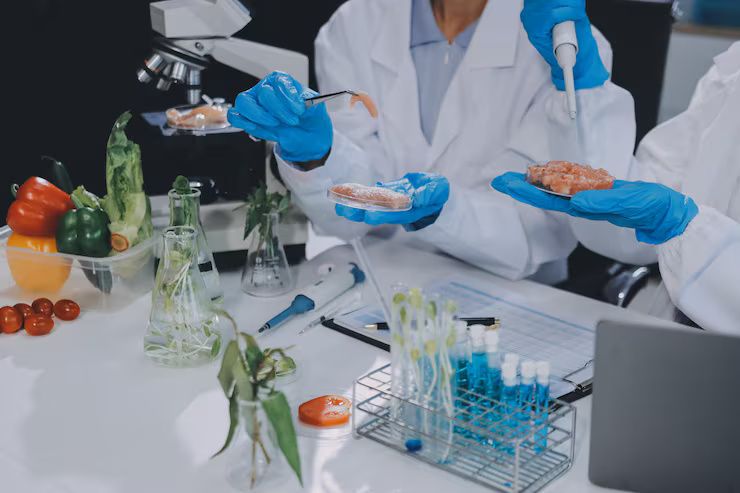
Food testing laboratory equipment provides the tools needed to perform these evaluations in a controlled environment. Understanding what different instruments do, how they support laboratory workflows, and which factors influence equipment selection can help food manufacturers, quality teams, researchers, and laboratory professionals make better testing decisions.
What Is Food Testing Laboratory Equipment?
Food testing laboratory equipment refers to instruments, systems, and laboratory tools used to examine the physical, chemical, nutritional, and microbiological characteristics of food and beverage samples.
Different tests require different analytical methods. A moisture analyzer, for example, determines moisture content, while a pH meter measures acidity or alkalinity. Other instruments may identify chemical compounds, measure texture, examine color, or detect microorganisms.
The purpose is not simply to generate numbers. Reliable food testing helps laboratories understand whether a sample meets defined quality specifications and whether processing and storage conditions are producing consistent results.
Why Food Quality Testing Matters
Food products can change throughout processing, transportation, and storage. Temperature, humidity, oxygen exposure, formulation, packaging, and microbial activity can all influence product quality.
Laboratory testing helps identify these changes through measurable characteristics. Common objectives include:
- Checking raw material quality
- Monitoring production consistency
- Evaluating finished food products
- Measuring nutritional characteristics
- Identifying unwanted contaminants
- Supporting shelf-life studies
- Investigating changes in taste, texture, or appearance
- Verifying that products meet applicable specifications
A structured testing program can therefore provide information for both quality control and product development.
Major Categories of Food Testing Equipment
Food laboratories generally use several categories of analytical equipment. The appropriate combination depends on the type of food being tested and the laboratory's testing objectives.
1. Moisture Testing Equipment
Moisture is one of the most important characteristics in many foods. Water content can influence texture, weight, microbial growth, stability, and shelf life.
Laboratories may use moisture analyzers, drying ovens, or related analytical methods to determine moisture content. Results can help quality teams compare batches and monitor processing conditions.
For products such as grains, bakery products, powders, snacks, and dried foods, moisture measurement can be particularly important.
2. pH and Acidity Measurement Equipment
pH measurement determines how acidic or alkaline a food sample is. It can be relevant to product stability, formulation, processing, and microbial control.
Digital pH meters are commonly used for liquids, semi-solid foods, and prepared samples. Some applications also require titration equipment to determine total acidity.
Because pH measurements can be affected by sample temperature, electrode condition, calibration, and preparation, proper testing procedures are essential.
3. Microbiological Testing Equipment
Microbiological analysis examines microorganisms that may affect food safety, quality, or shelf life. Depending on the testing program, laboratories may evaluate bacteria, yeasts, molds, or other microorganisms.
Common laboratory equipment includes incubators, autoclaves, microscopes, colony counters, sterile work areas, and sample preparation equipment.
Microbiological testing requires careful control of contamination, temperature, incubation conditions, and sample handling. Equipment alone cannot guarantee reliable results; laboratory procedures and trained personnel are equally important.
4. Analytical Balances
Accurate weighing is fundamental to many food testing procedures. Analytical balances are designed to measure small quantities with high precision.
They may be used when preparing samples, measuring reagents, creating standards, or determining changes in sample mass.
Environmental conditions such as vibration, air movement, temperature, and humidity can influence highly sensitive balances, making appropriate laboratory placement important.
5. Spectroscopy and Chemical Analysis Equipment
Spectroscopic instruments can provide information about the chemical composition of food samples. Depending on the technology, these systems can be used to examine ingredients, identify compounds, or estimate specific characteristics.
Laboratories may use techniques such as ultraviolet-visible spectroscopy, infrared spectroscopy, or other instrumental analysis methods.
More advanced chemical analysis may involve chromatographic instruments. These can separate and analyze components within complex food samples, supporting applications such as compositional testing and contaminant analysis.
Equipment for Physical and Sensory Characteristics
Not every food test involves chemical composition. Physical properties can also affect consumer acceptance and manufacturing consistency.
Texture Analysis
Texture analyzers measure characteristics such as firmness, hardness, elasticity, crispness, or other mechanical properties. These measurements can be useful for products ranging from baked goods to confectionery and processed foods.
Instrumental texture testing provides numerical measurements that can complement sensory evaluation.
Color Measurement
Colorimeters and spectrophotometers can measure food color objectively. This is useful because visual color can change with ingredients, cooking conditions, oxidation, storage, and processing.
Objective color measurements allow laboratories to compare samples using standardized measurement systems rather than relying entirely on visual judgment.
Density and Viscosity Testing
Density measurements can help characterize liquids, powders, and other food materials. Viscosity testing is particularly relevant for sauces, beverages, syrups, dairy products, and other fluid or semi-fluid foods.
These measurements can help evaluate formulation consistency and processing behavior.
Sample Preparation Is a Critical Step
Reliable analysis starts before a sample reaches the testing instrument. Food samples often contain multiple components and may require preparation before analysis.
Typical preparation steps can include grinding, mixing, homogenizing, filtering, dilution, drying, or extraction.
The preparation method should be appropriate for the food matrix and analytical method. Poorly prepared samples can introduce variation and produce results that do not accurately represent the original product.
For this reason, laboratories often establish documented sample-handling procedures covering identification, storage, preparation, testing, and disposal.
How to Choose Food Testing Laboratory Equipment
Selecting laboratory equipment requires more than considering the instrument's basic function. Laboratories should evaluate several practical and technical factors.
Testing Requirements
First, determine which characteristics need to be measured. A laboratory focused on moisture and pH testing will have different requirements from one performing detailed chemical or microbiological analysis.
Accuracy and Repeatability
Equipment should provide results appropriate for the intended application. Accuracy describes how close a measurement is to the accepted value, while repeatability concerns how consistently the same method produces results under similar conditions.
Sample Type
Food matrices vary significantly. Liquids, powders, oils, meat products, dairy products, grains, and solid foods may require different preparation methods and instruments.
Laboratory Workflow
Testing equipment should fit into the laboratory's workflow. Consider sample throughput, preparation requirements, operator procedures, cleaning, maintenance, and data recording.
Calibration and Maintenance
Regular calibration and maintenance help laboratories identify measurement drift and maintain dependable performance. Instruments should be used according to established procedures and checked at appropriate intervals.
Data Quality and Laboratory Practices
Modern food testing increasingly depends on reliable data management. Test results should be traceable to the correct sample, method, instrument, and testing conditions.
Laboratories may maintain records of calibration, maintenance, sample identification, test procedures, and analytical results. Consistent documentation makes it easier to review unusual results and identify possible sources of variation.
Quality control samples, reference materials, duplicate testing, and method verification can also help laboratories evaluate the reliability of their analytical processes.
Common Challenges in Food Testing
Food analysis can be complicated because food is rarely a simple material. A single sample may contain water, fats, proteins, carbohydrates, minerals, additives, and other components.
Several factors can affect results, including:
- Inconsistent sample preparation
- Instrument calibration problems
- Contamination
- Improper storage
- Temperature variation
- Operator error
- Inappropriate analytical methods
- Equipment maintenance issues
Recognizing these factors is an important part of building a dependable food testing program.
The Role of Food Testing in Quality Management
Food testing laboratory equipment is one component of a broader quality management system. Instruments provide measurements, but meaningful quality decisions also depend on appropriate methods, trained personnel, documented procedures, and effective quality controls.
When these elements work together, laboratories can produce useful information about raw materials, processing conditions, and finished products.
Final Thoughts
Food testing laboratory equipment supports a wide range of food quality analysis, from basic moisture and pH measurements to advanced chemical and microbiological testing. Each instrument serves a specific purpose, and the most appropriate laboratory setup depends on the food products, analytical requirements, sample characteristics, and testing workflow.
Understanding the basics of these technologies makes it easier to interpret laboratory processes and appreciate how reliable measurements contribute to food quality. Whether testing a raw ingredient or evaluating a finished product, careful sample preparation, suitable analytical methods, proper equipment maintenance, and consistent documentation are essential for producing meaningful results.