
Gelatin capsules are widely used in the pharmaceutical industry to deliver medicines in a convenient, measured dosage form. Their shells enclose active pharmaceutical ingredients (APIs) and other formulation components, helping protect the contents and making many formulations easier to administer. Gelatin capsules are manufactured in different sizes, shapes, and compositions to meet the requirements of pharmaceutical products, dietary supplements, and specialized drug delivery systems.
The gelatin capsule manufacturing industry combines pharmaceutical formulation science, polymer processing, automated production equipment, and quality control. Manufacturers must carefully manage raw material properties, capsule shell formation, filling accuracy, moisture levels, and product stability. Understanding capsule types, production technologies, global manufacturers, and pharmaceutical applications provides useful insight into this important segment of pharmaceutical manufacturing.
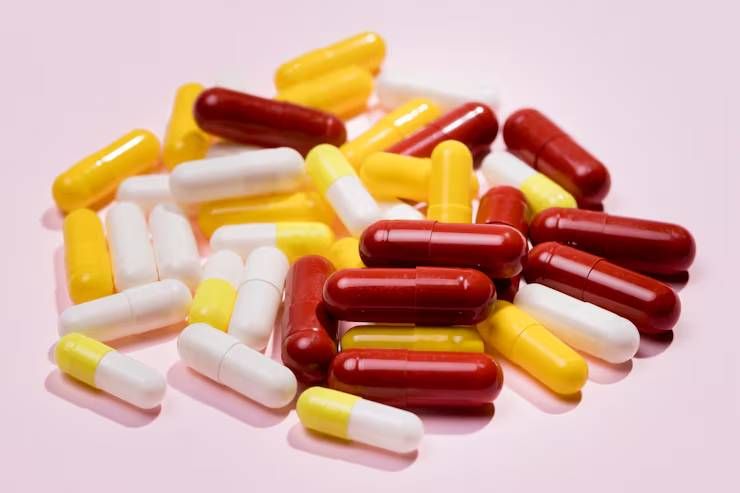
What Are Gelatin Capsules?
Gelatin capsules are pharmaceutical dosage forms consisting of a shell made primarily from gelatin, a protein obtained through the partial hydrolysis of collagen. The shell encloses one or more active ingredients, along with suitable excipients that support formulation stability, filling, and drug release.
Pharmaceutical gelatin is commonly obtained from processed bovine, porcine, or fish-derived materials. The source and properties of the gelatin influence the capsule shell's strength, flexibility, clarity, and manufacturing performance. Depending on the formulation, manufacturers may incorporate approved colorants, opacifiers, and other additives to achieve the required physical characteristics.
Gelatin capsules are particularly useful when a medicine is difficult to formulate as a conventional tablet or when the product requires a shell around powders, granules, pellets, liquids, or semisolid materials. The selected capsule design must remain compatible with its contents and meet the product's intended release and stability requirements.
Major Types of Gelatin Capsules
The pharmaceutical industry primarily uses hard gelatin capsules and soft gelatin capsules. These formats differ in their shell composition, manufacturing processes, filling methods, and suitable formulations.
Hard Gelatin Capsules
Hard gelatin capsules consist of two separate components: a capsule body and a cap. The body holds the formulation, while the cap fits over it to close the capsule. Their shells are relatively firm and are commonly used for powders, granules, pellets, and certain specialized formulations.
Hard gelatin capsules are produced separately from the filling operation. Empty shells are supplied to pharmaceutical manufacturers, who fill them using manual, semiautomatic, or fully automatic capsule filling machines. The filling equipment and formulation must be compatible with the capsule dimensions, material characteristics, and required dosage accuracy.
Hard capsules are widely used in solid oral dosage manufacturing because they accommodate different powder blends and multiparticulate formulations. Specialized hard capsules can also be designed for certain liquid or semisolid fills when the formulation, shell compatibility, and sealing method are appropriately established.
Soft Gelatin Capsules
Soft gelatin capsules, commonly called softgels, have a single-piece shell that is formed, filled, and sealed during the encapsulation process. Their shells contain gelatin, water, and plasticizers such as glycerol or sorbitol, which provide flexibility.
Softgels are frequently used for oils, lipid-based formulations, dissolved ingredients, suspensions, and selected semisolid products. They can be suitable for formulations in which the active ingredient is difficult to incorporate into a conventional dry powder dosage form.
Soft gelatin capsule manufacturing requires careful control of shell formulation, fill composition, sealing conditions, drying, and final moisture content. The compatibility between the shell and the enclosed formulation is especially important because unsuitable ingredients or processing conditions may affect leakage, stability, or capsule integrity.
Gelatin Capsules and Vegetarian Capsule Alternatives
Although gelatin remains an important capsule-shell material, pharmaceutical manufacturers also use alternatives such as hydroxypropyl methylcellulose (HPMC), pullulan, and certain starch-based materials. These materials can be appropriate when a product requires a nonanimal-derived shell or has specific formulation and storage requirements.
Vegetarian capsules are not gelatin capsules in the strict material sense, even though both formats serve similar dosage-delivery functions. Their moisture behavior, mechanical properties, and interactions with the formulation may differ. Manufacturers therefore select shell materials according to product requirements rather than assuming that different capsule types are interchangeable.
Gelatin Capsule Manufacturing Process
Gelatin capsule manufacturing involves multiple stages that transform pharmaceutical-grade raw materials into finished capsule shells or filled dosage units. The exact production sequence depends on whether the manufacturer produces empty hard capsules or finished softgel capsules.
Raw Material Selection and Preparation
The manufacturing process begins with the selection of gelatin that meets the required quality specifications. Important material characteristics include gel strength, viscosity, moisture behavior, purity, and suitability for pharmaceutical applications.
Manufacturers also assess the quality of water, colorants, processing aids, and other ingredients used in the shell formulation. Raw materials are checked against established specifications before entering production. Traceability and supplier qualification help maintain consistency between manufacturing batches.
Gelatin Solution Preparation
For capsule-shell production, gelatin is combined with water under controlled conditions to form a uniform solution or gel mass. The temperature, mixing conditions, concentration, and viscosity must be managed to support consistent shell formation.
Depending on the capsule design, manufacturers may add plasticizers, colorants, or opacifiers. Hard capsule shell formulations generally rely on water to provide flexibility, whereas softgel formulations use additional plasticizers to maintain a more elastic shell.
The prepared material is monitored for consistency and suitability before it moves to the forming stage. Inadequate mixing, unsuitable viscosity, or uncontrolled temperature conditions can affect shell thickness and physical quality.
Hard Capsule Shell Formation
Hard gelatin capsule shells are commonly produced using a dipping process. Stainless-steel pins are immersed in the prepared gelatin solution to form a thin coating around each pin.
The coated pins pass through controlled drying conditions, allowing the gelatin film to develop the required mechanical properties. Once sufficiently dried, the shells are removed from the pins, trimmed to the specified dimensions, and assembled into separate cap and body components.
Manufacturers inspect the resulting shells for defects such as cracks, uneven thickness, deformation, and dimensional inconsistencies. The empty capsules are then packaged under appropriate conditions before being supplied for pharmaceutical filling.
Softgel Encapsulation
Softgel manufacturing generally uses a rotary-die encapsulation machine. The machine forms two ribbons of gelatin-based shell material, brings them together around a measured quantity of fill material, and seals the capsule as it is shaped.
The fill formulation is prepared separately and may contain dissolved or suspended active ingredients in an appropriate vehicle. During encapsulation, the machine coordinates ribbon formation, fill delivery, capsule shaping, and sealing.
The newly formed capsules are then transferred for drying and subsequent inspection. Consistent ribbon thickness, accurate fill delivery, appropriate sealing conditions, and controlled machine operation are important for maintaining uniformity and reducing leakage or malformed units.
Drying, Finishing and Packaging
Drying is particularly important in softgel production because freshly formed capsules contain moisture that must be reduced to a suitable level. Manufacturers commonly use controlled drying environments and appropriate handling procedures to achieve the required shell characteristics.
After drying, capsules may undergo polishing, visual inspection, and other finishing operations. Hard capsules are also checked after filling to identify damaged shells, incomplete closures, powder residue, and other defects.
Finished products are packaged in suitable containers, including blister packs or bottles, depending on the formulation and packaging requirements. Packaging materials must help maintain product quality throughout the intended storage period.
Advanced Capsule Production Technologies
Modern capsule manufacturing facilities use specialized equipment to improve production consistency, operational control, and batch traceability. The choice of technology depends on the capsule format, production volume, formulation properties, and quality requirements.
Automatic Capsule Filling Machines
Automatic capsule filling machines separate empty capsules, orient the components, introduce the formulation, and close the filled units. Depending on the system, they may handle powders, pellets, granules, or compatible specialized fills.
These machines are designed to maintain consistent filling operations across large production batches. Equipment settings must be optimized for the formulation's flow characteristics, bulk density, particle size, and other properties that influence filling accuracy.
Rotary-Dye Softgel Encapsulation Machines
Rotary-die systems are widely used in industrial softgel manufacturing. They coordinate gelatin ribbon preparation, filling, capsule formation, and sealing in a continuous operation.
Modern equipment may incorporate controlled temperature zones, metered fill delivery, automated monitoring, and production data collection. These features help manufacturers maintain process consistency and identify deviations that could affect finished capsule quality.
Capsule Inspection and Sorting Systems
Automated inspection equipment can identify visible defects, dimensional irregularities, and selected capsule abnormalities. Depending on the system, inspection may use cameras, optical sensors, weight measurements, or other detection methods.
Automated sorting helps separate capsules that do not meet established specifications. However, visual inspection alone cannot establish every aspect of pharmaceutical quality; laboratory testing and process controls remain necessary.
Manufacturing Execution and Process Monitoring
Digital manufacturing systems can record production parameters, batch information, equipment status, and quality-related events. A manufacturing execution system (MES) may support electronic batch records, material traceability, and production monitoring.
Where automated systems are used, manufacturers must ensure that the systems are appropriately validated and that electronic records remain reliable and controlled. Digital monitoring supports manufacturing oversight but does not replace pharmaceutical quality management.
Pharmaceutical Applications of Gelatin Capsules
Gelatin capsules are used in several pharmaceutical applications because they can accommodate different formulations and manufacturing requirements.
Oral Solid Dosage Formulations
Hard gelatin capsules are frequently used for conventional oral medicines containing powders, granules, or pellets. They provide an enclosed dosage format that can be manufactured with different fill compositions.
Pharmaceutical developers may select capsules when a formulation's physical properties, manufacturing process, or intended product design make encapsulation appropriate. The final product must still demonstrate suitable stability, dosage uniformity, and release performance.
Modified-Release Drug Delivery
Some capsules contain coated pellets or granules designed to release an active ingredient according to a specified profile. The release behavior depends primarily on the formulation and the coatings or other delivery technologies used within the capsule.
For example, multiparticulate formulations may use functional coatings to achieve delayed or extended release. In these products, the capsule shell primarily contains the formulation, while the engineered particles or coatings provide the intended release characteristics.
Liquid and Lipid-Based Formulations
Softgels are commonly used for oil-based and other compatible liquid formulations. Enclosing an ingredient in a liquid-filled capsule can be useful when its solubility, stability, or formulation characteristics support this approach.
The pharmaceutical developer must evaluate the relationship between the active ingredient, the liquid vehicle, and the shell material. These interactions can affect leakage, shell integrity, storage stability, and the performance of the finished product.
Nutraceuticals and Dietary Supplements
Gelatin capsules are also used in the dietary supplement industry for suitable vitamins, minerals, herbal ingredients, and other formulated products. Hard capsules can contain dry blends or granules, while softgels are often used for oil-based formulations.
Products intended for dietary supplementation are subject to requirements that differ from those applicable to prescription medicines. Manufacturers must follow the regulations and quality standards relevant to the product category and intended market.
Gelatin Capsule Quality Control and Testing
Quality control is essential for ensuring that capsule shells and finished products meet established specifications. Testing requirements depend on the formulation, product classification, applicable pharmacopoeial standards, and intended use.
Capsule Weight and Fill Uniformity
Manufacturers assess capsule weight and the consistency of the fill quantity to verify that production remains within defined limits. Depending on the product, testing may include individual dosage-unit mass, active ingredient content, or other appropriate measures of dosage uniformity.
Weight measurements alone do not necessarily establish the quantity of active pharmaceutical ingredient in each capsule. Appropriate testing must be selected according to the product's formulation and applicable requirements.
Disintegration and Dissolution Testing
Disintegration testing evaluates whether a capsule breaks apart under specified test conditions. Dissolution testing examines how an active ingredient is released into a defined test medium over time.
These tests provide different types of information and are selected according to the dosage form and product specifications. Shell properties, formulation characteristics, storage conditions, and interactions between ingredients may affect the results.
Moisture Content and Shell Integrity
Moisture content is an important quality attribute because changes in moisture can influence capsule flexibility, brittleness, and handling performance. Excessive drying may make some shells brittle, while unsuitable humidity conditions can affect their mechanical properties.
Shell integrity testing can identify defects such as leakage, cracking, deformation, and weak seals. For softgels, seal quality is especially important because the contents are enclosed within a single-piece shell.
Microbiological Quality and Stability
Manufacturers apply appropriate microbiological controls to raw materials, production environments, and finished products. Testing and monitoring requirements depend on the formulation and applicable standards.
Stability studies evaluate whether a capsule maintains its required quality characteristics during storage. These studies may examine appearance, moisture, assay, degradation products, dissolution, packaging compatibility, and other relevant attributes.
Global Gelatin Capsule Manufacturers and Suppliers
The global pharmaceutical capsule supply chain includes empty capsule producers, pharmaceutical gelatin suppliers, capsule-filling equipment manufacturers, and contract development and manufacturing organizations. These businesses operate at different stages of production, so their products and capabilities should not be treated as equivalent.
Examples of established companies associated with capsule-shell production or pharmaceutical capsule manufacturing include the following.
Lonza and Capsugel
Lonza is associated with pharmaceutical capsule technologies through the Capsugel business. Its capsule-related activities are relevant to hard capsules, specialized dosage forms, and pharmaceutical development.
When assessing capsule products, pharmaceutical manufacturers should confirm the particular product range, manufacturing location, technical specifications, and current supply arrangements.
ACG
ACG operates in pharmaceutical capsules and related manufacturing technologies. Capsule-related offerings are relevant to pharmaceutical companies that require empty shells, encapsulation equipment, and associated production capabilities.
Supplier evaluation should consider the capsule materials, available sizes, compatibility with the formulation, quality documentation, and applicable regulatory requirements.
Qualicaps
Qualicaps is associated with hard capsule manufacturing and capsule-related technologies. Hard capsule products are used in pharmaceutical applications involving powders, granules, and other compatible formulations.
Pharmaceutical buyers generally evaluate capsule dimensions, shell properties, manufacturing consistency, and technical support when assessing a potential supplier.
Other Capsule Industry Participants
The broader supply chain also includes manufacturers of pharmaceutical gelatin, excipients, capsule-filling machines, and softgel production equipment. Some companies specialize in raw materials, while others supply finished empty shells or manufacture filled pharmaceutical products.
When comparing global manufacturers and suppliers, relevant factors include:
Material specifications: gelatin source, shell composition, and physical properties.
Quality systems: batch traceability, testing documentation, and applicable pharmaceutical quality standards.
Production capabilities: available capsule sizes, hard or soft capsule formats, and compatible formulations.
Regulatory documentation: information required for the intended product and target market.
Supply continuity: production capacity, lead times, packaging, and consistency between batches.
Technical compatibility: filling equipment requirements, formulation behavior, and storage conditions.
These factors help pharmaceutical manufacturers evaluate suppliers based on product suitability rather than company reputation alone.
Regulatory Standards for Pharmaceutical Capsule Manufacturing
Pharmaceutical capsules must comply with the regulatory requirements applicable to their classification, composition, production process, and intended market. Manufacturers are generally expected to operate appropriate quality management systems, maintain controlled manufacturing records, and demonstrate that finished products meet their specifications.
Pharmacopoeial standards may address capsule-shell identity, quality attributes, disintegration, dissolution, and other applicable tests. The specific requirements depend on the relevant monograph and dosage form.
Good Manufacturing Practice (GMP) principles support controlled production, appropriate documentation, equipment qualification, personnel training, and the investigation of deviations. Manufacturers must also establish suitable controls for raw materials, packaging components, contamination risks, and finished-product release.
Regulatory compliance is not established by capsule appearance alone. The finished pharmaceutical product must meet the applicable quality and performance requirements, supported by appropriate testing and documentation.
Challenges in the Gelatin Capsule Manufacturing Industry
Gelatin capsule manufacturers face several operational and technical challenges. Variation in gelatin properties can influence shell formation, mechanical strength, drying behavior, and filling performance. Maintaining consistent raw materials and process conditions is therefore important.
Moisture management is another major challenge. Capsule shells can become brittle or deform when exposed to unsuitable environmental conditions. Manufacturers must control production and storage environments according to the needs of the capsule material and formulation.
Formulation compatibility also requires attention. Certain ingredients may interact with gelatin, affect shell integrity, or alter the product's stability during storage. Such interactions must be assessed during formulation development and stability testing.
Manufacturers must also manage equipment performance, production efficiency, contamination controls, and changing regulatory expectations. Automation and digital monitoring can help improve process visibility, but their effectiveness depends on appropriate validation, maintenance, and personnel training.
Future Trends in Gelatin Capsule Production
The capsule manufacturing industry continues to develop technologies that support more consistent production, specialized drug delivery, and improved process monitoring. Automated capsule filling, advanced inspection systems, and digital batch records are becoming important components of modern pharmaceutical manufacturing operations.
Research into modified-release formulations and complex oral dosage forms is also expanding the range of products that can be delivered in capsules. In suitable applications, capsules may contain coated particles or other specialized formulations designed to achieve specific release characteristics.
At the same time, pharmaceutical developers are evaluating alternative shell materials for products that require different moisture properties, ingredient compatibility, or nonanimal-derived components. These materials complement rather than eliminate the role of conventional gelatin capsules.
Future manufacturing improvements will depend on continued progress in formulation science, material consistency, equipment design, and pharmaceutical quality management. The main objective remains the reliable production of dosage forms that meet their defined quality and performance requirements.
Conclusion
Gelatin capsules are an established dosage form in pharmaceutical manufacturing, offering flexibility for a wide range of powder, granule, liquid, and semisolid formulations. Hard gelatin capsules and softgel capsules serve different purposes and require distinct shell-forming, filling, and finishing processes.
Modern capsule production combines controlled raw material preparation, specialized encapsulation equipment, automated inspection, and rigorous quality testing. Pharmaceutical manufacturers and suppliers must also address formulation compatibility, moisture control, regulatory compliance, and supply-chain consistency.
As pharmaceutical formulations become more specialized, gelatin capsules will continue to play an important role in oral drug delivery. Their suitability for any particular product depends on the formulation, shell properties, manufacturing process, and evidence that the finished dosage form meets the required quality standards.
Disclaimer: The information provided in this article is for informational purposes only. We do not make any claims or guarantees regarding the accuracy, reliability, or completeness of the information presented. The content is not intended as professional advice and should not be relied upon as such. Readers are encouraged to conduct their own research and consult with appropriate professionals before making any decisions based on the information provided in this article.