Laboratory thermostats are temperature control devices used to maintain a selected temperature during scientific experiments, laboratory testing, and research activities. They help researchers establish stable thermal conditions for processes that require accurate and repeatable results. Depending on the equipment design, a laboratory thermostat may regulate the temperature of liquids, air, heating blocks, circulating fluids, or other materials.
Temperature plays an important role in chemistry, biology, pharmaceuticals, material science, and industrial research. Even a small temperature variation can influence a chemical reaction, affect the growth of microorganisms, or change the physical properties of a material. Laboratory thermostats help reduce these variations by monitoring temperature and adjusting heating or cooling output according to the selected settings.
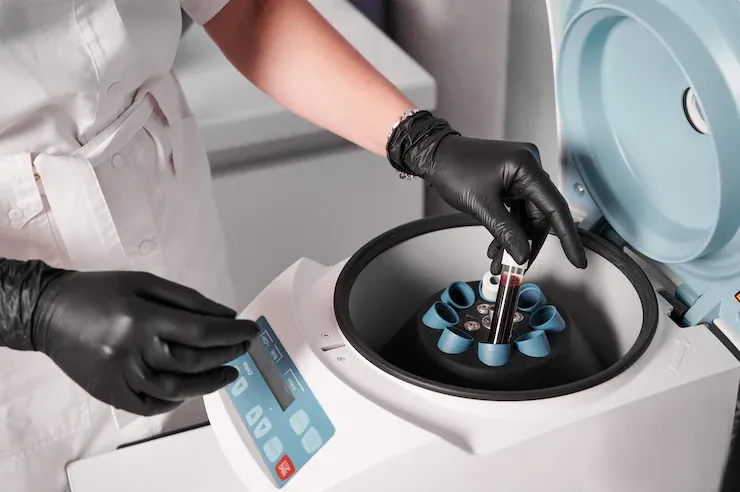
How Laboratory Thermostats Work
Temperature Measurement and Regulation
A laboratory thermostat typically uses a temperature sensor to measure the temperature of a controlled environment or material. Common sensor technologies include resistance temperature detectors, thermocouples, and thermistors. The sensor sends temperature information to a control unit, which compares the measured value with the desired setpoint.
When the measured temperature differs from the setpoint, the controller adjusts the heating or cooling mechanism. For example, a heating element may activate when the temperature falls below the selected value. In a refrigerated circulation system, cooling may increase when the temperature rises above the target.
Importance of Temperature Stability
Temperature stability refers to how consistently a device maintains its selected temperature over time. Temperature uniformity describes how evenly that temperature is distributed throughout the controlled area or fluid.
These characteristics are important because a device may display the correct temperature while different locations within the chamber or liquid remain at slightly different temperatures. Laboratory professionals therefore consider stability, uniformity, sensor accuracy, and response time when selecting temperature control equipment.
Types of Laboratory Thermostats
Digital Laboratory Thermostats
Digital laboratory thermostats use electronic controllers and digital displays to monitor and adjust temperature. Many models allow users to select a setpoint, observe the current temperature, and configure alarms or programmable temperature profiles.
These systems are commonly used in research laboratories, educational institutions, chemical testing facilities, and quality control environments. Depending on the model, digital controllers may also support data logging, external temperature probes, and communication with laboratory monitoring systems.
Circulating Thermostats
Circulating thermostats regulate the temperature of a fluid and circulate it through an external application or an integrated bath. The circulating liquid transfers heat between the thermostat and the equipment being controlled.
These systems are useful for maintaining consistent temperatures in laboratory reactors, analytical instruments, sample holders, and experimental assemblies. Heating and refrigerated circulation models are available for different operating requirements.
Immersion Thermostats
Immersion thermostats contain a temperature control unit designed to operate in a compatible liquid bath. They generally combine a heating element, temperature sensor, and circulation mechanism in a compact assembly.
They are used when laboratory personnel need to regulate the temperature of an existing bath without replacing the entire vessel. Compatibility with the bath material, liquid depth, required temperature range, and electrical safety specifications must be considered before use.
Heating Bath Thermostats
Heating bath thermostats maintain a controlled temperature in a liquid bath, often containing water or another suitable heat-transfer medium. Samples placed in compatible containers are heated indirectly through the surrounding liquid.
They are frequently used in sample preparation, chemical experiments, biological research, and procedures that require gentle and uniform heating. The achievable temperature depends on the bath design, heating capacity, fluid properties, and operating conditions.
Refrigerated Laboratory Thermostats
Refrigerated thermostats combine temperature regulation with a cooling system to maintain temperatures below ambient conditions. Some models can also provide heating, allowing them to control temperatures across a wider operating range.
These systems are used in material testing, chemical reaction studies, instrument temperature control, and experiments that require stable low-temperature conditions. Their cooling performance depends on the setpoint, ambient temperature, thermal load, and heat-transfer characteristics of the connected equipment.
Programmable Laboratory Thermostats
Programmable thermostats allow users to define temperature sequences over time. A typical program may include heating, holding at a specified temperature, cooling, and maintaining another setpoint.
This functionality is useful for experiments that require repeated thermal cycles or carefully controlled temperature changes. Programmable models can improve procedural consistency, although the actual results still depend on sensor placement, equipment calibration, and correct experimental methods.
Laboratory Thermostat Temperature Ranges
Laboratory thermostats are designed for different temperature requirements. Some operate near room temperature, while specialized systems support considerably lower or higher temperatures. The precise operating range depends on the equipment category and manufacturer specifications.
Thermostat category | Illustrative temperature range | Common application |
|---|---|---|
General-purpose heating bath | Approximately 20°C to 100°C | Sample heating and preparation |
Heating circulator | Approximately 20°C to 200°C | Controlled heating of external equipment |
Refrigerated circulator | Approximately −40°C to 200°C | Low-temperature testing and thermal control |
Immersion thermostat | Model-dependent, often suitable for bath heating | Temperature regulation in compatible vessels |
Precision laboratory circulator | Model-dependent; may cover sub-ambient to elevated temperatures | Analytical instruments and research systems |
Note: These ranges are illustrative rather than universal specifications. Some equipment operates outside these values. Always check the manufacturer's documented operating limits, permitted heat-transfer fluids, and safety requirements.
Factors That Affect the Operating Range
The temperature range of a laboratory thermostat depends on several technical factors. Heating capacity determines how quickly a system can reach a higher temperature, while refrigeration capacity influences how effectively it removes heat. Heat losses, insulation, circulation rate, and the volume of the controlled material can also affect performance.
The selected heat-transfer fluid is equally important. Water is suitable for many moderate-temperature applications, but specialized fluids may be required for lower or higher operating temperatures. Fluid viscosity, thermal stability, compatibility, and safety characteristics must match the intended application.
Scientific Applications of Laboratory Thermostats
Chemistry and Chemical Research
Laboratory thermostats are widely used in chemical experiments where temperature influences reaction rates, solubility, viscosity, and reaction selectivity. Maintaining a stable temperature can help researchers compare experimental results under consistent conditions.
Circulating thermostats are particularly useful for controlling the temperature of laboratory reactors and reaction vessels. In these applications, temperature control must be considered alongside mixing, pressure, chemical compatibility, and other process variables.
Pharmaceutical Research and Quality Control
Temperature control is important in pharmaceutical research, analytical procedures, formulation studies, and selected quality control tests. Laboratory thermostats can maintain specified thermal conditions for sample preparation, equipment operation, and stability-related experiments.
The appropriate temperature depends on the substance, testing method, and applicable laboratory procedure. Thermostats do not independently establish pharmaceutical quality or regulatory compliance; documented procedures, suitable instruments, calibration, and validated methods remain essential.
Biotechnology and Life Science Laboratories
Biotechnology laboratories use temperature-controlled equipment for various procedures involving biological materials, enzymes, buffers, and culture-related experiments. Certain reactions and biological processes require narrow temperature limits to produce consistent outcomes.
Thermostats may regulate the temperature of water baths, circulating systems, and specialized experimental equipment. They should not be confused with incubators, which are designed to provide specific environmental conditions such as controlled air temperature and, in some models, humidity or carbon dioxide concentration.
Material Science and Industrial Testing
Material properties can change with temperature. Laboratory thermostats help researchers investigate how materials respond to heating, cooling, and controlled thermal exposure.
These systems can support testing involving polymers, coatings, adhesives, electronic components, and other engineering materials. Depending on the test method, thermostats may regulate a liquid bath or maintain the temperature of equipment connected to a controlled fluid circuit.
Environmental and Academic Research
Universities and environmental research laboratories use thermostats in experiments involving water samples, chemical analysis, physical measurements, and temperature-sensitive procedures. Stable temperature conditions can reduce unwanted variation between measurements.
In educational laboratories, thermostats also demonstrate fundamental principles of heat transfer, feedback control, and experimental reproducibility. Their use allows students to observe how temperature influences physical and chemical processes.
Key Factors When Selecting Laboratory Thermostats
Temperature Accuracy and Stability
Temperature accuracy describes how closely the indicated or controlled temperature corresponds to the actual temperature. Stability describes how much the temperature fluctuates over time around the setpoint.
Laboratories conducting sensitive experiments may require tighter tolerances than those performing routine heating tasks. Selection should be based on the requirements of the specific procedure rather than the display resolution alone.
Heating and Cooling Capacity
Heating and cooling capacity determine how effectively a thermostat can bring a system to the desired temperature and maintain it under load. A unit that performs well with a small bath may respond slowly when connected to a larger reactor or instrument.
Laboratory professionals should consider the total fluid volume, heat generated by the experiment, heat losses, target temperature, and expected temperature changes during operation.
Temperature Uniformity and Circulation
Uniform temperature distribution is essential when samples or connected instruments must experience consistent conditions. Circulation helps reduce temperature gradients in liquid baths and external fluid circuits.
However, circulation requirements vary with the application. Excessive flow may be unsuitable for some experimental arrangements, while insufficient circulation may result in uneven temperature distribution.
Safety Features
Appropriate safety mechanisms help prevent equipment damage and reduce laboratory risks. Depending on the design, these may include overtemperature protection, low-fluid-level detection, cooling-system alarms, and automatic shutdown functions.
Laboratory personnel should also evaluate electrical protection, ventilation requirements, fluid compatibility, and the handling procedures associated with hot or cold surfaces. Safety controls must be appropriate for the actual application and operating environment.
Calibration and Maintenance
Calibration helps determine whether a thermostat's temperature measurement agrees with a suitable reference standard. The required calibration interval depends on equipment use, measurement requirements, quality procedures, and applicable regulations.
Routine maintenance may include checking sensors, inspecting electrical connections, cleaning compatible surfaces, examining fluid levels, and verifying circulation performance. Maintenance activities should follow the manufacturer's instructions and the laboratory's documented procedures.
Laboratory Thermostats Compared With Other Temperature Control Equipment
Laboratory thermostats are part of a broader category of temperature control equipment, but they serve different purposes from ovens, incubators, and general-purpose heaters.
Equipment | Main function | Typical distinction |
|---|---|---|
Laboratory thermostat | Regulates temperature in a bath or circulating fluid | Suitable for precise thermal control in compatible applications |
Laboratory oven | Heats materials in an enclosed chamber | Designed for dry heating and thermal processing |
Laboratory incubator | Maintains an environment for biological samples | May regulate additional environmental parameters |
Water bath | Provides indirect heating through a liquid | May include an integrated thermostat or use an external controller |
Refrigerated chamber | Maintains a controlled low-temperature environment | Controls the temperature of an enclosed space |
The appropriate equipment depends on the material being tested, the required temperature profile, the operating environment, and the relevant test procedure.
Common Challenges in Laboratory Temperature Control
Temperature Fluctuations
Temperature fluctuations can result from changing ambient conditions, inadequate heating or cooling capacity, sensor placement, or frequent opening of a controlled enclosure. Large thermal loads can also delay temperature recovery.
Reducing these effects may involve improving insulation, selecting suitable equipment capacity, maintaining proper circulation, and allowing the system to stabilize before measurements begin.
Incorrect Sensor Placement
A sensor measures the temperature at its location, which may not represent the temperature experienced by the sample. For example, a sensor near a heating element may report a higher temperature than the bulk liquid.
Correct sensor positioning, appropriate immersion depth, and independent verification can help improve confidence in temperature measurements.
Inadequate Calibration
A thermostat that has not been checked according to the laboratory's procedures may produce measurements outside the required tolerance. This can affect the interpretation and repeatability of experimental results.
Regular performance checks, traceable reference instruments where required, and documented calibration records help laboratories identify deviations and maintain measurement quality.
Future Developments in Laboratory Temperature Control
Laboratory temperature control is evolving through improvements in digital instrumentation, automated monitoring, energy efficiency, and data management. Some modern systems support programmable operation, remote monitoring, temperature logging, and integration with laboratory information or equipment management systems.
These capabilities can help researchers identify temperature deviations and maintain records of experimental conditions. However, digital connectivity does not automatically guarantee greater accuracy. Performance continues to depend on sensor quality, controller design, calibration, system capacity, and appropriate operating procedures.
Frequently Asked Questions About Laboratory Thermostats
What Is the Main Purpose of a Laboratory Thermostat?
A laboratory thermostat maintains a selected temperature for experiments, sample preparation, and scientific testing. It monitors temperature and adjusts heating or cooling output to reduce deviations from the desired setpoint.
What Temperature Can a Laboratory Thermostat Reach?
The operating range depends on the model and its design. Some laboratory thermostats are intended for moderate-temperature baths, while specialized heating and refrigerated circulators support wider temperature ranges. Manufacturer specifications should always be consulted.
What Is the Difference Between a Heating Thermostat and a Refrigerated Thermostat?
A heating thermostat primarily supplies heat to reach and maintain a target temperature. A refrigerated thermostat includes a cooling mechanism and may also provide heating, allowing it to regulate temperatures below ambient conditions and across a broader range.
Why Is Calibration Important for Laboratory Thermostats?
Calibration helps verify the accuracy of temperature measurements against a reference standard. It supports reliable experimental conditions, measurement consistency, and compliance with laboratory quality procedures where applicable.
Which Industries Use Laboratory Thermostats?
Laboratory thermostats are used in chemical research, pharmaceutical testing, biotechnology, material science, environmental analysis, academic research, and industrial quality control. The specific model depends on the temperature requirements and the nature of the experiment.
Conclusion
Laboratory thermostats are important instruments for controlling temperature in scientific research, testing, and experimental procedures. Different types, including digital thermostats, circulating systems, immersion units, heating baths, and refrigerated models, address different thermal requirements.
Understanding operating ranges, temperature stability, heating and cooling capacity, sensor accuracy, and safety features helps laboratories select suitable equipment for their applications. Proper calibration, maintenance, and operating practices further support reliable measurements and repeatable experimental conditions. By treating temperature control as an essential part of laboratory quality, researchers can improve the consistency and interpretation of scientific results.