Artificial intelligence is transforming higher education by changing how students learn, how educators teach, and how universities manage academic activities. From personalized learning systems to automated administrative processes, AI is becoming an important part of modern educational technology. Universities and colleges are exploring AI-powered tools to improve accessibility, support academic research, and make learning environments more adaptable to different student needs. These developments are also creating new opportunities for educational data analytics, digital classrooms, and online learning systems.
Higher education institutions operate in an increasingly digital environment where students expect flexible learning experiences and educators need effective ways to manage academic responsibilities. Artificial intelligence can help address these needs by analyzing learning patterns, supporting research activities, and providing timely academic assistance. However, its growing use also raises important questions about data privacy, academic integrity, digital accessibility, and the responsible use of technology. Understanding these opportunities and limitations helps students, teachers, administrators, and policymakers make informed decisions about AI adoption.
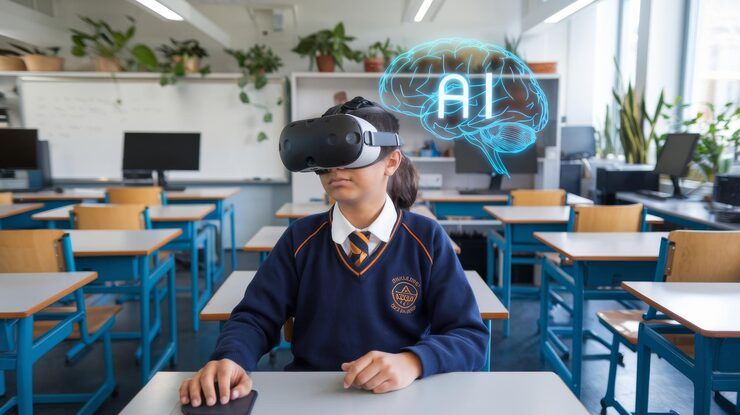
Understanding Artificial Intelligence in Education
What Is Artificial Intelligence in Higher Education?
Artificial intelligence in higher education refers to the use of computer systems that perform tasks associated with human intelligence, including language processing, pattern recognition, prediction, and decision support. These systems can analyze information, generate explanations, organize data, and respond to questions. In educational settings, AI applications may include intelligent tutoring systems, virtual learning assistants, automated feedback tools, and research support software.
AI technologies do not all function in the same way. Machine learning systems identify patterns in data, while natural language processing helps computers understand and generate human language. Generative AI can create text, summaries, explanations, and other content in response to instructions. Universities may use these technologies individually or combine them with existing learning management systems to support different academic activities.
Why AI Is Becoming Important in Universities
The growing importance of AI is connected to the expansion of online education, digital learning platforms, and data-driven academic management. Universities generate large amounts of information through assessments, attendance records, course activities, and student support systems. With appropriate safeguards, AI can help educators interpret some of this information and identify areas where additional academic support may be useful.
Another important factor is the diversity of student learning needs. Students differ in their prior knowledge, learning pace, language abilities, and accessibility requirements. AI-supported educational tools can provide alternative explanations, practice questions, and adaptable learning materials. These capabilities can complement traditional teaching methods, although meaningful educational outcomes still depend on curriculum quality, instructor guidance, and student participation.
Key Benefits of Artificial Intelligence in Higher Education
Personalized Learning Experiences
One of the most significant benefits of artificial intelligence in education is its potential to support personalized learning. Traditional classroom instruction often follows a common schedule, even though students may understand concepts at different speeds. AI-powered learning platforms can analyze responses to exercises and suggest additional practice or alternative explanations based on identified learning gaps.
For example, a student studying mathematics may receive more practice with a difficult concept, while another student who demonstrates stronger understanding can move toward more advanced exercises. This approach can help learners review topics more efficiently and encourage independent study. However, personalized recommendations should be reviewed carefully because inaccurate data or poorly designed algorithms can produce unsuitable suggestions.
Intelligent Tutoring and Academic Support
AI-based tutoring systems can provide explanations, practice activities, and feedback outside regular classroom hours. Students may use these systems to review lecture material, understand unfamiliar terminology, or prepare for examinations. Such tools can be particularly useful in large courses where instructors have limited time to provide individual assistance to every student.
AI tutoring is most effective when it supplements rather than replaces qualified educators. Automated explanations can contain errors, overlook important context, or present information with excessive confidence. Students should compare important answers with course materials, academic publications, and instructor guidance before relying on them for formal assignments or examinations.
Improved Teaching and Assessment
Artificial intelligence can assist educators with lesson preparation, question development, formative assessment, and the organization of learning materials. Some educational software can identify common mistakes in student responses and provide preliminary feedback. These functions may help instructors spend more time addressing complex questions, discussing concepts, and supporting students who need additional guidance.
AI can also support the development of alternative explanations and learning exercises for students with different levels of prior knowledge. Nevertheless, grading systems involving AI require careful oversight. Assessment decisions can affect academic progression, so educators should evaluate automated feedback for accuracy, consistency, fairness, and alignment with established learning objectives.
Better Educational Data Analytics
Educational data analytics involves examining information about teaching, learning, and institutional operations to understand patterns and support decisions. AI can help identify trends in course participation, assessment results, and learning platform activity. Universities may use these insights to review course design, improve academic advising, or identify subjects where students frequently experience difficulties.
Predictive analytics can also help institutions identify students who may benefit from additional academic support. Such predictions should not be treated as definitive judgments about an individual. Student circumstances are complex, and data may be incomplete or misleading. Institutions should combine analytical findings with professional judgment, transparent procedures, and appropriate privacy protections.
Major Applications of AI in Higher Education
AI-Powered Learning Management Systems
Learning management systems provide digital environments for course materials, assignments, assessments, and communication between students and instructors. AI integration can extend these platforms by supporting content recommendations, automated reminders, learning progress analysis, and conversational assistance.
These features may help students organize their academic activities and locate relevant course information. For educators, they can provide a clearer view of participation patterns and frequently misunderstood concepts. The quality of these applications depends on reliable information, accessible design, appropriate configuration, and the institution's ability to protect student records.
AI in Academic Research
Artificial intelligence is increasingly used to support academic research through literature discovery, document summarization, data analysis, coding assistance, and the exploration of complex datasets. Researchers may use AI tools to organize research questions, identify relevant publications, or examine possible relationships within large collections of information.
However, AI-generated research material requires careful verification. Tools may produce inaccurate references, misunderstand a study's findings, or overlook limitations in the evidence. Researchers remain responsible for checking original sources, protecting confidential information, documenting methods, and maintaining research integrity. AI assistance should not replace appropriate methodology or independent scholarly judgment.
Virtual Classrooms and Online Education
Online education has expanded access to learning for students who cannot regularly attend a physical campus. AI can support virtual classrooms through automated transcription, caption generation, language assistance, content recommendations, and conversational learning support. These applications can help students review lessons and navigate digital learning environments.
AI-enabled accessibility features may also benefit learners who require alternative ways to access educational materials. Nevertheless, institutions must evaluate whether these tools work accurately across languages, accents, disabilities, and technical environments. Reliable internet access, accessible course design, and human support remain important components of effective online education.
Administrative Automation in Universities
University administration involves activities such as processing routine inquiries, organizing student records, coordinating schedules, and communicating academic information. AI-enabled systems can help automate repetitive tasks and direct common questions to relevant departments. This can reduce some administrative workloads and make routine information easier to access.
Administrative automation must be designed with clear limits. Decisions involving admissions, disciplinary matters, financial assistance, and student eligibility may require contextual understanding and formal human review. Institutions should explain when AI is being used and provide procedures for correcting inaccurate information or challenging consequential decisions.
Challenges and Risks of AI in Higher Education
Data Privacy and Cybersecurity
AI-powered education systems may process personal information, academic records, assessment responses, and learning activity data. If this information is collected or stored without adequate safeguards, it may create privacy and cybersecurity risks. Universities need clear policies explaining what information is collected, why it is necessary, who can access it, and how long it is retained.
Strong access controls, secure data handling, staff training, and regular system reviews can reduce these risks. Institutions should also examine the privacy practices of third-party educational technology providers before adopting their products. Student information should not be entered into public AI tools unless the applicable privacy rules and institutional policies permit it.
Academic Integrity and Responsible AI Use
Generative AI can help students understand difficult topics, brainstorm ideas, and improve the clarity of their writing. At the same time, submitting AI-generated work as independent research may violate academic integrity rules. Students may also become overly dependent on automated explanations instead of developing their own analytical and problem-solving abilities.
Universities can address these challenges by establishing clear guidelines about acceptable AI assistance, disclosure requirements, and the use of AI in assessments. Educators can design assignments that emphasize critical thinking, oral explanations, practical application, and the evaluation of sources. The objective is to help students use technology responsibly while preserving independent learning.
Algorithmic Bias and Unequal Access
AI systems learn from the data and design choices used to develop them. If training data underrepresents particular groups or languages, the resulting systems may provide less accurate results for some students. Biased recommendations or automated assessments can create unfair outcomes when institutions fail to evaluate their performance across different populations.
Access to technology is another important concern. Students may have different levels of internet connectivity, suitable devices, and familiarity with digital learning tools. Universities should consider these differences when introducing AI-based educational systems. Accessible alternatives, digital literacy programs, and regular fairness assessments can help make technology adoption more inclusive.
Accuracy and Dependence on Automated Tools
AI systems can produce convincing but incorrect explanations, outdated information, or fabricated references. These limitations are especially important in academic research, technical subjects, and assignments that require precise evidence. Students and educators should verify important claims against reliable academic sources and official course materials.
Excessive dependence on AI can also reduce opportunities to practice independent reasoning, writing, and problem-solving. Effective teaching should therefore encourage students to explain their reasoning, evaluate evidence, and understand the methods behind their answers. AI should support intellectual development rather than replace it.
The Future of Artificial Intelligence in Higher Education
Emerging Trends in Educational Technology
Future developments in educational AI may include more sophisticated tutoring systems, improved multilingual learning support, adaptive assessment, and stronger integration with digital learning platforms. Advances in data analytics may also help universities evaluate course effectiveness and identify areas where teaching resources need improvement.
Another emerging direction is the development of AI literacy as part of higher education curricula. Students in many disciplines may need to understand how AI systems work, how their outputs should be evaluated, and what ethical considerations apply to their use. These skills can help graduates approach AI-supported workplaces with greater awareness and responsibility.
Human-Centered and Responsible AI Adoption
The long-term value of AI in education will depend on how effectively institutions balance technological capabilities with human judgment. Universities need policies that address transparency, accountability, accessibility, academic freedom, and data protection. They should also provide training so that students, faculty members, and administrators understand both the capabilities and limitations of AI tools.
Human-centered AI places educational goals ahead of automation for its own sake. Technology should help educators teach more effectively, give students meaningful academic support, and improve institutional decision-making without weakening privacy or fairness. Regular evaluation can help universities determine whether an AI application genuinely improves learning outcomes and whether its risks remain manageable.
Conclusion
Artificial intelligence is transforming higher education through personalized learning, intelligent tutoring, academic research support, educational data analytics, and administrative automation. These applications can help universities respond to diverse learning needs, improve access to educational resources, and organize academic activities more effectively. At the same time, privacy concerns, algorithmic bias, academic integrity, and the accuracy of AI-generated information require careful attention.
The future of AI in higher education will depend on responsible implementation, effective institutional policies, and continued involvement from educators and students. By combining AI capabilities with human expertise, critical thinking, and transparent decision-making, universities can explore new educational opportunities while protecting the quality and integrity of academic learning.