
Industrial 3D printers have transformed modern manufacturing by introducing advanced additive manufacturing methods that create complex components layer by layer. Unlike traditional manufacturing processes that remove material through cutting or machining, 3D printing builds objects directly from digital designs.
Today, industrial 3D printing is used across aerospace, automotive, healthcare, engineering, and product development industries. These advanced systems help manufacturers create prototypes, customized components, and production parts with greater design flexibility.
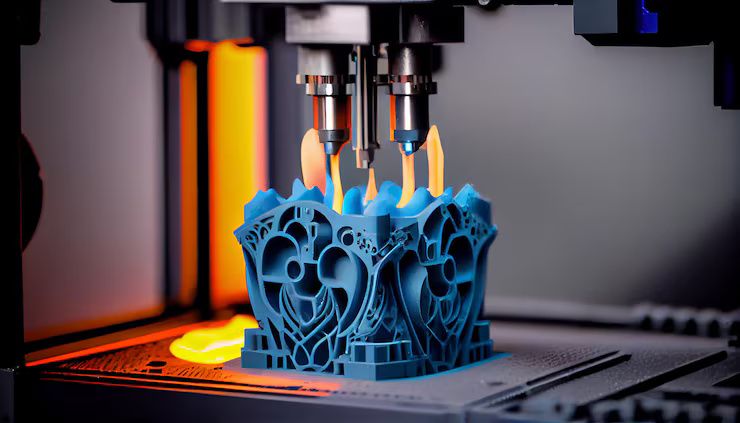
As additive manufacturing technology continues to evolve, industrial 3D printers are becoming an important part of smart manufacturing and Industry 4.0 environments.
This guide explains industrial 3D printing technologies, production systems, materials, and applications across different industrial sectors.
What Are Industrial 3D Printers?
Industrial 3D printers are advanced manufacturing machines designed to produce high-quality components using additive manufacturing techniques. These systems convert digital 3D models into physical objects by depositing or solidifying material layer by layer.
Unlike consumer-level 3D printers, industrial systems are built for demanding production environments where accuracy, repeatability, and material performance are essential.
Industrial 3D printers are commonly used for:
- Functional prototypes
- Engineering components
- Customized parts
- Manufacturing tools
These machines support both product development and industrial production processes.
Importance of Additive Manufacturing in Modern Industry
Additive manufacturing has changed how engineers and manufacturers approach product design. Traditional manufacturing methods often require multiple production steps, while 3D printing allows complex geometries to be created directly from digital models.
The technology provides several advantages:
- Greater design flexibility
- Faster product development cycles
- Reduced material waste
- Ability to create complex structures
For example, aerospace manufacturers use additive manufacturing to create lightweight components with complex internal designs that may be difficult to produce using conventional methods.
How Industrial 3D Printing Works
The industrial 3D printing process begins with a digital design created using computer-aided design (CAD) software. The model is then converted into instructions that guide the printer during production.
Digital Design Preparation
The first stage involves creating or modifying a three-dimensional digital model.
Engineers analyze the design, optimize the structure, and prepare the file for printing.
Modern software tools help improve:
- Design accuracy
- Material usage
- Production efficiency
Layer-by-Layer Manufacturing
During printing, the machine creates the object by adding thin layers of material.
Each layer is carefully positioned according to the digital instructions until the complete component is formed.
Post-Processing
After printing, many components require additional finishing processes.
These may include:
- Surface treatment
- Heat processing
- Cleaning
- Precision finishing
Post-processing improves the final appearance and performance of printed parts.
Types of Industrial 3D Printing Technologies
Different additive manufacturing technologies are designed for specific materials, applications, and production requirements.
Fused Deposition Modeling (FDM)
FDM is one of the most widely recognized 3D printing methods. It works by depositing melted thermoplastic material through a heated nozzle.
Industrial FDM systems are used for prototypes, manufacturing aids, and functional components.
They are valued for:
- Material flexibility
- Cost-effective production
- Fast design testing
Selective Laser Sintering (SLS)
SLS uses a laser to fuse powdered materials layer by layer.
This technology can create strong and complex components without requiring traditional support structures.
SLS is commonly used in engineering applications where durability and design complexity are important.
Selective Laser Melting (SLM)
SLM is a metal additive manufacturing process that uses a powerful laser to fully melt metal powder.
It is widely used for producing high-performance metal components in industries such as aerospace and automotive engineering.
Stereolithography (SLA)
SLA uses ultraviolet light to cure liquid resin into solid layers.
This technology provides excellent surface quality and high accuracy, making it suitable for detailed prototypes and precision components.
Direct Metal Laser Sintering (DMLS)
DMLS creates metal parts by fusing powdered metal materials using laser technology.
It is commonly used for producing complex metal components that require strong mechanical properties.
Materials Used in Industrial 3D Printing
Material selection plays an important role in determining the strength, durability, and performance of printed components.
Polymer Materials
Industrial 3D printers commonly use advanced polymers because of their flexibility and lightweight properties.
Examples include:
- Nylon
- ABS
- Polycarbonate
- Engineering-grade plastics
These materials are widely used for prototypes, tools, and functional parts.
Metal Materials
Metal additive manufacturing uses materials designed for demanding applications.
Common metals include:
- Stainless steel
- Titanium alloys
- Aluminum alloys
- Nickel-based materials
These materials are used when high strength and temperature resistance are required.
Composite Materials
Composite materials combine different properties to improve performance.
They are used in applications requiring lightweight structures with enhanced strength and durability.
Industrial Production Systems
Modern industrial 3D printing systems are designed to integrate with advanced manufacturing environments.
Automated Production Workflows
Many facilities combine 3D printers with automation systems to improve production efficiency.
Automation helps manage:
- Material handling
- Production monitoring
- Quality inspection
Digital Manufacturing Integration
Industrial 3D printers are an important part of digital manufacturing ecosystems.
They connect with software platforms that support design management, production planning, and performance monitoring.
Rapid Prototyping Systems
One of the earliest and most common uses of industrial 3D printing is rapid prototyping.
Engineers can quickly create physical models to evaluate design concepts before moving toward large-scale production.
This reduces development time and improves product innovation.
Industrial Applications of 3D Printers
Industrial 3D printing is used across many sectors because of its ability to produce complex and customized components.
Aerospace Industry
The aerospace sector uses additive manufacturing to create lightweight and high-performance components.
3D printing helps engineers design parts with optimized structures while reducing unnecessary material usage.
Automotive Manufacturing
Automotive companies use industrial 3D printers for prototypes, tooling components, and specialized vehicle parts.
The technology supports faster design testing and allows engineers to experiment with innovative concepts.
Healthcare and Medical Applications
Healthcare industries use 3D printing for customized medical solutions and research applications.
Examples include:
- Anatomical models
- Customized implants
- Surgical planning models
The technology allows professionals to create patient-specific designs based on individual requirements.
Industrial Machinery
Manufacturers use 3D printing to produce machine components, production tools, and replacement parts.
The flexibility of additive manufacturing helps improve equipment development and maintenance processes.
Architecture and Construction
3D printing technology is also being explored in construction and architectural applications.
Large-scale printing systems can create structural elements and experimental building designs with unique geometries.
Benefits of Industrial 3D Printing
Industrial 3D printers provide several advantages compared with traditional manufacturing approaches.
Important benefits include:
- Faster product development
- Complex design capabilities
- Reduced material waste
- Customized production possibilities
These advantages make additive manufacturing valuable for industries focused on innovation and efficiency.
Challenges of Industrial 3D Printing
Although industrial 3D printing offers many benefits, several challenges remain.
Material limitations, production speed, post-processing requirements, and quality consistency can affect wider adoption.
Manufacturers must carefully evaluate factors such as material performance, production requirements, and quality standards before implementing additive manufacturing systems.
Continuous improvements in technology are helping address these challenges.
Future Trends in Additive Manufacturing
The future of industrial 3D printing is closely connected with automation, artificial intelligence, and advanced materials.
Emerging developments include:
- AI-assisted design optimization
- Multi-material printing
- Faster production systems
- Sustainable manufacturing materials
As these technologies improve, additive manufacturing is expected to become an increasingly important part of smart factories and digital production environments.
Conclusion
Industrial 3D printers have become a major innovation in modern manufacturing by enabling flexible, efficient, and highly customized production. Through advanced additive manufacturing technologies, industries can create complex components while improving design possibilities and reducing material waste.
From aerospace and automotive engineering to healthcare and industrial machinery, 3D printing continues to expand its applications across multiple sectors. As technology advances, industrial additive manufacturing will play a significant role in shaping the future of production systems and engineering innovation.