Industrial chemical storage tanks are engineered vessels designed to contain, protect, and manage chemicals used in manufacturing, processing, utilities, agriculture, pharmaceuticals, water treatment, and other industrial environments. Their design depends on chemical properties, storage capacity, operating temperature, pressure, material compatibility, and site conditions.
Modern chemical storage tanks can incorporate specialized linings, corrosion-resistant materials, monitoring systems, secondary containment, level sensors, and automated controls. Manufacturing processes range from rotational molding and welding to filament winding and advanced fabrication methods, depending on the tank material and configuration.
Context
What Are Industrial Chemical Storage Tanks?
Industrial chemical storage tanks are containers designed for controlled storage of liquid, gaseous, or sometimes specialized chemical materials. They can range from relatively small process vessels to large stationary tanks used at manufacturing facilities and treatment plants.
Tank selection requires consideration of the chemical being stored and the conditions under which it will be handled. Factors such as concentration, temperature, vapor characteristics, density, corrosiveness, and compatibility with tank materials can influence the engineering specification.
Common Tank Technologies
Chemical storage tanks are available in several configurations.
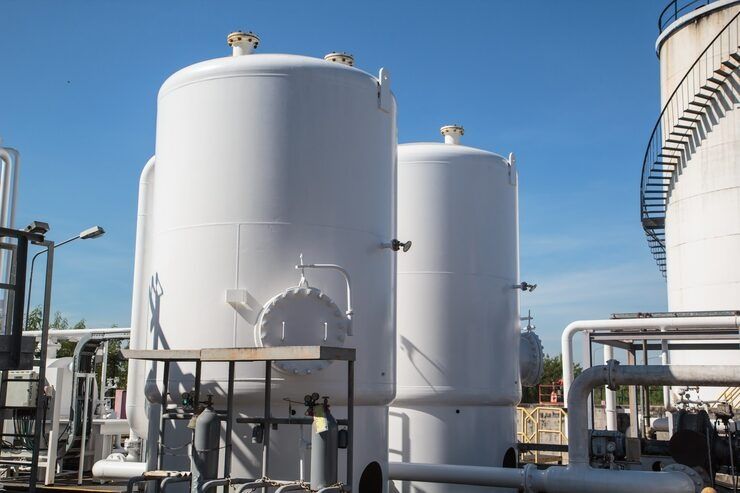
Vertical storage tanks are widely used where large volumes need to be stored in a relatively compact footprint. They may be manufactured from steel, stainless steel, fiberglass-reinforced plastic, or thermoplastic materials.
Horizontal tanks are useful where site layout, transportation, or installation requirements favor a horizontal configuration.
Double-wall tanks contain an inner tank and an outer containment layer. The space between the two walls can provide an additional containment barrier and may incorporate leak detection.
Lined tanks use a compatible internal lining to protect the structural tank material from chemical attack.
Pressure-rated vessels are engineered for applications involving pressure above normal atmospheric conditions and require specialized design and inspection procedures.
Major Tank Materials
Material selection is one of the most important aspects of chemical tank engineering.
| Material | Characteristics | Common Applications |
|---|---|---|
| Carbon Steel | High mechanical strength | Compatible industrial chemicals |
| Stainless Steel | Corrosion resistance and durability | Chemical and pharmaceutical processing |
| HDPE | Chemical resistance and relatively low weight | Acids, alkalis, water treatment |
| Polypropylene | Chemical resistance at suitable temperatures | Process chemicals |
| FRP | Corrosion resistance and structural strength | Water treatment and chemical processing |
| PVC | Chemical resistance | Selected low-temperature applications |
| Rubber-Lined Steel | Protective internal barrier | Aggressive chemical environments |
No single material is appropriate for every chemical. Compatibility testing and engineering evaluation are important before selecting a tank material.
Tank Manufacturing Processes
Manufacturing methods depend on material and tank design.
Steel tanks are commonly fabricated by cutting, forming, welding, inspection, surface preparation, and coating or lining. Welding procedures can be selected according to material grade, thickness, geometry, and applicable fabrication requirements.
Thermoplastic tanks may be produced through rotational molding, extrusion welding, or other fabrication techniques. Fiberglass-reinforced plastic tanks commonly involve resin systems combined with reinforcing fibers through controlled fabrication processes.
Key Tank Components
A chemical storage tank can include numerous supporting components:
- Inlet and outlet connections
- Manways
- Vent systems
- Overflow arrangements
- Level indicators
- Level transmitters
- Temperature sensors
- Agitators
- Sampling connections
- Drain systems
- Secondary containment
- Leak detection
- Inspection openings
The final configuration depends on the stored chemical and operational requirements.
Importance
Why Chemical Storage Tank Engineering Matters
Chemical storage involves more than selecting a container with sufficient volume. The tank must remain compatible with the stored material under expected operating conditions.
Incorrect material selection can result in corrosion, degradation, leakage, contamination, or premature equipment failure. Engineering evaluations therefore consider chemical compatibility, temperature, concentration, mechanical loading, environmental exposure, and expected operating life.
Supporting Industrial Processing
Chemical storage tanks are often integrated into larger process systems. A tank may receive chemicals from transportation containers and then supply them to dosing systems, reactors, treatment equipment, or production lines.
Pumps, valves, piping, instrumentation, and control systems can be connected to the storage vessel to create a controlled material-handling system.
Global Manufacturers and Suppliers
Industrial tank manufacturers and suppliers operate across multiple regions and produce equipment for different chemical environments. Their capabilities may include tank fabrication, material selection, engineering documentation, instrumentation integration, installation guidance, inspection, and replacement components.
Organizations evaluating manufacturers can examine technical specifications, material compatibility documentation, manufacturing standards, inspection procedures, applicable certifications, and project experience relevant to the intended application.
Industrial Applications
Chemical storage tanks are used in numerous industries.
Water and wastewater treatment: Tanks can contain chemicals used for pH adjustment, disinfection, coagulation, and other treatment processes.
Chemical manufacturing: Production facilities use tanks for raw materials, intermediate chemicals, finished materials, and process additives.
Pharmaceutical manufacturing: Specialized vessels can be used for chemical and process-material storage where hygiene and material compatibility are important.
Food processing: Selected chemical storage systems can support sanitation, cleaning, and water-treatment operations.
Agriculture: Chemical storage infrastructure can be used for fertilizers, treatment chemicals, and other agricultural materials subject to applicable regulations.
Mining and metals processing: Chemical storage tanks can support extraction, separation, treatment, and process-water operations.
Petrochemical facilities: Tanks can be integrated into chemical handling, processing, and utility systems.
Secondary Containment
Secondary containment is an important part of chemical storage planning. A containment structure can provide an additional barrier around a primary storage tank and associated equipment.
The appropriate design depends on the chemical, tank capacity, local regulations, environmental conditions, and facility risk assessment.
Recent Updates
Advanced Corrosion Protection
Modern tank systems increasingly use material combinations and protective barriers designed for specific chemical environments.
Examples include specialized coatings, polymer linings, corrosion-resistant alloys, and composite structures. Selection depends on chemical compatibility rather than material category alone.
Smart Tank Monitoring
Digital instrumentation can provide continuous information about tank conditions.
Level sensors can track inventory, while temperature sensors can monitor thermal conditions. Leak-detection systems can provide additional information for double-wall or secondary-containment arrangements.
Connected monitoring systems can send data to plant control platforms, dashboards, or maintenance systems.
Automated Chemical Handling
Automation can connect storage tanks with pumps, valves, dosing systems, and process controls.
For example, a level transmitter can provide information to a control system, which can then manage material transfer according to configured operating parameters.
Automation can also help reduce manual intervention during routine material movement, although appropriate safeguards and human oversight remain important.
Sustainable Tank Technologies
Environmental considerations are influencing tank design and material selection. Longer equipment life, improved corrosion resistance, leak detection, recyclable materials, and reduced maintenance requirements can contribute to resource efficiency.
The appropriate environmental strategy depends on the chemical, facility design, material characteristics, and applicable regulatory requirements.
Improved Inspection Technologies
Inspection methods continue to develop for industrial storage equipment. Depending on tank construction, inspections can include visual examination, thickness measurements, weld inspection, leak testing, and other nondestructive testing methods.
Digital inspection records can help organizations maintain equipment histories and identify changes over time.
Laws or Policies
Chemical Storage Regulations
Chemical storage requirements vary by country, chemical classification, facility type, and storage quantity. Regulations may address tank construction, fire protection, containment, labeling, emergency planning, environmental protection, and worker safety.
Organizations should identify the specific regulations applicable to their chemicals and operating location.
Occupational Safety
Personnel working around chemical storage systems may require appropriate training, personal protective equipment, emergency procedures, and controlled access.
Facilities can also establish procedures for loading, unloading, sampling, inspection, maintenance, spill response, and abnormal operating conditions.
Environmental Protection
Environmental requirements can address accidental releases, groundwater protection, air emissions, waste management, and secondary containment.
Tank systems should therefore be considered as part of the facility's wider environmental management framework.
Inspection and Documentation
Depending on the tank type and regulatory environment, documentation may include:
- Material certificates
- Welding records
- Inspection reports
- Pressure or leak-test records
- Coating or lining specifications
- Tank drawings
- Maintenance records
- Calibration records
- Operating procedures
Documentation requirements vary by jurisdiction and equipment category.
Applicable Standards
Industrial facilities may refer to recognized standards covering tank design, fabrication, inspection, pressure equipment, chemical handling, and occupational safety.
The relevant standard depends on factors such as tank material, pressure, geometry, chemical characteristics, location, and intended use.
Tools and Resources
Chemical Compatibility Databases
Chemical compatibility resources can help engineers evaluate whether a material is suitable for contact with a particular chemical.
Compatibility information should be reviewed alongside concentration, temperature, exposure duration, mechanical requirements, and manufacturer documentation.
Tank Design Software
Engineering software can assist with vessel sizing, structural calculations, stress analysis, fluid behavior, and configuration studies.
For complex systems, engineers may use computational tools alongside established design standards and physical inspection procedures.
Monitoring Systems
Modern tanks can use:
- Radar level sensors
- Ultrasonic level sensors
- Pressure transmitters
- Temperature sensors
- Leak detectors
- Flow meters
- Digital control systems
These instruments can provide operational information and support automated monitoring.
Maintenance and Inspection Systems
Computerized maintenance management systems can store inspection schedules, maintenance histories, equipment records, and work instructions.
Connecting tank records with maintenance systems can help organizations maintain structured equipment histories and plan periodic inspections.
FAQs
What are industrial chemical storage tanks?
Industrial chemical storage tanks are engineered vessels used to contain chemicals under defined operating conditions. They are manufactured from materials such as steel, stainless steel, HDPE, polypropylene, fiberglass-reinforced plastic, and other compatible materials.
Which materials are used for chemical storage tanks?
Common materials include carbon steel, stainless steel, HDPE, polypropylene, PVC, FRP, and lined steel. The appropriate selection depends on chemical compatibility, temperature, concentration, mechanical requirements, and environmental conditions.
How are chemical storage tanks manufactured?
Manufacturing methods depend on the tank material. Steel tanks may involve cutting, forming, welding, inspection, and coating or lining. Plastic tanks can use rotational molding or fabricated thermoplastic construction, while FRP tanks commonly use resin and reinforcing fibers.
What industries use chemical storage tanks?
Chemical storage tanks are used in chemical manufacturing, water treatment, pharmaceuticals, agriculture, mining, metals processing, petrochemicals, manufacturing, and other industrial applications.
How are chemical storage tanks monitored?
Tank monitoring can use level sensors, temperature instruments, leak detection, flow measurement, and digital control systems. Connected systems can transmit information to plant dashboards or control platforms.
Conclusion
Industrial chemical storage tanks are engineered systems that combine containment, material compatibility, structural design, monitoring, and operational controls. Tank technologies range from steel and stainless-steel vessels to HDPE, polypropylene, FRP, and lined configurations.
Manufacturing processes vary according to tank construction and material, while modern systems increasingly incorporate digital monitoring, leak detection, automation, and inspection technologies. Proper tank selection requires consideration of chemical properties, operating conditions, capacity, environmental factors, applicable standards, and facility procedures.
Global manufacturers and suppliers support a wide range of industrial applications, but technical specifications should always be evaluated against the actual chemical and operating environment. A structured engineering and compliance approach helps organizations manage storage systems throughout their operating life.