
Industrial workplaces are constantly evolving as companies seek new ways to improve productivity, workplace safety, and operational efficiency. While automation and robotics have transformed manufacturing processes, another innovative technology is gaining attention across industries: industrial exoskeletons.
Industrial exoskeletons are wearable robotic systems designed to support human movement, reduce physical strain, and enhance worker performance during demanding tasks. These technologies combine engineering, robotics, ergonomics, and advanced materials to create systems that work alongside people rather than replacing them.
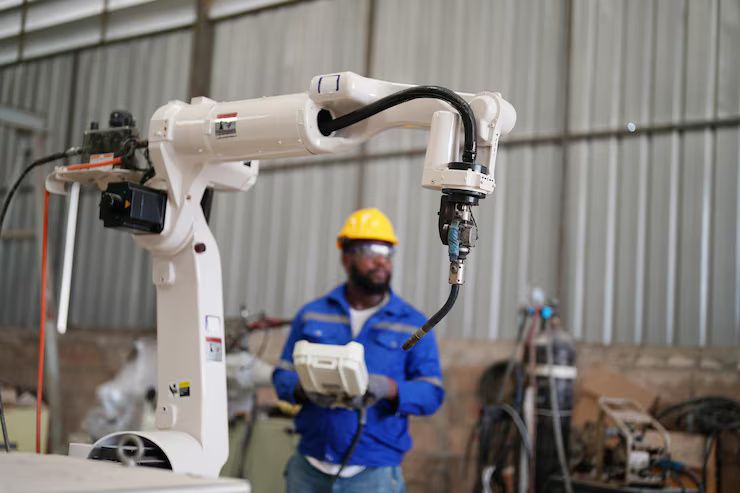
As industries focus on improving workplace conditions and operational performance, industrial exoskeletons are becoming an important part of modern manufacturing, logistics, construction, and industrial operations.
What Are Industrial Exoskeletons?
Industrial exoskeletons are wearable mechanical structures designed to support and enhance human physical capabilities. They are worn externally and help reduce stress on muscles and joints during physically demanding activities.
Unlike traditional industrial robots that operate independently, exoskeletons are designed to work directly with people. They assist movement, provide support during repetitive tasks, and help distribute physical loads more efficiently.
These systems can be worn on different parts of the body depending on the intended application, including the back, shoulders, arms, or lower body.
Why Industrial Exoskeletons Are Gaining Attention
Many industrial tasks require repetitive movements, lifting activities, and prolonged physical effort. Over time, these activities can contribute to fatigue and reduced productivity.
Industrial organizations are exploring wearable robotics because they can help workers perform demanding tasks more comfortably while maintaining efficiency.
Several factors are driving adoption:
- Increased focus on workplace ergonomics
- Growth of advanced industrial automation
- Demand for productivity improvements
- Rising interest in worker assistance technologies
As wearable robotics technology continues to improve, adoption is expanding across multiple industrial sectors.
Understanding Wearable Robotics Technology
Wearable robotics combines mechanical engineering, sensor technology, and human-machine interaction systems to create supportive equipment that moves with the user.
These systems are designed to complement natural body movements rather than restrict them.
Passive Exoskeleton Systems
Passive exoskeletons operate without motors or external power sources.
They use springs, mechanical structures, and energy-storing components to redistribute loads and support specific body movements.
Because of their simple design, passive systems are often lightweight and easy to integrate into industrial environments.
Active Exoskeleton Systems
Active exoskeletons incorporate powered components such as electric motors and advanced control systems.
These systems provide additional assistance during lifting, carrying, and repetitive tasks.
The integration of sensors allows the device to respond to user movements and provide targeted support when needed.
Hybrid Exoskeleton Designs
Some wearable systems combine passive and active technologies.
This approach helps balance mobility, support, and operational efficiency while maintaining user comfort.
Hybrid systems are becoming increasingly common as manufacturers seek versatile solutions for industrial applications.
Key Components of Industrial Exoskeletons
Modern exoskeleton systems consist of several integrated technologies working together to support human movement.
Structural Framework
The frame serves as the foundation of the exoskeleton.
It is typically constructed using lightweight materials designed to provide strength without restricting mobility.
Advanced materials help ensure durability while maintaining user comfort.
Sensors and Monitoring Systems
Sensors allow the exoskeleton to detect movement and understand user actions.
These systems monitor body position, movement patterns, and physical activity to provide appropriate assistance.
Real-time monitoring improves responsiveness and overall performance.
Support Mechanisms
Support mechanisms are responsible for transferring loads and reducing strain on specific body areas.
Depending on the design, they may assist with lifting, overhead work, bending, or carrying activities.
Control Systems
Powered exoskeletons use intelligent control systems to coordinate movement assistance.
These systems analyze sensor data and adjust support levels based on user activity and operational requirements.
Human Augmentation Systems and Their Role
Human augmentation refers to technologies designed to enhance human capabilities rather than replace human involvement.
Industrial exoskeletons are one example of this broader category of technology.
Improving Physical Support
One of the primary objectives of industrial exoskeletons is reducing physical strain during repetitive or demanding tasks.
Workers can perform activities more comfortably while maintaining productivity throughout their workday.
Enhancing Workplace Efficiency
By supporting movement and reducing fatigue, exoskeletons can contribute to more efficient operations.
This can be particularly valuable in environments where manual handling activities remain essential.
Supporting Long-Term Ergonomics
Many industries are placing greater emphasis on ergonomics and worker well-being.
Wearable support systems help organizations create safer and more sustainable working environments.
Industrial Applications of Exoskeleton Technology
Industrial exoskeletons are being adopted across a growing number of sectors where physical tasks play a significant role.
Manufacturing Facilities
Manufacturing environments often involve repetitive assembly, material handling, and production activities.
Exoskeleton systems can support workers during tasks that require frequent lifting or extended periods of physical effort.
This helps improve comfort while maintaining production efficiency.
Warehouse and Logistics Operations
Warehouses rely on continuous movement of materials and products.
Workers frequently perform lifting, carrying, and handling activities throughout the day.
Wearable robotic systems help reduce strain associated with these repetitive tasks.
Construction Industry
Construction projects often involve physically demanding activities performed in challenging environments.
Exoskeleton technologies can assist workers during lifting, positioning, and overhead operations.
Their ability to provide additional support makes them valuable in construction settings.
Automotive Manufacturing
The automotive industry has become an early adopter of industrial exoskeletons.
Workers involved in assembly operations may use wearable support systems to assist with repetitive movements and overhead work.
These applications help improve ergonomics within production environments.
Benefits of Industrial Exoskeletons
The growing interest in wearable robotics is driven by several practical advantages.
Organizations implementing exoskeleton technologies may experience:
- Reduced physical strain
- Improved worker comfort
- Enhanced operational efficiency
- Better ergonomic support
These benefits contribute to more sustainable and productive industrial operations.
Challenges in Exoskeleton Adoption
While industrial exoskeletons offer significant potential, successful implementation requires careful evaluation.
Organizations must consider factors such as workplace compatibility, user acceptance, training requirements, and operational objectives.
The effectiveness of an exoskeleton often depends on selecting the right design for specific tasks and working conditions.
As technology continues to advance, many of these challenges are becoming easier to address through improved designs and smarter support systems.
Future Trends in Wearable Robotics
The future of industrial exoskeletons is closely linked to advancements in robotics, artificial intelligence, and human-machine interaction technologies.
Emerging systems are becoming lighter, more intelligent, and increasingly adaptive to individual users.
Future developments may include advanced motion analysis, personalized support settings, predictive assistance systems, and improved connectivity with smart manufacturing platforms.
These innovations are expected to enhance both performance and usability across industrial environments.
Industrial Exoskeletons and Smart Manufacturing
As factories become more connected through Industry 4.0 technologies, wearable robotics is expected to play a larger role within smart manufacturing ecosystems.
Connected exoskeletons may integrate with digital production systems, workplace analytics platforms, and operational monitoring tools.
This integration can provide valuable insights into workflow optimization, ergonomics, and productivity improvement initiatives.
By combining human expertise with intelligent support technologies, organizations can create more efficient and adaptable production environments.
Conclusion
Industrial exoskeletons represent an exciting advancement in wearable robotics and human augmentation technology. By providing physical support during demanding tasks, these systems help improve workplace ergonomics, enhance productivity, and support worker well-being.
From manufacturing and logistics to construction and automotive production, industrial exoskeletons are finding applications across a wide range of industries. As wearable robotics technology continues to evolve, these systems are expected to become an increasingly important component of modern industrial operations, helping organizations build safer, smarter, and more efficient workplaces.