
Industrial gearboxes are among the most important mechanical components used in modern manufacturing and heavy industries. They transfer power from electric motors to industrial machinery while adjusting speed, torque, and rotational direction according to operational requirements. From conveyor systems and mining equipment to wind turbines and robotic production lines, gearboxes play a critical role in ensuring efficient and reliable machine performance.
As industries continue to embrace automation and smart manufacturing, gearbox technology has evolved significantly. Modern industrial gearboxes incorporate precision-engineered gears, advanced lubrication systems, condition monitoring sensors, and intelligent drive controls that improve efficiency, reduce maintenance, and extend equipment life. These innovations support higher productivity while minimizing energy losses and operational downtime.
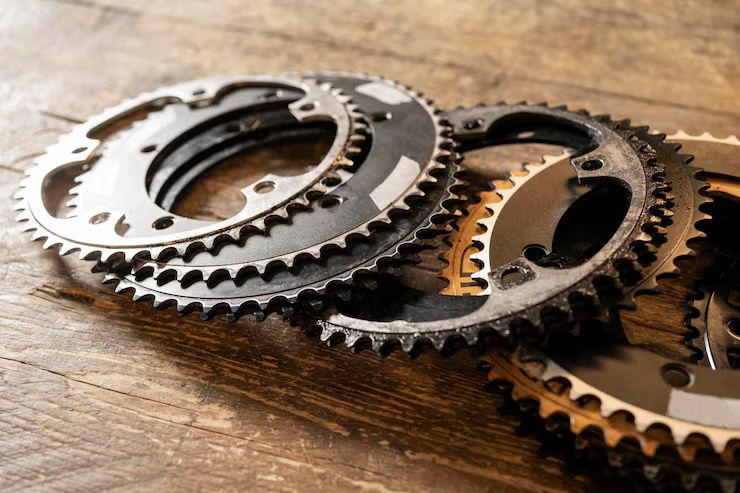
This guide explains how industrial gearboxes work, the different gear drive technologies available, efficiency standards, maintenance practices, and their wide-ranging applications across modern industries.
What Are Industrial Gearboxes?
An industrial gearbox is a mechanical power transmission system designed to transfer rotational power from a motor or engine to industrial equipment. It changes the speed, torque, or direction of rotation by using a combination of gears housed inside a protective casing.
Gearboxes allow machines to operate at the most suitable speed for specific industrial processes. While electric motors often rotate at high speeds, many manufacturing machines require slower speeds with higher torque. A gearbox provides this conversion efficiently.
A typical industrial gearbox consists of several major components:
- Gear sets
- Input shaft
- Output shaft
- Bearings
- Gear housing
- Lubrication system
- Seals and gaskets
These components work together to provide smooth, efficient, and reliable power transmission under demanding industrial conditions.
Why Industrial Gearboxes Are Important
Industrial machinery requires controlled power delivery to perform efficiently. Gearboxes help optimize machine performance by matching motor output to operational requirements.
They not only improve torque and speed control but also protect machinery from excessive mechanical stress, helping increase equipment reliability and service life.
Some important advantages include:
- Efficient power transmission
- Improved torque output
- Controlled operating speed
- Longer equipment lifespan
These benefits make industrial gearboxes an essential part of manufacturing, processing, and heavy industrial operations.
Types of Industrial Gearboxes
Different industrial applications require different gearbox configurations depending on speed, load, available space, and operating conditions.
Helical Gearboxes
Helical gearboxes use angled gear teeth that engage gradually, providing smoother and quieter operation than straight-cut gears.
They are widely used in conveyor systems, packaging equipment, pumps, compressors, and manufacturing machinery where continuous operation is required.
Bevel Gearboxes
Bevel gearboxes transfer power between intersecting shafts, usually positioned at a 90-degree angle.
These gearboxes are commonly used in material handling systems, agricultural equipment, mining machinery, and industrial automation.
Planetary Gearboxes
Planetary gearboxes consist of a central sun gear surrounded by multiple planet gears enclosed within a ring gear.
Their compact design provides high torque capacity, excellent efficiency, and balanced load distribution, making them suitable for robotics, heavy machinery, wind turbines, and precision manufacturing equipment.
Worm Gearboxes
Worm gearboxes use a worm shaft and worm wheel to achieve high gear reduction ratios.
They provide smooth, quiet operation and are commonly used in elevators, conveyors, gates, packaging machinery, and lifting equipment.
Spur Gearboxes
Spur gearboxes use straight-cut gears mounted on parallel shafts.
Their simple construction makes them suitable for moderate-speed industrial applications requiring reliable power transmission.
Cycloidal Gearboxes
Cycloidal gearboxes use rolling motion instead of conventional gear meshing.
They offer excellent shock resistance, compact design, and precise motion control, making them ideal for robotics, automation systems, and servo-driven machinery.
How Industrial Gearboxes Work
Although gearbox designs vary, they all operate using the same basic principle of gear engagement.
Power Input
Mechanical power enters the gearbox through the input shaft, which is connected to an electric motor or another prime mover.
The input shaft rotates at the motor's operating speed.
Gear Engagement
Inside the gearbox, multiple gears mesh together to transmit rotational motion.
The gear ratio determines whether speed is increased, reduced, or maintained while adjusting the available torque.
Torque Conversion
As rotational speed decreases, torque increases proportionally.
This allows industrial equipment to perform heavy-duty operations while maintaining stable mechanical performance.
Power Output
The output shaft transfers the converted power to industrial machinery such as conveyors, mixers, crushers, pumps, or production equipment.
The gearbox continuously maintains the required speed and torque throughout operation.
Power Transmission Technologies
Modern industrial gearboxes incorporate advanced technologies that improve efficiency, durability, and operational performance.
Precision Gear Manufacturing
Computer-controlled machining produces gears with highly accurate tooth profiles.
Improved precision reduces vibration, noise, and mechanical wear while increasing transmission efficiency.
Advanced Bearing Systems
High-performance bearings reduce friction and support heavy radial and axial loads.
These bearings improve gearbox reliability during continuous industrial operation.
Lubrication Technologies
Modern lubrication systems continuously circulate oil throughout the gearbox.
Proper lubrication minimizes wear, reduces operating temperatures, and extends gear life.
High-Strength Materials
Industrial gearboxes are manufactured using alloy steels, hardened gear materials, and specialized heat treatment processes that improve durability under demanding operating conditions.
Gear Drive Systems
Different drive systems allow industrial gearboxes to operate efficiently across various applications.
Gear Reducers
Gear reducers lower rotational speed while increasing output torque.
They are commonly used in conveyors, mixers, crushers, and heavy industrial equipment.
Right-Angle Drives
Right-angle gear drives transfer power between perpendicular shafts, helping optimize equipment layout where installation space is limited.
Variable Speed Drives
Many modern gearboxes operate alongside Variable Frequency Drives (VFDs) to provide flexible speed control while maintaining efficient power transmission.
Integrated Gearmotor Systems
A gearmotor combines an electric motor and gearbox into a single compact unit.
This integrated design reduces installation space while simplifying maintenance and improving overall system efficiency.
Efficiency Standards for Industrial Gearboxes
Modern gearbox manufacturers focus on improving transmission efficiency while reducing energy losses.
Important performance factors include:
- Gear mesh efficiency
- Bearing efficiency
- Lubrication performance
- Heat dissipation
- Mechanical durability
High-efficiency gearboxes help reduce energy consumption while improving equipment reliability during continuous industrial operation.
Comparison of Common Industrial Gearboxes
The table below compares the characteristics of commonly used gearbox types.
| Gearbox Type | Shaft Arrangement | Typical Applications | Torque Capacity |
|---|---|---|---|
| Helical Gearbox | Parallel | Conveyors, pumps, compressors | High |
| Bevel Gearbox | Right-angle | Material handling, mining | High |
| Planetary Gearbox | Coaxial | Robotics, wind turbines | Very High |
| Worm Gearbox | Right-angle | Lifting equipment, conveyors | Medium |
| Spur Gearbox | Parallel | General industrial machinery | Medium |
| Cycloidal Gearbox | Coaxial | Automation, servo systems | High |
Industrial Applications
Industrial gearboxes support countless production processes across numerous industries.
Manufacturing
Production facilities use gearboxes to operate conveyors, assembly equipment, mixers, packaging machinery, and automated production systems.
Mining and Cement
Heavy-duty gearboxes drive crushers, grinding mills, conveyors, excavators, and material handling equipment operating under demanding conditions.
Steel and Metal Processing
Steel plants use industrial gearboxes for rolling mills, furnaces, cooling systems, and continuous production lines requiring high torque.
Food and Beverage Processing
Gearboxes power mixers, filling machines, packaging equipment, conveyors, and processing systems while supporting continuous production.
Renewable Energy
Wind turbines use high-capacity planetary gearboxes to convert low-speed rotor movement into higher rotational speeds suitable for electricity generation.
Water and Wastewater Treatment
Pumps, aerators, agitators, and filtration equipment rely on industrial gearboxes for dependable mechanical power transmission.
Benefits of Industrial Gearboxes
Modern gearbox technologies provide several operational advantages.
Some important benefits include:
- Efficient power transmission
- Higher torque output
- Reduced mechanical stress
- Improved equipment reliability
- Long operating life
These advantages help manufacturers improve production efficiency while reducing maintenance requirements.
Challenges in Gearbox Operation
Although industrial gearboxes are designed for long-term reliability, they require regular inspection and maintenance to achieve maximum service life.
Common operational challenges include gear wear, lubrication degradation, bearing failure, shaft misalignment, overheating, contamination, and vibration.
Routine oil analysis, vibration monitoring, thermal inspections, and scheduled maintenance help identify potential issues before they affect production.
Proper installation and alignment also play an important role in maintaining gearbox efficiency.
Recent Developments (2024–2026)
Industrial gearbox technology has advanced significantly in recent years.
Manufacturers are increasingly incorporating smart sensors that monitor vibration, oil condition, temperature, and operating loads in real time. These systems support predictive maintenance by identifying early signs of wear before equipment failure occurs.
High-efficiency gear tooth designs and advanced synthetic lubricants are helping reduce friction while improving energy efficiency. Digital twin technology is also becoming more common, allowing engineers to simulate gearbox performance and optimize maintenance schedules.
Compact planetary gearboxes continue gaining popularity in robotics, electric manufacturing equipment, and automated production systems due to their high torque density and space-saving design.
Safety Standards and Industry Guidelines
Industrial gearboxes operate under recognized machinery safety and mechanical engineering standards to ensure reliable performance and safe operation.
Important safety practices include:
- Regular lubrication inspections
- Oil leakage monitoring
- Shaft alignment verification
- Bearing condition monitoring
- Protective guarding around rotating equipment
Manufacturers generally design industrial gearboxes to comply with internationally recognized machinery, power transmission, and quality standards. In India, relevant Bureau of Indian Standards (BIS) guidelines and industrial safety regulations may also apply depending on the application.
Tools and Resources
Several technologies help improve gearbox performance and maintenance.
Common resources include:
- Vibration monitoring systems
- Oil analysis equipment
- Thermal imaging cameras
- Laser shaft alignment tools
- Gearbox condition monitoring software
- Predictive maintenance platforms
These tools help reduce unexpected downtime while improving equipment reliability and operational efficiency.
Frequently Asked Questions
What is an industrial gearbox?
An industrial gearbox is a mechanical power transmission device that adjusts speed and torque while transferring rotational power from a motor to industrial machinery.
Why are gearboxes used in industrial machinery?
Gearboxes optimize motor performance by increasing torque, reducing speed, and delivering controlled mechanical power to equipment operating under various load conditions.
Which gearbox is best for high torque applications?
Planetary gearboxes are widely recognized for providing very high torque capacity while maintaining compact dimensions and excellent transmission efficiency.
How often should industrial gearboxes be maintained?
Maintenance schedules depend on operating conditions, load, lubrication quality, and manufacturer recommendations. Regular inspections and oil analysis help maintain long-term performance.
Which industries use industrial gearboxes?
Industrial gearboxes are widely used in manufacturing, mining, steel production, cement plants, food processing, renewable energy, water treatment, material handling, and automated production facilities.
Future Trends in Industrial Gearboxes
Industrial gearbox technology continues to evolve alongside Industry 4.0 and smart manufacturing.
Future gearboxes will increasingly incorporate artificial intelligence, wireless condition monitoring, edge computing, and predictive analytics that continuously optimize performance. Lightweight materials, improved gear coatings, and energy-efficient designs will further enhance durability while reducing operating costs.
Growing integration with robotics, automated production systems, and intelligent drive technologies will ensure industrial gearboxes remain a critical component of modern manufacturing for years to come.
Conclusion
Industrial gearboxes are essential components of modern power transmission systems, providing the controlled speed and torque needed for efficient industrial operations. Their ability to optimize motor performance, improve equipment reliability, and support demanding manufacturing processes makes them indispensable across countless industries.
Advances in precision engineering, intelligent monitoring, high-efficiency gear drive systems, and predictive maintenance technologies continue to improve gearbox performance. As smart factories and automated production environments expand, industrial gearboxes will remain a vital part of reliable, energy-efficient, and sustainable industrial operations.