
Industrial facilities depend on carefully controlled environments to maintain safe working conditions, protect equipment, support manufacturing processes, and preserve product quality.
An industrial HVAC system plays a central role in achieving these objectives by managing temperature, humidity, air movement, ventilation, and indoor air quality across large and often demanding spaces.
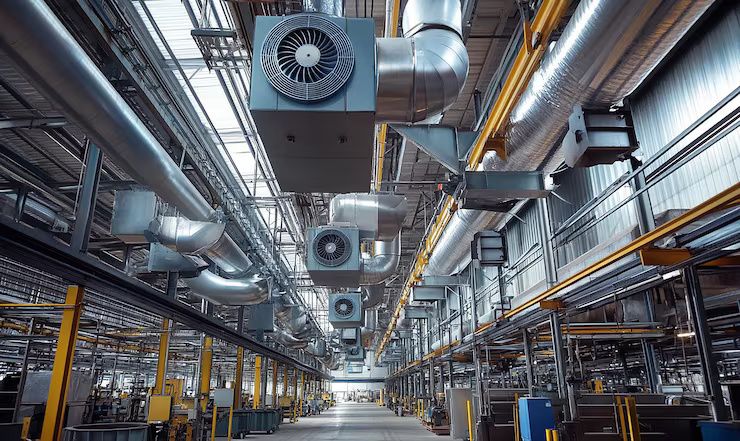
Unlike residential heating and cooling systems, industrial HVAC systems must operate across complex environments that may include warehouses, manufacturing plants, cleanrooms, data centers, laboratories, processing facilities, and other specialized buildings. The requirements can vary significantly depending on the building's size, production activities, equipment loads, occupancy, and environmental conditions.
Modern Industrial HVAC Equipment is also becoming more intelligent and energy-conscious. Advanced controls, variable-speed technologies, heat recovery, automation, and real-time monitoring are helping facilities improve environmental control while reducing unnecessary energy consumption.
This guide explains how industrial HVAC systems work, the major equipment involved, key efficiency considerations, and the role of modern technology in creating reliable and controlled industrial environments.
What Is an Industrial HVAC System?
An industrial HVAC system is a combination of heating, ventilation, air conditioning, filtration, and environmental control equipment designed for large-scale or specialized facilities.
The primary functions of an industrial HVAC system include:
- Maintaining suitable indoor temperatures
- Controlling humidity levels
- Providing adequate ventilation
- Managing air quality
- Removing unwanted heat
- Supporting specialized production conditions
- Protecting sensitive equipment
- Maintaining pressure differences between areas
The system is typically designed around the specific needs of the facility rather than using a standardized configuration.
For example, a manufacturing plant may need high-capacity cooling to remove process heat, while a pharmaceutical facility may require precise temperature, humidity, filtration, and pressure control.
Why Industrial HVAC Systems Are Important
Environmental conditions can directly affect industrial operations.
Excessive heat may affect machinery and worker comfort. High humidity can contribute to condensation, corrosion, and material degradation. Poor ventilation may allow contaminants or process-generated pollutants to accumulate.
A properly designed HVAC system helps maintain stable environmental conditions while supporting:
- Worker comfort and safety
- Equipment reliability
- Product quality
- Process stability
- Indoor air quality
- Regulatory requirements
- Energy management
This makes HVAC an essential part of the infrastructure in many industrial environments.
Major Components of Industrial HVAC Equipment
Industrial HVAC Equipment includes a broad range of mechanical and electrical systems that work together to manage building conditions.
Chillers
Industrial chillers remove heat from water or another circulating fluid, which is then used for cooling processes or air-handling systems.
They are commonly used in facilities requiring centralized cooling and precise temperature management.
Air Handling Units
Air handling units, or AHUs, condition and distribute air throughout a facility. Depending on the application, they may include filters, heating and cooling coils, fans, dampers, and humidity control components.
Industrial Cooling Towers
Cooling towers reject heat from water-based cooling systems into the atmosphere. They are frequently integrated with larger central cooling systems.
Boilers and Heating Systems
Industrial heating equipment provides thermal energy for building heating, process requirements, or air treatment.
Fans and Ventilation Systems
Fans move air through the facility, while ventilation systems introduce fresh air and remove stale or contaminated air.
Filtration Equipment
Industrial filtration systems help remove airborne particles and contaminants. Specialized facilities may require high-efficiency filtration depending on operational requirements.
How Industrial HVAC Solutions Improve Energy Efficiency
Energy efficiency is a major consideration because heating, cooling, and ventilation systems can represent a significant portion of industrial building energy use.
Modern Industrial HVAC Solutions focus on matching system operation to actual facility requirements.
Several approaches can improve efficiency.
Variable-Speed Drives
Variable-speed drives allow motors and fans to operate at different speeds depending on demand. Instead of continuously operating at full capacity, equipment can adjust output as conditions change.
This approach can reduce unnecessary energy consumption while maintaining environmental control.
Smart HVAC Controls
Modern control systems continuously monitor temperature, humidity, pressure, airflow, and equipment performance.
Automated controls can adjust system operation based on real-time conditions, helping prevent excessive heating or cooling.
Heat Recovery
Heat recovery systems capture useful thermal energy that would otherwise be wasted. Depending on the facility, recovered heat may be used to preheat incoming air or support other heating requirements.
High-Efficiency Equipment
Modern chillers, motors, compressors, and fans are increasingly designed to deliver greater performance with improved energy efficiency.
However, equipment efficiency should always be evaluated alongside system design, operating conditions, maintenance requirements, and actual facility demand.
Environmental Control in Industrial Facilities
Environmental control extends beyond simply keeping a building comfortable.
Different industrial processes may require specific environmental conditions.
For example:
| Facility Type | Key HVAC Requirement |
|---|---|
| Manufacturing Plant | Heat removal and ventilation |
| Warehouse | Temperature and humidity management |
| Data Center | Continuous cooling and airflow control |
| Cleanroom | Filtration and pressure control |
| Laboratory | Air quality and precise environmental conditions |
| Food Processing Facility | Hygiene, temperature, and humidity management |
The HVAC design must account for the unique requirements of each environment.
Indoor Air Quality and Ventilation
Ventilation is a critical part of industrial environmental management.
Industrial activities can generate dust, fumes, heat, moisture, odors, or other airborne contaminants. Appropriate ventilation helps control these conditions by introducing suitable outdoor air and removing unwanted pollutants.
Depending on the application, facilities may use:
- General ventilation
- Local exhaust systems
- Air filtration
- Dedicated outdoor air systems
- Air purification technologies
- Pressure-controlled ventilation
The appropriate approach depends on the processes taking place within the facility and the characteristics of the building.
The Role of Industrial HVAC Contractors
Industrial HVAC Contractors typically work on complex projects involving system planning, equipment installation, commissioning, upgrades, and maintenance.
Industrial HVAC projects often require coordination among mechanical engineers, electrical specialists, facility managers, controls professionals, and other technical teams.
A well-planned project generally considers:
- Facility layout
- Equipment heat loads
- Ventilation requirements
- Airflow patterns
- Energy performance
- Control strategies
- Maintenance access
- Future expansion
Proper coordination during design and installation helps ensure that the HVAC system operates as intended.
Industrial HVAC Services and Maintenance
Regular maintenance is essential for reliable HVAC performance.
Industrial HVAC Services may include inspection, testing, cleaning, calibration, repairs, equipment replacement, and system optimization.
Common maintenance activities include:
- Filter replacement
- Coil cleaning
- Fan inspection
- Refrigerant system checks
- Motor testing
- Ductwork inspection
- Sensor calibration
- Control system verification
- Chiller maintenance
Preventive maintenance helps identify developing issues before they become major operational problems.
Common Challenges in Industrial HVAC Design
Industrial HVAC projects can be more complex than conventional commercial systems.
Variable Operating Loads
Production schedules and equipment activity may change throughout the day. HVAC systems must respond to these fluctuations without wasting energy.
Large Facility Size
Large industrial buildings require careful airflow planning to avoid uneven temperatures and poorly ventilated areas.
Process Heat
Machinery and manufacturing processes can generate substantial heat that must be removed efficiently.
Specialized Environmental Requirements
Certain operations require precise temperature, humidity, pressure, or filtration conditions.
Aging Infrastructure
Older facilities may have inefficient equipment or outdated controls that limit performance.
Modernization often involves upgrading individual components while ensuring compatibility with existing infrastructure.
Digital Technology and Industrial HVAC Systems
Digitalization is transforming the way facilities monitor and manage HVAC performance.
Modern systems may incorporate:
- Internet of Things sensors
- Cloud-based monitoring
- Building management systems
- Automated fault detection
- Predictive maintenance
- Energy analytics
- Remote diagnostics
These technologies provide facility teams with greater visibility into equipment performance.
For example, sensors can identify unusual temperature changes, increased energy consumption, or equipment performance deviations. This information can support earlier investigation and maintenance planning.
Sustainability and Future HVAC Trends
The future of industrial HVAC is closely connected to energy efficiency and environmental responsibility.
Several developments are shaping the industry:
- Electrification of heating systems
- Heat recovery technologies
- Advanced automation
- Low-impact refrigerant technologies
- Renewable energy integration
- AI-assisted system optimization
- Predictive maintenance
- Digital twins and simulation
As industrial facilities become more focused on resource efficiency, HVAC systems are increasingly viewed as part of a broader energy management strategy rather than isolated mechanical equipment.
How to Evaluate an Industrial HVAC System
When assessing an existing system or planning a new installation, facility managers should consider several factors.
First, evaluate whether the system consistently meets environmental requirements. Temperature, humidity, airflow, and air quality should align with the facility's operational needs.
Next, examine energy performance and identify equipment that operates unnecessarily or inefficiently.
Maintenance history should also be reviewed to understand recurring problems and aging components.
Finally, consider whether the system can adapt to future changes in production, facility expansion, or environmental requirements.
The right approach depends on the building, process requirements, operating schedule, and long-term objectives.
Frequently Asked Questions
What is an industrial HVAC system?
An industrial HVAC system is a large-scale heating, ventilation, and air conditioning system designed to control temperature, humidity, airflow, ventilation, and air quality in industrial facilities.
What equipment is used in industrial HVAC systems?
Common Industrial HVAC Equipment includes chillers, boilers, air handling units, cooling towers, pumps, fans, ventilation systems, filtration equipment, sensors, and automated controls.
How can industrial HVAC systems improve energy efficiency?
Energy efficiency can be improved through variable-speed drives, smart controls, heat recovery, efficient equipment, proper maintenance, and system optimization based on actual operating demand.
Why is HVAC maintenance important in industrial facilities?
Regular maintenance helps maintain reliable operation, preserve equipment performance, support indoor environmental conditions, and identify developing issues before they interrupt facility operations.
What are Industrial HVAC Contractors responsible for?
Industrial HVAC Contractors may support system design, installation, commissioning, upgrades, troubleshooting, and maintenance, depending on the project and facility requirements.
Conclusion
An industrial HVAC system is a critical component of modern facility infrastructure, supporting temperature management, ventilation, air quality, equipment protection, and process stability. As industrial environments become more complex, HVAC systems must balance precise environmental control with responsible energy management.
Modern Industrial HVAC Solutions increasingly combine high-performance equipment, automated controls, digital monitoring, and predictive maintenance to improve system visibility and operational efficiency. At the same time, skilled Industrial HVAC Contractors and ongoing Industrial HVAC Services remain important for installation, system optimization, and long-term maintenance.
By evaluating facility requirements, selecting appropriate Industrial HVAC Equipment, and integrating intelligent control strategies, industrial organizations can create more stable, efficient, and adaptable environments. The future of industrial HVAC will increasingly depend on connected technologies, sustainable engineering, and data-driven management that align environmental performance with the evolving needs of modern industry.