
Metallurgy plays a fundamental role in modern manufacturing by transforming raw metals into materials and components used across countless industries. From automotive and aerospace engineering to construction, energy, and heavy machinery, metallurgical systems ensure that metals achieve the required strength, durability, and performance for demanding applications.
Today's industrial metallurgy systems combine advanced processing equipment, digital monitoring, and automated production technologies to improve efficiency and maintain consistent quality. These systems support every stage of metal production, from refining raw materials to producing finished metal products with precise mechanical properties.
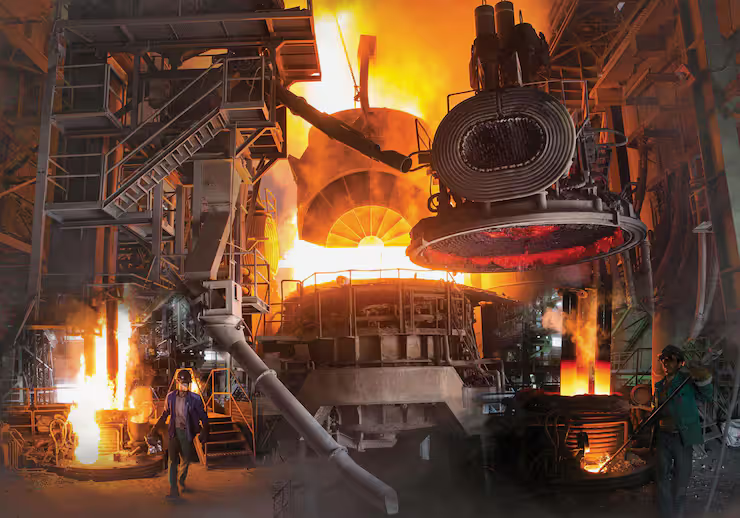
This guide explains how industrial metallurgy systems work, the different metal processing technologies used in manufacturing, and their applications across modern industries.
What Are Industrial Metallurgy Systems?
Industrial metallurgy systems are integrated manufacturing systems used to process, refine, and shape metals into finished products or industrial components. These systems include multiple production stages designed to improve the physical, chemical, and mechanical properties of metals.
Rather than relying on a single machine, metallurgy combines several specialized processes that work together to produce high-quality materials for industrial use.
A typical metallurgy production system may include:
- Metal melting equipment
- Refining and treatment systems
- Casting and forming machinery
- Heat treatment equipment
- Quality inspection systems
These production stages ensure that metals meet the required specifications before entering manufacturing operations.
Why Metallurgy Is Important in Manufacturing
Every industry depends on metals with reliable performance characteristics. The quality of steel, aluminum, copper, titanium, and other alloys directly affects the strength, safety, and lifespan of finished products.
Industrial metallurgy improves these materials by controlling composition, temperature, and processing conditions throughout production.
Some important advantages include:
- Improved material strength
- Enhanced corrosion resistance
- Better manufacturing consistency
- Reliable product quality
These benefits make metallurgy an essential part of modern industrial production.
Major Types of Metallurgy Systems
Different production methods are used depending on the type of metal and the required application.
1. Ferrous Metallurgy Systems
Ferrous metallurgy focuses on iron-based metals such as steel and cast iron.
These systems are widely used because steel remains one of the most important engineering materials in construction, transportation, and industrial manufacturing.
2. Non-Ferrous Metallurgy Systems
Non-ferrous metallurgy processes metals that do not contain significant amounts of iron.
Examples include aluminum, copper, nickel, titanium, and magnesium.
These materials are valued for properties such as lightweight performance, corrosion resistance, and electrical conductivity.
3. Powder Metallurgy Systems
Powder metallurgy produces components by compressing and heating fine metal powders.
This process allows manufacturers to create complex shapes with minimal material waste while maintaining excellent dimensional accuracy.
4. Extractive Metallurgy Systems
Extractive metallurgy focuses on recovering pure metals from ores through refining and separation processes.
These systems prepare raw materials for further manufacturing operations and support large-scale industrial metal production.
Metal Processing Technologies
Modern metallurgy combines multiple production technologies to improve metal quality and manufacturing performance.
Metal Melting and Refining
Production begins by melting raw metal materials under carefully controlled temperatures.
During refining, unwanted impurities are removed while alloy composition is adjusted to achieve the required material properties.
Accurate control during this stage is essential because even small variations can influence the performance of the finished metal.
Casting Processes
Molten metal is transferred into molds where it solidifies into the desired shape.
Different casting methods are used depending on component size, material type, and production requirements.
Modern casting technologies improve dimensional accuracy while reducing production defects.
Forming and Shaping
After casting, metals often undergo additional forming operations to achieve final dimensions and mechanical properties.
Common forming methods include rolling, forging, extrusion, and drawing.
These processes strengthen the material while producing components suitable for industrial applications.
Heat Treatment
Heat treatment modifies the internal structure of metals through controlled heating and cooling cycles.
The process helps improve hardness, toughness, wear resistance, and overall mechanical performance.
Heat treatment is widely used across automotive, aerospace, and heavy engineering industries.
Production Systems in Modern Metallurgy
Modern metallurgy relies on highly integrated production systems that combine automation, monitoring, and quality control.
Automated Production Lines
Many metal processing facilities now operate automated production lines that reduce manual handling while improving manufacturing consistency.
Automation supports:
- Material handling
- Process control
- Product inspection
- Production monitoring
These technologies increase efficiency while maintaining consistent quality standards.
Digital Process Control
Computer-controlled systems continuously monitor production parameters throughout manufacturing.
Important variables include:
- Furnace temperature
- Pressure conditions
- Material composition
- Cooling rates
Real-time monitoring allows operators to make adjustments that improve product consistency.
Smart Manufacturing Integration
Industry 4.0 technologies are transforming metallurgy by connecting equipment, sensors, and production software into intelligent manufacturing systems.
Connected production environments help manufacturers optimize workflows, improve traceability, and support predictive maintenance strategies.
Materials Processed in Metallurgy Systems
Industrial metallurgy handles a broad range of metals and engineered alloys.
Steel
Steel remains the most widely processed engineering material because of its strength, versatility, and durability.
It is extensively used in infrastructure, transportation, machinery, and manufacturing.
Aluminum
Aluminum is valued for its lightweight characteristics and corrosion resistance.
It is commonly used in aerospace, automotive manufacturing, packaging, and construction.
Copper
Copper provides excellent electrical and thermal conductivity.
Its properties make it essential for electrical systems, renewable energy equipment, and industrial machinery.
Advanced Alloys
Many industries require specialized alloys designed for demanding operating environments.
These materials are developed to provide improved heat resistance, strength, corrosion protection, and mechanical performance.
Industrial Applications of Metallurgy Systems
Industrial metallurgy supports manufacturing across nearly every major sector of the global economy.
Automotive Manufacturing
Vehicle manufacturers depend on metallurgical systems to produce engine components, body structures, transmission parts, and suspension systems.
Advanced metal processing helps improve vehicle performance while reducing overall weight.
Aerospace Industry
Aircraft components require lightweight materials capable of maintaining strength under demanding operating conditions.
Metallurgical technologies help produce advanced alloys that meet these strict engineering requirements.
Construction and Infrastructure
The construction industry uses processed metals for bridges, buildings, pipelines, and structural frameworks.
Reliable metallurgy ensures these materials provide long-term strength and durability.
Energy and Heavy Engineering
Power generation facilities, mining operations, and industrial machinery manufacturers rely on metallurgical systems to produce equipment capable of operating under high temperatures and heavy mechanical loads.
Benefits of Industrial Metallurgy Systems
Modern metallurgy systems provide several important advantages that support industrial manufacturing.
Some key benefits include:
- High material quality
- Improved production efficiency
- Enhanced mechanical performance
- Consistent manufacturing standards
These benefits help manufacturers produce reliable components for demanding industrial applications.
Challenges in Industrial Metallurgy
Although metallurgy technologies continue to advance, manufacturers must carefully manage complex production processes.
Material consistency, energy efficiency, process optimization, and environmental sustainability remain important considerations throughout metal production.
Maintaining precise temperature control and alloy composition is essential for producing metals that meet strict engineering specifications.
Ongoing technological developments continue to improve process efficiency while reducing environmental impact.
Future Trends in Industrial Metallurgy Systems
The future of metallurgy is closely connected with automation, digital manufacturing, and sustainable production technologies.
Artificial intelligence, machine learning, and advanced process simulation are helping manufacturers optimize metal processing while improving quality and reducing material waste.
Recycling technologies, energy-efficient furnaces, and low-emission production methods are also becoming increasingly important as industries work toward more sustainable manufacturing practices.
As smart manufacturing continues to evolve, metallurgy systems will become more intelligent, efficient, and environmentally responsible.
Conclusion
Industrial metallurgy systems are a critical part of modern manufacturing, providing the technologies needed to refine, process, and enhance metals for a wide range of industrial applications. Through advanced production systems, precision process control, and intelligent manufacturing technologies, these systems ensure that metals meet demanding quality and performance standards.
As industries continue to adopt automation, digital manufacturing, and sustainable production methods, metallurgy will remain a driving force behind innovation in engineering, construction, transportation, energy, and advanced manufacturing. Continued advancements in metal processing technologies will further strengthen the efficiency, reliability, and versatility of industrial metallurgy systems.