
Industrial plant engineering is the discipline of designing, developing, constructing, and maintaining facilities used for manufacturing, processing, energy generation, and other industrial activities. It combines mechanical, electrical, civil, chemical, instrumentation, and automation engineering to create facilities that operate according to defined production and safety requirements.
The development of industrial plant engineering is closely connected to the growth of industrialization. As factories, refineries, power stations, chemical facilities, and processing plants became more complex, specialized engineering methods were needed to coordinate machinery, utilities, structures, production equipment, and industrial infrastructure.
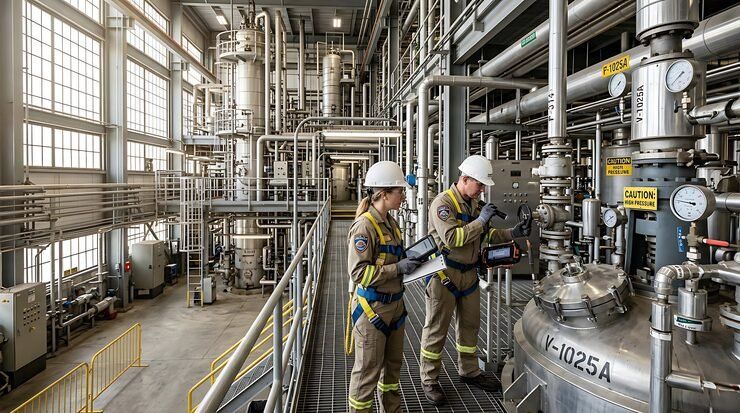
Today, industrial plant engineering covers the complete project lifecycle, from feasibility studies and conceptual design to equipment procurement, construction, commissioning, and operational improvements. Engineering, Procurement, and Construction (EPC) contractors, equipment manufacturers, engineering consultants, and industrial suppliers all contribute to this process.
Why Industrial Plant Engineering Matters in Modern Manufacturing
Industrial plant engineering provides the technical foundation for facilities that produce goods, process raw materials, generate electricity, and support essential infrastructure. A properly planned industrial facility must coordinate equipment, production capacity, utilities, environmental controls, worker safety, and operational requirements.
Modern industrial projects also face challenges involving energy consumption, environmental compliance, equipment integration, project coordination, and supply chain management.
Industrial plant engineering addresses these requirements across several areas:
Manufacturing Infrastructure: Develops production facilities for automotive, electronics, food processing, and consumer goods industries.
Energy Production: Supports power plants, renewable energy facilities, and industrial energy infrastructure.
Chemical Processing: Integrates reactors, storage tanks, pipelines, pumps, and process control equipment.
Industrial Safety: Incorporates fire protection, emergency systems, equipment safeguards, and hazard management.
Resource Management: Supports efficient use of water, raw materials, electricity, and other industrial resources.
Production Planning: Coordinates machinery, material movement, utilities, and manufacturing workflows.
These activities affect manufacturers, infrastructure developers, engineering companies, equipment suppliers, government organizations, and industrial operators.
Major Stages of Industrial Plant Design and Engineering
Industrial plant design involves several engineering disciplines working together. Each stage contributes to the technical development and implementation of the facility.
Feasibility Studies and Conceptual Plant Design
The initial stage evaluates the technical requirements of a proposed industrial facility. Engineers examine production capacity, site conditions, raw material availability, utility requirements, environmental considerations, and applicable regulations.
Conceptual plant design establishes the overall arrangement of production areas, equipment locations, material movement routes, and supporting infrastructure.
Basic and Detailed Engineering
Basic engineering defines the main technical parameters of the facility. It includes process descriptions, preliminary equipment specifications, utility requirements, and major engineering layouts.
Detailed engineering develops the information needed for procurement and construction.
Common engineering documents include:
Process Flow Diagrams (PFDs).
Piping and Instrumentation Diagrams (P&IDs).
Equipment layout drawings.
Structural and civil engineering drawings.
Electrical single-line diagrams.
Instrumentation and control diagrams.
Equipment specifications and technical data sheets.
Procurement and Equipment Selection
Procurement involves identifying and acquiring machinery, electrical systems, structural materials, instrumentation, and other components required for the facility.
Industrial equipment suppliers provide items such as compressors, pumps, boilers, heat exchangers, conveyors, pressure vessels, motors, and control systems.
Equipment selection depends on operating conditions, technical specifications, material compatibility, safety requirements, and project schedules.
Construction and Installation
During construction, civil structures, foundations, buildings, pipelines, electrical installations, and industrial machinery are installed according to approved engineering documents.
EPC contractors coordinate construction activities, equipment deliveries, technical inspections, and project interfaces.
Commissioning and Plant Handover
Commissioning involves checking installed systems to verify that they function according to design requirements. Activities may include equipment inspections, electrical testing, instrumentation calibration, control system verification, and operational trials.
After the required checks and documentation are completed, the facility can proceed toward operational handover.
Industrial Manufacturing Technologies and Plant Automation Systems
Modern industrial facilities use advanced machinery, digital systems, and automated equipment to manage production activities. These technologies support process control, equipment monitoring, material handling, and industrial operations.
Industrial Automation and Control Systems
Industrial automation systems coordinate machines and production processes through electronic controllers, sensors, and software.
Common technologies include:
Programmable Logic Controllers (PLCs): Control machinery and automated production sequences.
Supervisory Control and Data Acquisition (SCADA): Monitors industrial equipment and processes.
Distributed Control Systems (DCS): Manage complex industrial processes, particularly in chemical and energy facilities.
Human-Machine Interfaces (HMIs): Allow operators to monitor and interact with industrial equipment.
Industrial Robotics: Performs activities such as welding, assembly, material handling, and packaging.
Computer-Aided Plant Design
Computer-Aided Design (CAD) and engineering software help engineers create plant layouts, equipment drawings, piping arrangements, and structural models.
Building Information Modeling (BIM) and 3D plant modeling technologies allow different engineering disciplines to coordinate their designs and identify potential equipment or structural conflicts before construction.
Industrial Digital Twins
Digital twin technology creates a digital representation of a physical plant, machine, or industrial process. It can combine engineering models with operational information to support equipment monitoring, simulation, and maintenance planning.
Artificial Intelligence and Predictive Maintenance
AI-based industrial systems analyze equipment information to identify abnormal operating conditions and patterns associated with potential failures.
Predictive maintenance applications commonly use vibration sensors, temperature monitoring, pressure measurements, and equipment performance data.
These technologies help engineering teams understand equipment conditions and plan maintenance activities.
Global EPC Contractors and Industrial Engineering Companies
The global industrial plant engineering industry includes EPC contractors, engineering consultants, construction companies, technology providers, and specialized equipment manufacturers.
Some internationally recognized companies include:
Bechtel: An engineering, construction, and project management company involved in energy, infrastructure, and industrial projects.
Fluor Corporation: Provides engineering and construction capabilities across energy, chemicals, mining, and industrial sectors.
Technip Energies: Focuses on engineering and technology for energy, chemicals, and industrial infrastructure.
Worley: Provides engineering, project management, and technical capabilities for energy and industrial facilities.
Larsen & Toubro (L&T): An Indian engineering and construction group involved in heavy engineering, infrastructure, energy, and industrial projects.
Tata Projects: Undertakes industrial infrastructure, energy, and large engineering and construction projects.
Samsung E&A: Provides engineering, procurement, and construction capabilities for industrial and process facilities.
The wider industrial supply chain includes manufacturers of pumps, compressors, boilers, turbines, heat exchangers, valves, electrical panels, instrumentation, and industrial automation equipment.
The responsibilities of each organization depend on the project structure, technical scope, contractual arrangements, and regional operating requirements.
Industrial Plant Engineering Applications Across Different Sectors
Industrial plant engineering supports many industries by developing facilities, production infrastructure, and processing systems.
Industry | Engineering Applications | Major Equipment |
|---|---|---|
Oil and Gas | Refineries and processing facilities | Pumps, compressors, pipelines |
Chemicals | Chemical production plants | Reactors, vessels, heat exchangers |
Power Generation | Thermal and renewable power plants | Turbines, boilers, generators |
Pharmaceuticals | Pharmaceutical production facilities | Process vessels, filtration systems |
Food Processing | Food and beverage plants | Mixers, conveyors, packaging machines |
Automotive | Vehicle manufacturing facilities | Robots, assembly lines, conveyors |
Cement | Cement manufacturing plants | Kilns, crushers, grinding mills |
Water Treatment | Water and wastewater facilities | Pumps, filters, treatment tanks |
In the oil and gas industry, plant engineering integrates pipelines, separation systems, storage facilities, and process equipment. In pharmaceutical manufacturing, engineering teams coordinate controlled production environments, utilities, process equipment, and contamination prevention systems.
Automotive and electronics facilities rely on plant layouts, automated assembly lines, electrical infrastructure, and industrial material handling systems.
Industrial Plant Engineering Regulations and Government Standards in India
Industrial plant engineering projects in India must comply with relevant engineering, environmental, construction, and occupational safety regulations.
Several regulatory frameworks are particularly important.
Environment Protection Act, 1986: Establishes a legal framework for environmental protection and pollution control. Industrial projects may also require environmental clearances under applicable assessment regulations.
Factories Act, 1948: Historically established requirements concerning workplace health, safety, and welfare. The Occupational Safety, Health and Working Conditions Code, 2020 is part of India's labour code framework, and its applicable commencement and implementation provisions should be checked for individual projects.
Boilers Act, 2025: Provides a framework for boiler safety, registration, inspection, manufacture, and use. The corresponding Indian Boiler Regulations address relevant technical requirements.
Bureau of Indian Standards (BIS): Develops technical standards covering engineering materials, industrial equipment, electrical systems, and other applications.
Central Pollution Control Board (CPCB): Oversees relevant pollution control requirements and environmental compliance frameworks.
Depending on the facility, additional requirements may involve electrical safety, fire protection, hazardous material handling, pressure equipment, water management, and local building approvals.
Recent Developments in Industrial Plant Engineering, 2024–2026
Industrial plant engineering is evolving through digital engineering, modular construction, automation, and sustainability-focused technologies. These developments are influencing how industrial facilities are designed, constructed, and operated.
Several important trends include:
Artificial Intelligence in Engineering: AI tools are increasingly being explored for engineering documentation, equipment selection, procurement analysis, project planning, and technical data management.
Modular Plant Construction: Engineers are increasingly using prefabricated equipment modules and standardized assemblies. This approach can reduce the amount of work required at industrial construction sites.
Digital Engineering and 3D Modeling: Integrated 3D models and digital engineering platforms help engineering teams coordinate piping, electrical, structural, and mechanical designs.
Industrial Decarbonization: Projects involving renewable energy, carbon capture, energy efficiency, and low-emission production technologies are influencing industrial plant development.
Advanced Project Management: Digital collaboration platforms, automated reporting, and data analytics are increasingly used to monitor project progress and coordinate international engineering teams.
The 2025–2026 industry outlook from VDMA identifies AI, modularization, standardization, and digital collaboration as important developments in large-scale plant engineering. It also highlights growing investment opportunities in energy and industrial infrastructure.
Tools and Software Used in Industrial Plant Engineering
Engineering companies use specialized software and technical platforms to design industrial facilities, coordinate project activities, and manage equipment information.
Some commonly used tools include:
AVEVA E3D Design: Used for 3D plant design, equipment modeling, and piping engineering.
Autodesk AutoCAD Plant 3D: Supports piping design, plant layouts, and equipment modeling.
Hexagon Smart 3D: Used for engineering design and coordination of complex industrial facilities.
Aspen HYSYS: Supports process simulation and engineering analysis.
AVEVA PI System: Collects and manages industrial operational data.
Bentley Systems: Provides engineering software for infrastructure and industrial project development.
SAP: Supports enterprise resource planning, procurement, inventory, and project management.
Other important engineering tools include project scheduling software, structural analysis platforms, electrical design applications, and industrial risk assessment systems.
The selection of software depends on project complexity, engineering disciplines, information management requirements, and compatibility with existing systems.
Frequently Asked Questions About Industrial Plant Engineering
1. What is industrial plant engineering?
Industrial plant engineering involves designing, developing, constructing, and commissioning industrial facilities. It combines mechanical, electrical, civil, chemical, and automation engineering.
2. What are the main stages of industrial plant design?
The main stages include feasibility studies, conceptual design, basic engineering, detailed engineering, procurement, construction, commissioning, and operational handover.
3. What is the difference between EPC and industrial plant engineering?
Industrial plant engineering is the broader technical discipline covering facility design and development. EPC refers to a project delivery model in which a contractor manages engineering, procurement, and construction activities within an agreed project scope.
4. Who are the major global industrial EPC contractors?
Internationally recognized companies include Bechtel, Fluor, Technip Energies, Worley, Larsen & Toubro, Tata Projects, and Samsung E&A.
5. Which technologies are used in modern industrial plant engineering?
Common technologies include CAD, BIM, 3D plant modeling, PLCs, SCADA, DCS, industrial robotics, digital twins, AI-based analytics, and predictive maintenance systems.
Conclusion
Industrial plant engineering combines multiple engineering disciplines to develop manufacturing facilities, processing plants, power stations, and industrial infrastructure. Its major activities include plant design, equipment selection, procurement, construction, automation, and commissioning. Digital engineering, artificial intelligence, modular construction, and industrial automation are influencing modern project development. Regulatory compliance, equipment reliability, environmental management, and effective engineering coordination remain essential throughout the industrial plant lifecycle.