
Industrial automation solutions involve the use of machines, control systems, software, sensors, and robotics to operate industrial processes with reduced manual intervention. These solutions help manufacturers manage production activities, monitor equipment, control machinery, and coordinate different stages of industrial operations.
The development of industrial automation began with mechanical production equipment and gradually advanced through electrical control systems, programmable controllers, computers, and industrial communication networks. Modern automation combines these technologies with artificial intelligence (AI), the Industrial Internet of Things (IIoT), and advanced data analytics.
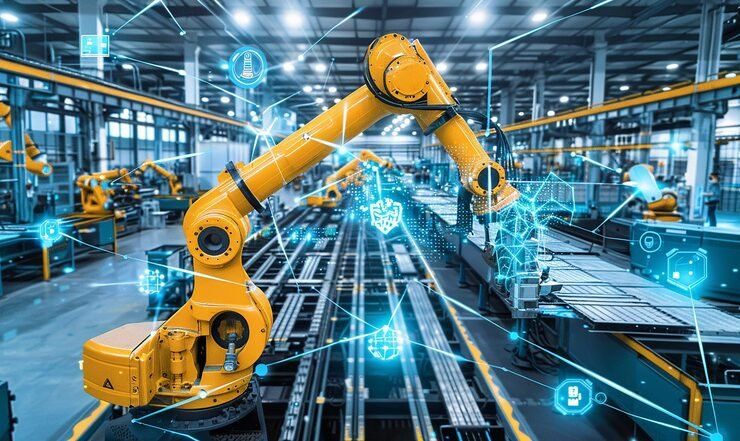
Today, industrial automation systems are used in manufacturing plants, warehouses, power facilities, pharmaceutical production, food processing, automotive assembly, and chemical industries. Their configurations vary according to production requirements, equipment complexity, operating conditions, and safety standards.
Why Industrial Automation Solutions Matter in Modern Manufacturing
Industrial automation has become an important part of modern manufacturing because factories must manage production consistency, equipment performance, workplace safety, and changing production requirements. Manual operations can create challenges involving repetitive activities, process variations, production delays, and limited equipment visibility.
Automation technologies help address these challenges by connecting machines, controllers, sensors, and production software.
Important applications include:
Production Management: Automated systems coordinate machinery, assembly operations, and production schedules.
Quality Control: Sensors and machine vision systems identify manufacturing defects and process variations.
Equipment Monitoring: Industrial control systems collect information about machine conditions and operating performance.
Material Handling: Automated conveyors, robotic arms, and mobile robots move materials between production areas.
Workplace Safety: Safety controllers, protective sensors, and emergency shutdown systems help manage industrial hazards.
Energy Management: Monitoring systems provide information about electricity consumption and equipment operation.
Industrial automation affects manufacturers, factory operators, maintenance engineers, production managers, equipment suppliers, and industrial system integrators.
Major Types of Industrial Automation Systems
Industrial automation is generally divided into different categories based on production requirements, process flexibility, and the level of equipment control.
Fixed Automation Systems
Fixed automation involves machinery designed to perform specific operations repeatedly. Equipment is configured for a particular production process and generally operates with limited changes to its sequence.
Applications include automotive assembly lines, high-volume packaging equipment, and specialized manufacturing machinery.
Programmable Automation Systems
Programmable automation allows production equipment to perform different operations through changes in control instructions and operating programs.
These systems are suitable for manufacturing environments where production batches, product designs, or operating sequences change periodically.
Examples include CNC machines, programmable production equipment, and automated batch processing systems.
Flexible Automation Systems
Flexible automation combines programmable equipment with control technologies that allow production changes with limited manual reconfiguration.
It is commonly used in manufacturing environments producing multiple product variations, particularly in automotive components, electronics, and precision engineering.
Integrated Automation Systems
Integrated automation connects different machines, production equipment, software platforms, and industrial control systems.
It allows information to move between production operations and management systems, supporting coordinated manufacturing activities.
Essential Industrial Automation Technologies and Equipment
Modern industrial automation solutions combine several technologies to control machinery, monitor production, and coordinate industrial processes.
Programmable Logic Controllers (PLCs)
PLCs are industrial computers used to control machines and automated processes. They receive information from sensors and input devices, process programmed instructions, and activate connected equipment.
Common applications include conveyor systems, packaging machinery, robotic workstations, and assembly lines.
Supervisory Control and Data Acquisition (SCADA)
SCADA systems allow operators to monitor and control industrial processes through centralized software interfaces. They collect information from remote equipment, display operating conditions, and generate alerts when certain conditions occur.
SCADA is widely used in water treatment facilities, power plants, oil and gas operations, and manufacturing facilities.
Distributed Control Systems (DCS)
DCS technology manages complex industrial processes through interconnected controllers distributed across different plant sections.
It is commonly used in chemical processing, oil refining, pharmaceutical production, and power generation.
Industrial Robotics and Motion Control
Industrial robots perform activities such as welding, material handling, painting, assembly, and packaging. Motion control systems regulate the movement, speed, and positioning of motors and mechanical components.
Robotic automation is particularly relevant to production environments requiring repeatable movements and controlled operations.
Sensors, HMIs, and Industrial Drives
Other important industrial automation equipment includes:
Industrial Sensors: Measure temperature, pressure, flow, position, vibration, and proximity.
Human-Machine Interfaces (HMIs): Allow operators to interact with machinery and view operating information.
Variable Frequency Drives (VFDs): Control motor speed and operation.
Servo Drives: Provide accurate motor positioning and movement control.
Safety Controllers: Manage designated machine safety functions.
Industrial Networking Equipment: Connect controllers, machines, and monitoring platforms.
These components work together to create coordinated automation systems.
Industrial Automation Integration and Smart Manufacturing Technologies
Industrial automation increasingly combines physical equipment with digital technologies to create connected production environments.
Industrial Internet of Things (IIoT)
IIoT connects industrial equipment, sensors, and software platforms through communication networks. It enables manufacturers to collect production information and monitor machine performance across different locations.
Artificial Intelligence and Predictive Maintenance
AI-based systems analyze equipment information to identify unusual operating patterns and potential maintenance requirements.
Predictive maintenance applications may use vibration measurements, temperature readings, and historical equipment data to support maintenance planning.
Digital Twin Technology
Digital twins are digital representations of physical machines, production lines, or industrial processes. They use engineering models and operational information to simulate system behavior and evaluate potential production changes.
Industrial Cybersecurity
Connected automation systems require protection against unauthorized access, network disruptions, and digital threats. Industrial cybersecurity includes network segmentation, access controls, monitoring, and secure communication practices.
Global Industrial Automation Manufacturers and Suppliers
The global industrial automation industry includes manufacturers of control equipment, industrial robots, electrical systems, sensors, software, and integrated production technologies.
Some internationally recognized companies include:
Siemens: Develops PLCs, industrial control systems, automation software, and digital manufacturing technologies.
ABB: Provides robotics, motion control, electrification, and industrial automation equipment.
Schneider Electric: Develops industrial control systems, electrical equipment, and energy management technologies.
Rockwell Automation: Provides programmable controllers, industrial software, and factory automation systems.
Mitsubishi Electric: Manufactures industrial controllers, servo systems, drives, and robotic equipment.
Honeywell: Develops process control, industrial monitoring, and automation technologies.
Emerson: Provides industrial control systems, measurement instruments, and process automation technologies.
Bosch Rexroth: Develops industrial hydraulics, electric drives, motion control, and factory automation equipment.
The supplier ecosystem also includes system integrators, electrical panel manufacturers, industrial sensor suppliers, robotics specialists, and automation software developers.
Companies generally select equipment based on application requirements, compatibility, technical specifications, production infrastructure, and regulatory considerations.
Industrial Applications of Automation Solutions
Industrial automation is used across several sectors to control machinery, improve production coordination, and monitor operating conditions.
Industry | Automation Applications | Main Purpose |
|---|---|---|
Automotive | Robotic assembly and welding | Vehicle production |
Pharmaceuticals | Process control and monitoring | Manufacturing consistency |
Food Processing | Packaging and inspection | Product handling |
Electronics | Precision assembly and testing | Component manufacturing |
Chemicals | Distributed control systems | Process management |
Oil and Gas | SCADA and instrumentation | Facility monitoring |
Warehousing | Automated conveyors and robotics | Material movement |
Power Generation | Turbine and process controls | Plant operation |
In automotive facilities, industrial robots perform welding and assembly activities. Pharmaceutical manufacturers use automated monitoring systems to manage production conditions and maintain manufacturing records.
Food processing facilities use automated packaging and inspection equipment, while warehouses integrate conveyor systems, scanners, and mobile robots to coordinate material movement.
Industrial Automation Regulations and Government Initiatives in India
Industrial automation equipment and manufacturing facilities must comply with applicable electrical safety, machinery safety, environmental, and workplace regulations.
In India, several government bodies and initiatives influence industrial automation development.
Make in India: Supports domestic manufacturing and industrial development, encouraging the adoption of modern production technologies.
SAMARTH Udyog Bharat 4.0: An initiative under the Ministry of Heavy Industries that supports smart manufacturing awareness, Industry 4.0 demonstrations, technology development, and industrial training.
Bureau of Indian Standards (BIS): Develops relevant technical and safety standards for electrical equipment, machinery, and industrial products.
Central Electricity Authority (CEA): Establishes applicable technical and safety requirements relating to electricity generation, transmission, and distribution.
Occupational Safety Requirements: Industrial facilities must consider applicable workplace safety, machine guarding, electrical protection, and emergency shutdown requirements.
Manufacturers and equipment suppliers should also assess applicable cybersecurity, environmental protection, and product certification requirements.
Recent Developments in Industrial Automation, 2024–2026
Industrial automation is evolving through artificial intelligence, connected equipment, robotics, and digital manufacturing infrastructure.
Important developments include:
AI-Based Industrial Automation: Manufacturers are exploring AI applications for equipment monitoring, production planning, quality inspection, and process analysis.
Collaborative Robotics: Cobots are increasingly used for selected assembly, handling, and inspection activities alongside human operators under appropriate safety controls.
Edge Computing: Industrial edge systems process equipment data closer to production machinery, supporting faster monitoring and local decision-making.
Digital Manufacturing: Digital twins, simulation software, and connected production systems are becoming important tools for manufacturing planning and equipment analysis.
Industrial Cybersecurity: Growing connectivity has increased attention to protecting industrial networks, programmable controllers, and operational technology.
Advanced Robotics in India: Government and industry discussions during 2026 have focused on developing domestic robotics capabilities and expanding advanced manufacturing technologies.
Tools and Software Platforms Used in Industrial Automation
Industrial automation projects use different software platforms to design, program, monitor, and manage equipment.
Examples include:
Siemens TIA Portal: Used for programming and configuring industrial automation equipment.
Rockwell Studio 5000: Supports controller programming and automation system development.
Schneider EcoStruxure: Provides industrial automation and connected equipment management capabilities.
ABB RobotStudio: Used for industrial robot programming and simulation.
MATLAB and Simulink: Support engineering simulation, modeling, and control system development.
AVEVA System Platform: Provides industrial operations management and monitoring capabilities.
Other commonly used tools include SCADA software, PLC programming environments, electrical design software, CAD platforms, and manufacturing execution systems (MES).
Frequently Asked Questions About Industrial Automation Solutions
1. What are industrial automation solutions?
Industrial automation solutions use machinery, controllers, sensors, software, and robotics to operate and monitor industrial processes with reduced manual intervention.
2. What equipment is used in industrial automation systems?
Common equipment includes PLCs, SCADA systems, DCS controllers, industrial robots, sensors, HMIs, servo motors, VFDs, and industrial communication devices.
3. Who are the major global industrial automation manufacturers?
Recognized manufacturers include Siemens, ABB, Schneider Electric, Rockwell Automation, Mitsubishi Electric, Honeywell, Emerson, and Bosch Rexroth.
4. How does AI improve industrial automation?
AI analyzes production and equipment information to support predictive maintenance, automated quality inspection, process monitoring, and production planning.
5. What industries use industrial automation technologies?
Automotive, pharmaceuticals, electronics, food processing, chemicals, oil and gas, power generation, aerospace, and warehousing industries use industrial automation technologies.
Conclusion
Industrial automation solutions combine machinery, control systems, sensors, robotics, and software to manage modern industrial operations. Technologies such as PLCs, SCADA, DCS, IIoT, and artificial intelligence support production monitoring, equipment control, and manufacturing integration. Global manufacturers provide different automation components and platforms for industries ranging from automotive production to pharmaceuticals and energy. Digital manufacturing, cybersecurity, robotics, and industrial connectivity continue to influence the development of automation systems.