
Walk into any factory today, and you'll notice something right away: machines are everywhere. From massive assembly lines to compact automated units, industrial production machines are the backbone of modern manufacturing. They shape metal, mold plastic, package goods, and build the products we use every single day.
If you've ever wondered how a car gets assembled, how bottles get filled in seconds, or how tiny electronic parts are produced with such precision, the answer lies in these machines. In this article, we'll break down the different types of industrial production machines, the technologies powering them, and where they're used across various industries.
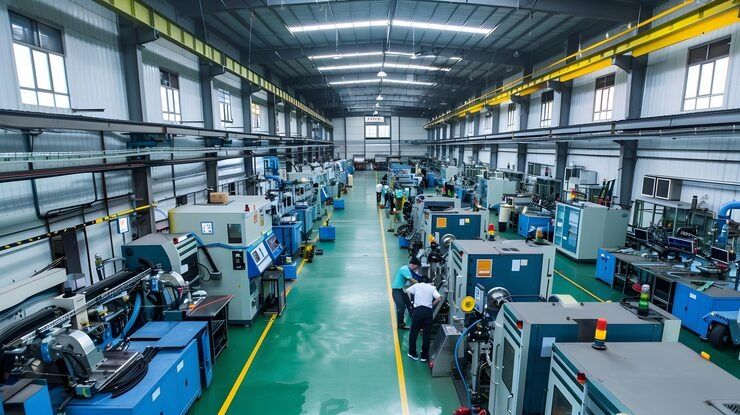
What Are Industrial Production Machines?
Industrial production machines are mechanical or automated systems designed to manufacture, process, or assemble goods on a large scale. They replace manual labor with speed, consistency, and precision that humans simply can't match on their own.
These machines range from simple mechanical presses to fully automated robotic systems guided by artificial intelligence. Regardless of complexity, their core purpose stays the same: transform raw materials into finished or semi-finished products efficiently.
Manufacturers rely on these machines to:
- Increase production speed and output
- Maintain consistent product quality
- Reduce material waste
- Lower long-term operational expenses
- Meet growing market demand without expanding the workforce
Types of Industrial Production Machines
Industrial machines come in many forms, each designed for a specific stage of the manufacturing process. Let's look at the major categories.
1. Forming and Shaping Machines
These machines change the shape of raw materials without removing any material. Think of them as sculptors that bend, press, or stretch metal and plastic into desired forms.
- Hydraulic presses – Used for stamping, bending, and molding metal sheets
- Injection molding machines – Common in plastic manufacturing, especially for producing components like bottle caps, containers, and automotive parts
- Rolling mills – Used to flatten and shape metal into sheets, rods, or bars
A good real-life example is automotive body panels. Hydraulic presses stamp flat metal sheets into curved door panels or hoods within seconds.
2. Cutting and Machining Equipment
Unlike forming machines, cutting machines remove material to achieve the desired shape or size. This category includes some of the most precise machinery in manufacturing.
- CNC (Computer Numerical Control) machines – Automated cutting tools controlled by computer programs
- Lathes – Rotate materials against cutting tools to shape cylindrical parts
- Milling machines – Remove material using rotary cutters, ideal for creating complex shapes and holes
- Laser cutting machines – Use focused light beams for precision cutting, especially in metal fabrication
CNC machining, in particular, has become a high-demand technology across aerospace, automotive, and medical device manufacturing due to its accuracy and repeatability.
3. Assembly Machines
Once individual parts are ready, assembly machines bring them together to create the final product.
- Robotic arms – Used for welding, fastening, and placing components with high precision
- Conveyor-based assembly systems – Move products through different assembly stages automatically
- Pick-and-place machines – Common in electronics manufacturing for placing tiny components onto circuit boards
Electronics manufacturing is a great example here. A single smartphone motherboard may involve thousands of micro-components, all placed accurately by automated pick-and-place systems.
4. Packaging Machines
After production, goods need to be packaged efficiently and hygienically, especially in food, pharmaceutical, and consumer goods industries.
- Filling machines – Used for liquids, powders, or granules
- Sealing and wrapping machines – Ensure products stay protected during storage and transport
- Labeling machines – Apply barcodes, batch numbers, and branding automatically
Think about bottled beverages. From filling to capping to labeling, the entire process happens through a synchronized packaging line, often completing hundreds of bottles per minute.
5. Quality Control and Inspection Machines
Precision matters in manufacturing, and inspection machines make sure nothing defective reaches the market.
- Vision inspection systems – Use cameras and sensors to detect flaws
- Coordinate measuring machines (CMM) – Measure the physical geometrical characteristics of a product
- Weight and dimension sensors – Ensure consistency across mass-produced items
These systems are especially critical in industries like pharmaceuticals and automotive manufacturing, where even minor defects can lead to major safety concerns.
Key Production Technologies Driving Modern Manufacturing
Machines alone aren't enough. It's the technology behind them that makes modern manufacturing so efficient.
Automation and Robotics
Automation has transformed manufacturing floors. Robots now handle repetitive, high-precision, or hazardous tasks, reducing human error and increasing throughput. Automotive plants, for instance, use robotic welding arms that work continuously with minimal downtime.
Computer Numerical Control (CNC) Systems
CNC technology allows machines to follow programmed instructions with extreme accuracy. This eliminates guesswork and manual adjustment, making it ideal for producing complex parts that require tight tolerances.
Industrial Internet of Things (IIoT)
Smart sensors connected to production machines now collect real-time data on performance, temperature, and wear. This helps manufacturers predict maintenance needs before a breakdown occurs, minimizing costly downtime.
3D Printing and Additive Manufacturing
While traditional machines remove or reshape material, 3D printing builds products layer by layer. This technology is gaining traction for prototyping and producing custom parts, especially in aerospace and medical industries.
Artificial Intelligence in Manufacturing
AI-powered systems analyze production data to optimize efficiency, detect anomalies, and even adjust machine settings automatically. This is becoming a major trend across smart factories worldwide.
Manufacturing Applications Across Industries
Industrial production machines aren't limited to one sector. Their applications span across nearly every industry you can think of.
Automotive Industry
From stamping car body parts to assembling engines, automotive manufacturing relies heavily on hydraulic presses, robotic assembly lines, and CNC machining centers.
Electronics Manufacturing
Precision machines handle everything from circuit board assembly to soldering and testing, ensuring devices function reliably.
Food and Beverage Production
Automated filling, packaging, and labeling machines maintain hygiene standards while meeting high production volumes.
Pharmaceutical Manufacturing
Strict quality control machines and automated packaging systems ensure medicines are produced safely and consistently, following strict regulatory standards.
Construction Equipment Manufacturing
Heavy-duty forming and cutting machines shape steel and other materials into components used for machinery, infrastructure projects, and industrial equipment.
Textile Industry
Automated weaving, cutting, and stitching machines have significantly increased production speed while reducing manual labor requirements.
Benefits of Using Industrial Production Machines
Understanding why manufacturers invest heavily in these machines helps clarify their growing importance.
- Higher efficiency – Machines can operate continuously with minimal breaks
- Improved precision – Reduces material waste and product defects
- Scalability – Easily increase production volume based on demand
- Consistency – Every unit produced matches the same quality standard
- Workforce safety – Machines handle dangerous or repetitive tasks, reducing workplace injuries
Challenges to Consider
While industrial machines offer major advantages, there are a few challenges manufacturers should keep in mind:
- Initial investment can be significant, especially for advanced automated systems
- Machines require regular maintenance to avoid unexpected downtime
- Skilled technicians are needed to operate and troubleshoot complex equipment
- Technology upgrades may be necessary to stay competitive in fast-evolving industries
Final Thoughts
Industrial production machines have completely reshaped how goods are made. Whether it's a car rolling off an assembly line, a bottle of juice getting sealed, or a tiny microchip being placed onto a circuit board, these machines make mass production possible with remarkable speed and accuracy.
As technologies like automation, AI, and IIoT continue to advance, manufacturing will only become smarter and more efficient. For businesses looking to scale production, understanding these machines and the technologies behind them is the first step toward building a more productive and future-ready operation.