
Industrial refrigeration systems play an essential role in industries where temperature control is necessary for product quality, process stability, equipment protection, and safe storage.
Unlike ordinary household refrigerators or small commercial cooling units, industrial systems are designed to manage large spaces, continuous operations, demanding temperature ranges, and complex cooling requirements.
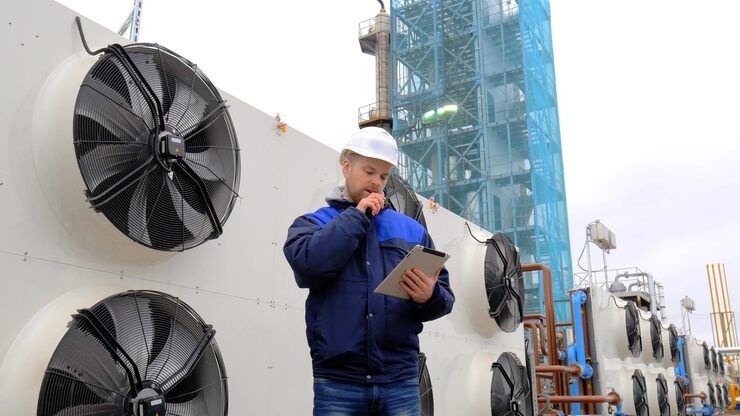
From food processing facilities and cold storage warehouses to pharmaceutical manufacturing and large-scale distribution centers, refrigeration technology supports many modern industrial activities. Understanding how these systems work, what equipment they use, and how different cooling applications are managed can help businesses and technical professionals make better decisions about refrigeration planning and facility operations.
This guide explains the fundamentals of industrial refrigeration systems, including major components, operating principles, system types, applications, maintenance considerations, and emerging developments.
What Is an Industrial Refrigeration System?
An Industrial Refrigeration System is a large-scale cooling arrangement designed to remove heat from industrial environments, processes, products, or storage areas. These systems can operate continuously and may be designed to maintain precise temperatures across multiple zones.
Industrial refrigeration is commonly used where temperature requirements are more demanding than those handled by conventional air-conditioning systems.
Typical applications include:
- Food and beverage processing
- Cold storage warehouses
- Meat and seafood processing
- Dairy facilities
- Pharmaceutical manufacturing
- Chemical processing
- Beverage production
- Distribution centers
- Industrial process cooling
The system selected for a facility depends on the required temperature range, cooling load, operating schedule, building layout, and process requirements.
How Industrial Refrigeration Works
At its core, refrigeration works by transferring heat from a colder area to a warmer environment. Most mechanical refrigeration systems use a continuous cycle involving a refrigerant and several major components.
The basic refrigeration cycle includes four primary stages:
- Evaporation
- Compression
- Condensation
- Expansion
During evaporation, the refrigerant absorbs heat from the space or process being cooled. The compressor then increases the refrigerant's pressure and temperature. In the condenser, heat is released to the surrounding environment, causing the refrigerant to change state. Finally, the expansion device reduces the refrigerant pressure before the cycle begins again.
This continuous process allows the system to maintain the desired temperature.
Major Components of Industrial Refrigeration Equipment
Industrial Refrigeration Equipment consists of several interconnected components. Each part performs a specific function within the cooling cycle.
Compressors
The compressor is often considered the central mechanical component of a refrigeration system. It circulates refrigerant through the system while increasing its pressure.
Common compressor types include:
- Reciprocating compressors
- Screw compressors
- Scroll compressors
- Centrifugal compressors
The appropriate compressor depends on system capacity, temperature requirements, operating conditions, and facility design.
Condensers
Condensers remove heat from the refrigerant after compression. Depending on the system design, heat may be rejected through air, water, or evaporative cooling.
Proper condenser performance is essential because poor heat rejection can reduce system efficiency and affect overall cooling capacity.
Evaporators
Evaporators absorb heat from the environment or process being cooled. They may be installed in cold rooms, processing areas, warehouses, or industrial equipment.
The design of the evaporator depends on factors such as:
- Required temperature
- Airflow
- Humidity
- Space dimensions
- Product characteristics
Expansion Devices
Expansion devices regulate refrigerant flow and reduce pressure before the refrigerant enters the evaporator.
Common examples include:
- Expansion valves
- Electronic expansion valves
- Thermostatic expansion valves
Accurate refrigerant control helps maintain stable cooling conditions.
Understanding an Industrial Refrigeration Plant
An Industrial Refrigeration Plant is a complete facility or centralized installation that generates and distributes cooling for multiple industrial applications.
A refrigeration plant may include:
- Compressors
- Condensers
- Evaporators
- Refrigerant piping
- Pumps
- Storage vessels
- Control systems
- Cooling towers
- Heat exchangers
Centralized refrigeration plants are often used when multiple rooms, production lines, or processing areas require coordinated temperature control.
The system may distribute cooling through refrigerant circuits or secondary cooling fluids, depending on the facility design.
Industrial Refrigeration vs. Commercial Refrigeration
Commercial Refrigeration Systems are generally designed for retail stores, restaurants, supermarkets, hotels, and other commercial environments. Industrial systems, in contrast, are typically designed for larger facilities and more demanding operating conditions.
| Factor | Commercial Refrigeration | Industrial Refrigeration |
|---|---|---|
| Scale | Small to medium | Medium to very large |
| Application | Retail and food service | Manufacturing and processing |
| Cooling demand | Moderate | High or continuous |
| System complexity | Generally simpler | Often highly integrated |
| Temperature control | Standard requirements | May require precise control |
| Operation | Varies by business hours | Often continuous |
The distinction is not always absolute, as some large commercial facilities may use sophisticated refrigeration infrastructure.
Industrial Cooling Systems and Their Applications
Industrial Cooling Systems serve many purposes beyond maintaining cold storage temperatures.
In food processing, refrigeration helps preserve raw materials and finished products while supporting temperature-sensitive production processes.
In pharmaceuticals, controlled cooling may be required for certain products, ingredients, and manufacturing environments.
In chemical industries, cooling systems can help regulate process temperatures and manage heat generated during production.
Cold storage and distribution facilities depend on refrigeration to maintain consistent environmental conditions across large storage areas.
The exact cooling requirements vary significantly between industries, making system design an important technical consideration.
Choosing a Suitable Refrigeration Configuration
The appropriate refrigeration configuration depends on several factors.
Cooling Load
Cooling load refers to the amount of heat that must be removed to maintain the required temperature. It can be affected by:
- Building insulation
- Product temperature
- Door openings
- Ambient conditions
- Equipment heat
- Lighting
- Occupancy
Accurate load calculations help prevent under-sizing or unnecessary system capacity.
Temperature Requirements
Different applications require different temperature ranges. Chilled environments, frozen storage, and deep-freezing operations each have distinct requirements.
The refrigeration system should be designed around the actual operating temperature rather than relying on a general cooling specification.
Operating Schedule
Some facilities operate continuously, while others have variable production schedules. A system designed for continuous operation may require different equipment arrangements from one used intermittently.
Refrigeration Controls and Automation
Modern industrial refrigeration systems increasingly use digital controls and automation to improve monitoring and operational visibility.
Control systems may monitor:
- Temperature
- Pressure
- Refrigerant flow
- Compressor performance
- Energy consumption
- Equipment status
Automated controls can help operators identify unusual operating conditions and respond before they develop into larger problems.
Remote monitoring can also allow technical teams to review system performance without being physically present at every location.
Maintenance and System Reliability
Regular maintenance is important for maintaining safe and consistent refrigeration performance.
Maintenance activities may include:
- Inspecting compressors
- Cleaning condenser surfaces
- Checking refrigerant circuits
- Monitoring pressure levels
- Inspecting electrical connections
- Testing control systems
- Checking insulation
- Reviewing temperature records
Preventive maintenance can help identify developing issues before they interrupt production or storage operations.
Because industrial refrigeration systems are often critical to facility operations, maintenance planning should be integrated into the broader operational schedule.
Refrigerant Selection and Environmental Considerations
Refrigerant selection has become an increasingly important part of refrigeration system design. Different refrigerants have different operating characteristics, environmental impacts, safety considerations, and equipment requirements.
Modern refrigeration planning often considers:
- Energy performance
- Environmental impact
- Regulatory requirements
- Safety characteristics
- Operating temperature
- Equipment compatibility
The selection process should be handled by qualified professionals who understand the technical and regulatory requirements of the specific application.
Energy Efficiency in Industrial Refrigeration
Refrigeration can represent a significant portion of energy use in temperature-controlled facilities.
Several strategies may improve energy performance, including:
- Proper insulation
- Efficient compressor operation
- Variable-speed technology
- Optimized condenser performance
- Automated temperature controls
- Regular equipment maintenance
- Heat recovery where appropriate
Energy efficiency should be considered during both system design and daily operation. Poorly maintained equipment or incorrect temperature settings can increase energy consumption without improving cooling performance.
Future Developments in Industrial Refrigeration
Industrial refrigeration continues to evolve as industries seek greater efficiency, automation, and environmental responsibility.
Important developments include:
- Advanced digital monitoring
- Predictive maintenance technologies
- Smart refrigeration controls
- Lower-impact refrigerants
- Variable-speed compressors
- Heat recovery systems
- Greater integration with industrial energy management
These developments are changing how facilities monitor and operate refrigeration systems. Data-driven controls can provide greater visibility into equipment performance and help identify opportunities for operational improvements.
Frequently Asked Questions
What is an Industrial Refrigeration System?
An Industrial Refrigeration System is a large-scale cooling system designed to remove heat from industrial processes, facilities, products, or storage environments. It is commonly used in food processing, pharmaceuticals, cold storage, chemical manufacturing, and other temperature-sensitive industries.
What equipment is used in industrial refrigeration?
Major Industrial Refrigeration Equipment includes compressors, condensers, evaporators, expansion devices, refrigerant piping, pumps, control systems, and heat exchangers. The exact configuration depends on the facility's cooling requirements.
How is industrial refrigeration different from commercial refrigeration?
Commercial Refrigeration Systems are generally used in retail, hospitality, and food-service environments. Industrial systems are typically larger and designed for continuous operation, higher cooling loads, or specialized industrial processes.
Why is maintenance important for industrial refrigeration?
Maintenance helps support reliable cooling performance, identify equipment issues, maintain temperature stability, and reduce unexpected operational interruptions. It also helps keep major system components functioning properly.
What are Industrial Cooling Systems used for?
Industrial Cooling Systems are used for cold storage, food processing, pharmaceutical applications, chemical processes, manufacturing operations, and other environments where controlled temperatures are necessary.
Conclusion
Industrial refrigeration systems are fundamental to many modern industries that depend on reliable temperature control. From individual refrigeration equipment to complete industrial refrigeration plants, these systems combine mechanical components, refrigerant circuits, control technologies, and monitoring processes to manage demanding cooling requirements.
Understanding how refrigeration cycles operate, how equipment works together, and how system design relates to cooling loads and temperature requirements provides a strong foundation for evaluating industrial cooling applications. As technology advances, greater automation, improved monitoring, energy efficiency, and environmentally responsible refrigerant choices are expected to shape the future of industrial refrigeration.
For facilities that depend on consistent cooling, the most effective approach is to consider the entire refrigeration system as an integrated operation. Equipment selection, system configuration, maintenance, controls, energy management, and environmental considerations all contribute to dependable long-term cooling performance.