Industrial water filtration plays an important role in manufacturing, processing, energy production, and other operations that depend on reliable water quality.
Industrial facilities may use water for equipment cooling, production processes, cleaning, boilers, material handling, or wastewater management. Each application can require different treatment methods because water quality and operating conditions vary considerably.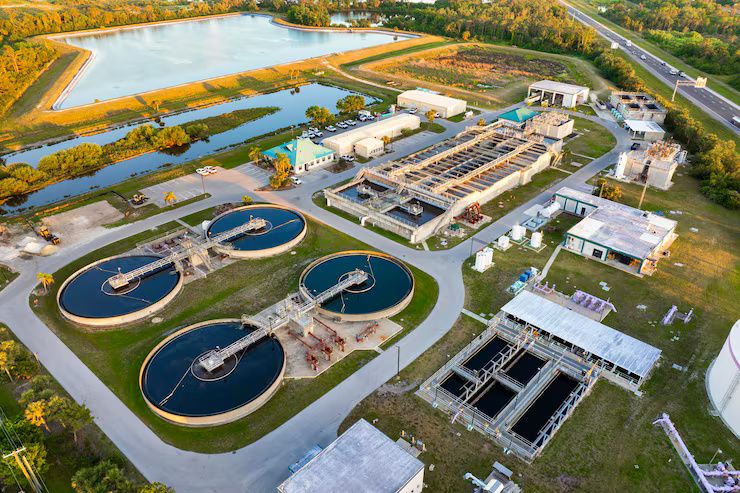
Modern industrial water filtration combines physical separation, chemical treatment, membrane technology, and specialized purification processes. Understanding how these methods work can help facility managers and technical teams evaluate treatment requirements, maintain consistent water quality, and select an appropriate approach for a specific application.
What Is Industrial Water Filtration?
Industrial water filtration is the controlled removal or reduction of unwanted materials from water used within an industrial environment.
Depending on the source and intended application, untreated water may contain suspended solids, sediment, microorganisms, dissolved minerals, oils, organic compounds, or other contaminants. Filtration and related treatment processes are designed to reduce these substances to appropriate levels.
The term filtration can describe several different processes. Some systems physically capture particles, while others use membranes or specialized media to separate dissolved substances. In many facilities, filtration is one stage within a larger water treatment system rather than a standalone process.
The correct treatment method depends on factors such as water chemistry, contaminant characteristics, flow rate, temperature, required water quality, and the intended use of the treated water.
Why Industrial Water Treatment Matters
Water quality can directly influence industrial operations. Poorly treated water may contribute to scaling, corrosion, fouling, equipment damage, process inconsistencies, or increased maintenance requirements.
For example, dissolved minerals can accumulate inside heat-transfer equipment and reduce operating efficiency. Suspended solids can interfere with pumps, valves, membranes, and other components. Biological growth can also create operational challenges in systems where microorganisms are able to multiply.
Effective water treatment helps facilities control these risks while supporting consistent process conditions.
Treatment objectives can vary significantly between applications. Water intended for general processing may have different requirements from boiler feedwater, cooling tower makeup water, or water used in specialized manufacturing processes.
Common Industrial Water Filtration Methods
Multimedia Filtration
Multimedia filters use layers of filtration media with different physical characteristics to capture suspended particles.
Water passes through the media, allowing particulate matter to become trapped within the filter bed. These systems are commonly used as a pretreatment stage because they can reduce suspended solids before water reaches more sensitive treatment equipment.
Periodic backwashing is generally required to remove accumulated material and restore filtration performance.
Activated Carbon Filtration
Activated carbon filtration is designed primarily to reduce certain organic compounds, chlorine, odors, and other substances that can interact with carbon surfaces.
Carbon has a highly porous structure that provides a large surface area for adsorption. It is often used when water contains organic contaminants or residual disinfectants that could interfere with downstream processes.
The effectiveness of activated carbon depends on the characteristics and concentration of the contaminants, contact time, water chemistry, and condition of the carbon media.
Cartridge and Bag Filtration
Cartridge and bag filters provide relatively straightforward particle removal. They are available in different filtration ratings and configurations to address specific particulate requirements.
These filters are often positioned downstream of larger pretreatment stages or before sensitive equipment. Their primary role is mechanical separation rather than removal of dissolved substances.
Filter selection should consider particle characteristics, flow conditions, pressure drop, and the required level of filtration.
Membrane Filtration
Membrane technologies use a selective barrier to separate substances from water. Different membrane processes operate at different separation ranges.
Microfiltration and ultrafiltration can reduce suspended solids, colloids, and certain microorganisms. Nanofiltration can remove smaller dissolved components, while reverse osmosis can substantially reduce many dissolved salts and other impurities.
Membrane systems can produce high-quality treated water, but pretreatment is important because excessive solids, scaling, or fouling can reduce membrane performance.
Reverse Osmosis in Industrial Water Treatment
Reverse osmosis is one of the most widely recognized membrane treatment processes for applications requiring significant reduction of dissolved substances.
During reverse osmosis, pressure is applied to water so that it passes through a semipermeable membrane while many dissolved materials are retained. The process can help reduce dissolved salts, minerals, and other contaminants.
Reverse osmosis systems generally require careful pretreatment and monitoring. Feedwater characteristics, membrane condition, pressure, temperature, recovery, and fouling potential can all influence performance.
It is also important to distinguish reverse osmosis from conventional particle filtration. A particulate filter may capture suspended material, while reverse osmosis addresses a much broader range of dissolved substances.
Ion Exchange and Water Softening
Ion exchange uses specialized resin materials to exchange selected ions in water.
Water softening is a common application. It primarily reduces hardness caused by calcium and magnesium ions, which can contribute to scale formation in equipment and piping.
Other ion exchange processes can target specific dissolved ions depending on the resin chemistry and treatment objective.
Ion exchange can be useful when water chemistry needs to be adjusted before another treatment stage or industrial process. Proper regeneration, monitoring, and resin management are important for maintaining consistent performance.
Selecting the Right Filtration Approach
There is no single filtration method that works equally well for every industrial application. Treatment should begin with an understanding of the water itself and the desired outcome.
Important considerations include:
- Source water characteristics
- Suspended and dissolved contaminants
- Required treated-water quality
- Flow rate and peak demand
- Temperature and operating conditions
- Pretreatment requirements
- Maintenance requirements
- Waste or concentrate management
- Compatibility with downstream equipment
Water analysis is particularly important because two facilities with similar production processes can have significantly different treatment requirements.
A staged treatment system is often more appropriate than relying on one filtration technology. For example, coarse particle removal may occur before finer filtration, followed by membrane treatment or another specialized process.
Monitoring and Maintenance
Even well-designed filtration systems require regular monitoring. Treatment performance can change as filters accumulate solids, membranes become fouled, or media loses effectiveness.
Useful operational indicators may include pressure differential, flow rate, conductivity, turbidity, water chemistry, and treated-water quality. The appropriate measurements depend on the treatment technology and industrial application.
Preventive maintenance can help identify problems before they significantly affect operations. Replacing or regenerating filtration media at appropriate intervals, inspecting system components, and maintaining accurate operating records can improve consistency.
Automation and sensor-based monitoring can also provide continuous visibility into important treatment parameters. However, automated alerts and readings should be interpreted alongside operational conditions rather than treated as isolated indicators.
Challenges in Modern Industrial Filtration
Industrial water treatment can become complex when water contains multiple contaminant types. A system designed to remove suspended solids may not adequately address dissolved minerals, while a membrane system may require substantial pretreatment to protect its membranes.
Fouling and scaling are additional challenges. Fouling can occur when unwanted materials accumulate on filtration surfaces, reducing flow or increasing pressure requirements. Scaling occurs when dissolved substances precipitate and form deposits on equipment or membranes.
Another consideration is concentrate and waste management. Some treatment processes separate contaminants from the treated water rather than destroying them, creating a concentrated stream that must be managed appropriately.
These factors reinforce the importance of designing treatment around actual water chemistry and operational requirements.
Improving Industrial Water Treatment Efficiency
Efficiency does not simply mean using less equipment. It involves matching treatment intensity with the actual requirements of the process.
Facilities can improve water management by monitoring water quality, identifying unnecessary treatment stages, reducing avoidable losses, and evaluating opportunities for appropriate water reuse.
Reuse may involve treating water to a quality suitable for another industrial application rather than requiring the same quality for every use. This approach can help organizations manage water resources more strategically.
Regular performance reviews can also reveal changes in source-water conditions, process demand, or equipment behavior that may require treatment adjustments.
Frequently Asked Questions
What is the purpose of industrial water filtration?
Industrial water filtration removes or reduces unwanted substances from water used in industrial processes. Depending on the technology, treatment can address suspended particles, microorganisms, organic compounds, dissolved minerals, or other contaminants.
What is the most common industrial filtration method?
There is no universally best method. Multimedia filtration, cartridge filtration, activated carbon, ion exchange, ultrafiltration, and reverse osmosis are all used for different treatment objectives.
Is filtration the same as water purification?
No. Filtration generally refers to separating particular substances from water, while purification can involve multiple processes designed to achieve a broader water-quality objective.
Why is pretreatment important for industrial water systems?
Pretreatment can reduce contaminants that might otherwise damage or foul downstream equipment. This is particularly important for membrane systems and other processes that are sensitive to suspended solids, scaling, or organic matter.
How often should industrial filtration systems be maintained?
Maintenance frequency depends on water quality, filtration technology, flow conditions, contaminant loading, and operating requirements. Monitoring system performance provides a more reliable basis for maintenance decisions than using a single universal schedule.
Conclusion
Industrial water filtration is a broad field that includes mechanical filters, activated carbon, ion exchange, membrane processes, reverse osmosis, and other specialized treatment technologies. Each method addresses different water-quality challenges, and many industrial systems combine several stages to achieve the required result.
The most effective approach begins with understanding the source water, identifying relevant contaminants, defining the required water quality, and selecting treatment technologies that match the application. Continuous monitoring and appropriate maintenance then help maintain reliable performance.
As industrial facilities place greater emphasis on water quality, operational reliability, and responsible water management, modern filtration systems can play an important role in maintaining efficient and controlled industrial processes.