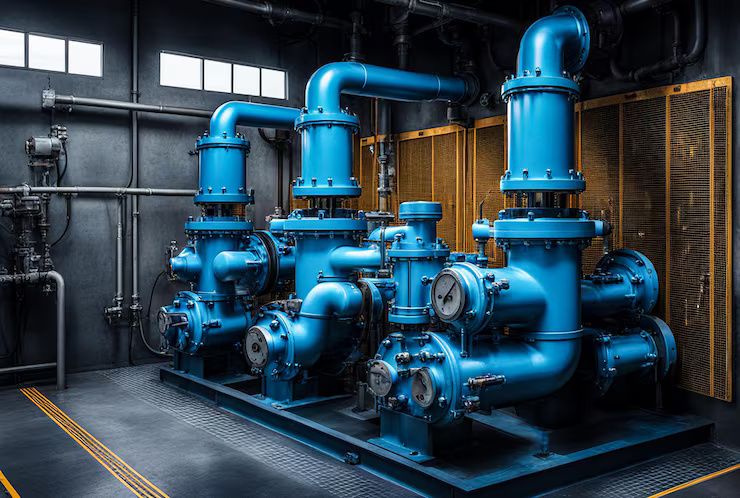
Industrial water pumps are mechanical devices designed to move water from one location to another within industrial, commercial, municipal, agricultural, and infrastructure systems.
They support processes such as water circulation, pressure management, cooling, drainage, irrigation, and wastewater movement.
An industrial water pump can vary significantly in design depending on the required flow rate, pressure, water quality, temperature, and operating environment. Understanding pump types, applications, operating principles, and relevant regulations helps organizations select and operate pumping equipment appropriately.
Context
An industrial water pump converts mechanical energy into hydraulic energy to move water through pipes and other components. Pumps are commonly driven by electric motors, although engines and other power sources can also be used in certain applications.
The two broad categories are dynamic pumps and positive-displacement pumps. Centrifugal pumps are the most common type of dynamic pump for many water applications. They use a rotating impeller to increase the velocity of water before converting that energy into pressure.
Positive-displacement pumps move a defined volume of liquid during each operating cycle. They can be useful where precise flow control or higher pressure is required, although their applications differ from those of conventional centrifugal pumps.
Common industrial water pump types include:
- Centrifugal pumps
- Multistage pumps
- Submersible pumps
- Diaphragm pumps
- Axial-flow pumps
- Mixed-flow pumps
- Vertical turbine pumps
Pump selection depends on factors such as flow rate, total dynamic head, fluid characteristics, pipe arrangement, motor capacity, and operating conditions.
Importance
Industrial water pumps are important because many facilities depend on continuous water movement. Manufacturing plants, power facilities, water treatment facilities, agricultural operations, commercial buildings, and infrastructure systems may all require pumping equipment.
A correctly selected pump can help maintain the required hydraulic conditions within a system. An unsuitable pump may operate outside its intended range, resulting in excessive vibration, inefficient operation, premature component wear, or unstable flow.
Several factors influence pump performance:
| Factor | Why It Matters |
|---|---|
| Flow rate | Determines how much water moves through the system |
| Pump head | Indicates the pressure or elevation the pump must overcome |
| Fluid temperature | Influences materials and operating conditions |
| Water quality | Affects corrosion, abrasion, and component selection |
| Motor power | Determines the energy available to operate the pump |
| Pipe diameter | Influences friction losses and system performance |
| Operating hours | Affects maintenance planning and equipment selection |
Pump efficiency is also important because pumping systems can represent a significant portion of electricity consumption in some industrial facilities. Proper system design, regular inspection, and appropriate controls can help reduce unnecessary energy use.
Recent Updates
Recent developments in industrial water pumping have focused on energy efficiency, automation, monitoring, and improved system control. Variable-frequency drives are increasingly used with compatible pump motors to adjust operating speed according to changing demand.
Digital monitoring has also expanded. Sensors can track variables such as pressure, temperature, vibration, flow, and motor performance. This information can help operators identify unusual operating conditions before they develop into major equipment problems.
Other developments include:
- Improved hydraulic designs for better operating efficiency
- Smart motor controls and variable-speed operation
- Remote equipment monitoring
- Condition-based maintenance approaches
- Improved corrosion-resistant materials
- Automated pump sequencing in multi-pump systems
Modern pumping systems can also be integrated with industrial control platforms. These systems allow operating information to be collected and reviewed alongside other facility data.
Laws or Policies
Industrial water pump installations can be affected by several types of regulations depending on location and application. Requirements may cover electrical safety, environmental protection, water extraction, wastewater management, pressure equipment, workplace safety, and energy efficiency.
In India, industrial facilities may need to consider requirements issued by organizations such as the Bureau of Indian Standards, Central Pollution Control Board, state pollution control authorities, and electrical safety authorities, depending on the application and location.
For example, water abstraction from regulated sources may require authorization under applicable groundwater or environmental rules. Wastewater pumping systems may also be subject to discharge and treatment requirements.
Relevant standards and regulations can change according to the type of facility, water source, discharge destination, and equipment configuration. Organizations should therefore verify current requirements with the appropriate national, state, or local authority before installing or modifying an industrial pumping system.
Tools and Resources
Several technical resources can help engineers, operators, and facility managers understand industrial water pump requirements.
Pump selection commonly involves hydraulic calculations. A basic assessment may consider flow rate, static head, friction losses, pressure requirements, and the physical characteristics of the piping network.
Useful resources include:
- Pump performance curves for evaluating flow and head
- Flow and pressure measurement instruments
- Motor and pump efficiency calculators
- Pipe friction and head-loss calculators
- Manufacturer technical manuals
- Engineering handbooks and hydraulic reference guides
- Applicable national and international standards
A pump curve is particularly useful because it shows how a pump performs under different flow and head conditions. The operating point is determined by the intersection of the pump curve and the system curve.
Maintenance records can also provide useful information. Recording vibration, temperature, pressure, flow, operating hours, and inspection findings can help identify changes in equipment performance over time.
FAQs
What is an industrial water pump?
An industrial water pump is equipment used to move water through industrial, commercial, agricultural, municipal, or infrastructure systems. Its design depends on the required flow, pressure, water characteristics, and operating environment.
What are the main types of industrial water pumps?
Common types include centrifugal, multistage, submersible, axial-flow, mixed-flow, vertical turbine, and diaphragm pumps. Each type has different operating characteristics and application ranges.
How is an industrial water pump selected?
Selection normally considers required flow rate, total head, fluid characteristics, temperature, pipe configuration, motor requirements, operating schedule, and applicable technical standards.
What is pump head?
Pump head represents the energy added to the water by the pump and is commonly expressed as a height of liquid. It accounts for factors such as elevation, pressure differences, and friction losses within a pumping system.
How can pump performance be monitored?
Performance can be monitored using measurements such as flow, pressure, vibration, temperature, motor current, and operating hours. Comparing current measurements with historical operating data can help identify changes in performance.
Conclusion
Industrial water pumps are essential components of many systems that require controlled water movement. Their selection and operation depend on hydraulic requirements, water characteristics, equipment design, energy considerations, and applicable regulations.
Understanding pump types, performance curves, operating conditions, and maintenance requirements can help organizations develop more reliable pumping systems. Regular monitoring and adherence to relevant technical and environmental requirements are also important for safe and effective operation.
The appropriate pump configuration depends on the specific application rather than on pump type alone. Engineering calculations and current regulatory information should be reviewed before implementing an industrial water pumping system.