
Industrial water plays an essential role in manufacturing, food processing, pharmaceuticals, power generation, chemical production, agriculture, and many other sectors.
Depending on the application, water may be used as a raw material, cleaning medium, cooling fluid, boiler feedwater, or process ingredient. However, untreated or poorly managed water can contain suspended solids, dissolved minerals, microorganisms, organic compounds, and other contaminants that interfere with industrial processes.
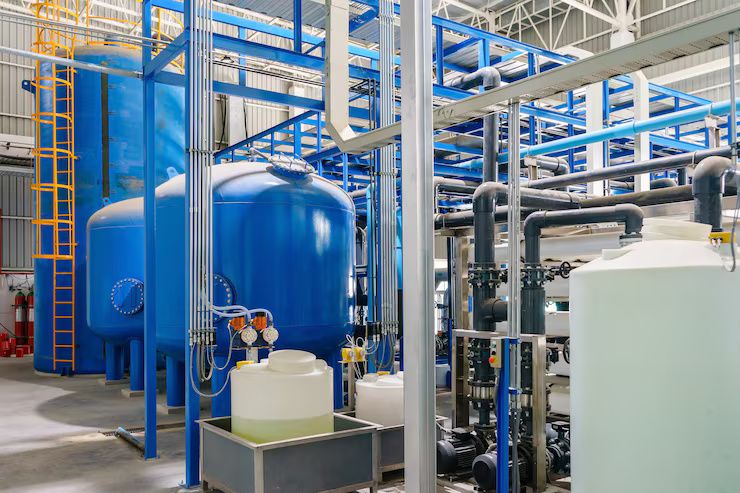
Industrial water purification is therefore an important part of modern facility management. It involves a combination of physical, chemical, and membrane-based processes designed to improve water quality for specific industrial applications. The right approach depends on the source water, contaminant profile, required water quality, process conditions, and environmental requirements.
This guide explains the fundamentals of industrial water purification, how industrial water treatment works, the major technologies involved, and the factors that influence the design of Industrial Water Purification Systems.
What Is Industrial Water Purification?
Industrial water purification is the process of removing or reducing unwanted contaminants from water so that it becomes suitable for a specific industrial purpose.
The term can cover several treatment stages, including:
- Preliminary screening
- Sediment removal
- Filtration
- Water softening
- Activated carbon treatment
- Membrane separation
- Disinfection
- Demineralization
- Specialized chemical treatment
The objective is not always to produce drinking water. Instead, industrial water purification is designed around the requirements of a particular process.
For example, a cooling system may require control of suspended solids and scaling minerals, while a pharmaceutical process may require highly purified water with strict microbiological controls.
Why Industrial Water Treatment Matters
Water quality can directly influence equipment performance, production efficiency, product quality, and environmental management.
Poorly treated water may contribute to:
- Scale formation
- Corrosion
- Equipment fouling
- Microbial growth
- Blocked pipelines
- Reduced heat-transfer efficiency
- Product contamination
- Increased maintenance requirements
Effective Industrial Water Treatment helps facilities maintain consistent water quality while protecting equipment and supporting reliable operations.
It can also help organizations manage water resources more responsibly by enabling water reuse and reducing unnecessary freshwater consumption.
Understanding the Industrial Water Purification Process
There is no single treatment process suitable for every industrial application. Most systems use several stages arranged according to the characteristics of the incoming water and the desired output.
A typical treatment process may include the following stages.
Preliminary Treatment
The first stage removes larger particles and materials that could damage downstream equipment.
Screens, strainers, and settling systems may be used to separate debris and larger suspended solids.
Primary Filtration
Filtration removes finer particles such as sediment, suspended solids, and certain impurities.
Different filtration media may be selected depending on the water source and treatment requirements.
Chemical Conditioning
Some applications require chemical processes to control hardness, pH, corrosion, or scaling.
Treatment chemicals may be carefully managed to achieve the required water characteristics.
Advanced Purification
Advanced technologies may be introduced when higher levels of purification are required.
These can include membrane systems, ion exchange, ultraviolet treatment, or other specialized processes.
Major Industrial Water Purification Systems
Modern Industrial Water Purification Systems often combine several technologies rather than relying on one method.
Industrial Water Filtration Systems
Industrial Water Filtration Systems remove suspended particles and other physical impurities from water.
Common filtration technologies include:
- Sand filtration
- Multimedia filtration
- Cartridge filtration
- Bag filtration
- Microfiltration
The selection depends on particle size, flow requirements, water quality, and the intended application.
Activated Carbon Treatment
Activated carbon is commonly used to reduce organic compounds, chlorine, odors, and certain chemical contaminants.
It is often incorporated into larger treatment systems as one stage of a multi-step purification process.
Water Softening
Hard water contains dissolved calcium and magnesium that can contribute to scale formation.
Water softeners use ion exchange processes to reduce hardness and help protect equipment such as boilers, heat exchangers, and industrial piping.
Reverse Osmosis
Reverse osmosis uses a semi-permeable membrane to remove a wide range of dissolved substances from water.
It is widely used when industries require lower levels of dissolved solids for manufacturing or process applications.
Reverse osmosis is often combined with pretreatment and post-treatment technologies to improve overall system performance.
Ultrafiltration
Ultrafiltration uses membranes with very small pores to separate suspended solids, colloids, bacteria, and certain larger organic molecules.
It is commonly used as a pretreatment or as part of water reuse systems.
Ultraviolet Disinfection
Ultraviolet systems use UV light to help control microorganisms without adding chemical disinfectants directly to the treated water.
UV treatment may be used in applications where microbiological control is important.
Industrial Water Treatment vs. Commercial Water Treatment
Industrial Water Treatment and Commercial Water Treatment Systems share some technologies but often differ in scale, complexity, and water-quality requirements.
| System Type | Typical Focus | Common Applications |
|---|---|---|
| Industrial Water Treatment | Process-specific water quality | Manufacturing and production |
| Industrial Filtration | Suspended solids removal | Process and utility water |
| Commercial Water Treatment Systems | General water quality management | Buildings and commercial facilities |
| Advanced Purification | High-purity water | Specialized industries |
| Water Reuse Systems | Recovery and recycling | Resource conservation |
Industrial facilities often require customized treatment strategies because their water requirements can vary significantly between processes.
Factors That Influence System Design
Several factors should be evaluated when developing an Industrial Water Purification System.
Water Source
Water from municipal supplies, rivers, groundwater, or industrial reuse streams can contain different contaminants.
Understanding the source is essential for selecting appropriate treatment stages.
Contaminant Profile
Water analysis helps identify suspended solids, dissolved minerals, organic compounds, microorganisms, and other substances that may need to be controlled.
Required Water Quality
The desired output quality depends on the intended application.
Cooling water, boiler feedwater, process water, and high-purity applications may require completely different treatment approaches.
Flow Rate
Treatment equipment must be capable of handling the required water volume without compromising performance.
Operating Conditions
Temperature, pressure, chemical exposure, and seasonal changes can influence treatment performance and equipment selection.
Water Reuse and Resource Efficiency
Water reuse has become an increasingly important part of modern Industrial Water Treatment.
Instead of sending all used water directly to wastewater systems, facilities may treat and reuse water for suitable applications.
Potential reuse areas include:
- Cooling systems
- Equipment cleaning
- Process operations
- Irrigation
- Utility applications
Water reuse can help reduce freshwater demand and support more efficient resource management.
However, reused water must be treated according to its intended application. Not every treated wastewater stream is appropriate for every industrial process.
Maintenance of Industrial Water Purification Systems
Regular maintenance is essential for reliable system performance.
Common maintenance activities include:
- Filter replacement
- Membrane cleaning
- Pump inspection
- Pressure monitoring
- Sensor calibration
- Chemical system checks
- Water quality testing
- Leak inspection
Monitoring pressure differences across filters and membranes can help identify fouling or blockage before system performance is significantly affected.
Preventive maintenance also helps identify potential problems early and supports consistent water quality.
Common Challenges in Industrial Water Purification
Industrial water treatment systems can face several operational challenges.
Membrane Fouling
Membranes may accumulate suspended solids, organic matter, or mineral deposits, reducing flow and purification performance.
Scaling
Dissolved minerals can form deposits on equipment and membranes, affecting efficiency.
Corrosion
Certain water conditions may accelerate corrosion in pipelines and equipment.
Microbial Growth
Biological growth can affect water quality and contribute to fouling in some systems.
Changing Water Quality
Seasonal changes or variations in source water can influence treatment requirements.
Effective monitoring and appropriate pretreatment can help address these challenges.
Emerging Trends in Industrial Water Purification
Industrial water treatment is becoming increasingly data-driven.
Emerging developments include:
- Smart water monitoring
- Automated process controls
- Real-time water quality sensors
- Predictive maintenance
- Advanced membrane technologies
- Digital water management platforms
- Increased water recycling
- Energy-efficient treatment processes
Automation allows operators to monitor important parameters continuously and respond to changing conditions more quickly.
Artificial intelligence and data analytics may also support predictive approaches by identifying patterns that indicate potential equipment or water-quality issues.
Frequently Asked Questions
What is industrial water purification?
Industrial water purification is the treatment of water to remove or reduce contaminants so it can meet the quality requirements of a specific industrial process or application.
What are Industrial Water Filtration Systems used for?
Industrial Water Filtration Systems primarily remove suspended solids, sediment, and other physical contaminants from water. They are often used as part of a larger multi-stage treatment process.
How does reverse osmosis help with industrial water treatment?
Reverse osmosis uses a semi-permeable membrane to reduce dissolved salts and other impurities, making it useful for applications requiring lower levels of total dissolved solids.
What is the difference between industrial and commercial water treatment?
Industrial Water Treatment is generally designed around specific manufacturing or process requirements, while Commercial Water Treatment Systems are often intended for buildings and general commercial water applications.
Why is water reuse important for industry?
Water reuse allows treated water to be recovered for suitable applications, helping facilities reduce freshwater demand and improve overall resource efficiency.
Conclusion
Industrial water purification is a critical component of modern industrial operations, supporting reliable processes, equipment protection, product quality, and responsible water management. From basic Industrial Water Filtration Systems to advanced membrane technologies and water reuse solutions, treatment strategies can be tailored to meet specific operational requirements.
The most effective Industrial Water Purification Systems begin with a clear understanding of the water source, contaminant profile, required quality, flow rate, and intended application. As digital monitoring, automation, advanced membranes, and resource-recovery technologies continue to develop, Industrial Water Treatment is becoming more efficient, adaptable, and focused on sustainable water management. For facilities of all sizes, understanding these fundamentals provides a strong foundation for making informed decisions about water quality and long-term system performance.