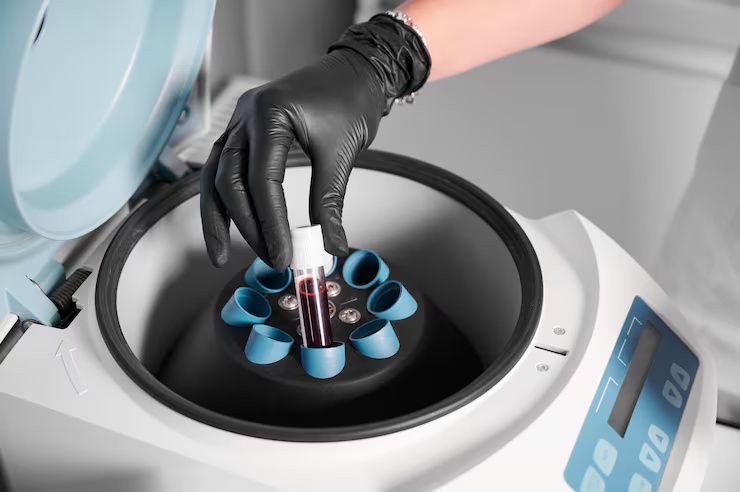
Lab centrifuge machines are laboratory instruments used to separate substances based on differences in density by spinning samples at high speed. Through centrifugal force, heavier components move outward and settle faster than lighter ones, enabling efficient separation of liquids, solids, or mixed phases. Centrifuges are essential tools in medical diagnostics, biotechnology, pharmaceuticals, chemical research, food testing, environmental analysis, and academic laboratories.
Lab centrifuge machines exist because many laboratory processes require precise and rapid separation that cannot be achieved by gravity alone. From blood analysis to protein purification, centrifugation supports accuracy, speed, and repeatability in scientific workflows.
Context: What Lab Centrifuge Machines Are and Why They Exist
Centrifuge machines were developed to overcome the limitations of natural sedimentation. In laboratory environments, waiting for materials to separate naturally is often impractical and inaccurate, especially when dealing with small volumes or fine particles.
Lab centrifuge machines exist to:
-
Separate components based on density
-
Speed up analytical and preparation processes
-
Improve accuracy in diagnostics and research
-
Support standardized laboratory procedures
-
Enable high-throughput sample processing
Over time, centrifuges evolved from simple mechanical devices into precision-controlled laboratory systems with digital controls, safety features, and application-specific designs.
Importance: Why Lab Centrifuge Machines Matter Today
Lab centrifuge machines are critical in modern laboratories due to the growing demand for speed, accuracy, and reproducibility.
Key Reasons Lab Centrifuge Machines Are Important
1. Accurate Sample Separation
Ensures reliable analysis and test results.
2. Time Efficiency
Reduces processing time compared to manual or gravity-based methods.
3. Broad Scientific Utility
Used across healthcare, research, and industrial labs.
4. Process Consistency
Standardized centrifugation improves repeatability.
5. Safety & Hygiene
Closed systems reduce contamination and exposure risks.
This topic is relevant to laboratory technicians, researchers, healthcare professionals, quality control teams, and scientific equipment managers.
Recent Updates: Lab Centrifuge Technology Trends (2024–2025)
Centrifuge technology continues to advance with automation and laboratory digitalization.
1. Smart & Digital Controls
Touchscreen interfaces and programmable settings improve ease of use.
2. Improved Safety Systems
Automatic lid locking and imbalance detection are now standard.
3. Compact & Energy-Efficient Designs
Smaller footprints support space-limited laboratories.
4. High-Speed & Ultra-Centrifugation
Used in molecular biology and advanced research.
5. Low-Noise Operation
Enhanced motor and rotor designs reduce vibration and noise.
Laws & Standards Affecting Lab Centrifuge Machines
Lab centrifuge machines must comply with laboratory safety and quality standards.
Key considerations include:
-
Laboratory equipment safety regulations
-
Electrical and mechanical safety certifications
-
Clinical and diagnostic laboratory standards
-
Good Laboratory Practice (GLP) guidelines
-
Biosafety and contamination control requirements
Compliance ensures safe operation, reliable results, and regulatory acceptance.
Types of Lab Centrifuge Machines
Lab centrifuges are categorized based on speed, application, and sample capacity.
Clinical Centrifuges
Used for routine medical and diagnostic testing.
Common in hospitals and pathology labs.
Microcentrifuges
Designed for small-volume samples.
Used in molecular biology and research labs.
Refrigerated Centrifuges
Maintain low temperatures during operation.
Used for temperature-sensitive samples.
High-Speed Centrifuges
Operate at higher rotational speeds.
Used in biochemical and pharmaceutical research.
Ultra-Centrifuges
Achieve extremely high speeds and forces.
Used in advanced molecular and particle studies.
Hematocrit Centrifuges
Specialized for blood cell separation.
Used in clinical diagnostics.
Working Principle: How Lab Centrifuge Machines Operate
Lab centrifuge machines operate on the principle of centrifugal force.
-
Samples are placed in balanced containers or tubes
-
The rotor spins at high speed
-
Centrifugal force pushes denser components outward
-
Lighter components remain closer to the center
-
Separated layers form based on density
-
Samples are removed for further analysis
Speed, time, and rotor type determine separation efficiency and outcome.
Key Components of a Lab Centrifuge
-
Rotor (fixed-angle or swing-out)
-
Motor and drive system
-
Control panel or digital interface
-
Safety lid and locking mechanism
-
Sample holders or adapters
-
Cooling system (for refrigerated models)
Each component contributes to accuracy, safety, and performance.
Applications of Lab Centrifuge Machines
Lab centrifuge machines are used across a wide range of scientific fields.
Medical & Clinical Laboratories
Blood separation, plasma extraction, urine testing.
Biotechnology & Life Sciences
DNA, RNA, and protein separation.
Pharmaceutical Industry
Drug formulation and quality testing.
Chemical & Environmental Testing
Suspension and sediment analysis.
Food & Beverage Testing
Fat content and quality control testing.
Academic & Research Institutions
Experimental studies and sample preparation.
Table: Types of Lab Centrifuges and Their Uses
| Centrifuge Type | Speed Range | Common Applications |
|---|---|---|
| Clinical Centrifuge | Low–Medium | Medical diagnostics |
| Microcentrifuge | Medium–High | Molecular biology |
| Refrigerated Centrifuge | Medium–High | Temperature-sensitive samples |
| High-Speed Centrifuge | High | Biochemical research |
| Ultra-Centrifuge | Very High | Advanced molecular analysis |
| Hematocrit Centrifuge | Medium | Blood testing |
How to Choose the Right Lab Centrifuge Machine
Define the Application
Clinical, research, or industrial use.
Determine Sample Volume & Speed
Small volumes need microcentrifuges; large volumes need high-capacity units.
Select Rotor Type
Fixed-angle or swing-out based on separation needs.
Consider Temperature Control
Refrigeration is essential for sensitive samples.
Evaluate Safety & Compliance
Ensure certified safety features and standards.
Assess Maintenance Requirements
Ease of cleaning and servicing improves reliability.
Frequently Asked Questions
1. What is the most common lab centrifuge type?
Clinical centrifuges are widely used in diagnostic laboratories.
2. Why is sample balancing important?
Proper balance prevents vibration and equipment damage.
3. Do centrifuges require regular calibration?
Yes, calibration ensures accurate speed and separation.
4. Can one centrifuge be used for multiple applications?
Some models support interchangeable rotors for versatility.
5. Are refrigerated centrifuges always necessary?
Only for temperature-sensitive samples.
Conclusion
Lab centrifuge machines are fundamental tools that enable accurate, efficient, and reliable sample separation across medical, research, and industrial laboratories. By applying controlled centrifugal force, these machines support essential scientific and diagnostic processes.
Understanding centrifuge types, working principles, applications, and selection criteria helps laboratories choose equipment that aligns with their operational needs and compliance requirements. As laboratory science advances, centrifuge machines continue to evolve, supporting precision, safety, and productivity in modern research and diagnostics.