Lifting equipment includes mechanical and powered devices used to raise, lower, move, or position heavy materials and loads.
Common examples include cranes, hoists, lifting tables, winches, jacks, slings, shackles, and other lifting accessories. These systems are used across construction, manufacturing, warehouses, logistics, ports, energy facilities, and maintenance environments.
Understanding lifting equipment types and uses helps workers, supervisors, engineers, and facility managers choose suitable equipment and recognize basic safety requirements. Proper selection depends on factors such as load weight, lifting height, movement distance, working environment, equipment capacity, and the nature of the load.
Context
Lifting equipment is designed to reduce the physical effort required to move loads that cannot be handled safely or efficiently by people alone. Equipment ranges from relatively simple manual devices to large electrically, hydraulically, or mechanically powered machines.
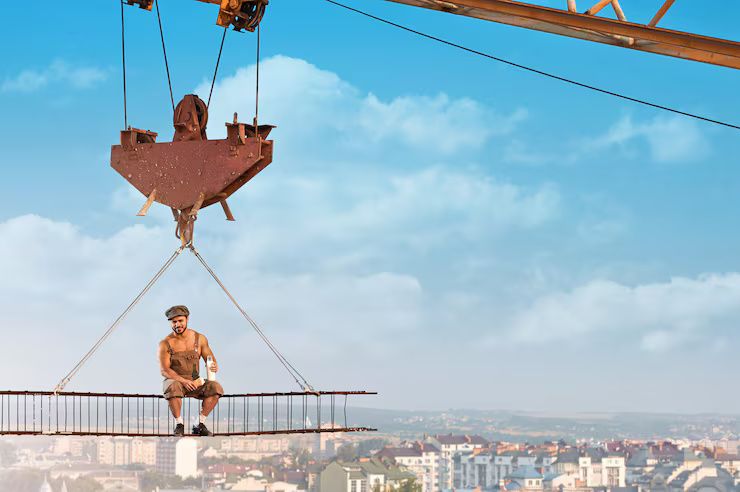
Cranes are among the most recognizable forms of lifting equipment. Mobile cranes can move around work areas, while tower cranes are commonly used on large construction projects. Overhead and gantry cranes are frequently found in factories, workshops, and warehouses where loads need to travel along a defined path.
Hoists provide controlled vertical movement. They may be powered by electricity, compressed air, or manually operated mechanisms. Chain hoists and wire-rope hoists are common examples.
Lifting accessories connect the load to the lifting machine. These can include wire-rope slings, chain slings, web slings, shackles, hooks, lifting beams, and clamps. Their capacity and condition are important because an accessory can affect the safety of the entire lifting arrangement.
| Equipment type | Typical use | Main characteristic |
|---|---|---|
| Mobile crane | Construction and outdoor lifting | Relocatable lifting system |
| Tower crane | High-rise construction | High reach and vertical lifting |
| Overhead crane | Factories and workshops | Controlled movement along rails |
| Hoist | Vertical load movement | Precise raising and lowering |
| Winch | Pulling and controlled movement | Cable or rope-based operation |
| Jack | Short-distance lifting | Compact lifting mechanism |
| Sling | Connecting loads | Flexible load attachment |
| Lifting table | Workplace material positioning | Adjustable working height |
The intended purpose of lifting equipment is not simply to move heavy objects. It also allows loads to be positioned accurately, reduces manual handling demands, and supports organized material movement.
Importance
Lifting equipment affects many workplaces because uncontrolled loads can create significant hazards. A dropped, unstable, or improperly attached load can cause serious injury, equipment damage, structural damage, or disruption to operations.
Correct equipment selection begins with understanding the load. Important factors include:
- Total load mass and dimensions
- Center of gravity
- Required lifting height
- Required horizontal movement
- Ground or supporting surface
- Environmental conditions
- Available clearance
- Equipment rated capacity
- Compatibility of lifting accessories
The rated capacity should not be treated as a general indication that any load can be lifted in every configuration. Crane capacity, for example, can change according to boom length, operating radius, configuration, and ground conditions.
Inspection is also important. Components such as wire ropes, chains, hooks, brakes, limit devices, wheels, structural members, and attachment points can deteriorate through repeated use, corrosion, impact, overload, or unsuitable operating conditions.
Training and communication are equally important. Operators, riggers, signal persons, supervisors, and other workers involved in lifting activities need appropriate knowledge for their responsibilities. A lifting plan should identify the load, equipment, attachment method, movement path, hazards, and control measures.
Recent Updates
Lifting technology continues to develop through digital monitoring, automation, electrification, and improved inspection practices. Modern cranes and hoists may incorporate sensors that monitor load conditions, operating hours, movement, temperature, or other equipment parameters.
Digital systems can also help organizations maintain inspection records and identify equipment conditions that require attention. Telematics can provide information about equipment use and operating patterns, while connected monitoring systems can support preventive maintenance planning.
Electric lifting equipment is another important development. Battery-powered and electrically driven machines can reduce dependence on conventional combustion engines in suitable applications. Their practical use depends on factors such as lifting capacity, duty cycle, battery capacity, charging infrastructure, and operating environment.
Automation is also becoming more common in controlled industrial environments. Automated cranes and material-handling systems can perform repetitive movements according to programmed instructions. However, automation does not remove the need for risk assessment, inspection, suitable guarding, and competent oversight.
Modern safety systems may include:
- Load monitoring and overload protection
- Anti-collision systems
- Limit switches
- Crane cameras and remote monitoring
- Digital inspection records
- Position and movement sensors
- Emergency stopping systems
These developments are intended to improve visibility, control, and operational consistency rather than replace fundamental safety procedures.
Laws or Policies
Lifting equipment requirements vary according to the country, industry, equipment type, and workplace conditions. Organizations should follow the regulations applicable to their location and activity.
In the United States, OSHA's construction rules include 29 CFR Part 1926 Subpart CC, which covers cranes and derricks used in construction. The requirements address areas such as ground conditions, assembly and disassembly, power-line safety, wire rope, signals, fall protection, operational controls, and equipment inspection.
OSHA also requires attention to ground conditions when covered lifting equipment is assembled or used. Ground conditions must provide adequate support, with supporting materials used when necessary according to applicable requirements and manufacturer specifications.
In the United Kingdom, the Lifting Operations and Lifting Equipment Regulations 1998, commonly called LOLER, apply to lifting equipment used at work. The regulations require lifting operations to be properly planned, appropriately supervised, and carried out safely. Equipment must be suitable for its intended use, adequately strong and stable, appropriately marked, and subject to thorough examination in applicable circumstances.
LOLER also establishes requirements for examination records and reporting defects. A thorough examination is a systematic assessment carried out by a competent person, with findings documented in a report.
International standards can provide additional technical guidance. ISO 9927-1 addresses general inspection requirements for cranes and is intended to support systematic inspection practices.
Because regulations differ between jurisdictions, workplace operators should consult the relevant government authority, applicable legislation, manufacturer documentation, and recognized technical standards before establishing lifting procedures.
Tools and Resources
Several resources can help people understand lifting equipment requirements and plan safer operations. Manufacturer manuals are particularly important because they provide equipment-specific capacity information, operating limitations, inspection instructions, and configuration requirements.
Useful resources include:
- OSHA regulations and construction safety guidance
- UK HSE lifting equipment guidance
- ISO crane inspection standards
- Manufacturer load charts and operating manuals
- Lifting plans and risk-assessment templates
- Load-weight and center-of-gravity calculations
- Inspection and examination records
- Equipment maintenance logs
- Training and competency records
Load calculations should be based on reliable measurements and appropriate engineering information. When a load has an unusual shape or an uncertain center of gravity, a qualified person may need to determine the correct lifting arrangement.
For cranes, load charts are particularly important because allowable capacity can vary with operating radius, boom configuration, counterweight arrangement, and other conditions. Operators should use the chart applicable to the exact equipment configuration.
FAQs
What is lifting equipment?
Lifting equipment refers to work equipment used to raise, lower, or move loads. Examples include cranes, hoists, winches, jacks, and various lifting accessories.
What are the main types of lifting equipment?
Common types include mobile cranes, tower cranes, overhead cranes, gantry cranes, hoists, winches, lifting tables, jacks, slings, shackles, and lifting beams. The appropriate type depends on the load and operating conditions.
Why is lifting equipment inspection important?
Inspection helps identify deterioration, damage, deformation, wear, corrosion, and other conditions that could affect safe operation. The required inspection or examination frequency depends on applicable regulations, equipment type, use, and manufacturer guidance.
What does rated capacity mean?
Rated capacity is the maximum load an item or configuration is designed to handle under specified conditions. It does not mean that the same capacity applies under every operating arrangement.
Who should operate lifting equipment?
Equipment should be operated by people who have the training, knowledge, and competency required for the specific equipment and workplace conditions. Some jurisdictions also have formal certification or qualification requirements for particular equipment.
Conclusion
Lifting equipment plays an important role in construction, manufacturing, logistics, warehousing, energy, and many other industries. Cranes, hoists, winches, jacks, slings, and related equipment allow heavy loads to be moved and positioned while reducing manual handling demands.
Safe use depends on suitable equipment selection, accurate load assessment, proper attachment, competent operation, inspection, maintenance, and compliance with applicable regulations. Technological developments such as sensors, digital records, electric systems, and automation are expanding the ways lifting activities can be monitored and controlled.
Understanding the characteristics and limitations of each lifting equipment type is essential before planning a lifting activity. Equipment documentation, regulatory guidance, inspection records, and competent personnel should form the basis of workplace lifting practices.
As requirements differ by location and application, organizations should verify the rules that apply to their specific workplace. Manufacturer instructions and relevant technical standards should also be considered when developing lifting procedures and risk controls.