
Metal cutting band saws are machine tools designed to cut metal stock into specified lengths or shapes.
They use a continuous toothed blade that travels around two or more wheels, creating a controlled cutting motion through materials such as steel, aluminum, copper, brass, and various alloys. Unlike circular saws, the blade moves in a continuous loop, which allows the machine to make relatively narrow cuts while maintaining a steady cutting action.
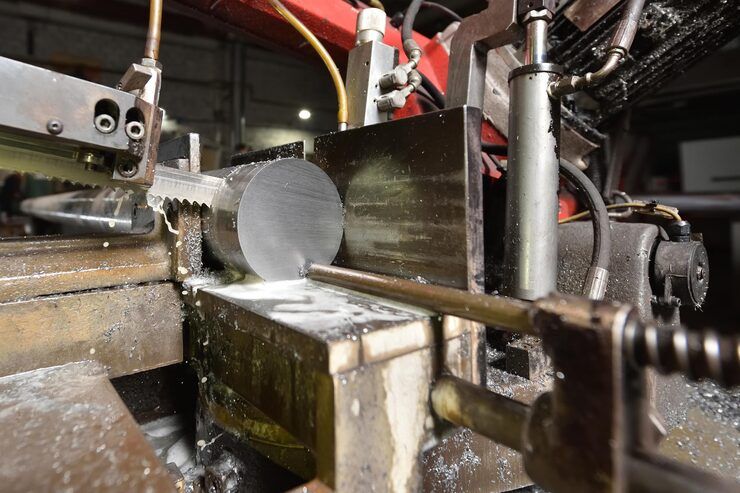
The development of band sawing is connected to the broader growth of industrial metalworking. As manufacturing expanded, workshops needed equipment that could divide bars, tubes, pipes, structural sections, and other metal stock with greater consistency than manual cutting methods. Modern machines incorporate mechanical, hydraulic, electrical, and digital controls to regulate cutting operations.
An industrial metal band saw generally consists of a frame, blade wheels, cutting blade, drive motor, material vise, guides, and control system. Depending on the design, the machine may operate horizontally or vertically. Horizontal machines are commonly associated with cutting metal stock to length, while vertical configurations can be used for contour cutting and other fabrication tasks.
A metal cutting band saw machine works by feeding the material toward a moving blade while controlling the blade speed and downward pressure. Blade tooth design, material thickness, workpiece shape, and material hardness all influence how the cutting process should be configured.
Importance
Metal cutting equipment plays an important role in manufacturing, construction, maintenance, fabrication, and metal processing. Many metal products begin as longer pieces of stock that must be divided into manageable sections before drilling, welding, machining, assembly, or further fabrication.
An industrial band saw machine can help address several practical challenges associated with metal preparation. Controlled cutting can make it easier to maintain consistent dimensions, organize material batches, and prepare components for subsequent production stages.
The equipment also matters because different metals respond differently to cutting. Aluminum may require different blade characteristics and cutting parameters from stainless steel, while thicker structural sections place different demands on the machine than small tubes or bars.
Several factors influence the suitability of a band saw for a particular application:
- Material type and hardness
- Workpiece dimensions
- Required cutting angle
- Blade tooth configuration
- Blade speed
- Cutting pressure
- Production volume
- Available workspace
- Material handling method
Safe operation is another important consideration. Operators generally need to secure the workpiece firmly, keep hands away from the cutting area, use appropriate protective equipment, and follow the machine manufacturer's operating instructions.
Understanding Material Handling
Material handling begins before the cutting cycle. Long bars, pipes, and structural sections may require rollers, tables, cranes, carts, or other suitable equipment to position the material correctly.
After cutting, sections should be supported so that they do not fall unexpectedly or interfere with the blade. Proper alignment also reduces the possibility of uneven cutting caused by movement during the process.
Cutting Accuracy and Blade Selection
Blade selection has a direct relationship with cutting performance. Band saw blades are available with different tooth pitches, tooth forms, widths, and materials. A finer tooth arrangement can be appropriate for thinner sections, while larger tooth spacing may be used for thicker material.
Blade tension and alignment are also important. Excessive or insufficient tension can affect blade tracking and cutting behavior. For this reason, machine settings should be selected according to the equipment specifications and workpiece requirements.
Recent Updates
Recent developments in metal sawing have generally focused on automation, digital monitoring, energy management, blade technology, and improved material handling. These developments reflect a wider movement toward connected manufacturing environments in which machines can collect operating information and help production teams monitor processes.
Automation is increasingly associated with functions such as automatic material feeding, programmable cutting cycles, blade monitoring, and digital control panels. Depending on machine configuration, these features can reduce the amount of manual adjustment required between repeated cutting operations.
Another development is the integration of sensors and electronic controls. Industrial equipment may monitor variables such as blade load, cutting pressure, motor conditions, or operating cycles. Data from these systems can help operators identify unusual operating conditions and understand equipment usage.
Blade technology has also continued to evolve. Manufacturers have developed blades with different tooth geometries and cutting materials for applications involving difficult-to-cut alloys, structural metals, tubing, and other workpieces. The appropriate blade remains dependent on the specific material and machine configuration rather than on a single universal design.
Material handling is another area receiving attention. Automated feeding systems, powered rollers, and programmable positioning mechanisms can help coordinate longer workpieces with cutting equipment. Integration between handling equipment and an industrial band saw machine can also support more organized production workflows.
| Machine consideration | Typical purpose | Factors to evaluate |
|---|---|---|
| Blade speed | Controls cutting motion | Material type and thickness |
| Tooth pitch | Determines tooth spacing | Workpiece dimensions |
| Blade tension | Supports blade tracking | Machine specifications |
| Material vise | Holds the workpiece | Shape and stability |
| Feed pressure | Controls blade engagement | Material hardness |
| Roller table | Supports long stock | Length and weight |
| Digital controls | Manages machine settings | Automation requirements |
Current equipment design also places greater emphasis on operator interfaces and process visibility. Touchscreen controls, programmable settings, alarms, and digital displays can make machine conditions easier to observe, although the exact functions differ between machine models.
Tools and Resources
Several practical resources can help readers understand and work with metal cutting equipment. Manufacturer manuals are among the most important references because they provide machine-specific information about blade installation, tension, lubrication, operating limits, and safety procedures.
Blade-selection charts can help users compare tooth pitches and blade configurations for different material dimensions. These charts should be interpreted alongside the blade manufacturer's specifications because recommended settings vary according to blade construction and application.
Material calculators can also be useful when estimating dimensions, weights, or cutting requirements. Common examples include calculators for metal weight, tube dimensions, bar measurements, and cutting-length calculations.
Industry standards and technical publications provide additional background on metalworking practices. Organizations such as the International Organization for Standardization and national standards bodies publish technical information covering manufacturing processes, dimensions, materials, and related subjects.
Machine documentation can also be used to create simple operating checklists. A checklist may include workpiece inspection, blade condition, vise positioning, coolant or lubrication requirements where applicable, machine settings, and post-cut inspection.
For general learning, educational resources from technical colleges, engineering departments, equipment manufacturers, and industrial training organizations can provide explanations of sawing principles, blade geometry, and material behavior.
FAQs
What are metal cutting band saws used for?
Metal cutting band saws are used to cut metal bars, pipes, tubes, profiles, plates, and structural sections into required lengths or shapes. Their applications can range from general fabrication to industrial production.
How does a metal cutting band saw machine work?
A metal cutting band saw machine uses a continuous toothed blade that moves around rotating wheels. The workpiece is secured while the blade passes through the material under controlled cutting conditions.
What is an industrial metal band saw?
An industrial metal band saw is a machine designed for metal cutting applications in manufacturing, fabrication, workshops, and other industrial environments. Its configuration may include powered feeding, hydraulic controls, automated cutting cycles, and material support systems.
What should be considered when selecting an industrial band saw machine?
Important considerations include the material being cut, maximum workpiece dimensions, cutting angles, blade characteristics, machine capacity, feeding method, automation level, and available workspace.
Why is material handling important when using band saw equipment?
Proper material handling helps maintain workpiece stability and alignment before, during, and after cutting. Long or heavy materials may require suitable support equipment to reduce unwanted movement and improve workplace organization.
Conclusion
Metal cutting band saws provide a controlled method for dividing a wide range of metal materials into usable sections. Their operation depends on coordinated factors such as blade selection, cutting speed, workpiece stability, and material handling. Recent equipment developments have increasingly incorporated digital controls, automation, monitoring, and improved feeding systems. Understanding these fundamentals helps readers recognize how an industrial band saw machine fits into modern metalworking processes.