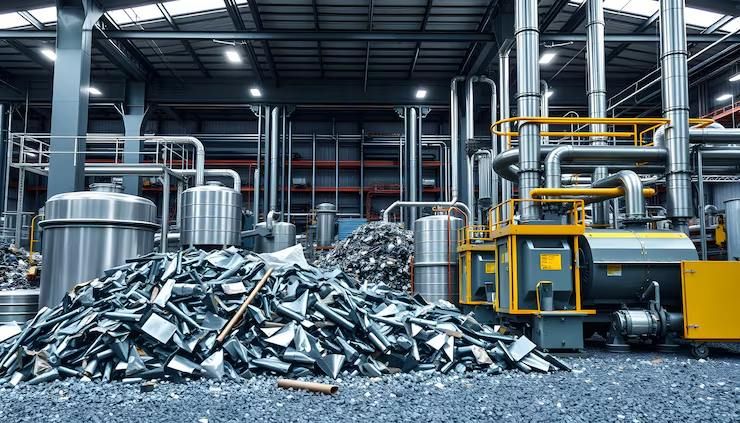
Metals recycling equipment is used to process discarded metal products, industrial scrap, end-of-life vehicles, electronic waste, and manufacturing residues into reusable metal materials. These machines support material recovery through shredding, cutting, compaction, separation, sorting, and preparation for further processing.
Modern metal recycling facilities combine mechanical equipment with magnetic separation, eddy current technology, sensor-based sorting, and automated material handling. The appropriate equipment depends on the metal type, scrap dimensions, contamination level, processing capacity, and intended output.
Context
What Is Metals Recycling Equipment?
Metals recycling equipment refers to industrial machinery used to collect, prepare, separate, and recover ferrous and non-ferrous metals from waste streams. Ferrous metals contain iron, while non-ferrous metals include aluminum, copper, brass, zinc, and other metals.
The equipment may operate as individual machines or as part of an integrated recycling line. A typical processing facility may include feeding conveyors, shredders, shears, balers, magnetic separators, eddy current separators, sensor-based sorters, and dust collection systems.
Some facilities process scrap into sorted metal fractions for use by foundries and metal producers. Others include melting, refining, and casting operations that convert recovered materials into ingots, billets, or other metal products.
Equipment selection requires an understanding of scrap composition, particle size, bulk density, moisture, contamination, and downstream processing requirements.
Major Types of Metals Recycling Equipment
1. Metal Shredders
Metal shredders reduce bulky scrap into smaller fragments using rotating cutting elements, hammers, or other size-reduction mechanisms. They process materials such as vehicle scrap, appliances, metal containers, and mixed industrial scrap.
Single-shaft, twin-shaft, and hammer-mill designs serve different applications. Pre-shredders may be installed before secondary shredding to handle large or irregular materials.
2. Scrap Metal Shears
Scrap shears cut large metal sections into manageable pieces. Common configurations include guillotine shears, alligator shears, container shears, and gantry shears.
These machines use mechanical or hydraulic force to process structural steel, heavy scrap, metal sections, and other materials that require controlled cutting before transport or melting.
3. Metal Baling Machines
Baling machines compress loose metal scrap into dense, manageable bundles. Hydraulic balers are commonly used for sheet metal, aluminum scrap, steel offcuts, and selected packaging-related metal waste.
Baling improves storage and transport efficiency by reducing the volume occupied by loose materials.
4. Briquetting Machines
Metal briquetting machines compress fine metal turnings, chips, and swarf into compact blocks. These machines are particularly relevant to machining facilities that generate aluminum, steel, copper, or other metal residues.
Briquetting can simplify handling and may support recovery of cutting fluids when the equipment includes suitable fluid collection arrangements.
5. Magnetic Separators
Magnetic separators remove ferrous metals from mixed material streams. Suspended magnets, magnetic drums, and magnetic pulleys are used in scrap processing, waste management, and material recovery.
These systems are often installed after shredding, where fragmented steel and iron can be separated from non-magnetic material.
6. Eddy Current Separators
Eddy current separators recover conductive non-ferrous metals, particularly aluminum, copper, and brass, from mixed waste streams. A rapidly rotating magnetic rotor generates a changing magnetic field that induces currents in conductive particles, creating a force that diverts them from other materials.
They are frequently installed after ferrous metal removal. <Cite refs={["turn917467search7","turn917467search9"]}/>
7. Sensor-Based Metal Sorting Systems
Sensor-based sorting equipment identifies material characteristics using technologies such as X-ray transmission, X-ray fluorescence, optical sensing, and other analytical methods.
These systems can help separate mixed metal fractions and distinguish certain alloy categories. The achievable separation depends on the sensor technology, material presentation, particle size, and composition.
8. Cable Recycling Machines
Cable recycling systems process discarded electrical cables to recover copper or aluminum conductors from insulation. Equipment may include cable cutters, shredders, granulators, screens, and air or density separators.
The process configuration depends on cable dimensions, conductor material, insulation type, and the required purity of the recovered metal.
9. Metal Handling Equipment
Material handlers, lifting magnets, hydraulic grabs, conveyors, hoppers, and loaders move scrap between processing stages. Appropriate handling equipment helps maintain consistent feed rates and reduces manual movement of heavy materials.
10. Dust Collection and Pollution-Control Equipment
Shredding, cutting, and sorting can generate dust, fumes, and fine particles. Extraction hoods, ductwork, filtration units, and other pollution-control equipment help manage emissions and maintain suitable working conditions.
Comparison of Metals Recycling Equipment Types
| Equipment type | Primary function | Common materials |
|---|---|---|
| Metal shredder | Reduces scrap dimensions | Mixed scrap, appliances, vehicle scrap |
| Scrap shear | Cuts large metal sections | Steel sections and heavy scrap |
| Hydraulic baler | Compresses loose scrap | Sheet metal, aluminum, steel offcuts |
| Briquetting machine | Compacts metal chips | Machining turnings and swarf |
| Magnetic separator | Removes ferrous metals | Iron and steel fragments |
| Eddy current separator | Separates conductive non-ferrous metals | Aluminum, copper, brass |
| Sensor-based sorter | Identifies selected materials and alloys | Mixed metal fractions |
| Cable recycling line | Separates conductors from insulation | Copper and aluminum cables |
| Material handler | Moves scrap between processing stages | Bulky and loose metal scrap |
Importance of Metals Recycling Equipment
Metals recycling equipment helps recover valuable raw materials from discarded products and manufacturing residues. Recovered metals can re-enter industrial production, reducing the need to obtain all metal feedstock from newly extracted ores.
Mechanical processing improves the handling characteristics of scrap. Shredding creates smaller fragments, shearing reduces oversized sections, and baling produces dense bundles. These operations prepare material for sorting, transport, and downstream processing.
Separation technology is equally important because mixed scrap can contain several metals along with plastics, rubber, glass, dirt, and other unwanted materials. Removing these components can improve the quality of recovered metal fractions.
Automated processing can also reduce the need for manual handling in selected operations. However, recycling plants require suitable guarding, fire prevention, dust control, inspection procedures, and trained operators to manage mechanical and environmental risks.
Manufacturing Processes
Manufacturing metals recycling equipment involves mechanical engineering, hydraulic systems, electrical controls, wear-resistant components, automation, and equipment testing.
1. Design and Engineering
The design process begins with identifying the scrap types, expected feed dimensions, throughput, operating conditions, and required output.
Engineers determine machine capacity, cutting force, rotor configuration, hydraulic pressure, conveyor dimensions, separation arrangement, and control requirements. Computer-aided design tools support component layout, structural analysis, and assembly planning.
For integrated recycling lines, engineers also evaluate the sequence of machines, material transfer points, access for maintenance, and the layout of dust extraction systems.
2. Material Selection
Recycling equipment handles abrasive, heavy, irregular, and sometimes contaminated materials. Structural frames commonly use suitable grades of steel, while cutting tools and shredder components may require wear-resistant alloys or hardened materials.
The material selection depends on the expected impact loads, abrasion, corrosion exposure, and operating conditions. Hydraulic components, electrical enclosures, and conveyor belts must also suit the environment in which the equipment operates.
3. Structural Fabrication
Frames, housings, hoppers, conveyor supports, and machine bases are produced through cutting, bending, machining, and welding.
Large structures may be manufactured in sections for transport and assembled at the installation site. Dimensional checks and weld inspections help verify structural alignment and assembly quality.
4. Cutting and Shredding Component Production
Shear blades, shredder rotors, cutting tools, shafts, and hammer assemblies require precise manufacturing and suitable material properties.
Machining, heat treatment, grinding, and surface finishing may be used to achieve the required dimensions, hardness, and wear characteristics. Rotor balance and shaft alignment are important for machines operating at high rotational speeds.
5. Hydraulic and Mechanical Assembly
Hydraulic shears, balers, and many briquetting machines incorporate pumps, cylinders, valves, reservoirs, and control circuits.
Assembly involves fitting these components, connecting hydraulic lines, aligning moving parts, and checking mechanical clearances. Pressure testing and inspection help identify leakage and confirm that the system operates within its intended range.
6. Electrical and Automation Integration
Motors, drives, programmable logic controllers, sensors, safety interlocks, and operator interfaces are integrated according to the equipment design.
Automated recycling lines may coordinate conveyor speed, shredder operation, material feeding, sorting mechanisms, and emergency shutdown functions. Sensors can also monitor selected operating conditions and help identify equipment abnormalities.
7. Assembly and Quality Inspection
The completed machine undergoes mechanical, electrical, and functional checks. Depending on its design, inspection may include:
Structural dimensions and weld integrity
Blade, rotor, and shaft alignment
Hydraulic pressure and leakage checks
Motor and drive performance
Conveyor tracking and material flow
Magnetic or sensor-based separation checks
Safety guards and emergency-stop functions
Control-system operation and documentation
8. Performance Testing and Commissioning
Manufacturers may test equipment using representative materials to assess throughput, particle-size reduction, separation behavior, and operational stability.
For integrated recycling lines, commissioning includes checking the transfer of material between machines and verifying that the process produces the intended output fractions. Actual recovery and purity depend on feed composition, material size, equipment settings, and the overall process design.
Global Manufacturers and Suppliers
The metals recycling equipment market includes manufacturers of shredders, shears, balers, briquetting systems, magnetic separators, eddy current separators, and integrated processing lines.
LINDEMANN: Develops metal recycling machinery, including shredders, scrap shears, balers, and briquetting equipment for different scrap-processing requirements. <Cite refs={["turn917467search3"]}/>
Eriez: Manufactures magnetic separation and eddy current equipment used to recover ferrous and non-ferrous metals from scrap, electronic waste, and mixed recycling streams. <Cite refs={["turn917467search8","turn917467search9"]}/>
Intelligent Edge Technologies: Supplies metal recycling machinery and sorting equipment, including shredders, shears, balers, briquetting systems, magnetic separators, and non-ferrous sorting technologies. <Cite refs={["turn917467search0"]}/>
Super Recycling Solution: Manufactures and supplies scrap processing machinery, including hydraulic balers, shears, shredders, and briquetting equipment. <Cite refs={["turn917467search2"]}/>
Advance Hydrau-Tech: Produces scrap recycling machinery, including hydraulic balers, shears, shredders, and chip briquetting machines. <Cite refs={["turn917467search4"]}/>
STEINERT: Develops separation and sorting technologies used in metal recovery, scrap processing, and recycling applications.
JXSC: Supplies mineral and material processing machinery, including selected equipment used in metal separation and recycling operations.
The companies listed cover different equipment categories and markets. Not every manufacturer supplies a complete recycling plant, and product configurations vary according to material type and capacity requirements.
When comparing manufacturers and suppliers, examine machine capacity, feed dimensions, motor power, wear-part requirements, automation options, separation performance, maintenance access, safety features, and technical documentation.
Industrial Applications
1. Scrap Metal Recycling Yards
Scrap yards use shears, shredders, balers, material handlers, and magnetic separators to prepare and classify ferrous and non-ferrous scrap.
Processing may begin with visual inspection and sorting, followed by cutting or size reduction. Magnetic and sensor-based systems then help separate material fractions for further processing.
2. Automotive Recycling
End-of-life vehicles contain steel, aluminum, copper, wiring, plastics, rubber, and other materials. Recycling facilities dismantle or shred vehicles and use separation equipment to recover metal fractions.
Magnetic separators recover ferrous material, while eddy current and sensor-based systems help separate selected non-ferrous fractions. Feed preparation and separation stages depend on the vehicle materials and the intended output.
3. Electrical and Electronic Waste Processing
Electronic waste contains metals in circuit boards, wiring, connectors, appliances, and other components. Specialized recycling lines use dismantling, shredding, screening, magnetic separation, and sensor-based sorting to recover selected metal fractions.
The process must also manage batteries, hazardous components, dust, and other materials that require separate handling.
4. Aluminum Recycling
Aluminum recycling facilities process beverage containers, automotive components, extrusion scrap, sheet offcuts, and other aluminum-bearing materials.
Balers, shredders, eddy current separators, and alloy-sorting systems may be used to prepare and classify scrap. Some facilities also include furnaces and casting equipment to produce secondary aluminum products.
5. Copper Cable Recycling
Cable recycling lines recover copper or aluminum conductors from discarded cables. Mechanical size reduction separates or exposes the conductors, while screening and density-based methods help separate metal from insulation.
Properly configured systems can process different cable types, but the equipment and settings must match the feed material.
6. Manufacturing and Metalworking Plants
Manufacturing facilities generate offcuts, stamping scrap, machining chips, turnings, and other metal residues. Balers, briquetting machines, conveyors, and collection systems help prepare these materials for recovery.
Briquetting is particularly relevant where large volumes of metal chips are generated during machining.
7. Foundries and Steel Production
Foundries and metal producers use scrap processing equipment to prepare feedstock for melting. Shearing, shredding, sorting, and magnetic separation can help achieve suitable dimensions and material composition.
The final scrap specification depends on furnace requirements, alloy chemistry, contamination limits, and the production process.
8. Construction and Demolition Waste
Construction and demolition activities generate structural steel, reinforcement bars, aluminum sections, and mixed materials. Metal recovery systems separate recyclable metals from concrete, wood, plastics, and other waste.
Material handlers, shears, magnets, and sorting equipment may be integrated into stationary or mobile processing operations.
Recent Developments
Metals recycling equipment continues to evolve through automation, sensor-based sorting, improved cutting technology, and integrated process monitoring.
Advanced shredders and shears use control systems to manage operating conditions and coordinate material feeding. Equipment monitoring can track selected variables, helping operators identify abnormal loads, temperature changes, or mechanical issues.
Sensor-based sorting is expanding the ability to separate complex metal mixtures. Technologies such as X-ray transmission and X-ray fluorescence can help identify material differences that are not easily distinguished by conventional magnetic methods.
Improved eddy current separators and magnetic systems also support recovery from mixed and fragmented material streams. The achievable performance depends on particle size, feed presentation, material composition, and the configuration of the full processing line.
Some recycling facilities integrate shredding, screening, magnetic separation, non-ferrous recovery, sensor sorting, and dust extraction into coordinated systems. Process integration can improve material flow, but plant design must account for fire risks, dust generation, maintenance access, and variations in incoming scrap.
Laws or Policies
Metals recycling facilities may be subject to regulations concerning waste handling, environmental protection, machinery safety, occupational health, emissions, and hazardous materials.
Environmental requirements may cover dust, noise, wastewater, storage of contaminated scrap, and the handling of hazardous components. Facilities that include melting or refining may face additional requirements for furnace emissions, slag, fumes, and other process residues.
Machinery safety measures may include guards around cutting and shredding mechanisms, emergency stops, lockout procedures, safe access platforms, and suitable electrical protection.
Electronic waste facilities may need specific procedures for batteries, refrigerants, hazardous substances, and other components. Transport and storage requirements can also vary by material type and jurisdiction.
In India, recycling facilities should identify applicable central and state waste-management, environmental, factory-safety, and pollution-control requirements. Other countries may impose additional requirements for waste classification, emissions, and industrial equipment.
Applicable ISO and IEC standards may address quality management, electrical safety, machinery risk assessment, and selected equipment requirements. Compliance should be assessed for the complete installation and its operating environment.
Tools and Resources
Several tools and resources support equipment selection, process monitoring, and maintenance.
Scrap composition analysis: Helps identify the metals and contaminants present in incoming material.
Particle-size analysis: Measures the distribution of material produced by shredding and screening.
Magnetic separation testing: Evaluates the recovery of ferrous components.
Eddy current testing: Helps assess the separation of conductive non-ferrous metals.
X-ray and alloy analysis instruments: Support identification of selected metal compositions.
Hydraulic pressure instruments: Help verify the operating condition of balers and shears.
Power and vibration monitoring: Supports condition assessment of motors, drives, and rotating equipment.
Maintenance records: Track wear-part replacement, downtime, inspection findings, and process performance.
Equipment selection should begin with an assessment of the incoming scrap, required throughput, output specifications, and downstream processing method. Representative material trials can help determine the appropriate combination of machines.
FAQs
1. What is metals recycling equipment used for?
It is used to reduce scrap size, compact loose materials, separate different metal types, recover reusable materials, and prepare scrap for transport or further industrial processing.
2. Which machines are commonly used in metal recycling plants?
Common machines include shredders, shears, balers, briquetting machines, magnetic separators, eddy current separators, sensor-based sorters, conveyors, and material handlers.
3. How are ferrous and non-ferrous metals separated?
Magnetic separators are commonly used to recover ferrous metals such as iron and steel. Eddy current separators recover selected conductive non-ferrous metals, while sensor-based sorting can distinguish certain materials and alloy categories.
4. What factors influence the selection of metal recycling machinery?
Important factors include scrap composition, material dimensions, contamination, required throughput, output purity, available space, power requirements, safety provisions, and downstream processing needs.
5. Can metal recycling equipment be integrated into an automated plant?
Yes. Shredders, conveyors, magnetic separators, eddy current systems, sensor sorters, and dust collection equipment can be integrated into coordinated processing lines. The design must match the feed material, required output, and plant operating conditions.
Conclusion
Metals recycling equipment supports the recovery of ferrous and non-ferrous metals from industrial scrap, end-of-life products, electronic waste, vehicles, and manufacturing residues. Shredders, shears, balers, briquetting machines, magnetic separators, eddy current systems, and sensor-based sorters perform different functions within the recycling process.
Selecting suitable machinery requires an understanding of scrap composition, throughput, output specifications, safety requirements, and downstream processing needs. Effective equipment integration, regular inspection, appropriate material handling, and well-designed separation stages help recycling facilities recover metals and prepare them for reuse in industrial production.