Modern men's clothing combines traditional garments with contemporary silhouettes, fabrics, colors, and styling approaches. Today's wardrobes commonly include casual apparel, smart-casual pieces, tailored clothing, sportswear, workwear, seasonal layers, footwear, and accessories.
Men's apparel choices can vary according to lifestyle, climate, occupation, occasion, and personal preference. Understanding different clothing categories and how they work together can make it easier to build a practical wardrobe for everyday activities, professional settings, travel, social occasions, and formal events.
Context
What Is Modern Men's Clothing?
Modern men's clothing refers to contemporary apparel designed for current lifestyles and styling preferences. It includes classic garments that continue to be widely worn as well as newer interpretations of traditional clothing.
A modern wardrobe may combine a tailored jacket with relaxed trousers, a classic shirt with sneakers, or technical outerwear with everyday denim. This flexibility allows individual pieces to work across multiple settings.
Major Men's Apparel Types
Men's clothing can be divided into several broad categories based on function and occasion.
| Apparel Type | Common Examples | Typical Use |
|---|---|---|
| T-Shirts | Crew neck, V-neck, graphic, heavyweight | Casual wear |
| Shirts | Oxford, dress, linen, casual button-up | Casual to formal |
| Trousers | Chinos, tailored trousers, cargo pants | Everyday and professional |
| Denim | Jeans, denim jackets | Casual wear |
| Knitwear | Sweaters, cardigans, knit polos | Layering and cooler weather |
| Jackets | Harrington, bomber, field, blazer | Casual and smart-casual |
| Suits | Two-piece and three-piece suits | Formal occasions |
| Outerwear | Coats, parkas, insulated jackets | Cold and wet weather |
| Sportswear | Track jackets, joggers, performance tops | Active and casual use |
| Shorts | Chino, denim, athletic, tailored | Warm-weather wear |
Casual Clothing
Casual clothing forms the foundation of many modern men's wardrobes. T-shirts, jeans, chinos, casual shirts, sweatshirts, overshirts, sneakers, and lightweight jackets can be combined in numerous ways.
Neutral shades such as white, black, navy, gray, beige, and olive provide flexibility, while seasonal colors can introduce variety.
Smart-Casual Clothing
Smart-casual clothing combines elements of relaxed and formal dressing. Examples include a knit polo with tailored trousers, an Oxford shirt with chinos, or a blazer worn with dark denim.
The appropriate combination depends on the setting. Workplace expectations, social events, restaurants, and travel environments may each have different levels of formality.
Formal Apparel
Formal men's clothing includes suits, dress shirts, tailored trousers, formal shoes, ties, pocket squares, and related accessories.
Suit construction and proportions vary. Contemporary tailoring can feature relaxed cuts and softer construction, while traditional tailoring may use more structured silhouettes.
Importance
Why Modern Men's Clothing Matters
Clothing performs both practical and visual functions. Fabric, construction, fit, and layering influence comfort, movement, weather protection, and overall appearance.
Modern apparel also reflects changes in lifestyle. Hybrid work environments, frequent travel, outdoor recreation, and casual social settings have increased demand for clothing that can transition between different activities.
Clothing Fit
Fit is one of the most important aspects of men's apparel. Common silhouettes include slim, regular, relaxed, straight, tapered, and oversized.
The appropriate fit depends on the garment and intended appearance. A relaxed shirt does not necessarily require relaxed trousers, and an oversized jacket can be balanced with a more structured lower half.
Fabrics and Materials
Fabric selection affects breathability, warmth, durability, appearance, and maintenance.
Cotton is widely used for shirts and T-shirts. Wool is common in knitwear and tailoring, while linen is associated with warm-weather clothing. Synthetic and technical fabrics can provide stretch, water resistance, insulation, or moisture-management characteristics.
Colors and Patterns
Modern men's clothing uses both neutral palettes and stronger seasonal colors. Navy, gray, black, white, beige, brown, and olive can serve as wardrobe foundations.
Patterns such as stripes, checks, plaids, geometric designs, and subtle prints can introduce visual interest. Combining patterns usually works more naturally when their scale or color palette remains coordinated.
Fashion Trends
Relaxed Silhouettes
Relaxed clothing has become an important part of contemporary menswear. Wider trousers, loose shirts, unstructured jackets, and relaxed outerwear provide an alternative to closely fitted garments.
The trend can be incorporated gradually by introducing one relaxed piece into an otherwise conventional outfit.
Modern Tailoring
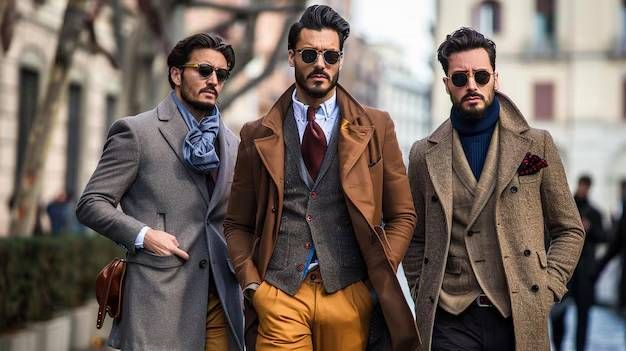
Tailoring is evolving beyond traditional business clothing. Unstructured blazers, wider trousers, softer fabrics, knit jackets, and casual tailoring can bridge the gap between formal and everyday clothing.
This approach allows tailored garments to work with sneakers, knitwear, denim, and other casual pieces.
Utility and Workwear
Utility-inspired clothing includes cargo trousers, overshirts, field jackets, chore jackets, workwear-inspired shirts, and durable footwear.
These garments often emphasize practical pockets, sturdy fabrics, and functional construction while being adapted for everyday fashion.
Sportswear Influence
Sportswear continues to influence modern men's wardrobes. Joggers, technical jackets, performance fabrics, sneakers, track-inspired tops, and athletic silhouettes can be combined with casual garments.
The result can range from fully athletic outfits to subtle combinations that use one sportswear element with traditional clothing.
Vintage References
Contemporary menswear frequently draws inspiration from earlier decades. Retro denim, classic sneakers, varsity jackets, knitwear, military-inspired outerwear, and heritage-style garments can be updated through modern proportions and fabrics.
Accessories
Watches
Watches remain a practical and visual accessory. Common categories include dress watches, field watches, diving watches, chronographs, digital watches, and smartwatches.
The appropriate design depends on the outfit, activity, and personal preference.
Belts and Wallets
Belts can provide both functional support and visual coordination. Leather belts are common with formal and smart-casual clothing, while woven and textile belts can work with casual outfits.
Wallets are available in traditional bifold formats, slim card holders, travel wallets, and digital-oriented designs.
Bags
Modern men's bags include backpacks, briefcases, messenger bags, crossbody bags, totes, duffel bags, and travel bags.
The choice depends on carrying requirements, clothing style, and intended environment. A structured bag generally works with tailored clothing, while softer designs tend to complement casual apparel.
Sunglasses
Sunglasses can complement an outfit while providing protection from bright sunlight. Common frame shapes include rectangular, round, aviator, wayfarer-style, and geometric designs.
Frame selection can be influenced by face shape, personal preference, and the overall character of the outfit.
Hats and Other Accessories
Caps, beanies, bucket hats, scarves, gloves, jewelry, and sunglasses can add seasonal or personal elements to men's clothing.
Accessories are often most effective when they complement the existing color palette rather than competing with several other prominent pieces.
Seasonal Clothing
Spring
Spring clothing typically focuses on adaptable layers. Lightweight jackets, overshirts, cotton shirts, chinos, denim, knitwear, and casual sneakers can work across changing temperatures.
Neutral colors can be combined with lighter seasonal shades to create flexible outfits.
Summer
Summer clothing generally emphasizes breathable fabrics and lightweight construction. Linen shirts, cotton T-shirts, polos, relaxed trousers, shorts, lightweight sneakers, and sandals are common choices.
Light colors can help create a warmer-weather appearance, while darker shades remain practical for evening settings.
Autumn
Autumn is suitable for layered clothing. Overshirts, sweaters, denim jackets, field jackets, corduroy trousers, chinos, and boots can be combined according to temperature.
Brown, olive, burgundy, navy, charcoal, and other deeper shades often complement autumn wardrobes.
Winter
Winter wardrobes require insulation and layering. Wool coats, parkas, insulated jackets, sweaters, thermal layers, heavy trousers, boots, scarves, gloves, and knit hats can provide protection from colder conditions.
Layering also allows clothing to be adjusted when moving between outdoor and indoor environments.
Style Guide
Building a Modern Wardrobe
A versatile men's wardrobe can begin with several adaptable foundations: well-fitting trousers, denim, plain T-shirts, casual shirts, knitwear, a versatile jacket, suitable footwear, and one formal outfit.
Additional pieces can then be selected according to climate, occupation, hobbies, travel requirements, and personal style.
Dressing for Different Occasions
Everyday casual settings may allow jeans, T-shirts, sneakers, polos, and overshirts. Smart-casual environments may require chinos or tailored trousers with shirts, knitwear, or jackets.
Formal occasions generally require greater attention to dress codes. A suit, dress shirt, appropriate footwear, and coordinated accessories may be expected.
Layering Techniques
Layering can improve both comfort and visual structure. A simple combination might include a T-shirt beneath an overshirt, followed by a lightweight jacket.
For colder conditions, knitwear and outerwear can be added. Different textures and lengths can create depth while maintaining practical insulation.
Footwear Coordination
Footwear has a strong influence on the character of an outfit. Sneakers generally work with casual clothing, loafers can bridge casual and formal settings, while derby shoes and dress shoes suit more formal clothing.
Boots can work across casual, workwear, outdoor, and smart-casual combinations depending on their design.
Creating Color Coordination
A simple color palette can make a wardrobe easier to combine. Neutral trousers and outerwear can provide a foundation for shirts, knitwear, and accessories in seasonal colors.
Monochromatic outfits can use different shades of the same color, while complementary combinations introduce stronger contrast.
Recent Updates
Functional Fabrics
Technical fabrics are increasingly present in everyday menswear. Stretch materials, water-resistant fabrics, lightweight insulation, breathable constructions, and moisture-management textiles can combine practical features with contemporary styling.
Hybrid Clothing
Hybrid apparel combines characteristics from different categories. Examples include tailored trousers with stretch construction, shirt jackets, technical blazers, and knit tailoring.
These garments reflect the growing overlap between professional, casual, travel, and lifestyle clothing.
Digital and Smart Accessories
Smartwatches and connected accessories have become established parts of modern men's wardrobes. Their functionality can include notifications, activity tracking, navigation, communication, and other digital features.
Sustainable Material Development
Fashion manufacturers are experimenting with recycled fibers, lower-impact production methods, alternative materials, and longer-lasting garment construction.
Material sourcing and production practices vary significantly, so individual products should be evaluated based on their specific documentation and composition.
FAQs
What is modern men's clothing?
Modern men's clothing includes contemporary interpretations of casualwear, smart-casual apparel, tailoring, sportswear, workwear, outerwear, footwear, and accessories.
What are common men's apparel types?
Common categories include T-shirts, shirts, jeans, trousers, chinos, knitwear, jackets, suits, outerwear, shorts, sportswear, and footwear.
What men's clothing styles are popular today?
Relaxed silhouettes, modern tailoring, utility-inspired clothing, sportswear influences, vintage references, versatile basics, and functional fabrics are common influences in contemporary menswear.
How should men choose clothing for different seasons?
Lightweight breathable fabrics generally work well in warmer conditions, while layered knitwear, jackets, coats, and insulated garments are more suitable for colder weather.
What accessories are useful for men's wardrobes?
Watches, belts, wallets, bags, sunglasses, hats, scarves, and jewelry can complement men's clothing. Selection depends on the occasion, season, and personal style.
Conclusion
Modern men's clothing combines established wardrobe foundations with changing silhouettes, materials, colors, and styling influences. Casualwear, smart-casual apparel, formal clothing, sportswear, workwear, and seasonal outerwear can all contribute to a flexible wardrobe.
Understanding fit, fabric, color, layering, footwear, and accessories provides a practical framework for putting outfits together. Current trends such as relaxed tailoring, utility clothing, technical fabrics, hybrid apparel, and vintage influences can be incorporated selectively without replacing established wardrobe staples.
A well-structured men's wardrobe should reflect the individual's lifestyle, climate, activities, and personal preferences. By combining adaptable garments with appropriate seasonal and occasion-specific pieces, clothing can remain functional while allowing room for changing fashion preferences.