The Northern Lights, also known as the aurora borealis, are among the most remarkable natural phenomena visible in the Arctic region.
They appear as glowing curtains, arcs, or waves of light across the night sky, often displaying shades of green, pink, purple, and red. Norway is a popular destination for observing this phenomenon because its northern regions lie within or near the auroral oval, where auroral activity frequently occurs.
The Northern Lights form when charged particles from the Sun interact with Earth's magnetic field and collide with gases in the upper atmosphere. These interactions release energy in the form of light. The appearance and intensity of the aurora depend on solar activity, atmospheric conditions, and the observer's location.
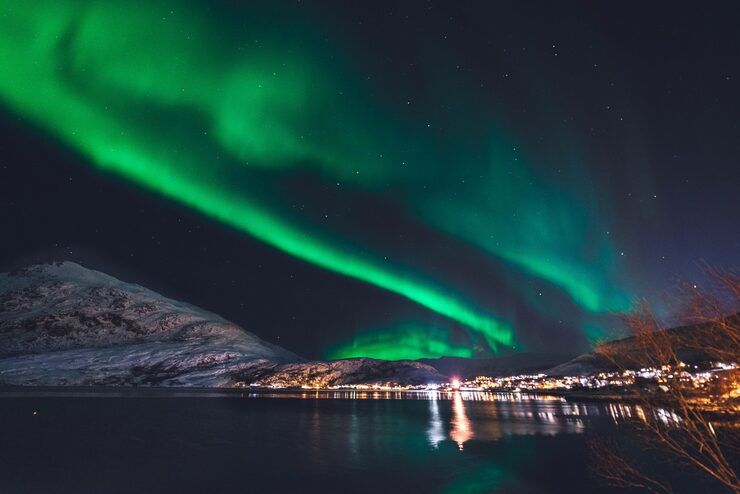
Northern Norway offers several destinations for aurora viewing, including Tromsø and the Lofoten Islands. Tromsø is known for its Arctic facilities, organized excursions, and access to surrounding wilderness. The Lofoten Islands are recognized for their rugged mountains, fishing villages, coastal scenery, and dark-sky locations. Together, these destinations provide opportunities to experience the aurora alongside other Arctic activities.
The Northern Lights are a natural event and cannot be guaranteed on any particular night. Clear skies, limited artificial lighting, and sufficient darkness improve viewing opportunities, but cloud cover and changing solar conditions can affect visibility.
Importance
Why Norway Is Popular for Northern Lights Viewing
Northern Norway attracts visitors because its high latitude provides favorable conditions for observing auroral activity during the darker months. The region also combines natural landscapes with established transport connections, accommodation, local guides, and outdoor activities.
The main viewing season generally runs from September to early April, when nights are sufficiently dark. September and October can provide autumn scenery, while the winter months bring snow-covered landscapes and longer periods of darkness. March often combines dark evenings with increasing daylight for daytime exploration.
Winter weather remains an important consideration. Temperatures can fall below freezing, strong winds may develop, and snow or rain can reduce visibility. Travelers should prepare with layered clothing, insulated footwear, and weather-resistant outerwear.
Tromsø: A Gateway to Arctic Adventures
Tromsø is a city in northern Norway located well above the Arctic Circle. It serves as a convenient base for travelers interested in Northern Lights excursions, Arctic wildlife, winter activities, and regional culture.
The city combines urban facilities with easy access to surrounding mountains, fjords, and open landscapes. Visitors can explore museums, restaurants, waterfront areas, and landmarks before joining an evening aurora excursion.
Popular experiences in and around Tromsø include:
- Northern Lights excursions: Local guides may travel away from city lighting to find clearer skies.
- Whale watching: Seasonal trips may provide opportunities to observe whales, depending on migration patterns and local conditions.
- Dog sledding: Guided sledding experiences introduce visitors to traditional and modern Arctic travel.
- Reindeer and Sámi cultural experiences: Some programs provide opportunities to learn about Sámi traditions, reindeer herding, and northern Norwegian history.
- Fjords and mountain scenery: Daytime excursions reveal coastal landscapes, snow-covered peaks, and Arctic communities.
Tromsø is particularly suitable for travelers who want a balance between city facilities and outdoor exploration. However, aurora excursions may involve long drives, late returns, and changing itineraries because guides must respond to local weather conditions.
Lofoten Islands: Coastal Landscapes Beneath the Aurora
The Lofoten Islands lie off the northwestern coast of Norway and are known for steep mountains, sheltered bays, beaches, and traditional fishing villages. Their dramatic scenery provides a distinctive setting for Northern Lights viewing.
Places such as Reine, Hamnøy, and Henningsvær are associated with picturesque coastal landscapes and traditional architecture. Under suitable conditions, the aurora may appear above mountain peaks, fishing harbors, or the Norwegian Sea.
Activities across the islands include scenic drives, photography, hiking during suitable seasons, village visits, and learning about the region's fishing heritage. Winter travel offers a quieter atmosphere in many areas, although weather can change quickly and some roads or walking routes may become difficult.
Unlike a larger city, the Lofoten Islands have more dispersed settlements and fewer urban facilities. Travelers should plan transport, accommodation, meal arrangements, and daily travel distances carefully. A rental vehicle can provide flexibility, but driving on icy or snow-covered roads requires caution and suitable preparation.
Choosing Between Tromsø and Lofoten
Both destinations offer opportunities to observe the aurora, but their experiences differ.
| Feature | Tromsø | Lofoten Islands |
|---|---|---|
| Main attraction | Arctic city and organized excursions | Coastal scenery and traditional villages |
| Accommodation | Broad range of urban and regional options | Options spread across islands and settlements |
| Transport | City transport and guided excursions | Regional buses, organized trips, and rental vehicles |
| Photography | Mountains, fjords, and open landscapes | Beaches, fishing villages, mountains, and harbors |
| Additional activities | Museums, dog sledding, wildlife excursions | Scenic drives, village visits, coastal exploration |
| Best suited for | Travelers seeking convenience and varied activities | Travelers prioritizing landscapes and quieter surroundings |
The two locations can be combined in a longer itinerary, but travel between them requires planning. Distances, winter road conditions, flight schedules, and ferry connections may influence how much time is available for each destination.
Recent Updates
Northern Lights Travel Trends and Planning
During the 12 months preceding October 13, 2026, Northern Lights travel continues to be a topic of interest for travelers seeking nature-based experiences, winter scenery, and photography opportunities. However, specific visitor-growth figures or new destination records should not be assumed without current tourism statistics.
Solar activity is another important factor in aurora planning. The Sun follows an approximately 11-year cycle of changing activity, which influences the frequency of geomagnetic disturbances that can produce auroras. The cycle does not predict visibility on an individual night, and strong auroral activity does not guarantee a clear sky.
For trip planning, visitors should monitor local weather forecasts, cloud cover, and aurora forecasts close to their travel dates. Forecasts can help estimate viewing conditions, but they remain uncertain, particularly several days in advance.
Sustainable and Responsible Arctic Travel
Responsible tourism is important in northern Norway because natural areas, small communities, and Arctic wildlife can be sensitive to increased visitor activity.
Travelers can reduce their impact by following marked paths, respecting private property, avoiding disturbance to wildlife, and taking all waste away from natural viewing locations. Visitors should also follow local parking rules and avoid blocking roads while stopping to photograph the aurora.
In Sámi areas, cultural awareness is equally important. Visitors should choose respectful cultural experiences, follow local guidance, and avoid treating Sámi traditions as entertainment without cultural context.
Winter conditions can also affect travel safety. Checking road conditions, allowing extra travel time, carrying appropriate clothing, and following guidance from local authorities are practical steps for responsible Arctic exploration.
Laws or Policies
Travel and Entry Requirements
Norway is part of the Schengen Area. Entry requirements depend on a visitor's nationality, travel documents, purpose of visit, and length of stay. Travelers should verify current visa requirements and permitted travel periods before departure.
Visitors who plan to drive should confirm that their driving licence is valid for Norway and determine whether an international driving permit or other documentation is required for their circumstances. Rental providers may impose additional conditions, including minimum age and licence-holding periods.
Road Safety and Winter Conditions
Norwegian road rules apply throughout Tromsø and the Lofoten Islands. Drivers must follow posted speed limits, traffic signs, and applicable winter-driving requirements. Weather, darkness, ice, and snow can make driving more difficult than expected.
Before setting out, check official road information and weather warnings. Avoid stopping in unsafe locations to photograph the aurora, and use designated parking areas wherever possible. Travelers unfamiliar with Arctic driving may prefer guided excursions, particularly during severe winter weather.
Nature Protection and Outdoor Conduct
Norway has rules governing protected areas, wildlife, public access, and environmental protection. The right to access certain uncultivated land does not mean visitors can ignore restrictions, damage vegetation, disturb wildlife, or enter private areas without permission.
Some outdoor activities require additional precautions or local guidance. Visitors should follow marked routes, respect temporary closures, and check whether specific locations have restrictions during sensitive seasons.
Travelers should also understand that drone use is regulated. Aviation rules, privacy requirements, protected-area restrictions, and local limitations may apply. Current requirements should be checked before operating a drone near wildlife, settlements, or scenic viewing locations.
Tools and Resources
Visit Norway
Visit Norway provides destination information, seasonal travel guidance, activity suggestions, and practical information about Northern Lights trips. It can help travelers compare northern destinations and plan an itinerary.
Visit Tromsø
The official destination resource for Tromsø provides information about local attractions, seasonal activities, organized excursions, and regional travel planning.
Visit Lofoten
Visit Lofoten provides information about the islands, accommodation areas, outdoor activities, local communities, and practical travel considerations.
Norwegian Meteorological Institute
The Norwegian Meteorological Institute provides weather forecasts and relevant weather information for locations throughout Norway. Checking cloud cover and local conditions can help travelers choose suitable viewing locations.
Norwegian Public Roads Administration
The Norwegian Public Roads Administration provides road information and updates relevant to winter driving. Travelers exploring rural areas should review current road conditions before beginning longer journeys.
Norwegian Directorate of Immigration (UDI)
UDI provides official information about Norwegian immigration requirements. Travelers can use it to check visa-related guidance and other entry information relevant to their circumstances.
Space Weather and Aurora Forecasts
Aurora forecasts and space-weather information can help travelers understand solar activity and the likelihood of auroral displays. These forecasts should be considered alongside local cloud forecasts, because a strong aurora may remain invisible when the sky is covered.
FAQs
When is the best time to see the Northern Lights in Norway?
The main viewing season generally runs from September to early April, when nights are dark enough for aurora observation. Visibility depends on solar activity, cloud cover, darkness, and local conditions, so no particular month or date guarantees a sighting.
Is Tromsø or Lofoten better for Northern Lights viewing?
Tromsø is a practical choice for travelers who want urban facilities, organized excursions, and several activities in one destination. Lofoten is particularly appealing to visitors who want coastal landscapes, fishing villages, and photography opportunities. Both can provide excellent viewing conditions when skies are clear.
How many days should travelers spend in northern Norway?
A stay of three to five nights in one destination gives travelers several opportunities to look for the aurora while enjoying daytime activities. A combined Tromsø and Lofoten trip usually requires additional time because of the distance and transport arrangements between the regions.
Can the Northern Lights be seen every night?
No. Aurora visibility depends on solar activity, atmospheric conditions, darkness, and weather. Even during the main viewing season, cloud cover can prevent observations. Spending several nights in the region improves the number of opportunities but does not guarantee success.
What should travelers pack for a Northern Lights trip?
Essential items include thermal base layers, insulating mid-layers, a wind-resistant outer layer, warm gloves, a hat, insulated footwear, and extra socks. A camera, spare batteries, and a tripod can be useful for photography. Batteries may lose power more quickly in cold conditions.
Is it possible to photograph the Northern Lights with a smartphone?
Yes. Many modern smartphones include night modes that can capture auroral displays when conditions are suitable. Keeping the phone stable, using a tripod when available, and carrying a portable power source can improve results. Actual image quality depends on the device, brightness of the aurora, and surrounding light.
Conclusion
Northern Norway offers distinctive opportunities to experience the Northern Lights alongside Arctic scenery, cultural experiences, and outdoor activities. Tromsø provides convenient access to organized excursions and city facilities, while the Lofoten Islands offer dramatic coastal landscapes and traditional fishing communities. Careful planning, flexible schedules, suitable winter clothing, and attention to weather and road conditions can make a trip more comfortable and responsible. Although the aurora cannot be guaranteed, spending several nights in northern Norway gives travelers multiple opportunities to witness one of the Arctic's most memorable natural displays.