Paint booth filtration is an important part of industrial painting and finishing environments. A properly designed filtration system helps capture paint particles, overspray, dust, and other airborne contaminants before they can spread through the workplace or enter exhaust systems. It can also support better air quality, cleaner working conditions, and more consistent finishing results.
Modern manufacturing facilities use different filtration arrangements depending on the type of coating, painting process, booth design, airflow requirements, and environmental regulations. Understanding these systems can help facility managers, engineers, and maintenance teams select appropriate filtration technologies for their applications.
What Is Paint Booth Filtration?
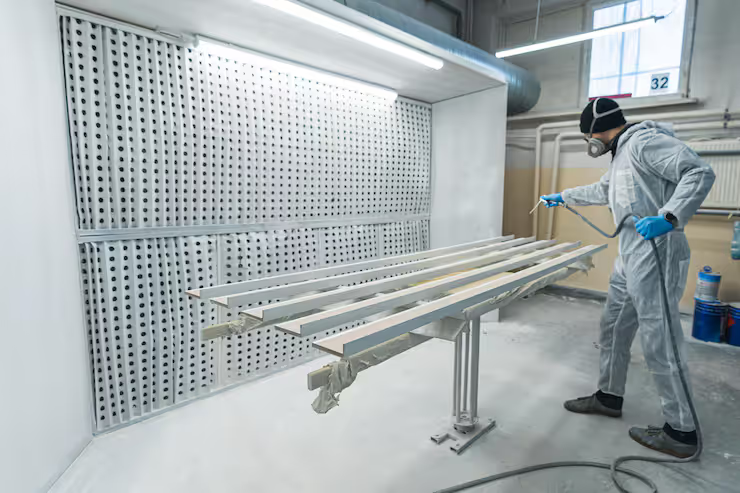
Paint booth filtration refers to the use of specialized filters and airflow systems to remove airborne particles generated during spray painting and coating operations. During painting, some coating material does not reach the intended surface and becomes airborne overspray. The filtration system captures this material as air moves through the booth.
A typical paint booth may include intake filtration, overspray filtration, exhaust filtration, or several filtration stages. The exact configuration depends on whether the booth uses crossdraft, downdraft, side-draft, or another airflow arrangement.
Why Paint Booth Filtration Matters
Maintaining Better Air Quality
Effective filtration can reduce airborne particles within and around the painting area. This is particularly important in facilities where painting operations take place for extended periods or where multiple coating processes operate simultaneously.
Supporting Consistent Paint Finishing
Dust and airborne particles can affect the appearance of painted surfaces. Appropriate filtration helps create a cleaner painting environment, which can contribute to more consistent surface finishes and reduce contamination-related defects.
Protecting Equipment
Overspray can accumulate on ventilation components, ductwork, fans, and other equipment. A suitable filtration arrangement captures a significant portion of airborne coating particles before they travel through the exhaust system.
Supporting Workplace Safety
Paint applications can generate airborne contaminants that require proper engineering controls and ventilation. Filtration works as one component of a broader workplace safety strategy that can include ventilation design, protective equipment, operating procedures, and regulatory compliance.
Types of Paint Booth Filters
Intake Filters
Intake filters clean incoming air before it enters the paint booth. They can help reduce dust and other particles that could otherwise settle on freshly painted surfaces.
The appropriate intake filter depends on the required air quality, booth configuration, airflow volume, and characteristics of the painting process.
Overspray Filters
Overspray filters are designed to capture coating particles generated during spraying. They are commonly positioned along the airflow path so that paint particles are collected before exhaust air leaves the booth.
Different filter materials and configurations are available for different coating applications. Selection should consider particle characteristics, paint type, airflow, loading capacity, and replacement requirements.
Exhaust Filters
Exhaust filtration helps capture remaining contaminants before air moves into exhaust ductwork or leaves the controlled painting area. The design requirements vary according to the coating process and applicable environmental and workplace regulations.
High-Efficiency Filters
Some applications require higher-efficiency particle filtration. High-efficiency filters can provide additional particle removal when the process and system design require tighter air-quality control.
However, higher filtration efficiency can also increase airflow resistance. The filter must therefore be compatible with the booth's fan and ventilation system.
How Paint Booth Filtration Works
Airflow and Contaminant Capture
A paint booth creates controlled airflow that moves airborne contaminants away from the operator and painted component. As contaminated air passes through filtration stages, particles are captured by the filter media.
The effectiveness of the overall system depends on factors such as airflow velocity, booth geometry, filter efficiency, filter loading, pressure drop, and the location of filtration stages.
Pressure Drop
As filters collect particles, resistance to airflow generally increases. This resistance is known as pressure drop. Monitoring pressure drop can help maintenance teams determine when filters require inspection or replacement.
A filter that becomes excessively loaded may reduce airflow and affect booth performance. Regular monitoring is therefore an important part of filtration system maintenance.
Factors to Consider When Selecting Paint Booth Filtration
Paint and Coating Type
Different coatings can generate different types and quantities of overspray. The filter material should be selected according to the characteristics of the coating process rather than using a universal filter for every application.
Airflow Requirements
The filtration system must work with the booth's designed airflow. An unsuitable filter can create excessive resistance and interfere with ventilation performance.
Particle Loading
Facilities with high-volume painting operations may generate substantial quantities of overspray. Filter capacity and loading characteristics become particularly important in these environments.
Filter Efficiency
Efficiency requirements depend on the application and regulatory conditions. A filtration system should provide the necessary level of particle capture without creating unnecessary airflow resistance.
Maintenance Requirements
Filter replacement frequency, inspection requirements, accessibility, and disposal procedures should be considered during system planning. A filtration system that is difficult to maintain may result in inconsistent performance.
Paint Booth Filtration Maintenance
Regular Inspection
Filters should be inspected according to the manufacturer's recommendations and the operating conditions of the booth. Visual inspection can identify excessive loading, damage, uneven contamination, or other problems.
Monitoring Pressure
Pressure gauges or monitoring systems can provide useful information about filter loading. A significant increase in pressure drop may indicate that filters are becoming restricted.
Timely Replacement
Filters should be replaced when they reach their specified loading or pressure-drop limits. Waiting too long can negatively affect airflow and filtration performance.
Cleaning Surrounding Components
Overspray can accumulate on booth walls, floors, ductwork, fans, and other components. Appropriate cleaning procedures can help maintain the overall ventilation system and reduce contamination.
Modern Paint Booth Filtration Technology
Multi-Stage Filtration
Modern systems may combine several filtration stages. For example, an intake stage can reduce incoming dust while a separate overspray stage captures coating particles from the painting process.
Automated Monitoring
Advanced industrial ventilation systems can incorporate sensors and monitoring equipment to track airflow, pressure differential, and filter condition. Such information can help maintenance teams identify changes in system performance.
Energy-Efficient Ventilation
Energy consumption is an important consideration in industrial facilities. Properly selected filtration components can help maintain required airflow while minimizing unnecessary resistance within the ventilation system.
Environmental and Regulatory Considerations
Paint booth operations can involve airborne particulate matter, volatile organic compounds, and other emissions depending on the coating materials used. Filtration is only one part of an appropriate emissions-control and workplace-safety strategy.
Facilities should evaluate applicable local, national, and industry-specific requirements when designing or modifying paint booth ventilation and filtration systems. Requirements can differ based on the coating process, facility type, location, and emission characteristics.
Common Paint Booth Filtration Problems
Reduced Airflow
Restricted filters, blocked ductwork, fan problems, or incorrect system configuration can reduce airflow. Reduced airflow can affect contaminant capture and painting conditions.
Rapid Filter Loading
Rapid loading may indicate high overspray generation, an unsuitable filter, incorrect application technique, or inadequate filtration capacity.
Uneven Airflow
Uneven airflow across the booth can lead to inconsistent contaminant movement and may contribute to variable finishing conditions. Booth design and filter arrangement should be evaluated when this occurs.
Excessive Pressure Drop
A high pressure drop generally indicates increased resistance through the filtration system. Regular monitoring can help identify when investigation or filter replacement is necessary.
Benefits of a Well-Designed Filtration System
A properly designed paint booth filtration system can provide several operational benefits. These may include improved airborne particle control, more consistent painting conditions, reduced contamination of ventilation equipment, easier maintenance planning, and better control of workplace air quality.
The actual performance depends on correct system design, appropriate filter selection, adequate airflow, regular maintenance, and compliance with applicable safety requirements.
Future Trends in Paint Booth Filtration
The industrial filtration sector is increasingly focused on energy efficiency, monitoring, automation, and improved filter-media technology. Sensor-based monitoring can help operators understand changes in pressure and airflow, while more advanced filtration materials may improve particle capture and service life.
Digital maintenance systems are also becoming more common in modern manufacturing environments. By combining filtration equipment with monitoring technologies, facilities can make maintenance decisions based on actual operating conditions rather than relying only on fixed replacement schedules.
Frequently Asked Questions
What is paint booth filtration?
Paint booth filtration is the process of using filters within a controlled painting environment to capture airborne particles, overspray, dust, and other contaminants generated during coating operations.
How often should paint booth filters be replaced?
Replacement intervals vary according to the filter type, painting volume, coating material, airflow, and pressure-drop limits. Filters should be inspected regularly and replaced according to the manufacturer's specifications and operating conditions.
Why is airflow important in a paint booth?
Controlled airflow helps move airborne contaminants through the filtration system and away from the painting area. Incorrect airflow can reduce contaminant capture and affect finishing conditions.
What affects paint filter performance?
Filter performance can be affected by filter design, particle loading, airflow rate, pressure drop, coating characteristics, installation, and maintenance practices.
Can one filter be used for every paint booth?
No. Paint booths have different airflow designs and painting processes. Filter selection should be based on the booth configuration, coating process, contaminant characteristics, and required filtration performance.
Conclusion
Paint booth filtration is an important component of controlled industrial painting environments. From intake filters and overspray collection to exhaust filtration and pressure monitoring, each stage can contribute to effective airborne-particle management.
Choosing the appropriate filtration approach requires consideration of airflow, coating characteristics, filter efficiency, pressure drop, maintenance requirements, and applicable regulations. With suitable system design and regular maintenance, paint booth filtration can support cleaner painting conditions, more consistent finishing processes, and effective management of airborne contaminants.