Polyvinyl chloride, commonly known as PVC, is one of the most widely used thermoplastics in modern manufacturing.
Its versatility, durability, chemical resistance, and adaptability make it suitable for products ranging from plumbing pipes and electrical conduits to window profiles, wall panels, sheets, and industrial components.
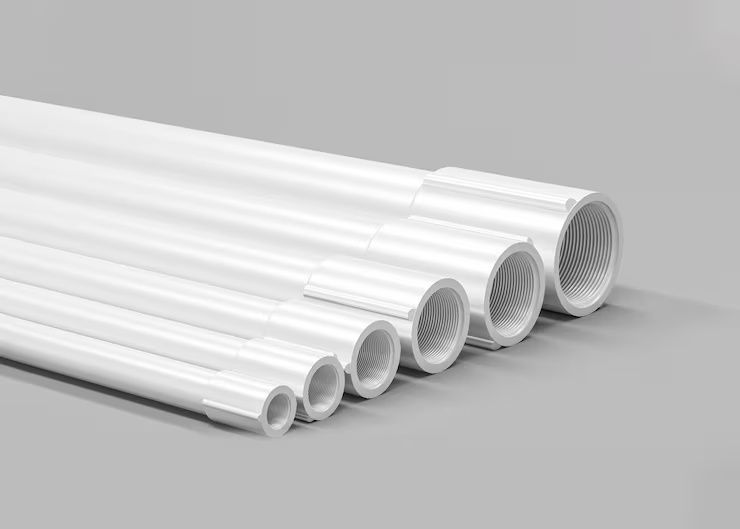
Manufacturing these products requires specialized equipment arranged in a coordinated production system. A PVC production line is designed to transform raw PVC compounds into finished products through carefully controlled stages such as material preparation, extrusion, shaping, cooling, sizing, cutting, and inspection.
Although the basic principle remains similar across many applications, the configuration of a PVC manufacturing line changes depending on whether the final product is a pipe, profile, or sheet. Understanding these differences helps manufacturers, engineers, and industry professionals better evaluate how PVC processing lines operate and how each stage contributes to product quality.
What Is a PVC Production Line?
A PVC production line is an integrated group of machines and systems used to manufacture PVC products continuously or semi-continuously. The exact equipment configuration depends on the product being produced, its dimensions, required properties, and production specifications.
A typical PVC production line may include:
- Raw material mixing equipment
- Feeding systems
- Extruders
- Dies and molds
- Calibration units
- Cooling systems
- Haul-off equipment
- Cutting machines
- Surface treatment equipment
- Stacking or winding systems
The extruder is generally the central component. It heats and processes the prepared PVC compound before forcing the material through a specially designed die that determines the basic shape of the final product.
How a PVC Manufacturing Line Works
The manufacturing process begins with the preparation of PVC resin and other carefully selected additives. Depending on the intended application, formulations may include stabilizers, plasticizers, pigments, lubricants, impact modifiers, or processing aids.
The materials are mixed to achieve a consistent compound before entering the processing stage.
Once prepared, the material moves into the extrusion system. Inside the extruder, controlled heat and mechanical action soften and homogenize the PVC compound.
The processed material then passes through a die that creates the required cross-sectional shape. From this point, the process differs according to whether the product is a pipe, profile, or sheet.
Cooling and dimensional control are critical throughout the process because PVC must maintain its intended shape as it transitions from a softened state to a stable finished product.
PVC Pipe Manufacturing Process
PVC pipes are widely used in water distribution, drainage, irrigation, electrical protection, and industrial applications.
A PVC pipe production line typically follows a sequence of extrusion, shaping, calibration, cooling, hauling, cutting, and finishing.
Extrusion
PVC compound enters the extruder, where controlled processing conditions produce a uniform melt.
Pipe Forming
The molten PVC passes through a circular die that forms the basic pipe shape.
Vacuum Calibration
The newly formed pipe enters a calibration system that helps establish precise external dimensions. Vacuum pressure and controlled cooling support dimensional stability.
Cooling
Cooling tanks gradually reduce the temperature of the pipe while helping maintain its shape.
Haul-Off
A haul-off unit continuously pulls the pipe through the production line at a controlled speed.
Cutting
The continuous pipe is cut into predetermined lengths using automated cutting equipment.
Finishing
Depending on the application, the pipe may undergo additional operations such as socket formation, marking, or surface inspection.
The final product is then checked for dimensions, surface quality, and other relevant specifications.
PVC Profile Manufacturing Process
PVC profiles are commonly used in construction and architectural applications, including window frames, door systems, decorative elements, and structural components.
Unlike pipes, profiles often have complex cross-sectional geometries that require specialized dies.
The PVC profile manufacturing process generally involves:
- Material preparation and mixing
- Extrusion
- Profile shaping through a specialized die
- Vacuum calibration
- Cooling
- Haul-off
- Cutting
- Surface finishing or additional processing
The calibration stage is particularly important because even minor dimensional variations can affect how profiles fit together during installation.
Some profile systems may also undergo additional processes such as lamination, coating, or surface texturing to achieve specific functional or visual characteristics.
PVC Sheet Manufacturing Process
PVC sheets are produced for applications such as wall coverings, industrial components, packaging, signage, and construction materials.
A PVC sheet production line generally uses extrusion equipment to create a continuous flat sheet.
The process commonly includes:
- Raw material preparation
- Extrusion
- Flat die forming
- Calendering or smoothing
- Cooling
- Thickness control
- Edge trimming
- Cutting or winding
The extruded PVC passes through a flat die that determines the initial sheet width and thickness.
Rollers may then be used to improve surface uniformity and control thickness. Cooling systems stabilize the sheet before it is trimmed and converted into finished dimensions.
Depending on the intended application, sheets may receive additional surface treatments or finishing processes.
Comparing PVC Pipe, Profile, and Sheet Lines
| Product Type | Main Forming Method | Key Control Areas | Common Applications |
|---|---|---|---|
| PVC Pipe | Circular extrusion die | Diameter and wall thickness | Plumbing and drainage |
| PVC Profile | Specialized profile die | Cross-sectional accuracy | Windows and doors |
| PVC Sheet | Flat die extrusion | Thickness and surface quality | Construction and industrial uses |
The primary difference between these manufacturing systems is the forming equipment and downstream machinery required to achieve the desired product geometry.
Important PVC Production Equipment
Different machines perform specific functions within a PVC processing line.
Extruder
The extruder melts, mixes, and transports the PVC compound toward the forming die. Screw design, temperature control, and processing stability influence material consistency.
Die
The die determines the basic shape of the product. Pipe dies create circular forms, while profile dies produce complex cross-sections and flat dies are used for sheet production.
Calibration Equipment
Calibration systems help maintain dimensional accuracy as the newly formed product cools.
Cooling Systems
Controlled cooling is essential for preventing deformation and maintaining product dimensions.
Haul-Off Units
These systems pull the material through the line at a consistent speed, supporting stable production.
Cutting Systems
Automated cutters divide continuous products into required lengths while maintaining dimensional consistency.
Factors That Influence PVC Processing Quality
Several variables affect the performance of a PVC processing line.
Material Formulation
The composition of the PVC compound directly affects flexibility, strength, durability, color, and processing behavior.
Temperature Control
PVC requires carefully managed processing temperatures. Excessive heat can cause material degradation, while insufficient heat may prevent proper fusion.
Extrusion Speed
The relationship between extrusion speed, screw rotation, and cooling capacity influences product dimensions and surface quality.
Cooling Efficiency
Uneven cooling may lead to distortion or dimensional changes.
Die Design
The geometry and quality of the die influence material distribution and the consistency of the final product.
Maintaining stable conditions across these variables is essential for reliable manufacturing.
Energy Efficiency and Automation
Modern PVC production equipment increasingly incorporates automation and digital monitoring.
Automated systems can help control:
- Temperature
- Pressure
- Extrusion speed
- Cooling conditions
- Product dimensions
- Production data
Sensors and control systems allow operators to monitor production conditions in real time. This can improve consistency and help identify process deviations earlier.
Energy-efficient motors, improved heating systems, and optimized cooling technologies are also becoming increasingly important as manufacturers focus on responsible resource use and operational efficiency.
Maintenance Considerations for PVC Processing Lines
Regular maintenance helps preserve the performance of production equipment.
Important maintenance areas include:
- Extruder screws and barrels
- Dies
- Calibration systems
- Cooling tanks
- Haul-off rollers
- Cutting mechanisms
- Electrical controls
- Temperature sensors
Cleaning is also important because residual material can affect product quality and interfere with equipment operation.
A structured maintenance program can help identify wear before it affects production and supports consistent operation over time.
How to Evaluate PVC Line Suppliers
When evaluating PVC line suppliers or equipment providers, manufacturers typically consider technical factors rather than focusing on a single machine.
Important considerations may include:
- Equipment compatibility
- Production requirements
- Automation capabilities
- Technical documentation
- Installation support
- Maintenance requirements
- Spare parts availability
- Operator training
- After-sales technical assistance
The most suitable PVC production equipment depends on the intended product, production scale, material formulation, and required quality standards.
Future Trends in PVC Manufacturing
PVC manufacturing continues to evolve through improvements in automation, process monitoring, and material technology.
Important trends include:
- Greater use of digital process controls
- Real-time quality monitoring
- Improved energy management
- Automated material handling
- Advanced extrusion technologies
- More efficient cooling systems
- Increased use of recycled PVC materials
- Improved manufacturing data analysis
These developments are helping manufacturers create more consistent processes while responding to changing environmental and operational requirements.
Frequently Asked Questions
What is a PVC production line?
A PVC production line is a coordinated system of equipment used to transform PVC compounds into finished products such as pipes, profiles, and sheets.
What is the main machine in a PVC manufacturing line?
The extruder is generally the central machine because it processes and transports the PVC compound before the material is shaped through a die.
How does PVC pipe manufacturing differ from sheet production?
PVC pipe manufacturing uses a circular die and calibration system to create hollow cylindrical products, while sheet production uses a flat die and specialized rollers to produce continuous flat material.
Why is cooling important in PVC processing?
Controlled cooling helps stabilize the newly formed PVC product, maintain its dimensions, and prevent unwanted deformation during manufacturing.
What should be considered when selecting PVC production equipment?
Key factors include the intended product type, material formulation, production requirements, automation level, dimensional accuracy, maintenance needs, and compatibility between different line components.
Conclusion
PVC production lines provide the foundation for manufacturing a wide range of products used across construction, infrastructure, industrial, electrical, and consumer applications. While pipe, profile, and sheet production share core principles such as extrusion and controlled cooling, each requires specialized forming and finishing equipment.
A well-designed PVC processing line depends on the interaction between material formulation, extrusion technology, die design, calibration, cooling, hauling, and quality control. As automation, digital monitoring, and material recycling continue to develop, PVC manufacturing is becoming increasingly focused on process consistency, resource efficiency, and reliable product performance.
Understanding how PVC manufacturing lines operate provides valuable insight into the technology behind everyday products and helps industry professionals evaluate production requirements with greater clarity.