Ribbon blenders are industrial mixing machines designed to blend powders, granules, dry solids, and selected semi-solid materials into uniform mixtures. Their horizontal trough, rotating shaft, and ribbon-shaped agitators create controlled material movement and are widely used across chemical, food, pharmaceutical, agricultural, construction-material, and other processing industries.
Ribbon blending systems can be configured with different capacities, materials of construction, discharge arrangements, drive systems, and automation features according to production requirements.
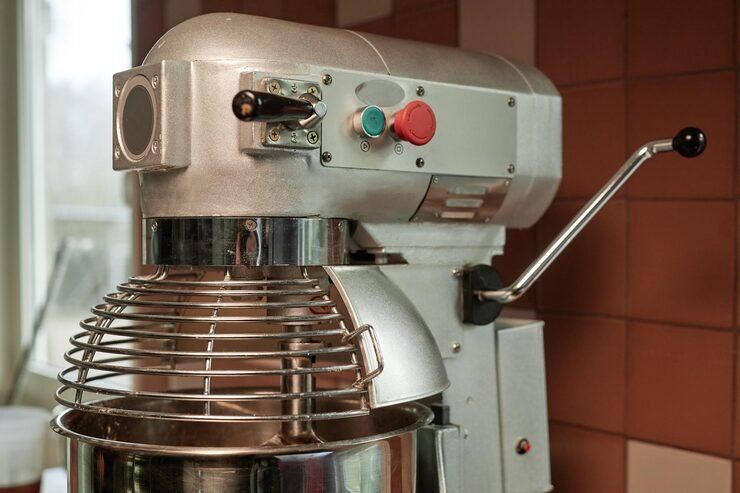
What Are Ribbon Blenders?
A ribbon blender is a horizontal batch mixer consisting primarily of a trough, central shaft, ribbon agitator, drive assembly, inlet, and discharge mechanism.
The ribbon agitator typically contains inner and outer helical elements. As the shaft rotates, these ribbons move material in opposing directions, creating axial and radial circulation within the mixing chamber.
This movement helps distribute different materials throughout the batch.
Common materials processed in ribbon blenders include:
Powders
Granules
Dry chemicals
Food ingredients
Agricultural formulations
Minerals
Construction materials
Pharmaceutical ingredients
Detergent powders
Polymer additives
The appropriate design depends on particle characteristics, moisture content, bulk density, required mixing time, and production objectives.
How Ribbon Blenders Work
The ribbon blender mixing process generally follows several stages.
1. Loading: Raw materials are introduced through the top inlet or feeding system.
2. Initial movement: The rotating shaft begins moving the ribbon agitators through the material.
3. Axial mixing: Inner and outer ribbons move material in different directions along the length of the trough.
4. Radial circulation: Material moves between different regions of the mixing chamber.
5. Homogenization: Continued circulation distributes the ingredients throughout the batch.
6. Discharge: After the required mixing cycle, the finished mixture is discharged through a bottom, side, or other configured outlet.
Mixing time depends on formulation, fill level, particle properties, ribbon geometry, rotational speed, and required uniformity.
Ribbon Blender Mixing Technologies
Different design features can modify the performance of a ribbon blender.
Single Ribbon Blenders
Single-ribbon configurations use a primary helical agitator to circulate material through the mixing chamber. They can be suitable for relatively straightforward dry-material blending processes.
Double Ribbon Blenders
Double-ribbon designs commonly use inner and outer ribbon flights to create opposing material movements. This arrangement can improve circulation throughout the horizontal chamber.
Paddle-Ribbon Systems
Some industrial mixers combine ribbon and paddle-style agitation to address particular material-handling and mixing requirements.
High-Intensity Configurations
Certain applications require additional agitation or specialized mixing elements when materials have challenging flow characteristics or require more intensive dispersion.
Major Components of a Ribbon Blender
| Component | Function | Design Consideration |
|---|---|---|
| Mixing trough | Contains the material | Capacity and material of construction |
| Ribbon agitator | Moves and blends material | Geometry and mixing performance |
| Shaft | Supports agitator | Strength and operating speed |
| Drive system | Rotates shaft | Torque and power requirements |
| Bearings | Support rotating assembly | Load and operating conditions |
| Discharge valve | Removes blended material | Flow and product characteristics |
| Seals | Protect rotating shaft | Material compatibility |
| Control system | Manages operation | Automation and process monitoring |
The components can be manufactured from carbon steel, stainless steel, or other materials depending on the product and operating environment.
Ribbon Blender Manufacturing Process
Manufacturing a ribbon blender involves several engineering and fabrication stages.
Design and Engineering
Engineers determine vessel dimensions, ribbon geometry, shaft configuration, drive requirements, operating speed, and discharge arrangement.
Material Preparation
Metal sheets, plates, shafts, and structural components are prepared according to the equipment design.
Fabrication
The mixing trough and structural components are formed, cut, welded, and assembled.
Agitator Manufacturing
Ribbon flights are fabricated and attached to the central shaft with controlled geometry to maintain the required mixing pattern.
Surface Finishing
Internal surfaces may undergo grinding, polishing, or other finishing operations depending on hygiene and product requirements.
Assembly and Testing
The shaft, bearings, seals, motor, gearbox, discharge system, and controls are assembled before mechanical and operational testing.
Global Manufacturers and Suppliers
The ribbon blender market includes specialized mixing-equipment manufacturers, process-equipment companies, engineering firms, and industrial machinery suppliers.
Companies such as Munson Machinery, Marion Process Solutions, WAMGROUP, Charles Ross & Son Company, PerMix, and INOXPA provide industrial mixing technologies or related process equipment.
Suppliers may provide standard machines as well as customized systems incorporating feeding equipment, load cells, automated controls, dust-management systems, heating or cooling jackets, and specialized discharge arrangements.
When evaluating suppliers, manufacturers can examine mixing performance, batch capacity, construction materials, motor and gearbox specifications, sealing arrangements, cleaning requirements, automation capabilities, documentation, and technical support.
Industrial Applications of Ribbon Blenders
Ribbon blenders are used across many industries.
Food Processing
Applications include blending dry ingredients, seasoning mixes, flour-based formulations, nutritional powders, and other food products.
Pharmaceutical Manufacturing
Ribbon mixers can be used for controlled blending of suitable powders and dry pharmaceutical formulations, subject to the required process and equipment standards.
Chemical Processing
Chemical manufacturers use ribbon blenders for powders, additives, pigments, detergents, fertilizers, and other dry formulations.
Agriculture
Agricultural applications can include fertilizer formulations, soil additives, feed ingredients, and other granular products.
Construction Materials
Dry construction mixtures, mineral blends, cement additives, and related formulations can be processed using industrial ribbon mixers.
How to Select a Ribbon Blender
A suitable ribbon blender should be selected according to the material and production process.
1. Identify material characteristics: Consider particle size, bulk density, moisture, flowability, abrasiveness, and cohesion.
2. Determine batch capacity: Establish working volume and required production throughput.
3. Evaluate mixing requirements: Define target uniformity and acceptable mixing time.
4. Select construction materials: Choose suitable contact materials according to the formulation and operating environment.
5. Review discharge requirements: Consider gravity discharge, valve type, product flow, and residual material.
6. Assess automation: Determine whether load cells, PLC controls, sensors, recipe management, or automated feeding are required.
7. Consider cleaning and maintenance: Evaluate access, surface finish, seals, bearings, and inspection requirements.
Frequently Asked Questions
What are ribbon blenders used for?
Ribbon blenders are primarily used to mix powders, granules, dry solids, and selected semi-solid materials into relatively uniform batches.
How does a ribbon blender work?
A rotating shaft moves inner and outer ribbon agitators through the material. The ribbons circulate product in different directions, promoting mixing throughout the trough.
What is the difference between a ribbon blender and a paddle mixer?
Ribbon blenders use helical ribbon elements to create axial and radial material movement, while paddle mixers use paddle-shaped elements with different material-flow characteristics.
What materials can be mixed in a ribbon blender?
Depending on the equipment configuration, materials can include powders, granules, dry chemicals, food ingredients, fertilizers, minerals, construction mixtures, and pharmaceutical formulations.
How do manufacturers choose ribbon blender equipment?
Selection typically considers batch capacity, material characteristics, mixing uniformity, cycle time, construction materials, discharge configuration, cleaning requirements, and automation needs.
Conclusion
Ribbon blenders provide a versatile approach to batch mixing of powders, granules, and other dry materials. Their horizontal trough and ribbon agitator design creates controlled material circulation, while different configurations can be adapted to specific formulations and production requirements.
Modern ribbon blender systems can incorporate automated controls, load measurement, specialized discharge mechanisms, dust-management equipment, and integrated feeding systems. Selecting the appropriate machine requires careful consideration of material properties, capacity, mixing requirements, construction materials, cleaning, and process automation.