Robotic masonry combines robotics, construction automation, digital design, material handling, and automated bricklaying technologies to support masonry activities. These systems can use robotic arms, specialized grippers, mortar-delivery equipment, machine vision, positioning systems, and software to place masonry units according to programmed layouts.
Automated bricklaying robots are being developed for construction environments where repetitive placement activities can be coordinated through digital workflows. Their applications include walls, facades, structural masonry, prefabricated components, and selected construction projects.
Context
What Is Robotic Masonry?
Robotic masonry is the use of robotic equipment and automated control systems to perform selected masonry operations. Depending on the system, a robot can pick up bricks or blocks, position them according to a digital pattern, apply or coordinate mortar placement, and repeat the process across a wall section.
The technology combines mechanical movement with construction planning and digital information. Human workers may still be involved in material preparation, site coordination, inspection, machine setup, and other construction activities.
How Automated Bricklaying Robots Work
A typical robotic masonry workflow may include:
- A digital wall design is prepared.
- The design is converted into machine-readable instructions.
- Bricks or blocks are supplied to the working area.
- A robotic arm or automated mechanism picks up a masonry unit.
- The unit is positioned according to the programmed layout.
- Mortar or another bonding material is applied or coordinated.
- Sensors or vision systems verify positioning.
- The robot continues through the programmed sequence.
The precise workflow depends on the robotic platform and construction method.
Major Robotic Masonry Technologies
| Technology | Main Function | Typical Application |
|---|---|---|
| Robotic Arm | Positions masonry units | Automated wall construction |
| Brick Gripper | Holds and transfers bricks | Brick placement |
| Vacuum Gripper | Handles compatible surfaces | Specialized masonry handling |
| Machine Vision | Detects position and alignment | Automated verification |
| Mortar System | Controls bonding material | Masonry placement |
| Mobile Robot | Moves across construction areas | Large wall sections |
| 3D Construction Printing | Deposits construction material | Automated wall structures |
| Digital Layout Software | Converts designs into robot paths | Construction planning |
Robotic Arms
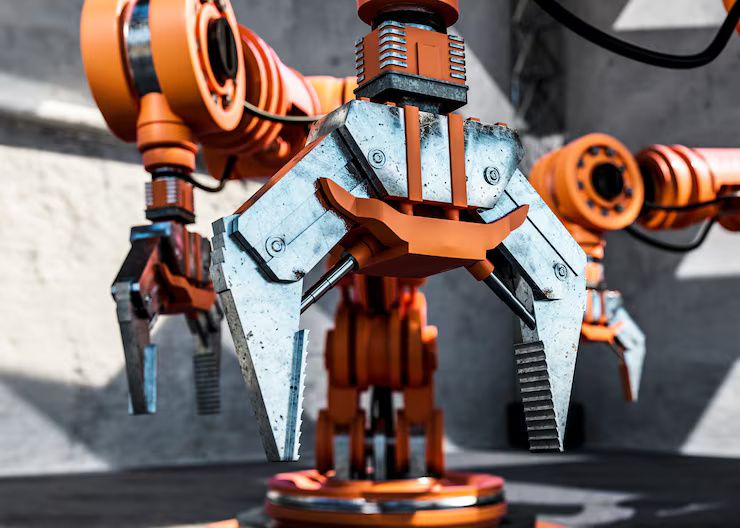
Industrial robotic arms provide controlled multi-axis movement. A robotic arm can move masonry units through predefined paths while maintaining programmed placement coordinates.
The arm can be mounted on a fixed platform, mobile base, scaffold structure, or specialized construction machine.
Brick and Block Grippers
Grippers are responsible for securely handling masonry units. Mechanical clamps, vacuum systems, and specialized end-effectors can be selected according to brick dimensions, surface characteristics, weight, and construction conditions.
End-effector design is important because the robot needs to transport and release each unit accurately.
Machine Vision
Machine-vision systems can provide information about the location of masonry units, wall surfaces, reference points, and other objects.
Cameras, depth sensors, laser systems, or other sensing technologies may be integrated into robotic construction equipment.
Importance
Why Robotic Masonry Matters
Masonry involves repetitive material-handling and placement activities. Robotics can automate selected repetitive movements while providing programmable positioning.
The technology can also connect physical construction activities with digital building models, helping translate predefined designs into automated movement instructions.
Construction Automation
Robotic masonry is part of a broader construction-automation ecosystem. Other technologies include autonomous surveying, robotic drilling, automated material handling, construction 3D printing, digital layout systems, and building information modeling.
These technologies can work independently or as part of an integrated digital construction workflow.
Consistent Placement
Robotic systems can follow programmed movement paths and placement coordinates. This can help create repeatable positioning when the work environment and material dimensions remain within defined operating parameters.
Actual construction accuracy depends on robot calibration, material variation, surface conditions, site conditions, and system configuration.
Reducing Repetitive Physical Handling
Bricklaying requires repeated lifting, carrying, positioning, and alignment of masonry units. Automated equipment can perform selected material-handling movements.
Human personnel can remain involved in setup, supervision, quality checks, material preparation, and activities that require contextual judgment.
Digital Construction Workflows
Robotic masonry can use digital building information to define wall geometry and placement patterns. This creates a connection between design software and construction equipment.
Digital workflows can also provide machine-readable information for selected construction tasks.
Construction Technologies
Building Information Modeling
Building Information Modeling (BIM) provides structured digital information about building components and geometry.
BIM data can potentially be used as an input to robotic construction planning, although additional processing may be required to convert design information into safe machine instructions.
CAD and Robotic Path Planning
Computer-aided design tools can define wall geometry, openings, dimensions, and masonry patterns.
Path-planning software can then generate movement instructions for robotic equipment while considering reach, sequencing, collision avoidance, and placement coordinates.
Automated Mortar Application
Some robotic masonry systems incorporate mechanisms for controlled mortar or bonding-material application.
The application method depends on the masonry system, mortar characteristics, environmental conditions, and robot configuration.
Laser Positioning
Laser-based systems can provide reference information for alignment and positioning.
They may be used alongside cameras, encoders, or other sensors to help determine the robot's location relative to the construction surface.
Mobile Robotic Platforms
Mobile robots can move along construction areas instead of remaining fixed in one position.
Mobility can increase the accessible work area, although navigation, uneven surfaces, obstacles, weather, and site coordination introduce additional engineering challenges.
Manufacturers and Suppliers
The robotic masonry ecosystem includes robotics manufacturers, construction-technology developers, end-effector producers, automation companies, digital construction software providers, and equipment integrators.
Some organizations develop complete robotic bricklaying platforms, while others provide individual components such as robotic arms, grippers, machine-vision systems, positioning equipment, and control software.
When evaluating manufacturers or suppliers, organizations can examine:
- Robot payload
- Working reach
- Placement accuracy
- Compatible masonry units
- Gripper configuration
- Mobility
- Mortar integration
- Vision capabilities
- Environmental operating range
- Software compatibility
- Safety systems
- Maintenance requirements
- Training and technical documentation
System suitability depends heavily on the construction environment and the specific masonry method.
Industrial and Construction Applications
Residential Construction
Automated bricklaying technologies can be applied to selected residential wall-building activities. Robot configurations may be adapted to different wall dimensions and brick patterns.
Site preparation and material logistics remain important because automated placement depends on reliable access to masonry units.
Commercial Buildings
Commercial construction projects may contain large wall areas where repetitive masonry placement is required.
Robotic systems can potentially be integrated into larger digital construction workflows involving BIM, automated surveying, and project-management platforms.
Industrial Facilities
Industrial buildings can include extensive masonry walls, partitions, and other structures.
Automation may be particularly relevant where repetitive construction tasks occur within controlled areas.
Prefabricated Construction
Robotic masonry can be used in controlled manufacturing environments to construct wall panels or other prefabricated components.
Factory-based environments can provide more predictable floor conditions, material logistics, and machine positioning than open construction sites.
Architectural Masonry
Robotic systems can also support selected complex masonry patterns. Digital path planning allows specific brick arrangements to be translated into programmed placement sequences.
Complex patterns may require specialized grippers, software, and quality-control methods.
Recent Updates
Increased Construction Robotics
Construction robotics continues to expand beyond conventional factory environments. Developers are working on mobile robotic platforms and systems designed to operate in changing site conditions.
Unlike factory automation, construction robots must account for weather, uneven surfaces, changing geometry, temporary structures, and other variables.
AI-Assisted Site Perception
Artificial intelligence and computer vision can help robotic systems interpret construction environments.
Potential applications include object recognition, surface detection, progress monitoring, and identification of deviations from planned geometry. These systems require appropriate validation before being used for safety-critical decisions.
Digital Twin Integration
Digital twins can connect construction models with information collected from the physical site.
Robotic systems may use digital site information alongside sensor measurements to understand equipment position and construction progress.
Autonomous Navigation
Mobile construction robots are increasingly incorporating navigation technologies such as cameras, LiDAR, inertial measurement units, GPS where available, and other positioning methods.
Combining multiple sensing methods can help robots operate in environments where a single positioning technology may be insufficient.
Automated Progress Monitoring
Computer vision can compare planned construction information with observed site conditions.
Progress data can help project teams track completed wall sections and identify areas requiring inspection.
Human-Robot Collaboration
Construction robotics does not necessarily mean completely independent construction. Collaborative workflows can combine robotic repetitive movements with human supervision, material preparation, inspection, and site coordination.
This approach can allow automation to be introduced into selected parts of the construction process.
Laws or Policies
Construction Safety
Robotic masonry equipment operates within broader construction safety requirements. Site-specific risk assessments should consider robot movement, moving machinery, lifting operations, material handling, electrical systems, and interactions between people and machines.
Machine Safeguarding
Robotic systems can require guarding, emergency stops, interlocks, restricted operating zones, warning systems, and other safeguards depending on the equipment design.
Worker-Robot Interaction
Construction sites are dynamic environments, so personnel working around robots need clear procedures for access, setup, maintenance, troubleshooting, and emergency intervention.
Building Regulations
Completed masonry structures must comply with applicable building codes and structural requirements.
Automation equipment does not change the underlying engineering requirements for wall stability, structural connections, fire performance, moisture control, or other building characteristics.
Data and Digital Construction
BIM and cloud-connected construction systems can generate substantial project information. Organizations should apply appropriate controls for access, data management, version control, and information security.
Tools and Resources
Robotic Simulation Software
Simulation platforms can model robotic movement before deployment. Engineers can evaluate reach, cycle sequences, potential collisions, and workspace requirements.
BIM Platforms
BIM tools can provide digital representations of walls, openings, dimensions, and other building components.
Machine-Vision Systems
Vision platforms can identify masonry units, wall surfaces, reference points, and construction progress.
Laser Scanning
Laser scanning can generate three-dimensional information about existing construction conditions.
This information can help compare actual site geometry with digital models.
Construction Management Platforms
Digital construction platforms can coordinate drawings, schedules, progress information, equipment data, and project documentation.
Integration with robotic systems can help connect planning information with automated construction activities.
FAQs
What is robotic masonry?
Robotic masonry uses robotic equipment and automation technologies to perform selected masonry activities such as brick or block handling, positioning, and placement.
How do automated bricklaying robots work?
Automated bricklaying robots receive programmed construction instructions and use robotic mechanisms, grippers, sensors, and sometimes mortar systems to place masonry units according to a defined layout.
What technologies are used in robotic masonry?
Common technologies include robotic arms, specialized grippers, machine vision, laser positioning, BIM, CAD, path-planning software, mobile platforms, sensors, and automated control systems.
Who manufactures robotic masonry equipment?
The ecosystem includes robotics companies, construction-technology developers, automation manufacturers, end-effector producers, machine-vision providers, and system integrators.
Where can robotic masonry be used?
Applications can include residential construction, commercial buildings, industrial facilities, prefabricated wall production, architectural masonry, and controlled construction environments.
Conclusion
Robotic masonry connects automated bricklaying robots with digital construction technologies, robotic handling, machine vision, positioning systems, and construction-management workflows. These systems can automate selected repetitive masonry activities while maintaining programmed placement sequences.
The technology is developing alongside BIM, mobile robotics, AI-assisted perception, digital twins, automated progress monitoring, and construction 3D printing. Successful deployment requires consideration of masonry materials, site conditions, robot reach, equipment mobility, worker interaction, construction safety, building requirements, and the capabilities of manufacturers and suppliers.