Industrial operations have changed significantly with the adoption of digital technologies. Modern manufacturing facilities no longer rely solely on manual inspections or periodic equipment checks. Instead, they use connected devices that continuously collect operational data, helping organizations monitor equipment, improve productivity, and make informed decisions.
Industrial Internet of Things (IIoT) monitoring systems are at the center of this transformation. By connecting machines, sensors, and software platforms, these systems provide real-time visibility into manufacturing processes and equipment performance.
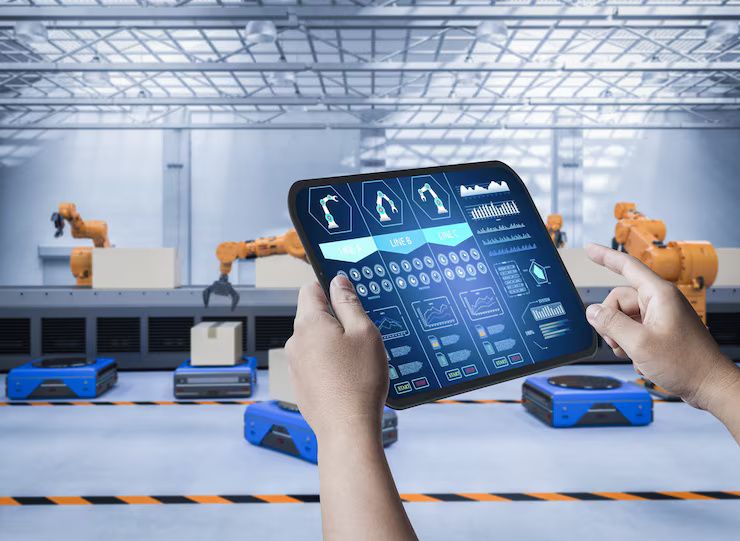
This guide explains how IIoT industrial monitoring systems work, the role of connected sensors and real-time analytics, and how they support smart manufacturing across various industries.
What Are IIoT Industrial Monitoring Systems?
IIoT Industrial Monitoring Systems are digital platforms that connect industrial equipment through sensors, communication networks, and intelligent software. These systems continuously gather operational data from machines and production lines, allowing organizations to monitor performance in real time.
Unlike traditional monitoring methods that depend on scheduled inspections, IIoT systems provide continuous visibility into equipment conditions. This enables manufacturers to identify issues earlier and respond more efficiently.
A typical IIoT monitoring system includes several important components:
- Connected industrial sensors
- Communication networks
- Data processing platforms
- Real-time monitoring dashboards
Together, these technologies help manufacturers improve operational awareness and decision-making.
Why IIoT Is Transforming Manufacturing
Manufacturing facilities are becoming more connected than ever before. As production systems grow increasingly complex, organizations need accurate information to maintain efficiency and product quality.
IIoT provides continuous operational insights that help reduce unexpected interruptions and improve production planning.
For example, instead of waiting for equipment to stop working, maintenance teams can identify unusual vibration or temperature changes before they develop into larger problems. This proactive approach supports more reliable manufacturing operations.
Understanding Connected Sensors
Connected sensors form the foundation of every IIoT monitoring system. These devices collect information from industrial equipment and transmit it to centralized monitoring platforms.
Different sensors are designed to measure specific operating conditions depending on the application.
Temperature Sensors
Temperature monitoring is essential in many manufacturing environments.
These sensors continuously measure equipment temperatures and help identify overheating before it affects production performance.
Pressure Sensors
Pressure sensors monitor liquids, gases, and hydraulic systems operating within industrial equipment.
Maintaining stable pressure helps improve both operational efficiency and equipment reliability.
Vibration Sensors
Rotating machinery often produces vibration patterns that indicate equipment health.
By analyzing vibration levels, maintenance teams can detect early signs of wear or mechanical imbalance before failures occur.
Flow Sensors
Flow sensors measure the movement of liquids or gases throughout industrial systems.
These measurements help operators monitor production consistency and identify abnormal operating conditions.
How IIoT Monitoring Systems Work
Although monitoring systems vary across industries, most follow a similar sequence of operations.
Data Collection
Industrial sensors continuously collect operational information from machines, equipment, and production systems.
The collected information may include temperature, vibration, pressure, energy usage, and production output.
Data Transmission
After collection, sensor data is transmitted through industrial communication networks to centralized monitoring platforms.
Reliable communication ensures that operational information remains available for analysis without significant delays.
Data Processing
The monitoring platform organizes and analyzes incoming information.
Advanced software identifies operational patterns, compares performance against expected values, and highlights unusual conditions that may require attention.
Visualization and Reporting
The processed information is displayed through dashboards that allow operators to monitor equipment performance in real time.
Visual reports help maintenance teams and production managers quickly understand equipment status and operational trends.
Real-Time Analytics in IIoT
Real-time analytics is one of the most valuable capabilities of IIoT monitoring systems.
Instead of reviewing historical information only after production has finished, manufacturers receive continuous updates while operations are in progress.
Performance Monitoring
Real-time analytics allows operators to observe equipment performance as production continues.
Important metrics may include:
- Machine utilization
- Production efficiency
- Equipment health
- Energy consumption
This information supports faster operational decisions.
Predictive Maintenance
One of the biggest advantages of IIoT is predictive maintenance.
Rather than following fixed maintenance schedules, organizations monitor actual equipment conditions to determine when maintenance is needed.
For example, if vibration data gradually increases over several weeks, maintenance teams can investigate the equipment before a breakdown occurs.
Production Optimization
Real-time insights also help manufacturers improve production efficiency.
By identifying bottlenecks, reducing idle time, and monitoring production flow, organizations can continuously improve manufacturing performance.
Communication Technologies in IIoT
Reliable communication networks allow industrial devices to exchange information quickly and securely.
Modern IIoT environments often use industrial communication protocols together with wired and wireless networks to connect sensors, machines, and monitoring platforms.
Stable communication ensures accurate data collection while supporting uninterrupted industrial operations.
As industrial facilities continue to expand, scalable communication infrastructure becomes increasingly important.
Smart Manufacturing Applications
IIoT monitoring systems are widely used across multiple manufacturing sectors because they improve operational visibility and equipment management.
Automotive Manufacturing
Automotive production facilities use IIoT systems to monitor robotic equipment, assembly lines, and quality control processes.
Continuous monitoring helps maintain consistent production standards while reducing unexpected equipment interruptions.
Pharmaceutical Manufacturing
Pharmaceutical production requires strict environmental control and precise manufacturing conditions.
IIoT systems help monitor temperature, humidity, and production equipment throughout manufacturing processes.
Food and Beverage Processing
Food processing facilities rely on continuous monitoring to maintain product consistency and equipment performance.
Sensor data helps manufacturers monitor production conditions while supporting quality management.
Energy and Utilities
Power generation facilities use IIoT monitoring to supervise turbines, generators, pumps, and electrical systems.
Continuous monitoring improves operational reliability and supports efficient maintenance planning.
Benefits of IIoT Industrial Monitoring Systems
Organizations implementing IIoT technologies often experience measurable improvements across manufacturing operations.
Some major advantages include:
- Better operational visibility
- Improved equipment reliability
- Enhanced production efficiency
- Faster maintenance decisions
These improvements support more consistent manufacturing performance while helping organizations manage complex industrial environments.
Challenges of IIoT Implementation
Although IIoT offers numerous advantages, successful implementation requires careful planning.
Organizations often face challenges related to integrating existing equipment with modern digital technologies. Data security, network reliability, and compatibility between different systems also require ongoing attention.
Employee training is another important consideration, as personnel must understand how to interpret monitoring data and respond appropriately to operational insights.
Addressing these challenges helps organizations maximize the long-term value of their IIoT investments.
Future Trends in IIoT and Smart Manufacturing
The future of industrial monitoring continues to evolve with advances in artificial intelligence, machine learning, and edge computing.
These technologies are making monitoring systems more intelligent by enabling faster data processing, automated decision support, and improved predictive capabilities.
Digital twins, autonomous production systems, and advanced industrial analytics are also becoming increasingly important in modern manufacturing environments.
As these innovations mature, IIoT monitoring systems will continue to improve productivity, operational efficiency, and manufacturing intelligence across industries.
Conclusion
IIoT Industrial Monitoring Systems have become an essential part of modern manufacturing. By connecting industrial sensors, communication networks, and real-time analytics, these systems provide valuable operational insights that improve equipment performance and production efficiency.
As manufacturers continue adopting smart technologies, IIoT will play an even greater role in supporting predictive maintenance, intelligent decision-making, and connected industrial operations. Organizations that embrace these technologies are better positioned to build efficient, reliable, and future-ready manufacturing environments.