
Industrial machinery is the backbone of modern manufacturing. Whether producing automotive parts, pharmaceuticals, electronics, or food products, every production facility depends on reliable equipment to maintain consistent operations. Unexpected machine failures can interrupt production, reduce efficiency, and increase maintenance expenses.
To address these challenges, industries are increasingly adopting predictive maintenance. Unlike traditional maintenance approaches that rely on fixed schedules or react after a breakdown occurs, predictive maintenance uses real-time data and intelligent technologies to identify potential equipment issues before they become major problems.
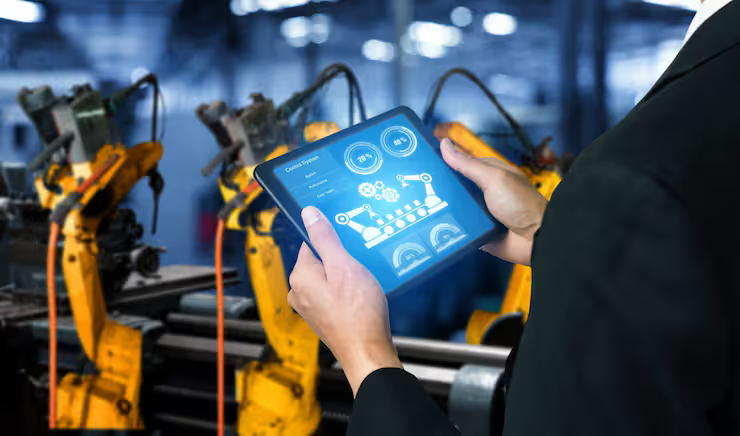
With the integration of artificial intelligence, advanced sensors, and continuous equipment monitoring, predictive maintenance is transforming how industries manage machinery and improve operational reliability.
What Is Predictive Maintenance?
Predictive maintenance is a maintenance strategy that uses machine data, sensor readings, and analytical technologies to determine when equipment may require attention. Instead of replacing parts according to a calendar or waiting until machinery stops working, maintenance activities are planned based on the actual condition of the equipment.
This approach allows manufacturers to monitor machinery continuously and respond before a minor issue develops into a significant failure.
The primary objectives of predictive maintenance include:
- Improving equipment reliability
- Reducing unexpected downtime
- Extending machine lifespan
- Supporting efficient maintenance planning
By focusing on equipment condition rather than fixed maintenance intervals, industries can improve productivity while maintaining operational stability.
Why Predictive Maintenance Is Becoming Essential
Manufacturing environments have become increasingly automated and interconnected. Production lines often operate around the clock, making equipment reliability more important than ever.
Traditional maintenance methods may replace components that are still functioning properly or fail to detect hidden problems developing inside machinery. Predictive maintenance addresses these limitations by analyzing actual operating conditions.
For example, a production motor may begin producing slight vibration changes several weeks before a bearing failure occurs. Sensor systems can detect these changes early, allowing maintenance teams to inspect the equipment before production is affected.
This proactive approach helps minimize interruptions and improves overall equipment performance.
How Predictive Maintenance Works
Predictive maintenance combines data collection, advanced analytics, and intelligent decision-making to monitor machine health.
Data Collection
The process begins by gathering operational information from industrial equipment. Various sensors continuously measure machine performance while equipment is operating.
Typical measurements include:
- Temperature
- Vibration
- Pressure
- Motor current
This information provides valuable insight into the condition of machinery over time.
Data Analysis
Once collected, the information is analyzed using specialized software and artificial intelligence models.
The system compares current operating conditions with historical performance data to identify unusual patterns or developing faults.
Rather than relying on manual inspection alone, intelligent analysis helps maintenance teams detect problems that may not be immediately visible.
Maintenance Planning
When the system identifies abnormal behavior, maintenance personnel can schedule inspections or component replacement before equipment performance declines further.
This planned approach reduces unnecessary maintenance activities while improving production reliability.
AI Monitoring in Industrial Machinery
Artificial intelligence has become one of the most valuable technologies in predictive maintenance. AI systems can analyze massive amounts of operational data much faster than traditional methods.
Instead of evaluating individual measurements, AI identifies relationships between multiple operating conditions and predicts how equipment is likely to perform in the future.
Pattern Recognition
AI algorithms continuously study machine behavior and identify operating patterns.
As equipment ages, small performance changes may indicate developing mechanical issues. AI systems recognize these changes early and alert maintenance teams before failures occur.
Predictive Analytics
Predictive analytics estimates the future condition of equipment based on historical and real-time information.
For example, an industrial compressor operating under increasing vibration levels may receive a maintenance recommendation well before mechanical damage becomes severe.
This allows maintenance teams to make informed decisions based on equipment health rather than assumptions.
Understanding Sensor Technology
Sensors serve as the foundation of predictive maintenance systems. They continuously monitor equipment and provide the data required for intelligent analysis.
Modern industrial facilities often install multiple sensors on critical machinery to monitor different operating conditions simultaneously.
Vibration Sensors
Vibration monitoring helps detect issues such as bearing wear, shaft imbalance, or mechanical misalignment.
Even small changes in vibration patterns can indicate developing equipment problems.
Temperature Sensors
Temperature monitoring identifies overheating components that may require attention.
Motors, bearings, electrical systems, and hydraulic equipment commonly use temperature sensors to monitor operating conditions.
Pressure Sensors
Pressure sensors monitor hydraulic and pneumatic systems.
Unexpected pressure changes may indicate leaks, blockages, or component wear that could affect equipment performance.
Current Monitoring Sensors
Electrical current sensors measure the power consumed by motors and other equipment.
Changes in electrical consumption often provide early indications of mechanical or electrical issues.
Failure Prevention Systems
Failure prevention systems combine sensor technology, AI monitoring, and maintenance planning into a complete equipment protection strategy.
Rather than reacting to breakdowns, these systems focus on identifying risks before failures occur.
Early detection allows maintenance teams to schedule inspections during planned production intervals, reducing disruption and improving equipment availability.
In many facilities, failure prevention systems also generate automatic notifications when machine conditions exceed predefined operating limits.
Industrial Applications
Predictive maintenance has become an important part of many manufacturing industries because reliable equipment is essential for efficient production.
Manufacturing Facilities
Production machinery operates continuously in manufacturing plants, making predictive maintenance valuable for reducing unexpected downtime.
Equipment such as conveyors, CNC machines, compressors, and robotic systems are commonly monitored using predictive technologies.
Energy and Utilities
Power generation equipment must operate reliably under demanding conditions.
Predictive maintenance helps monitor turbines, generators, transformers, and electrical distribution systems to improve operational reliability.
Automotive Production
Automotive manufacturing depends on highly automated production lines.
Continuous equipment monitoring helps maintain consistent production quality while reducing interruptions caused by machinery failures.
Food and Pharmaceutical Manufacturing
Industries with strict production standards require equipment that operates consistently and efficiently.
Predictive maintenance supports reliable production while helping maintain operational quality throughout manufacturing processes.
Benefits of Predictive Maintenance
Organizations implementing predictive maintenance often experience improvements in equipment performance and operational efficiency.
Some important advantages include:
- Better equipment reliability
- Improved production efficiency
- Reduced emergency maintenance
- Longer machinery lifespan
These benefits contribute to more stable manufacturing operations and improved resource utilization.
Challenges of Implementation
Although predictive maintenance provides many advantages, successful implementation requires careful planning.
Installing sensors, integrating monitoring systems, and interpreting operational data require technical expertise and ongoing management.
Organizations also need to ensure that employees understand how to interpret predictive maintenance insights and incorporate them into routine maintenance activities.
With proper planning, these challenges become easier to manage as systems mature.
Future Trends in Predictive Maintenance
Industrial maintenance continues to evolve alongside advances in artificial intelligence, Industrial Internet of Things (IIoT), and smart manufacturing technologies.
Future predictive maintenance systems are expected to provide even greater automation, improved fault prediction, and more accurate equipment diagnostics.
Digital twins, machine learning, cloud-based monitoring platforms, and edge computing are expected to further improve maintenance efficiency and decision-making across industrial environments.
As manufacturing becomes increasingly connected, predictive maintenance will continue to play a central role in improving equipment reliability and operational performance.
Conclusion
Predictive maintenance has transformed industrial machinery management by replacing reactive maintenance with intelligent, data-driven decision-making. Through AI monitoring, sensor technology, and failure prevention systems, manufacturers can identify developing equipment issues before they lead to costly production interruptions.
As smart manufacturing technologies continue to advance, predictive maintenance will become even more important for improving efficiency, extending machinery lifespan, and supporting reliable industrial operations. Organizations that adopt these technologies are better positioned to maintain consistent production, optimize maintenance planning, and build more resilient manufacturing environments.