Shredding and granulating machines play an important role in modern material processing, recycling, waste management, and manufacturing.
These systems reduce large or irregular materials into smaller, more manageable pieces that can be reused, processed further, transported, or separated according to specific requirements.
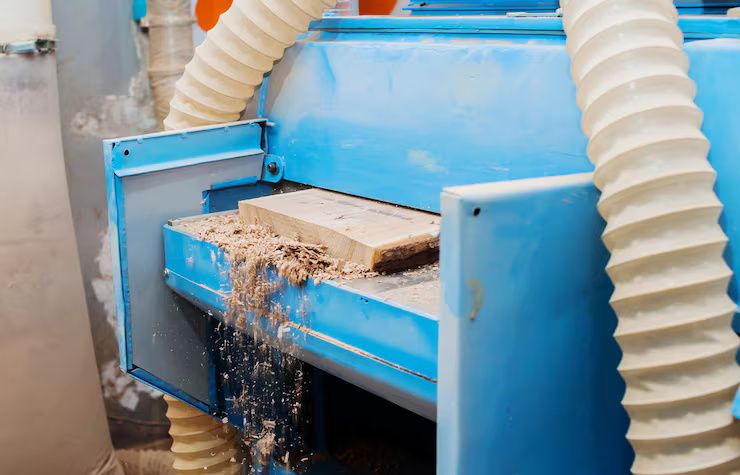
Although shredding and granulation are sometimes treated as the same process, they serve different purposes. An industrial shredder machine typically performs the initial size reduction by tearing, cutting, or breaking materials into coarse pieces. An industrial granulator machine then uses controlled cutting or grinding to produce smaller and more uniform particles.
A complete processing line may combine feeding, shredding, granulating, screening, separation, and material handling systems. Understanding how these stages work together helps explain why industrial shredders and granulators are used across plastics, packaging, electronics, manufacturing waste, and other material recovery applications.
What Are Shredding and Granulating Machines?
Shredding and granulating machines are industrial processing systems designed to reduce the size of materials through mechanical force.
The primary objective is to transform bulky or irregular input materials into smaller particles that are easier to handle or suitable for subsequent processing.
The two main categories have different operating characteristics.
An industrial shredder machine generally uses lower-speed, high-torque mechanisms to process bulky, dense, or difficult materials. It may produce irregular pieces of varying sizes.
An industrial granulator machine generally operates at higher speeds and uses sharp cutting systems to create smaller, more consistent particles.
Depending on the application, one machine may be used independently, or both may be incorporated into a multi-stage processing line.
How the Material Processing Sequence Works
A typical size-reduction system follows several stages:
- Material feeding
- Initial shredding
- Secondary granulation or grinding
- Screening
- Separation
- Collection and storage
Not every application requires every stage. The correct configuration depends on the material type, desired particle size, contamination level, and downstream processing requirements.
The overall objective is to create a controlled material flow in which each stage prepares the output for the next.
Feeding: The First Stage of Processing
Feeding is an essential part of any shredding or granulation system because it controls how material enters the size-reduction equipment.
Feed systems may include hoppers, conveyors, loading systems, or specialized feeding mechanisms. Their design depends on the material's shape, density, moisture content, and physical characteristics.
Consistent feeding helps maintain stable machine operation. If material enters too quickly, the processing chamber may become overloaded. If the feed rate is too low, equipment capacity may not be used efficiently.
Modern systems may incorporate sensors and automated controls to monitor material flow and adjust feeding conditions.
Important considerations include:
- Material dimensions
- Bulk density
- Feed rate
- Moisture content
- Material composition
- Contamination levels
A well-designed feeding system helps maintain a predictable flow from material input to final output.
Shredding: The Primary Size-Reduction Stage
Shredding is generally the first major mechanical processing stage when dealing with large or bulky materials.
Industrial Shredding Machines use rotating shafts, cutting elements, or other mechanical systems to break materials into smaller pieces.
The process may involve:
- Tearing
- Cutting
- Shearing
- Compression
- Fracturing
The exact mechanism depends on the machine design and the material being processed.
An Industrial Shredder Machine is often selected when materials are too large or irregular for direct processing in a granulator. The resulting pieces are then transferred to the next stage for further size reduction.
Shredders may be used for materials such as plastics, packaging waste, production scrap, electronic components, and other industrial materials.
Cutting and Grinding: Achieving Smaller Particle Sizes
After initial shredding, the material may require further processing to achieve a more consistent particle size.
This is where granulation and grinding become important.
An Industrial Granulator Machine typically uses rotating knives and stationary cutting elements to reduce material into smaller pieces. Unlike primary shredding, granulation generally emphasizes controlled particle dimensions.
Grinding systems may use mechanical forces to further reduce material size depending on the application.
The choice between shredding, granulating, and grinding depends on factors such as:
- Desired particle size
- Material hardness
- Material thickness
- Processing volume
- Required uniformity
- Downstream application
The relationship between these stages is important. Shredding prepares oversized materials, while granulation and grinding provide greater control over the final particle characteristics.
Screening: Controlling the Final Output
Screening is often used after shredding or granulation to separate particles according to size.
A screen contains openings designed to allow appropriately sized particles to pass through while retaining larger pieces for additional processing.
This creates a controlled feedback process:
Material Input → Shredding → Granulation → Screening → Collection
Oversized material may return to the processing stage, while correctly sized particles continue toward collection or downstream applications.
Screening helps improve output consistency and can reduce the presence of oversized particles in the finished material.
Understanding Industrial Shredders and Granulators
Industrial shredders and granulators often work together as part of a complete processing system.
| Equipment | Primary Function | Typical Output |
|---|---|---|
| Industrial Shredder | Initial size reduction | Coarse, irregular pieces |
| Industrial Granulator | Controlled cutting | Smaller, more uniform particles |
| Grinder | Further size reduction | Fine or reduced-size material |
| Screening System | Particle separation | Size-classified output |
| Conveyor | Material movement | Continuous material flow |
The combination selected depends on the material and the desired result.
For example, bulky production scrap may first pass through a shredder before entering a granulator. A screening system can then separate the processed material according to particle size.
Factors That Influence Machine Selection
Selecting appropriate Shredding and Granulating Machines requires an understanding of the material and the intended output.
Material Characteristics
Material hardness, thickness, flexibility, moisture, and composition all influence machine design.
Desired Particle Size
A coarse output may require only primary shredding, while a uniform smaller particle size may require granulation and screening.
Processing Capacity
The expected material flow influences equipment dimensions, motor requirements, feeding systems, and overall plant configuration.
Contamination
Materials containing foreign objects or mixed components may require specialized processing or separation stages.
Maintenance Requirements
Cutting components experience wear over time. Easy access to knives, screens, bearings, and other components can simplify routine maintenance.
Applications Across Different Industries
Shredding and granulation technologies are used in numerous industrial environments.
Plastics Processing
Plastic production scrap, rejected components, and post-use materials may be reduced into smaller pieces for further processing.
Recycling
Recycling facilities use size-reduction equipment to prepare materials for sorting, separation, and recovery.
Manufacturing
Industrial plants may process production waste and offcuts to improve material handling and recovery.
Electronics Processing
Electronic materials can require specialized size-reduction systems as part of broader recycling processes.
Packaging
Packaging waste can be reduced to improve handling and support subsequent sorting or processing stages.
Each application requires equipment designed around the physical properties of the material being processed.
Automation and Modern Control Systems
Technology has significantly improved the operation of modern industrial shredders and granulators.
Advanced systems may include:
- Automated feeding controls
- Motor load monitoring
- Temperature sensors
- Vibration monitoring
- Screen monitoring
- Remote diagnostics
- Programmable control systems
These technologies help operators monitor machine conditions and identify potential issues before they affect production.
Automation can also improve consistency by maintaining more stable material flow and processing conditions.
Maintenance and Operational Considerations
Regular maintenance is essential for maintaining reliable performance.
Key maintenance activities may include:
- Inspecting cutting components
- Checking screen condition
- Monitoring bearings
- Inspecting drive systems
- Cleaning processing chambers
- Checking electrical systems
- Monitoring vibration
- Reviewing machine performance
Cutting elements may require sharpening, adjustment, or replacement as they wear.
Maintenance schedules should be based on manufacturer guidance, operating conditions, material characteristics, and actual machine usage.
Safety Considerations
Industrial size-reduction equipment requires carefully managed safety procedures.
Potential hazards can include moving mechanical components, sharp cutting elements, unexpected material movement, and stored mechanical energy.
Appropriate safety practices may include:
- Guarding moving components
- Emergency stop systems
- Lockout and isolation procedures
- Operator training
- Controlled access
- Routine equipment inspections
- Proper personal protective equipment
Safety should be incorporated into equipment design, installation, operation, and maintenance rather than treated as a separate activity.
Future Trends in Shredding and Granulation
The industry is increasingly adopting technologies that improve monitoring, automation, and resource efficiency.
Future developments may include:
- AI-assisted machine monitoring
- Predictive maintenance
- Smart sensors
- Automated material identification
- Improved energy management
- Advanced particle-size control
- Greater integration with recycling systems
As industries place greater emphasis on resource recovery and circular material flows, shredding and granulation technologies are likely to become increasingly integrated with automated sorting and recycling processes.
Frequently Asked Questions
What is the difference between a shredder and a granulator?
A shredder generally performs primary size reduction by processing bulky or difficult materials into coarse pieces. A granulator typically performs more controlled cutting to create smaller and more uniform particles.
What is the purpose of a screening system?
A screening system separates processed material according to particle size. Oversized particles can be returned for further processing, while appropriately sized material moves forward.
Why is feeding important in size-reduction systems?
Consistent feeding helps prevent overloading, supports stable machine operation, and maintains a predictable material flow through the processing line.
What materials can industrial shredders and granulators process?
Depending on their design, these machines may process plastics, packaging materials, manufacturing scrap, electronic materials, and various other industrial feedstocks.
How can automation improve shredding and granulation?
Automation can help monitor machine conditions, regulate material flow, track equipment performance, and support predictive maintenance through sensors and digital control systems.
Conclusion
Shredding and granulating machines form an important part of modern material processing systems. While industrial shredders focus primarily on breaking bulky materials into manageable pieces, industrial granulator machines provide more controlled size reduction. Grinding and screening can then further refine the material and separate particles according to specific requirements.
The complete process depends on coordinated feeding, cutting, grinding, screening, and material handling. By selecting equipment according to material characteristics, desired output, processing capacity, and operational requirements, industries can create efficient and consistent size-reduction workflows.
As automation, sensor technology, and predictive maintenance continue to advance, industrial shredders and granulators are becoming increasingly connected and data-driven. Their role in recycling, manufacturing, and resource recovery is expected to remain important as industries seek more efficient ways to process materials and support sustainable circular production systems.