
Textile machinery refers to the equipment used to convert natural and synthetic fibers into yarn, fabric, finished textiles, and other textile products. These machines support different stages of textile production, including fiber preparation, spinning, weaving, knitting, dyeing, printing, finishing, and fabric inspection. Textile machinery is used in industries that produce clothing, home furnishings, industrial fabrics, medical textiles, and technical materials.
The development of textile machinery began with simple hand-operated tools and gradually progressed toward mechanical and automated equipment. The Industrial Revolution introduced mechanized spinning and weaving, increasing production capacity and changing how textiles were manufactured. Modern textile production combines mechanical engineering, electronic controls, sensors, and computerized systems to manage complex manufacturing operations.
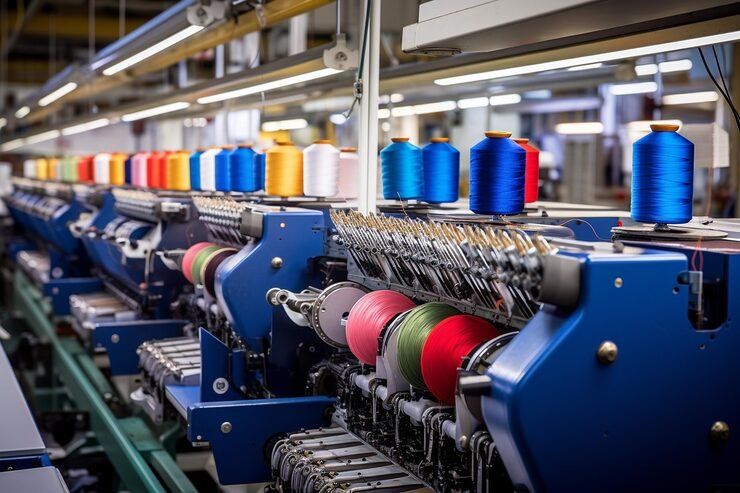
Today, textile machinery varies significantly according to the type of fiber, fabric structure, production volume, and intended application. Cotton, wool, polyester, nylon, and blended fibers may require different processing methods and equipment configurations. Understanding these differences helps explain how raw materials become finished textile products.
Main categories of textile machinery
Textile machinery is generally divided into several categories based on its role in the production process.
Fiber preparation machines: Open, clean, blend, and align fibers before spinning.
Spinning machines: Convert prepared fibers into yarn with the required thickness and strength.
Weaving machines: Interlace lengthwise and crosswise yarns to produce woven fabrics.
Knitting machines: Form fabrics by creating interconnected loops of yarn.
Dyeing and printing machines: Apply colors, patterns, and decorative designs to fibers, yarns, or fabrics.
Textile finishing machines: Improve fabric properties such as softness, dimensional stability, appearance, and surface texture.
Inspection and winding machines: Examine textile quality, remove defects where possible, and prepare materials for subsequent production stages.
Each category serves a specific purpose, although some facilities combine several operations within an integrated production line.
Importance
Textile machinery plays an important role in supplying fabrics for everyday products and specialized industrial applications. Clothing manufacturers, furniture producers, automotive component manufacturers, and healthcare textile producers all depend on machinery capable of processing materials to defined specifications.
Mechanized production helps manufacturers maintain consistent fabric dimensions, yarn characteristics, and surface properties across production batches. Automated controls can also reduce certain repetitive manual activities and help operators monitor machine performance. However, output quality still depends on raw material characteristics, equipment condition, operating settings, and inspection procedures.
Common textile manufacturing processes
Textile production generally follows a sequence of operations, although the exact process depends on the material and finished product.
Fiber preparation: Natural or synthetic fibers are prepared for further processing. Cotton may undergo opening, cleaning, and carding, while manufactured fibers may require cutting, drawing, or other preparation methods.
Spinning: Prepared fibers are converted into yarn. Ring spinning uses a rotating spindle and traveler mechanism, while rotor spinning uses a rotor to form yarn. Air-jet spinning is another method that uses controlled air currents to form yarn structures.
Weaving and knitting: Weaving machines interlace two sets of yarns, known as warp and weft. Knitting machines form fabric through interconnected loops, creating structures that differ in flexibility, stretch, and appearance.
Dyeing and printing: Textile materials receive color through processes selected according to fiber composition, color requirements, and production conditions. Printing applies designs to selected areas or surfaces of a textile.
Finishing: Fabrics may undergo washing, drying, heat setting, calendaring, coating, or other treatments. These processes influence appearance, handle, shrinkage, and functional characteristics.
Inspection and packaging: Finished textiles are checked for defects, dimensions, color consistency, and other quality requirements before being prepared for storage or distribution.
Textile machinery by application
Machine type | Primary function | Common applications |
|---|---|---|
Carding machine | Separates and aligns fibers | Cotton and staple-fiber processing |
Ring spinning machine | Produces yarn from prepared fibers | Apparel and home textiles |
Air-jet loom | Weaves fabric using an air stream to insert weft yarn | Apparel and industrial fabrics |
Circular knitting machine | Produces tubular knitted fabric | T-shirts, sportswear, and underwear |
Flat knitting machine | Produces shaped knitted panels | Sweaters, collars, and technical knitwear |
Fabric dyeing machine | Applies color to textile materials | Garment fabrics and home textiles |
Textile printing machine | Applies patterns and designs | Decorative fabrics and clothing |
Stenter machine | Controls fabric width and supports heat treatment | Finishing and dimensional stabilization |
Fabric inspection machine | Supports visual examination of fabric | Quality control and defect identification |
Machine selection depends on the required textile structure, material properties, production speed, and quality specifications.
Industrial applications of textile machinery
Textile machinery serves a broad range of manufacturing sectors. Apparel production uses spinning, weaving, knitting, dyeing, and finishing equipment to produce garments and fabrics. Home textile manufacturing uses specialized machinery for bedsheets, curtains, towels, carpets, and upholstery materials.
Technical textile production requires equipment adapted to specific performance characteristics. Examples include filtration fabrics, geotextiles used in civil engineering, automotive textiles, protective fabrics, and certain medical textile products. These applications may require controlled yarn structures, specialized coatings, precise fabric formation, or additional testing.
Nonwoven machinery also supports the production of textiles made by bonding or interlocking fibers without conventional weaving or knitting. Nonwoven materials are used in filtration, hygiene products, insulation, and selected healthcare applications.
Recent Updates
Textile machinery continues to evolve through automation, digital monitoring, energy management, and improvements in material processing. Recent developments emphasize greater process visibility, reduced material waste, and the ability to manage different fabric designs and production requirements.
Automation and digital textile manufacturing
Modern textile equipment increasingly incorporates sensors, programmable controls, computerized production settings, and machine-monitoring systems. These technologies can help operators track production speed, identify operating irregularities, and maintain records of manufacturing conditions.
Computerized knitting and weaving equipment can support rapid changes between selected designs and fabric structures. Digital printing technologies also allow patterns to be transferred onto suitable textile materials without using conventional screen-based methods for every design. The practical advantages depend on fabric compatibility, production volume, color requirements, and process configuration.
Artificial intelligence and predictive maintenance
Artificial intelligence is being explored for fabric defect detection, process monitoring, and production analysis. Camera-based inspection systems can identify certain surface irregularities, while analytical software can help technicians investigate recurring equipment problems.
Predictive maintenance systems use information such as vibration, temperature, operating hours, and machine history to identify conditions that may require attention. These systems do not eliminate breakdowns, and their usefulness depends on suitable sensors, reliable data, and appropriate maintenance procedures.
Energy and resource management
Dyeing, drying, washing, and finishing operations can require substantial amounts of water, heat, and electricity. Equipment developments increasingly focus on controlling process conditions, recovering heat where practical, reducing unnecessary water use, and improving chemical application.
Manufacturers are also examining wastewater treatment, material recovery, and production methods that reduce textile waste. Environmental performance varies according to the fiber, machinery configuration, energy source, chemicals used, and operating practices.
Laws or Policies
Textile machinery manufacturing and operation are influenced by rules covering workplace safety, electrical equipment, machinery design, environmental protection, chemical handling, and textile product quality. Requirements vary across jurisdictions and may differ between equipment manufacturers, textile mills, and companies producing finished goods.
Textile machinery regulations in India
In India, textile manufacturing facilities must consider applicable factory and occupational safety requirements, including relevant provisions of the Occupational Safety, Health and Working Conditions Code, 2020, subject to its commencement, applicable rules, and the establishment's circumstances.
Machinery operators must follow relevant safety procedures for moving components, rotating shafts, electrical systems, high-temperature equipment, and pressure-related hazards. Machine guarding, emergency stops, maintenance isolation procedures, and suitable worker training are important elements of industrial safety management.
Environmental requirements may apply to textile dyeing, washing, printing, and finishing operations, particularly where wastewater, air emissions, or chemical discharge are involved. Applicable permissions and standards depend on the process, location, and relevant pollution control authority.
International standards and technical requirements
International standards can help organizations establish consistent approaches to equipment safety, quality management, and environmental performance.
ISO 9001: Quality management principles relevant to machinery manufacturing and textile production.
ISO 14001: Environmental management systems for identifying and managing environmental impacts.
IEC standards: Technical requirements relevant to electrical equipment, controls, and certain machine-related systems.
Applicable machinery safety standards: Requirements addressing guarding, risk assessment, control systems, and safe operation.
A standard may be voluntary or required through legislation, contracts, or industry-specific arrangements. Manufacturers and operators need to identify which requirements apply to their equipment and operating location.
Tools and Resources
Textile manufacturers use technical documentation, machine-monitoring software, laboratory testing equipment, and production-planning systems to manage textile processes. These resources support equipment selection, process control, maintenance, and product quality assessment.
Common software and technical tools
Computer-aided design (CAD): Textile CAD systems support fabric pattern development, weave design, knitting structures, and garment pattern preparation.
Production monitoring systems: These tools collect information about machine operation, output, downtime, and production efficiency.
Maintenance management software: These systems organize inspections, maintenance schedules, repair records, and spare-parts inventories.
Quality testing equipment: Instruments can measure yarn strength, fabric thickness, color consistency, dimensional stability, and resistance to abrasion, depending on the test method.
Energy monitoring systems: These systems track electricity, steam, compressed air, and other resources used by textile production equipment.
Information for machinery evaluation
When evaluating textile machinery, manufacturers commonly examine:
Material compatibility, including fiber type, yarn count, fabric width, and fabric construction.
Production capacity under specified operating conditions.
Power requirements, compressed air needs, water consumption, and heat requirements.
Machine dimensions, maintenance access, and operator safety provisions.
Control-system compatibility and availability of technical documentation.
Quality inspection requirements and applicable environmental regulations.
Manufacturers and suppliers publish equipment specifications, operating manuals, maintenance instructions, and process information. Comparing these technical details helps establish whether a particular machine is appropriate for the intended manufacturing process.
FAQs
What are the main types of textile machinery?
The main types include fiber preparation machines, spinning machines, weaving looms, knitting machines, dyeing and printing equipment, finishing machines, and fabric inspection systems.
How does textile machinery work?
Textile machinery performs specific operations that transform fibers into yarn, fabric, or finished textile products. Mechanical components, electronic controls, and sensors may work together to regulate material movement, processing conditions, and production quality.
What is the difference between weaving and knitting machines?
Weaving machines interlace warp and weft yarns to form fabric. Knitting machines create fabric by forming interconnected loops, generally producing structures with different stretch and flexibility characteristics.
Which technologies are used in modern textile machinery?
Modern textile machinery may use computerized controls, industrial sensors, machine vision, digital printing, automated material handling, and predictive maintenance software. The technologies used depend on the machine type and production requirements.
What factors influence textile machinery selection?
Important factors include the type of fiber, yarn specifications, fabric construction, production capacity, energy requirements, maintenance needs, safety provisions, and the intended application of the finished textile.
Conclusion
Textile machinery supports the conversion of fibers into yarn, fabric, and finished textile products through spinning, weaving, knitting, dyeing, and finishing processes. Modern equipment increasingly incorporates automation, digital monitoring, and quality inspection technologies. Machinery requirements vary according to the material, production method, and intended industrial application. Equipment safety, maintenance, resource use, and applicable regulations remain important considerations throughout textile manufacturing.