Textiles go through a series of carefully controlled processes before they become the fabrics used in clothing, home furnishings, technical materials, and industrial products.
While fibers and weaving or knitting techniques determine much of a fabric's basic structure, textile processing chemicals play an equally important role in improving color, softness, durability, appearance, and performance.
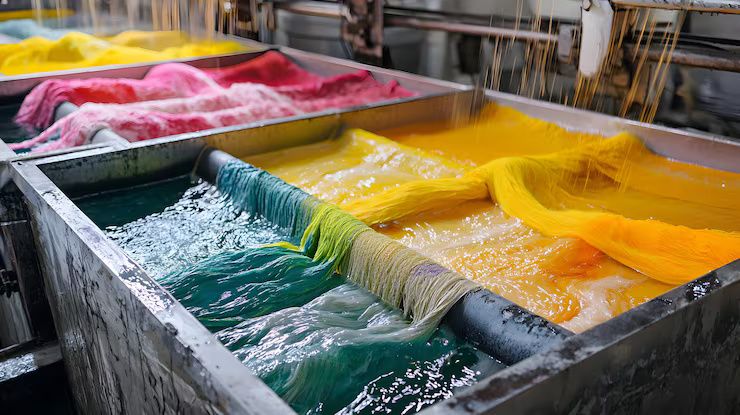
From preparation and dyeing to finishing and specialty treatments, these chemicals help manufacturers achieve specific fabric characteristics while maintaining consistency across production batches. As textile production becomes more focused on resource efficiency, performance, and environmental responsibility, the role of textile chemistry continues to evolve.
Understanding how textile processing chemicals work provides useful insight into the journey from raw fiber to finished fabric. This guide explores the main stages of textile processing, the chemical categories used at each stage, and the trends shaping modern textile manufacturing.
What Are Textile Processing Chemicals?
Textile processing chemicals are specialized chemical substances used during the manufacture, treatment, dyeing, printing, and finishing of textile materials. They support different stages of production and help modify the physical, visual, and functional properties of fibers and fabrics.
Depending on the application, these chemicals may help with:
- Removing impurities from fibers
- Improving dye absorption
- Creating consistent colors
- Enhancing softness
- Controlling fabric shrinkage
- Improving wrinkle resistance
- Adding water or oil repellency
- Supporting antimicrobial performance
- Improving fabric durability
The exact chemical formulation depends on the fiber type, production process, desired performance, and applicable environmental and safety requirements.
Why Textile Chemicals Are Important
Raw fibers often require several treatments before they can become suitable for their intended application.
Cotton, polyester, wool, nylon, rayon, and blended fabrics all respond differently to chemical processing. A treatment that works effectively on one fiber may not provide the same results on another.
Textile processing chemicals help manufacturers control these differences and achieve more predictable results.
Their importance can be seen across several areas:
Improved Fabric Appearance
Chemicals used during bleaching, dyeing, printing, and finishing help create consistent color and visual quality.
Enhanced Performance
Specialty treatments can improve characteristics such as softness, durability, water resistance, and dimensional stability.
Process Efficiency
Carefully formulated chemicals can help optimize production processes by improving dye uptake, reducing processing time, or supporting more consistent results.
Functional Properties
Advanced textile specialty chemicals can give fabrics specific performance characteristics for sportswear, medical textiles, protective clothing, and technical applications.
Textile Processing: From Fiber to Finished Fabric
Textile production generally involves several stages, with each stage requiring different chemical treatments.
The process may include:
- Fiber preparation
- Desizing
- Scouring
- Bleaching
- Mercerization
- Dyeing
- Printing
- Washing
- Finishing
- Quality inspection
Not every textile follows the same sequence. The process depends on the type of fiber, fabric construction, and intended end use.
Preparation and Pretreatment Chemicals
Before dyeing or printing, fabrics often undergo pretreatment to remove natural impurities, processing residues, oils, waxes, and other unwanted materials.
Common chemical groups used during pretreatment include:
- Wetting agents
- Detergents
- Scouring agents
- Chelating agents
- Sequestering agents
- Bleaching chemicals
- Enzymes
These treatments help prepare the textile surface for subsequent processes.
Effective pretreatment is important because uneven preparation can lead to inconsistent dye absorption, shade variation, or surface defects.
Dyeing Chemicals and Their Role
Dyeing is one of the most important stages in textile production. It gives fibers or fabrics their desired color and appearance.
Different fibers require different dye classes and processing conditions.
Common dye categories include:
| Dye Type | Common Fiber Applications | General Characteristics |
|---|---|---|
| Reactive Dyes | Cotton and cellulose fibers | Strong color bonding |
| Disperse Dyes | Polyester | Suitable for synthetic fibers |
| Acid Dyes | Wool, silk, nylon | Often used for protein and polyamide fibers |
| Direct Dyes | Cellulosic fibers | Simple application process |
| Vat Dyes | Cotton and cellulose | High color fastness in suitable applications |
Alongside dyes, textile processing chemicals such as leveling agents, dispersing agents, fixing agents, and pH regulators help control the dyeing process.
The objective is to achieve even color distribution, suitable shade depth, and appropriate color fastness.
Textile Printing and Specialty Treatments
Textile printing applies color or designs to specific areas of fabric rather than coloring the entire material uniformly.
Printing processes may use pigments, dyes, binders, thickeners, and other specialty formulations.
Modern textile printing focuses on:
- Sharp pattern definition
- Consistent color
- Improved wash durability
- Efficient application
- Reduced chemical waste
Digital textile printing has also increased interest in specialized inks and pretreatment chemistry designed for specific fabric types.
Textile Finishing Chemicals
Finishing is often the final stage used to modify a fabric's appearance, feel, or performance.
Textile finishing chemicals may be used to provide:
- Softness
- Smoothness
- Wrinkle resistance
- Water repellency
- Flame resistance
- Antistatic properties
- Soil resistance
- Antimicrobial characteristics
Finishing treatments can significantly influence how a textile performs during everyday use.
For example, a fabric designed for outdoor applications may require water-repellent treatment, while clothing textiles may prioritize softness and wrinkle resistance.
Textile Specialty Chemicals
Textile specialty chemicals are developed for specific performance requirements rather than basic processing alone.
These may include advanced formulations for:
- Technical textiles
- Sportswear
- Protective fabrics
- Medical textiles
- Automotive interiors
- Outdoor materials
- High-performance industrial fabrics
As technical textiles expand into new industries, demand for specialized chemical treatments continues to grow.
The development of these products often focuses on combining multiple properties while maintaining fabric comfort, durability, and regulatory compliance.
Role of Textile Chemical Manufacturers and Suppliers
Textile Chemical Manufacturers develop chemical formulations that support different textile processes, while Textile Chemical Suppliers help make these materials available to textile processing facilities.
A reliable supply chain is important because textile production often requires consistent chemical characteristics across multiple manufacturing stages.
Textile Processing Chemical Suppliers may support manufacturers with technical information related to:
- Application methods
- Compatibility
- Process conditions
- Storage requirements
- Handling procedures
- Regulatory documentation
The relationship between textile producers and chemical specialists is increasingly focused on technical collaboration and process optimization.
Sustainability in Textile Chemical Processing
Environmental considerations have become increasingly important across the textile industry.
Manufacturers are exploring ways to reduce:
- Water consumption
- Energy use
- Chemical waste
- Wastewater pollution
- Processing time
Modern approaches may include low-liquor dyeing, improved chemical concentration control, water-efficient washing, and formulations designed to support lower-impact processing.
Closed-loop water systems and wastewater treatment technologies also play important roles in responsible textile manufacturing.
Sustainability does not depend on a single chemical or process. It requires improvements across the entire textile production chain.
Challenges in Textile Chemical Processing
Textile manufacturers must manage several technical challenges when selecting and applying processing chemicals.
Color Consistency
Maintaining consistent shades across different production batches requires precise control of chemical concentrations, temperature, pH, and processing time.
Fiber Compatibility
Different fibers respond differently to chemical treatments, making formulation and process selection important.
Wastewater Management
Textile processing can generate wastewater containing dyes, salts, surfactants, and other substances that require appropriate treatment.
Regulatory Requirements
Manufacturers must comply with applicable chemical safety, environmental, and product regulations.
Balancing Performance and Sustainability
The industry continues to seek formulations that provide strong fabric performance while reducing environmental impact.
Future Trends in Textile Processing Chemicals
The textile chemical industry is evolving alongside advances in manufacturing technology and sustainability.
Important trends include:
- Bio-based chemical formulations
- Enzyme-assisted processing
- Low-water dyeing technologies
- Digital process monitoring
- High-performance specialty treatments
- Improved biodegradable formulations
- More efficient finishing processes
- Chemical recycling technologies
Automation and data analytics are also helping manufacturers monitor processing conditions more precisely. This can improve consistency and reduce unnecessary resource use.
Frequently Asked Questions
What are textile processing chemicals used for?
Textile processing chemicals are used during preparation, dyeing, printing, washing, and finishing to improve fabric appearance, performance, durability, and functionality.
What is the role of textile specialty chemicals?
Textile specialty chemicals provide specific properties such as water repellency, flame resistance, antimicrobial performance, softness, or enhanced durability for specialized applications.
Why are pretreatment chemicals important?
Pretreatment chemicals help remove impurities and prepare fibers or fabrics for dyeing and finishing, supporting more consistent processing and color results.
How are textile manufacturers improving sustainability?
Manufacturers are exploring water-efficient processes, improved wastewater treatment, lower-impact formulations, resource optimization, and more efficient dyeing and finishing technologies.
What should textile manufacturers consider when selecting processing chemicals?
Important considerations include fiber compatibility, intended fabric performance, process conditions, color requirements, environmental impact, safety, regulatory compliance, and overall process consistency.
Conclusion
Textile processing chemicals are essential to modern fabric manufacturing, supporting everything from fiber preparation and dyeing to printing, finishing, and advanced performance treatments. They help manufacturers control color, texture, durability, comfort, and specialized functional characteristics across a wide range of textile applications.
The industry is now moving toward more resource-efficient processes, advanced textile specialty chemicals, and improved environmental management. As textile chemical manufacturers and Textile Processing Chemical Suppliers continue developing innovative formulations, the future of textile processing is likely to combine higher performance with greater attention to sustainability, process efficiency, and responsible chemical management.