
Ultrasonic technology is an advanced method that uses high-frequency sound waves to detect, measure, inspect, and process materials across many industries.
Although humans cannot hear ultrasonic frequencies, these sound waves can provide valuable information about objects, structures, and environments.
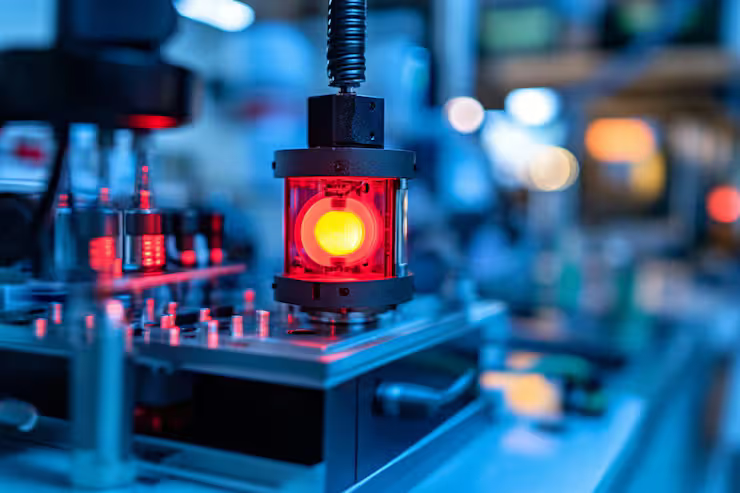
From medical imaging and industrial inspections to automation systems and manufacturing processes, ultrasonic technology has become an important part of modern engineering. Understanding how ultrasonic equipment works, the role of its components, and the principles behind sound wave behavior helps explain why this technology is widely used in different applications.
This guide explores the fundamentals of ultrasonic technology, including equipment types, system components, operating methods, industrial applications, and future developments.
What Is Ultrasonic Technology?
Ultrasonic technology refers to the use of sound waves with frequencies above the range of human hearing, generally higher than 20 kHz. These high-frequency waves can travel through different materials and environments, creating measurable responses when they interact with objects.
Unlike visible technologies that rely on light or cameras, ultrasonic systems use sound energy to gather information. When ultrasonic waves encounter a surface, boundary, or internal structure, they may reflect, transmit, or change direction. These responses can then be analyzed to identify characteristics such as distance, thickness, defects, or movement.
The ability to operate in different conditions makes ultrasonic technology valuable for applications where traditional sensing methods may not be effective.
How Ultrasonic Technology Works
The operating principle of ultrasonic systems is based on generating and receiving high-frequency sound waves.
A typical ultrasonic process includes three main stages:
- Generation of ultrasonic waves
- Interaction between waves and the target object
- Detection and analysis of returning signals
A component called a transducer converts electrical energy into ultrasonic vibrations. These vibrations create sound waves that travel through air, liquids, or solid materials. When the waves encounter an object, part of the energy returns as an echo.
The system analyzes this echo to determine information about the target, such as distance, position, material condition, or structural characteristics.
Main Components of Ultrasonic Systems
Ultrasonic systems consist of several important components that work together to generate accurate results.
Ultrasonic Transducers
The transducer is one of the most important parts of an ultrasonic system. It converts electrical signals into mechanical vibrations and converts returning sound waves back into electrical signals.
Common transducer types include:
- Contact transducers for direct material inspection
- Immersion transducers used with liquid environments
- Air-coupled transducers for non-contact applications
The design and frequency range of a transducer influence the performance of the entire system.
Signal Generator
A signal generator produces the electrical energy required to activate the transducer. It controls important parameters such as frequency, waveform, and intensity.
In industrial environments, precise signal control helps maintain consistent inspection and measurement results.
Receiver and Data Processing Unit
The receiver captures returning ultrasonic signals and converts them into useful information.
Modern systems often include digital processing capabilities that allow:
- Signal filtering
- Data analysis
- Pattern recognition
- Automated reporting
- Real-time monitoring
Display and Control Interface
The user interface allows operators to monitor measurements, adjust settings, and interpret results. Advanced ultrasonic systems may include software platforms that provide visualization and detailed analysis.
Types of Ultrasonic Equipment
Different industries use specialized ultrasonic equipment based on their specific requirements.
Ultrasonic Testing Equipment
Ultrasonic testing equipment is widely used for non-destructive examination of materials and structures. It allows inspectors to identify internal conditions without damaging the tested object.
Common applications include:
- Detecting internal cracks
- Measuring material thickness
- Examining weld quality
- Inspecting industrial components
This approach is commonly used in industries where reliability and safety are important.
Industrial Ultrasonic Equipment
Industrial ultrasonic equipment is designed for manufacturing, automation, and production environments.
Applications may include:
- Cleaning precision components
- Welding plastic materials
- Measuring production parameters
- Monitoring industrial processes
These systems are designed to operate continuously while maintaining consistent performance.
Ultrasonic Sensors
Ultrasonic sensors use sound waves to detect objects, measure distances, and monitor movement.
They are commonly used in:
- Robotics
- Manufacturing automation
- Vehicle assistance systems
- Liquid level measurement
- Object detection systems
Understanding Ultrasonic Sensor Technology
Ultrasonic sensor technology focuses on using sound waves for measurement and detection purposes.
Unlike optical sensors, ultrasonic sensors can operate effectively in conditions involving:
- Dust
- Smoke
- Low visibility
- Certain environmental changes
A typical ultrasonic sensor sends out a sound pulse and measures the time required for the echo to return. This measurement allows the system to calculate the distance between the sensor and the object.
The accuracy depends on factors such as:
- Sound speed variations
- Sensor design
- Target surface characteristics
- Environmental conditions
Applications of Ultrasonic Technology
Ultrasonic technology supports many industries through measurement, inspection, and automation capabilities.
Manufacturing and Production
Manufacturers use ultrasonic systems for:
- Quality inspection
- Material analysis
- Process monitoring
- Component testing
These applications help identify potential issues during production and improve process control.
Automotive Industry
Ultrasonic sensors are commonly integrated into vehicles for:
- Parking assistance
- Object detection
- Distance measurement
- Safety systems
They provide information that supports driver assistance technologies.
Healthcare and Medical Imaging
Ultrasonic principles are widely used in medical imaging systems to create internal body images without using radiation-based methods.
These systems demonstrate how sound waves can provide detailed information about internal structures.
Construction and Infrastructure
Engineers use ultrasonic testing equipment to inspect:
- Concrete structures
- Metal components
- Bridges
- Pipelines
Non-destructive testing methods help evaluate structural conditions while preserving the original material.
Ultrasonic System Integration
Ultrasonic system integration involves combining ultrasonic components with software, automation platforms, and industrial control systems.
A complete integrated ultrasonic solution may include:
- Sensors
- Controllers
- Data processing software
- Communication systems
- Automated decision-making tools
Integration allows ultrasonic technology to become part of larger industrial processes rather than functioning as an isolated device.
For example, in automated manufacturing environments, ultrasonic sensors can communicate with control systems to monitor production conditions and support real-time adjustments.
Advantages of Ultrasonic Technology
Ultrasonic technology provides several useful characteristics that make it suitable for many applications.
Key advantages include:
- Non-contact measurement capabilities
- Ability to inspect internal structures
- Operation in challenging environments
- Reliable distance measurement
- Compatibility with automation systems
- Adaptability across industries
However, performance depends on correct equipment selection, environmental conditions, and proper system configuration.
Challenges and Limitations
Although ultrasonic systems are highly useful, they also have certain limitations.
Factors that may influence performance include:
- Material properties
- Surface shape
- Temperature changes
- Signal interference
- Absorption of sound waves
Highly complex applications may require specialized equipment and careful calibration to achieve accurate results.
Understanding these limitations helps users select appropriate ultrasonic methods for specific requirements.
Future Developments in Ultrasonic Technology
Advancements in electronics, artificial intelligence, and automation are continuing to improve ultrasonic systems.
Future developments may include:
- Smarter signal interpretation
- Improved sensor accuracy
- Greater automation integration
- Advanced data analysis
- More compact system designs
The combination of ultrasonic technology with digital systems is expected to expand its role in industrial monitoring, automation, and intelligent sensing applications.
Frequently Asked Questions
What is ultrasonic technology used for?
Ultrasonic technology is used for measurement, inspection, detection, cleaning, material testing, and automation applications across industries such as manufacturing, healthcare, automotive, and construction.
How does ultrasonic equipment work?
Ultrasonic equipment generates high-frequency sound waves, detects their interaction with objects or materials, and analyzes returned signals to gather useful information.
What is ultrasonic testing equipment?
Ultrasonic testing equipment uses sound waves to examine materials and identify internal conditions such as defects, thickness variations, or structural changes without damaging the material.
How does ultrasonic sensor technology measure distance?
Ultrasonic sensors send sound pulses toward an object and calculate distance by measuring the time required for the reflected echo to return.
What is ultrasonic system integration?
Ultrasonic system integration combines ultrasonic devices with software, automation controls, and communication systems to create coordinated measurement and monitoring solutions.
Conclusion
Ultrasonic technology has become an essential tool for modern measurement, inspection, and automation processes. By using high-frequency sound waves, ultrasonic systems can provide valuable information about objects, materials, and environments without physical contact.
Understanding the components, operating principles, equipment types, and applications of ultrasonic systems helps explain their importance across industries. From industrial ultrasonic equipment and ultrasonic testing equipment to ultrasonic sensor technology and ultrasonic system integration, these solutions continue evolving with advances in digital technology and automation.
As industries focus more on precision, efficiency, and intelligent monitoring, ultrasonic technology will continue playing an important role in creating safer, smarter, and more reliable systems.