
Warehouses have become far more than storage facilities. They now serve as critical operational hubs where inventory, transportation, order fulfillment, and real-time information converge to keep supply chains moving efficiently. Warehouse automation systems have emerged as a practical solution for managing increasing order volumes while maintaining speed and accuracy.
Growing customer expectations, expanding product portfolios, and shorter delivery windows have encouraged organizations to modernize distribution operations. Automation technologies help facilities process inventory with greater consistency while reducing repetitive manual activities and improving operational visibility.
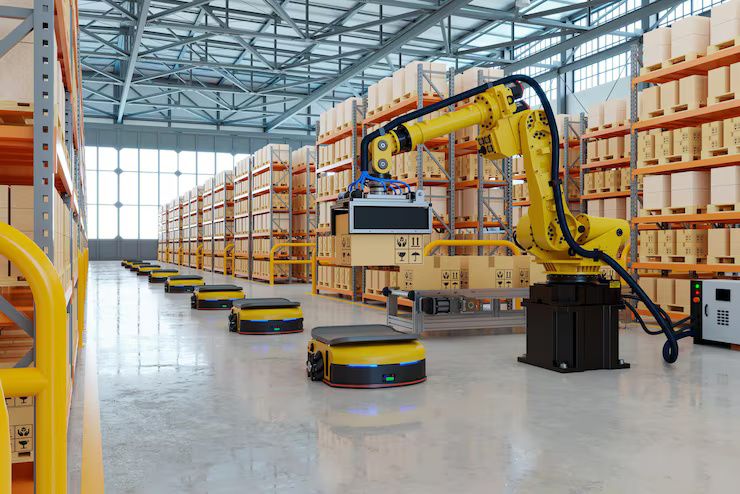
Understanding warehouse automation systems provides valuable insight into how modern distribution centers organize inventory, coordinate equipment, and streamline material movement. From automated storage to intelligent software platforms, each technology contributes to building more responsive and efficient warehouse environments.
How Automation Supports Warehouse Operations
Warehouse automation combines mechanical equipment, software, sensors, and communication technologies to perform tasks that traditionally required significant manual effort. Rather than replacing every human activity, automation coordinates repetitive and data-driven processes that benefit from greater speed and consistency.
Automated systems support receiving, storage, inventory movement, picking, packing, sorting, and shipping. These functions operate together through integrated control systems that continuously exchange operational information, helping warehouses respond more effectively to changing demand.
As automation expands, facilities gain improved inventory visibility and better control over daily workflows without sacrificing operational flexibility.
Core Technologies Behind Automated Warehouses
Modern warehouse automation relies on several interconnected technologies, each designed to improve a specific aspect of material handling and inventory management.
Automated Storage and Retrieval Systems
Automated Storage and Retrieval Systems (AS/RS) organize products within high-density storage locations and retrieve inventory with minimal manual intervention. These systems use cranes, shuttles, or robotic mechanisms to move goods between storage positions and workstations.
By maximizing vertical storage space and reducing unnecessary travel, AS/RS solutions help improve warehouse capacity while supporting faster inventory access.
Conveyor and Sortation Systems
Conveyors transport products efficiently throughout the warehouse, connecting receiving areas, storage zones, picking stations, and shipping departments. Automated sortation equipment directs cartons or individual items to designated destinations based on barcode or scanning information.
These systems reduce handling time while maintaining consistent product flow during periods of high operational demand.
Autonomous Mobile Robots
Autonomous Mobile Robots (AMRs) navigate warehouse environments independently using onboard sensors and intelligent navigation software. Unlike fixed conveyor systems, they can adapt routes dynamically according to changing warehouse conditions.
AMRs assist with transporting inventory, replenishing stock, and supporting order fulfillment activities while allowing facilities to adjust workflows more easily as operational requirements evolve.
Warehouse Management Software Coordinates Operations
Physical automation performs most effectively when supported by intelligent software.
Warehouse Management Systems (WMS) coordinate inventory locations, receiving schedules, picking priorities, shipping documentation, and workforce activities. The software continuously monitors inventory movement while providing real-time operational visibility across the facility.
Many warehouses also integrate Warehouse Control Systems (WCS) and Warehouse Execution Systems (WES) to coordinate automated equipment, optimize workflows, and synchronize communication between software and physical machinery.
Together, these platforms create a connected operating environment that improves decision-making throughout daily warehouse activities.
The Role of Sensors and Data Collection
Automation depends heavily on accurate operational data.
Barcode scanners, RFID technology, machine vision systems, proximity sensors, and weighing equipment collect information throughout the warehouse. These technologies verify product identity, monitor inventory movement, confirm storage locations, and support quality assurance processes.
Real-time data collection enables warehouse managers to identify bottlenecks, monitor equipment performance, and respond quickly to changing operational conditions without relying solely on manual reporting.
Material Handling Equipment Remains Essential
Although robotics receives considerable attention, conventional material handling equipment continues playing an important role within automated warehouses.
Forklifts, pallet movers, lift tables, automated guided vehicles, and specialized transport systems work alongside automated technologies to support inventory movement throughout the facility.
Successful warehouse automation focuses on integrating existing equipment with newer technologies rather than replacing every operational asset simultaneously.
Key Considerations Before Implementing Automation
Selecting warehouse automation requires careful evaluation of operational needs rather than adopting technology for its own sake.
Organizations typically consider factors such as:
- Facility layout and available space
- Inventory characteristics
- Order volume and seasonal fluctuations
- Product handling requirements
- Software compatibility
- Equipment scalability
- Workforce training requirements
- Maintenance planning
Understanding these operational factors helps organizations choose automation systems that align with long-term business objectives and distribution strategies.
Benefits Beyond Operational Speed
Automation is often associated with faster processing, but its value extends much further.
Improved inventory accuracy reduces stock discrepancies and supports better planning. Standardized workflows enhance operational consistency, while automated data collection provides stronger visibility into warehouse performance.
Automation also supports workplace safety by reducing repetitive lifting, minimizing unnecessary travel, and limiting manual handling in demanding operational environments. Employees can dedicate more time to supervisory, analytical, and exception-handling responsibilities that require human judgment.
Emerging Trends in Warehouse Automation
Warehouse technology continues advancing alongside developments in artificial intelligence, machine learning, industrial robotics, and connected devices.
Predictive analytics now helps forecast inventory requirements, while digital twins allow organizations to simulate warehouse layouts before making operational changes. Machine vision systems continue improving inspection accuracy, and collaborative robots increasingly assist workers with repetitive fulfillment activities.
Cloud-based software platforms also enable centralized monitoring across multiple warehouse locations, providing greater operational visibility throughout broader distribution networks.
Conclusion
Warehouse automation systems have become an integral part of modern distribution operations by combining intelligent software, automated equipment, robotics, and real-time data collection into coordinated workflows. Rather than focusing solely on faster order processing, these systems improve inventory visibility, operational consistency, and overall warehouse efficiency.
As supply chains continue evolving, organizations that understand the capabilities of warehouse automation will be better prepared to design flexible, scalable, and reliable distribution environments capable of meeting future operational demands while maintaining high standards of accuracy and performance.