AI in warehousing automation refers to the use of artificial intelligence to help warehouses manage inventory, move goods, organize storage, and coordinate daily operations.
It combines software, sensors, robotics, cameras, and data analysis to support activities that traditionally required extensive manual coordination. These systems are used in distribution centers, manufacturing facilities, retail warehouses, and logistics networks.
Warehousing has changed as businesses handle a wider range of products, changing order patterns, and increasingly complex distribution processes. Traditional warehouses rely on employees, barcode scanners, conveyor systems, forklifts, and inventory management software. Although these methods remain important, artificial intelligence can help interpret large amounts of operational data and support decisions about where goods should be stored, when items may be needed, and how tasks can be organized.
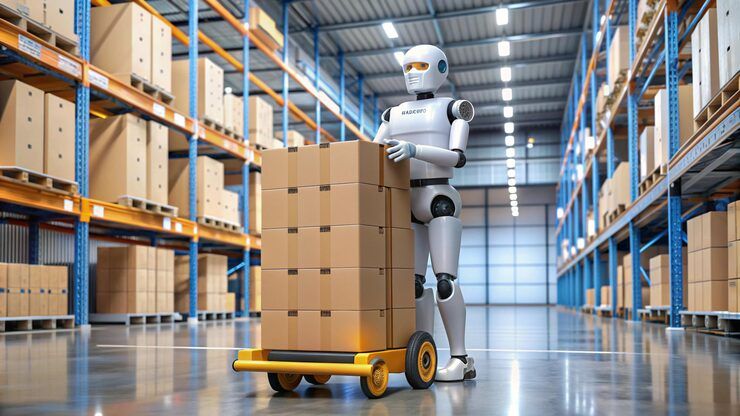
The development of AI in warehousing automation builds on earlier technologies, including computerized inventory records, industrial robotics, and warehouse management systems. Machine learning, computer vision, and predictive analytics have expanded these capabilities by allowing systems to recognize patterns, interpret visual information, and adjust certain decisions as conditions change.
How AI Works in a Warehouse
AI-powered warehouse systems process information from multiple sources. These may include inventory databases, barcode scanners, radio-frequency identification (RFID) readers, cameras, robotic equipment, and order management platforms. Algorithms analyze this information to identify patterns, classify objects, estimate demand, or determine suitable actions.
For example, an AI system may analyze previous orders and current inventory levels to estimate which products are likely to be requested more frequently. A warehouse management system can then use that information when planning storage locations or replenishment activities, subject to its configured rules and human oversight.
Main Technologies Used
Several technologies contribute to AI-powered warehousing automation:
- Machine learning: Examines historical and current data to identify patterns in demand, inventory movement, and operational performance.
- Computer vision: Uses camera images to recognize packages, read labels, identify objects, or detect certain handling errors.
- Autonomous mobile robots: Move materials through designated warehouse areas using navigation systems, sensors, and task instructions.
- Predictive analytics: Estimates future inventory requirements, equipment maintenance needs, or potential operational delays.
- Natural language processing: Allows warehouse personnel to interact with certain systems through written or spoken questions.
- Warehouse management systems: Coordinate inventory records, storage locations, order processing, and warehouse workflows.
These technologies may operate together, but not every automated warehouse uses every component. The design depends on the facility's layout, inventory, equipment, and operating requirements.
Importance
AI in warehousing automation matters because warehouses connect manufacturers, retailers, transport networks, and consumers. Their operations influence whether products are available, whether orders are prepared accurately, and how efficiently goods move between locations.
As warehouses handle more products and more complicated order patterns, manual coordination can become difficult. AI-supported systems can process operational information quickly, identify unusual patterns, and help organize tasks. However, their results depend on accurate data, suitable equipment, reliable networks, and appropriate human supervision.
Inventory Management and Order Accuracy
Inventory management involves knowing what products are available, where they are stored, and when additional stock may be required. AI can compare inventory records with sales patterns and movement data to identify possible shortages, excess stock, or discrepancies.
Computer vision and automated scanning can also help verify item identities and package information. These systems may flag mismatches for inspection, although damaged labels, poor lighting, unusual packaging, and incomplete records can affect recognition accuracy.
Robotics and Material Movement
Robots can transport containers, shelves, or individual items between designated warehouse locations. AI-based navigation helps some robotic systems interpret their surroundings and adjust routes when obstacles or traffic appear.
Conveyor systems and automated storage equipment can work alongside these robots. Employees may continue handling tasks that require judgment, unusual-item processing, exception management, or physical inspection.
Demand Forecasting and Workforce Coordination
Demand forecasting uses historical orders, seasonal patterns, current stock levels, and other relevant information to estimate future requirements. AI models can identify relationships within this data and help warehouse managers plan replenishment and storage activities.
Some systems also support task allocation by considering order priorities, equipment availability, and workload. Such planning can affect employees' daily activities, so organizations need to consider training, workload balance, workplace safety, and appropriate human review.
Common Applications of AI in Warehousing
| Application | How AI contributes | Main consideration |
|---|---|---|
| Inventory forecasting | Estimates future product requirements | Data quality |
| Robotic navigation | Helps robots select and adjust routes | Safe movement |
| Package recognition | Identifies items and labels from images | Image clarity |
| Order picking | Helps organize item retrieval tasks | Picking accuracy |
| Equipment monitoring | Identifies unusual operating patterns | Sensor reliability |
| Storage planning | Suggests suitable product locations | Layout constraints |
| Anomaly detection | Flags unusual inventory or transaction activity | Human verification |
Recent Updates
Developments in AI in warehousing automation from 2024 through 2026 reflect wider adoption of connected robotics, AI-based planning, computer vision, and data-driven operations. Progress varies between organizations, and many facilities continue to use a combination of manual processes and established automation.
More Flexible Warehouse Robotics
Warehouse robots are increasingly designed to handle changing routes, product arrangements, and task instructions. Improvements in sensors, mapping, and AI-based perception can help certain systems operate in environments where obstacles and workflows change throughout the day.
Some facilities are also exploring robotic systems that can handle a broader range of picking and material movement tasks. Performance remains dependent on object shape, packaging, workspace conditions, and the complexity of the task.
Generative AI and Natural Language Interfaces
Generative AI is being explored for warehouse information retrieval, operational reporting, and employee assistance. A worker might use a natural language interface to ask about an inventory discrepancy or request an explanation of an operational procedure.
These tools can make information easier to access, but they may produce incorrect or incomplete answers. Systems that affect inventory records, equipment controls, or safety procedures therefore need suitable permissions, verification, and oversight.
Digital Twins and Predictive Maintenance
A digital twin is a digital representation of a physical system, such as a warehouse layout, conveyor network, or automated storage facility. When connected to current operational data, it can help teams examine workflows, test possible layout changes, and study equipment interactions.
Predictive maintenance systems analyze information such as vibration, temperature, operating hours, and fault records to identify signs of possible equipment problems. Their predictions are estimates rather than certainties, and maintenance inspections remain important.
Greater Attention to Data Security
Connected warehouse equipment produces and exchanges substantial operational data. As AI systems become integrated with inventory platforms, robotics, and enterprise software, organizations are paying greater attention to access controls, network security, data quality, and system reliability.
The overall direction is toward more connected and adaptable warehouse operations. Nevertheless, implementation varies according to facility size, available infrastructure, technical skills, and the suitability of automation for particular tasks.
Laws or Policies
AI in warehousing automation is affected by workplace safety rules, machinery requirements, data protection laws, and regulations governing electronic systems. The applicable requirements depend on the country, the type of equipment, the information collected, and the activities performed at the facility.
Relevant Requirements in India
In India, warehouse operations may be subject to applicable occupational safety, health, labour, electrical safety, fire safety, and environmental requirements. The Occupational Safety, Health and Working Conditions Code, 2020, forms part of India's labour law framework; its application depends on the relevant commencement provisions and applicable rules.
Facilities may also need to consider state-level requirements, building and fire regulations, electrical installation standards, and equipment-specific obligations. Automated lifting equipment, pressure systems, and other specialized machinery may be subject to additional technical or inspection requirements.
India's Digital Personal Data Protection Act, 2023, is relevant where AI systems process digital personal data within its scope. For example, certain employee monitoring systems may involve personal information, making applicable data protection obligations important.
Workplace Safety and Responsible AI
AI does not remove an employer's responsibility to provide a safe working environment. Automated vehicles, conveyors, robotic arms, and lifting systems require suitable risk assessment, protective barriers where needed, emergency controls, maintenance, and employee training.
Important considerations include:
- Preventing collisions between employees and moving equipment.
- Protecting workers from moving parts and automated handling systems.
- Limiting access to machinery controls and sensitive operational data.
- Maintaining records of inspections, incidents, and relevant system changes.
- Reviewing AI-generated decisions that affect safety or employee activities.
International standards from organizations such as ISO and IEC can provide technical guidance on robotics, machinery safety, automation, and information security. A standard does not automatically become a legal requirement in every situation; its status depends on applicable regulations and contractual or organizational requirements.
Tools and Resources
A range of digital tools can help explain, plan, and manage AI in warehousing automation. The appropriate resource depends on whether the task involves inventory, robotics, data analysis, safety, or facility design.
Warehouse Management and Analytics Tools
Warehouse management systems maintain information about inventory, receiving, storage, picking, packing, and dispatch. When connected to suitable analytics tools, they can provide information about stock movement, order patterns, and operational delays.
Data analysis platforms can help teams examine inventory records, identify unusual transactions, and prepare performance reports. Forecasting tools can also compare historical demand with current inventory information, provided the underlying records are sufficiently complete.
Simulation and Robotics Resources
Warehouse simulation software allows users to model storage layouts, conveyor routes, robotic movement, and order flows. These models can help examine how a proposed arrangement might behave before physical changes are made.
Robotics development environments and technical documentation explain robot navigation, sensors, machine vision, and control systems. Relevant learning materials are available through engineering institutions, technical training providers, and robotics research organizations.
Official and Technical Information
Useful resources include:
- The Ministry of Labour and Employment in India for relevant labour legislation and policy information.
- The Ministry of Electronics and Information Technology for digital policy and data protection information.
- The International Organization for Standardization for applicable management and technical standards.
- The International Electrotechnical Commission for electrical, electronic, and automation standards.
- Government workplace safety publications and equipment manuals for practical safety information.
These resources help readers understand the technical and regulatory background. The precise requirements for a warehouse depend on its location, equipment, and operational activities.
FAQs
What is AI in warehousing automation?
AI in warehousing automation uses machine learning, computer vision, predictive analytics, and related technologies to support inventory management, robotic movement, order picking, and warehouse planning.
How does AI improve warehouse inventory management?
AI analyzes inventory records, order history, and product movement to estimate demand and identify possible stock discrepancies. The quality of its results depends on accurate records and appropriate system configuration.
What types of robots are used in AI-powered warehouses?
Common examples include autonomous mobile robots, robotic picking arms, automated guided vehicles, and robotic systems used with conveyors or storage equipment. Their capabilities vary according to their sensors, programming, and working environment.
What are the main challenges of AI in warehousing automation?
Common challenges include equipment integration, inaccurate data, cybersecurity risks, employee training, system maintenance, and workplace safety. Organizations must also account for tasks that still require human judgment.
What laws apply to AI-powered warehouses in India?
Applicable requirements may include workplace safety and labour laws, electrical and fire safety rules, machinery-related standards, and data protection legislation when personal data is processed. The exact obligations depend on the facility and its activities.
Conclusion
AI in warehousing automation combines data analysis, robotics, sensors, and digital systems to support inventory control, material movement, order processing, and operational planning. Recent developments include more adaptable robots, natural language interfaces, digital twins, and predictive maintenance tools. These technologies also introduce challenges involving safety, data accuracy, cybersecurity, and employee training. Their use is shaped by the warehouse environment, technical capabilities, and applicable laws and standards.