Data center virtualization is a technology that allows organizations to run multiple virtual computing environments on a single physical infrastructure.
Instead of dedicating one physical server to every application, virtualization uses software to divide the computing resources of a server into separate virtual machines. Each virtual machine can run its own operating system and applications while sharing the underlying hardware.
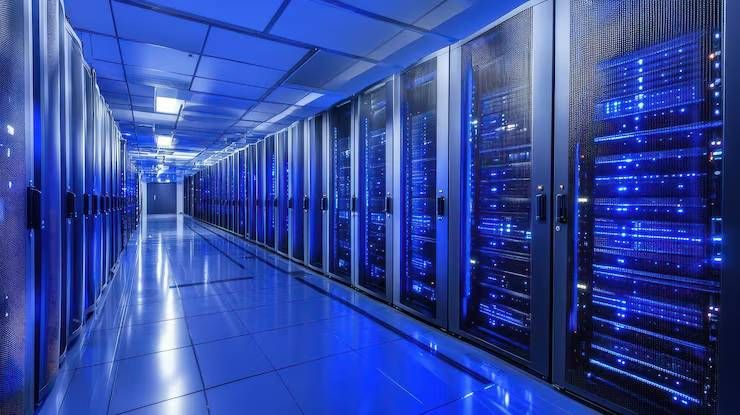
Traditional data centers often rely on individual physical servers for databases, websites, business applications, and internal systems. This approach can leave computing resources underused because many applications do not continuously require the full capacity of their assigned servers. Data center virtualization addresses this challenge by allowing computing power, memory, storage, and networking resources to be allocated more flexibly.
A typical virtualized data center includes several important components:
- Physical servers: Hardware that provides processors, memory, and other computing resources.
- Hypervisors: Software that creates and manages virtual machines on physical hardware.
- Virtual machines (VMs): Software-based computers that run operating systems and applications.
- Virtual storage: Logical storage resources created from physical disks or storage systems.
- Virtual networking: Software-defined connections that allow virtual machines to communicate.
- Management platforms: Tools that help administrators monitor, configure, and maintain virtual infrastructure.
For example, a company operating an online information platform might use one physical server to host several virtual machines. One machine could run the website, another could manage the database, and a third could support internal applications. Each environment remains logically separated, although all depend on shared physical infrastructure.
Data center virtualization is closely connected to cloud computing, server consolidation, software-defined infrastructure, and enterprise IT management. However, virtualization does not automatically make an environment a cloud. Cloud computing generally adds capabilities such as self-service provisioning, automated resource allocation, and measured usage.
Importance of Data Center Virtualization
Data center virtualization has become important as organizations manage growing volumes of data, digital applications, remote operations, and changing computing demands. Businesses, educational institutions, hospitals, financial organizations, and government departments may use virtualized infrastructure to support their digital systems.
More efficient hardware utilization
Virtualization allows multiple workloads to share the resources of a physical server. Administrators can allocate processor capacity and memory according to application requirements, reducing the need to maintain separate hardware for every workload.
Flexible infrastructure management
Virtual machines can often be created, configured, copied, or moved between compatible hosts more easily than applications tied to individual physical servers. This flexibility can help organizations respond to changing computing requirements.
Business continuity and disaster recovery
Virtualization can support backup, replication, and recovery strategies. If a physical server fails, compatible workloads may be restarted on another host when sufficient capacity and suitable recovery arrangements are available. Virtualization alone, however, does not guarantee uninterrupted operation.
Improved application separation
Different applications can operate in separate virtual machines, each with its own operating system and configuration. This separation helps administrators manage software dependencies and limit some forms of interference between workloads.
Support for cloud and hybrid infrastructure
Virtualized environments can provide a foundation for private cloud systems and hybrid infrastructure that combines on-premises data centers with public cloud platforms. Organizations can select where workloads run according to technical, operational, and regulatory requirements.
Operational planning and energy awareness
Consolidating workloads may reduce the number of physical servers required for a given computing demand. This can reduce electricity consumption and cooling requirements, although actual savings depend on workload patterns, hardware efficiency, and the additional resources required for resilience.
Common challenges include licensing complexity, specialized administration skills, security misconfiguration, hardware compatibility, and the risk that multiple applications will be affected by a shared host failure.
Recent Updates in Data Center Virtualization
Virtualization technology continues to evolve as organizations adopt artificial intelligence (AI), containerized applications, hybrid cloud infrastructure, and stronger cybersecurity controls. Developments during 2025 and 2026 show a growing focus on managing virtual machines alongside modern applications and specialized computing hardware.
Private cloud and AI infrastructure
On June 17, 2025, Broadcom announced VMware Cloud Foundation 9.0, a platform designed to unify private cloud operations across computing, storage, networking, and management. The announcement highlighted support for traditional applications, modern workloads, and AI infrastructure.
On May 5, 2026, Broadcom announced VMware Cloud Foundation 9.1, with additional capabilities for AI workloads and mixed computing hardware. Such developments reflect the growing relationship between data center virtualization and enterprise AI infrastructure.
GPU virtualization and high-performance computing
AI applications often require graphics processing units (GPUs) to process large datasets and execute complex calculations. Virtualization platforms are increasingly developing ways to allocate GPU resources across compatible workloads while maintaining isolation and management controls.
For example, updates announced for VMware Cloud Foundation 9.1 in May 2026 described improvements involving GPU access, memory management, and network processing. These capabilities can help organizations run certain AI and data-intensive applications in virtualized environments. <Cite refs={["turn272155search8"]}/>
Hybrid infrastructure and container management
Virtual machines remain important for traditional enterprise applications, while containers support applications that need portable and consistent deployment environments. Many organizations therefore use both technologies instead of relying on only one approach.
Current infrastructure planning increasingly considers how virtual machines, containers, private cloud systems, and public cloud platforms can operate together. This approach allows technical teams to choose an environment according to application requirements, security needs, and operational constraints.
The direction of development is not identical across every organization. Platform capabilities, hardware compatibility, software subscriptions, and migration requirements should be evaluated before infrastructure changes are made.
Laws and Policies Affecting Data Center Virtualization in India
Data center virtualization in India is affected by laws and cybersecurity requirements concerning personal information, digital infrastructure, incident reporting, and sector-specific obligations. Virtualization itself does not automatically establish legal compliance; organizations must consider how they collect, store, process, and protect information.
Digital Personal Data Protection Act, 2023
India's Digital Personal Data Protection (DPDP) Act, 2023 establishes a framework governing the processing of digital personal data, subject to its provisions and applicable rules. The Digital Personal Data Protection Rules, 2025 were notified on November 14, 2025.
Organizations operating virtualized environments that process personal data should consider:
- Appropriate access controls and protection against unauthorized access.
- Data retention and deletion procedures.
- Security safeguards for systems containing personal information.
- Responsibilities when infrastructure or data processing involves external providers.
- Applicable commencement dates, exemptions, and obligations under the Act and Rules.
CERT-In cybersecurity directions
The Indian Computer Emergency Response Team (CERT-In) issued cybersecurity directions under Section 70B of the Information Technology Act, 2000, on April 28, 2022. These include requirements relating to specified cyber incident reporting, time synchronization, and maintaining certain information and records. Applicable requirements depend on the entity and the direction's scope.
For virtualized infrastructure, organizations should maintain appropriate system logs, monitor suspicious activity, establish incident response procedures, and understand their reporting responsibilities. Data center, cloud, and virtual private server operators should review requirements applicable to their particular operations.
Sector-specific and contractual requirements
Financial institutions, healthcare organizations, government departments, and other regulated entities may face additional requirements concerning data security, auditability, operational resilience, or information handling. These obligations can influence where virtual machines run, who administers them, and how backups are maintained.
Organizations should consult current official guidance from the relevant regulators and government departments. The appropriate legal controls depend on the data involved, the organization’s activities, and the applicable regulatory framework.
When assessing a virtualization platform, consider these factors:
- Hardware compatibility: Confirm processor, memory, storage, and network support.
- Security features: Review access management, isolation, encryption, and patching procedures.
- Management capabilities: Examine monitoring, automation, and workload migration features.
- Backup and recovery: Verify backup consistency and regularly test restoration procedures.
- Licensing and support: Understand applicable software terms, maintenance arrangements, and platform lifecycle policies.
Frequently Asked Questions
What is data center virtualization?
Data center virtualization is the use of software to create virtual computing resources from physical hardware. It enables multiple virtual machines, storage environments, and network components to operate on shared infrastructure.
What is the difference between virtualization and cloud computing?
Virtualization abstracts physical hardware into logical resources. Cloud computing builds on infrastructure technologies and typically adds on-demand provisioning, automation, resource pooling, and usage measurement. A virtualized data center can operate without being a cloud environment.
Is data center virtualization secure?
It can support secure infrastructure when administrators implement appropriate isolation, access controls, software updates, network segmentation, monitoring, and backup procedures. However, vulnerabilities in the hypervisor or management platform can affect multiple virtual machines.
How does virtualization support disaster recovery?
Virtualization can simplify replication, backup, and workload restoration. If a host fails, workloads may be restarted on another compatible server when recovery systems, available capacity, and appropriate configurations are in place.
What is the difference between virtual machines and containers?
Virtual machines typically run separate operating systems on virtualized hardware. Containers share the host operating system kernel while isolating applications and their dependencies. Virtual machines provide a different isolation model, while containers can be more lightweight for suitable application architectures.
Conclusion
Data center virtualization is an important foundation of modern IT infrastructure. By separating computing environments from physical hardware, it allows organizations to consolidate workloads, allocate resources flexibly, manage applications more consistently, and develop private or hybrid cloud environments.
Developments in AI infrastructure, GPU virtualization, container management, and automated operations are expanding its role. At the same time, organizations must address cybersecurity, regulatory compliance, backup planning, hardware compatibility, and software lifecycle management.
A successful virtualization strategy begins with understanding existing workloads and infrastructure requirements. Careful planning, ongoing monitoring, tested recovery procedures, and regular security reviews help organizations maintain reliable virtualized environments as their computing needs evolve.