Bearings are essential mechanical components that enable machines to operate smoothly by reducing friction between moving parts. From automobiles and industrial machinery to renewable energy systems and aerospace equipment, bearings support countless applications where precision, durability, and reliability are critical.
The bearing manufacturing industry has evolved significantly with the adoption of advanced production technologies, precision engineering, and automated quality control systems. Modern bearings are designed to withstand high speeds, heavy loads, and demanding operating conditions while maintaining consistent performance over long periods.
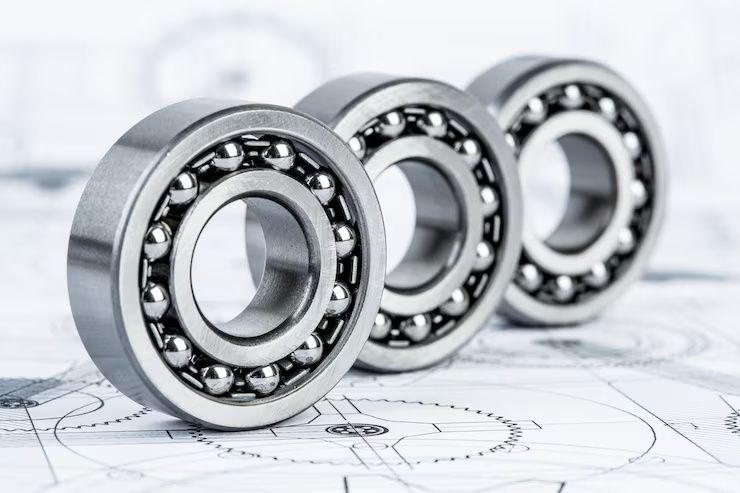
This guide explains the different types of bearings, the materials used in their production, modern manufacturing technologies, and the industries that rely on these precision-engineered components.
What Is the Bearing Manufacturing Industry?
The bearing manufacturing industry focuses on designing and producing components that support rotational or linear movement while minimizing friction. Bearings improve mechanical efficiency, reduce wear, and help extend the operating life of equipment.
Producing bearings requires exceptional precision because even slight variations in dimensions can affect machine performance. Manufacturers follow carefully controlled production processes to ensure every component meets strict engineering standards.
A standard rolling bearing generally consists of:
- Inner ring
- Outer ring
- Rolling elements
- Cage or retainer
Each component works together to distribute loads evenly and ensure smooth movement.
Why Bearings Are Important
Machines contain numerous moving parts that constantly generate friction. Bearings reduce this friction, allowing equipment to operate more efficiently while minimizing wear and energy loss.
Some important advantages of bearings include:
- Smooth and controlled movement
- Reduced mechanical wear
- Improved equipment efficiency
- Longer operating life
For example, industrial conveyor systems use bearings to support rotating rollers. Without precision bearings, continuous movement would quickly generate excessive heat and damage mechanical components.
Types of Bearings
Different industries require different bearing designs depending on operating conditions, speed, and load requirements.
1. Ball Bearings
Ball bearings are among the most widely used bearing types. They use spherical rolling elements to reduce friction while supporting both radial and axial loads.
These bearings are commonly found in electric motors, household appliances, pumps, and automotive equipment because they provide reliable performance at relatively high rotational speeds.
2. Roller Bearings
Roller bearings use cylindrical, tapered, or spherical rollers instead of balls. Their larger contact area enables them to support heavier loads.
They are widely used in heavy industrial machinery, mining equipment, construction machinery, and manufacturing systems where durability is essential.
3. Thrust Bearings
Thrust bearings are specifically designed to handle axial loads that act parallel to a rotating shaft.
These bearings are commonly installed in gearboxes, marine equipment, turbines, and automotive transmission systems.
4. Needle Bearings
Needle bearings contain long and slender rollers that provide high load capacity within compact spaces.
Their space-saving design makes them suitable for automotive transmissions, power tools, and industrial equipment where installation space is limited.
5. Spherical Bearings
Spherical bearings are designed to accommodate shaft misalignment while maintaining smooth movement.
They are frequently used in agricultural machinery, heavy equipment, and industrial applications where shaft alignment may change during operation.
Materials Used in Bearing Manufacturing
The choice of material directly influences bearing strength, durability, and performance under different operating conditions.
Bearing Steel
Bearing steel remains the most commonly used material because of its excellent hardness, wear resistance, and fatigue strength.
It performs well in demanding industrial environments where components operate continuously under heavy loads.
Stainless Steel
Stainless steel bearings are preferred in environments where corrosion resistance is important.
They are commonly used in food processing equipment, healthcare devices, marine applications, and chemical processing systems.
Ceramic Materials
Ceramic bearings have gained popularity in high-performance applications due to their lightweight construction and excellent resistance to heat and corrosion.
These bearings are often found in aerospace systems, high-speed machinery, and specialized industrial equipment.
Advanced Alloys
Some applications require specialized alloys that provide exceptional performance under extreme temperatures or high-pressure operating conditions.
These advanced materials help improve durability in highly demanding engineering environments.
Bearing Manufacturing Process
Manufacturing bearings involves multiple precision-controlled stages to ensure consistent quality and performance.
Raw Material Selection
Production begins with carefully selected raw materials that meet strict engineering specifications.
Every material batch undergoes inspection before entering production to ensure consistent quality.
Forging and Ring Forming
The selected material is heated and forged into bearing rings.
Forging improves the internal grain structure of the material while creating the basic shape required for machining.
Precision Machining
The forged components are machined to achieve exact dimensions and surface finishes.
Key machining operations include:
- Turning
- Grinding
- Raceway machining
- Surface finishing
Modern CNC equipment ensures exceptional dimensional accuracy throughout this stage.
Heat Treatment
Heat treatment strengthens the bearing components by improving hardness and wear resistance.
Carefully controlled heating and cooling cycles help achieve the balance between strength and toughness required for long-term operation.
Assembly and Final Inspection
After machining, rolling elements and cages are assembled into the finished bearing.
Every completed bearing undergoes detailed inspection before approval for industrial use.
Production Technologies Used Today
Modern bearing manufacturers rely on advanced technologies to improve production efficiency and maintain consistent quality.
CNC Manufacturing
Computer Numerical Control (CNC) machines produce highly accurate bearing components with minimal dimensional variation.
Automation also improves production speed while maintaining strict quality standards.
Automated Inspection Systems
Advanced inspection equipment measures every critical dimension during production.
These systems help identify even microscopic deviations before components move to the next manufacturing stage.
Smart Manufacturing
Many production facilities now integrate Industry 4.0 technologies into bearing manufacturing.
Digital monitoring systems collect production data in real time, allowing manufacturers to improve equipment performance, monitor quality, and optimize manufacturing efficiency.
Quality Control in Bearing Manufacturing
Quality control is one of the most important aspects of bearing production.
Manufacturers perform multiple inspections throughout the manufacturing process to verify precision and reliability.
Typical quality evaluations include:
- Dimensional measurements
- Surface finish inspection
- Hardness verification
- Rotational performance testing
These inspections help ensure that every bearing performs consistently under real operating conditions.
Industrial Applications of Bearings
Bearings support mechanical systems across nearly every major industry.
Automotive Industry
Modern vehicles contain numerous bearings within engines, transmissions, steering systems, wheels, and electric drive systems.
These components contribute to smoother operation and improved mechanical efficiency.
Manufacturing Equipment
Industrial production machinery depends on bearings to support rotating shafts, conveyors, compressors, pumps, and machine tools.
Reliable bearings help maintain continuous production with minimal mechanical wear.
Aerospace Industry
Aircraft systems require highly reliable bearings capable of operating under demanding conditions involving high speeds, varying temperatures, and continuous movement.
Precision manufacturing is especially important in aerospace applications.
Renewable Energy
Wind turbines use numerous bearings within rotor assemblies, gearboxes, and generator systems.
These bearings must operate continuously while handling changing environmental conditions and heavy mechanical loads.
Challenges in Bearing Manufacturing
Manufacturers continue to face increasing demands for greater precision, higher efficiency, and improved sustainability.
Producing components with extremely tight tolerances while managing advanced materials and automated production systems requires continuous innovation.
Manufacturers are also investing in environmentally responsible production methods that improve efficiency while reducing material waste and energy consumption.
Future Trends in Bearing Manufacturing
The bearing industry continues to evolve through technological innovation.
Artificial intelligence, predictive maintenance systems, advanced robotics, and digital manufacturing platforms are transforming production facilities worldwide.
Research into lightweight materials, smart bearings with integrated sensors, and energy-efficient manufacturing methods is expected to improve equipment performance and operational reliability even further.
As industries continue adopting automation and intelligent machinery, precision bearings will remain fundamental components supporting modern engineering systems.
Conclusion
The bearing manufacturing industry plays a vital role in modern engineering by producing precision components that reduce friction, improve efficiency, and support reliable machine operation. Through advanced materials, sophisticated production technologies, and rigorous quality control, manufacturers create bearings capable of meeting the demanding requirements of industries around the world.
As manufacturing technologies continue to advance, bearings will remain essential to automotive systems, industrial equipment, renewable energy, aerospace engineering, and many other sectors. Understanding bearing types, production methods, and industrial applications provides valuable insight into one of the most important components in modern mechanical engineering.