Industrial lyophilizers are specialized freeze-drying systems used to remove moisture from temperature-sensitive products under controlled conditions. They are widely associated with pharmaceutical manufacturing, biotechnology, food processing, research, and other applications where controlled dehydration is required.
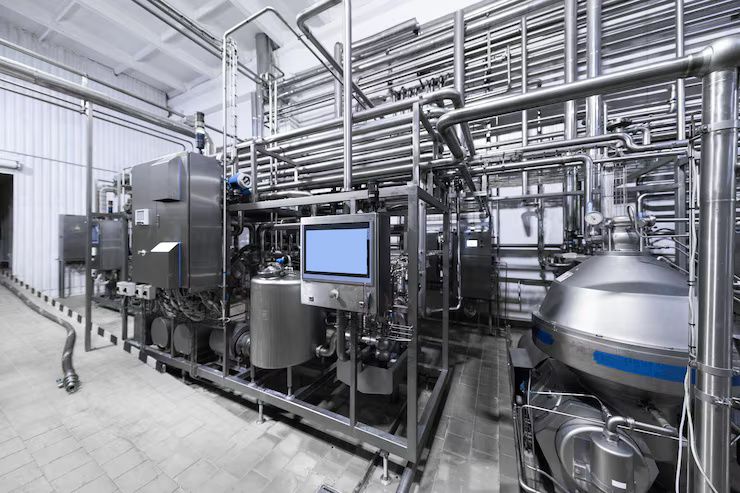
Industrial freeze-drying equipment combines refrigerated systems, vacuum technology, heated shelves, condensers, control systems, sensors, and product-handling equipment. The system must maintain carefully controlled temperature and pressure conditions throughout freezing, primary drying, and secondary drying stages.
Context
What Are Industrial Lyophilizers?
An industrial lyophilizer is a large-scale freeze-drying machine designed to process products under controlled vacuum and temperature conditions. The equipment removes frozen water primarily through sublimation, changing ice directly into vapor without passing through the conventional liquid phase.
Industrial systems can be designed for different production volumes and container formats. Pharmaceutical installations frequently process filled vials, while other industries may use trays, bulk materials, or specialized containers.
How Freeze Drying Works
The freeze-drying cycle generally consists of three main stages:
- Freezing – The product is cooled until its water content becomes frozen.
- Primary drying – Vacuum conditions allow ice to sublimate while controlled shelf heat supplies energy to the product.
- Secondary drying – Additional moisture is removed to reach the required residual-moisture level.
Each stage requires appropriate temperature, pressure, and process monitoring.
Main Components of an Industrial Lyophilizer
An industrial freeze dryer typically contains several interconnected systems.
| Component | Primary Function | Process Role |
|---|---|---|
| Product Chamber | Holds product | Controlled processing environment |
| Shelves | Support containers or trays | Heat transfer |
| Refrigeration System | Produces low temperatures | Product freezing |
| Vacuum System | Reduces chamber pressure | Supports sublimation |
| Condenser | Captures water vapor | Protects vacuum system |
| Heating System | Supplies controlled heat | Primary and secondary drying |
| Control System | Manages process parameters | Automated operation |
| Sensors | Measures process conditions | Monitoring and control |
| Loading System | Transfers product | Product handling |
The design of each component affects the overall performance and operating characteristics of the freeze dryer.
Product Chamber
The chamber provides the enclosed environment where freezing and drying occur. Its dimensions depend on the intended production capacity and shelf arrangement.
Pharmaceutical chambers are generally designed with attention to cleanability, material compatibility, access, sealing, and integration with loading and unloading systems.
Shelves and Heat Transfer
Shelves support product containers and transfer thermal energy during the drying process. Their temperature can be controlled through circulating heat-transfer fluids or other thermal systems.
Uniform shelf performance is important because variations in heat transfer can influence drying behavior across different container locations.
Refrigeration and Condenser Systems
The refrigeration system provides the low temperatures required for freezing and condenser operation. The condenser captures water vapor released from the product during drying.
Condenser temperature and capacity are important design parameters because the system must accommodate the expected vapor load.
Vacuum System
Vacuum pumps reduce chamber pressure to create conditions suitable for sublimation. Valves, pressure sensors, and control systems regulate the vacuum environment.
Vacuum-system configuration depends on chamber volume, process requirements, vapor load, and equipment design.
Importance
Why Industrial Lyophilizers Matter
Freeze drying can be useful for products that are sensitive to heat or require controlled moisture removal. By freezing the product and removing ice under vacuum, manufacturers can develop processes that preserve selected physical and chemical characteristics.
The technology is particularly important for certain pharmaceutical and biological formulations.
Supporting Pharmaceutical Manufacturing
Pharmaceutical lyophilizers can process sterile drug products, biological materials, vaccines, and other formulations when freeze drying is appropriate.
The lyophilizer is generally integrated into a larger manufacturing workflow that can include formulation, filling, loading, freeze drying, unloading, inspection, and packaging.
Process Control
Freeze drying is highly dependent on controlled process conditions. Temperature and pressure measurements help operators and automated systems understand the state of the process.
Control strategies can regulate shelf temperature, chamber pressure, refrigeration, condenser conditions, and other parameters according to the validated process.
Product Stability
Removing water can improve the storage stability of certain formulations. However, the appropriate residual-moisture level depends on the formulation and product characteristics.
Freeze-drying cycle development therefore requires evaluation of formulation behavior, freezing characteristics, drying kinetics, and final product requirements.
Production Scale
Industrial lyophilizers are available in different configurations for research, pilot-scale development, and larger manufacturing environments.
Scaling requires evaluation of shelf area, chamber volume, heat transfer, condenser capacity, vacuum performance, loading configuration, and cycle behavior.
Freeze-Drying Technologies
Batch Lyophilization
Batch freeze drying processes a defined group of products during one cycle. Filled vials or trays are loaded into the chamber before freezing and remain inside until the drying process is completed.
Batch processing is widely used in pharmaceutical manufacturing.
Continuous Freeze Drying
Continuous approaches are designed to maintain material movement through different stages of the drying process.
They can require specialized product-handling and process-control architectures and are used in selected industrial applications.
Aseptic Freeze Drying
Aseptic lyophilization is associated with sterile pharmaceutical production. The equipment and surrounding process must be designed to maintain appropriate contamination-control conditions.
Loading and unloading technologies can be integrated with restricted-access or isolator-based environments depending on the facility configuration.
Tray Freeze Drying
Tray systems can accommodate bulk materials or products arranged in containers. The tray configuration influences product loading, heat transfer, and unloading procedures.
Vial Freeze Drying
Vial-based freeze drying is common in pharmaceutical manufacturing. Filled and partially stoppered vials are arranged on shelves before the freeze-drying cycle.
Automated loading systems can position vials consistently and reduce manual product movement.
Manufacturing Equipment
Automated Loading Systems
Automated loading systems transfer containers from filling lines or staging areas into the lyophilizer.
Equipment can include conveyors, robotic systems, pushers, rails, transfer mechanisms, and accumulation tables.
Automated Unloading Systems
After drying, unloading equipment transfers products out of the chamber and toward downstream inspection or packaging stages.
Automation can coordinate unloading with stopper placement, inspection, and other downstream activities.
Control and Automation Systems
Programmable controllers and industrial automation software coordinate the freeze-drying cycle. Human-machine interfaces display process parameters, equipment status, alarms, and cycle information.
Electronic records can also support process documentation in regulated environments.
Clean-in-Place and Sterilization Systems
Pharmaceutical lyophilizers may incorporate cleaning and sterilization technologies depending on their design and application.
Automated cleaning and sterilization sequences can be monitored through temperature, pressure, flow, and other measurements.
Instrumentation
Important instrumentation can include:
- Product temperature sensors
- Shelf temperature sensors
- Chamber pressure sensors
- Condenser temperature sensors
- Vacuum monitoring devices
- Refrigeration sensors
- Door and valve position sensors
These instruments provide information required for process control and equipment monitoring.
Manufacturers and Suppliers
The industrial lyophilizer ecosystem includes manufacturers specializing in freeze dryers, pharmaceutical processing equipment, vacuum technology, refrigeration systems, loading systems, automation, and cleanroom-compatible equipment.
When evaluating industrial lyophilizer manufacturers or suppliers, organizations can examine:
- Chamber configuration
- Shelf area
- Condenser capacity
- Temperature range
- Vacuum performance
- Loading configuration
- Automation architecture
- Sterilization approach
- Cleaning design
- Validation documentation
- Maintenance requirements
- Facility integration
The appropriate system depends on the product, production scale, facility design, and regulatory environment.
Pharmaceutical Applications
Injectable Pharmaceuticals
Freeze drying is used for selected injectable formulations where controlled moisture removal can support product stability.
Vials can be loaded into the lyophilizer after filling and undergo a programmed freezing and drying cycle.
Vaccines
Some vaccine formulations can use lyophilization to improve stability under defined storage conditions.
The exact freeze-drying cycle depends on the formulation and container system.
Biological Products
Proteins, enzymes, antibodies, and other biological materials may require carefully controlled drying conditions.
Formulation development determines whether lyophilization is appropriate and establishes the relevant process parameters.
Diagnostic Products
Certain diagnostic reagents and biological materials can be processed through freeze drying when the formulation is compatible with the technology.
Biotechnology
Biotechnology facilities may use lyophilizers during development and manufacturing of biological products.
Pilot-scale equipment can support cycle development before larger production systems are used.
Recent Updates
Advanced Process Monitoring
Modern industrial lyophilizers increasingly incorporate sensors and automated data collection.
Monitoring can include shelf temperature, product temperature, chamber pressure, condenser conditions, and refrigeration performance.
Automated Cycle Control
Modern control systems can execute predefined freeze-drying recipes and monitor critical process parameters throughout the cycle.
Automated alarms can identify selected deviations and prompt operator intervention according to established procedures.
PAT Integration
Process Analytical Technology approaches can provide additional information about product and process behavior.
Tools such as pressure-based measurements, temperature monitoring, and other analytical techniques can contribute to cycle development and process understanding.
Digital Manufacturing
Lyophilizers can be connected with manufacturing execution systems and plant-level data platforms.
Digital integration can link batch information, equipment status, cycle records, maintenance information, and production documentation.
Single-Use and Containment Technologies
Some modern facilities combine lyophilization with isolators, restricted-access systems, or other containment approaches.
These technologies can help manage contamination risks during loading, unloading, and other product-handling stages.
Energy Management
Industrial freeze dryers can consume substantial energy because refrigeration, vacuum generation, heating, and cooling operate throughout the process.
Energy monitoring and thermal-system optimization can help facilities understand equipment consumption and identify areas for engineering improvements.
Laws or Policies
Good Manufacturing Practice
Pharmaceutical lyophilizers used for regulated production are generally operated within Good Manufacturing Practice frameworks.
Requirements can address equipment qualification, process validation, contamination control, documentation, calibration, maintenance, and data integrity.
Equipment Qualification
Qualification activities may establish that the lyophilizer has been installed and operates according to predefined specifications.
Documentation can include installation qualification, operational qualification, performance qualification, calibration, and software configuration records.
Process Validation
Freeze-drying cycles generally require documented development and validation appropriate to the product and manufacturing process.
Important parameters may include freezing conditions, shelf temperature, chamber pressure, drying duration, and final product characteristics.
Sterility and Contamination Control
Sterile pharmaceutical manufacturing requires appropriate contamination-control strategies.
Lyophilizer chambers, loading systems, transfer systems, and associated equipment should be incorporated into the facility's overall contamination-control approach.
Data Integrity
Electronic lyophilizer control systems generate process data throughout the production cycle.
Regulated facilities need appropriate controls for data access, electronic records, audit trails, configuration changes, and record retention.
Tools and Resources
Freeze-Drying Cycle Development
Process-development teams use laboratory and pilot systems to evaluate freezing behavior, product temperature, resistance to mass transfer, drying duration, and residual moisture.
Process Monitoring Instruments
Temperature probes, pressure sensors, capacitance manometers, vacuum instruments, and other measurement technologies help characterize freeze-drying conditions.
Simulation and Modeling
Mathematical models and process simulations can help engineers study heat and mass transfer, drying behavior, condenser loading, and scale-up considerations.
Maintenance and Calibration Systems
Maintenance management platforms can track inspections, calibration schedules, component replacement, and equipment history.
Reliable instrumentation is particularly important because freeze-drying control depends heavily on accurate process measurements.
FAQs
What is an industrial lyophilizer?
An industrial lyophilizer is a large-scale freeze-drying machine that removes frozen moisture from products under controlled temperature and vacuum conditions.
How does an industrial freeze dryer work?
The product is first frozen, followed by primary drying under reduced pressure to remove ice through sublimation. Secondary drying then removes additional moisture according to the required process conditions.
What are industrial lyophilizers used for?
Industrial lyophilizers are used in pharmaceutical manufacturing, biotechnology, diagnostics, food processing, research, and other applications involving controlled freeze drying.
What are the main components of an industrial lyophilizer?
Major components include the product chamber, shelves, refrigeration system, condenser, vacuum system, heating system, sensors, control platform, and loading and unloading equipment.
What should be considered when selecting industrial lyophilizer manufacturers?
Important factors include chamber and shelf capacity, condenser performance, temperature range, vacuum capabilities, automation, loading configuration, sterilization approach, validation documentation, maintenance requirements, and facility integration.
Conclusion
Industrial lyophilizers are sophisticated freeze-drying systems that combine refrigeration, vacuum, controlled heating, condensation, automation, instrumentation, and product-handling technologies. They are particularly important in pharmaceutical and biotechnology manufacturing where selected formulations require controlled moisture removal.
Modern systems increasingly incorporate automated loading and unloading, advanced process monitoring, digital manufacturing integration, process analytics, contamination-control technologies, and energy monitoring. Selecting appropriate equipment requires consideration of formulation characteristics, production scale, cycle requirements, facility architecture, validation strategy, and applicable regulatory requirements.