Beverage filling systems are industrial machines and integrated production lines used to dispense liquids and semi-liquid beverages into bottles, cans, cartons, pouches, cups, and other containers. They are used across bottled water, juices, soft drinks, dairy beverages, sports drinks, energy drinks, alcoholic beverages, and other liquid products.
A modern filling line can combine container handling, rinsing, filling, sealing, capping, inspection, labeling, coding, and secondary packaging. The appropriate configuration depends on beverage characteristics, container format, production capacity, hygiene requirements, and shelf-life objectives.
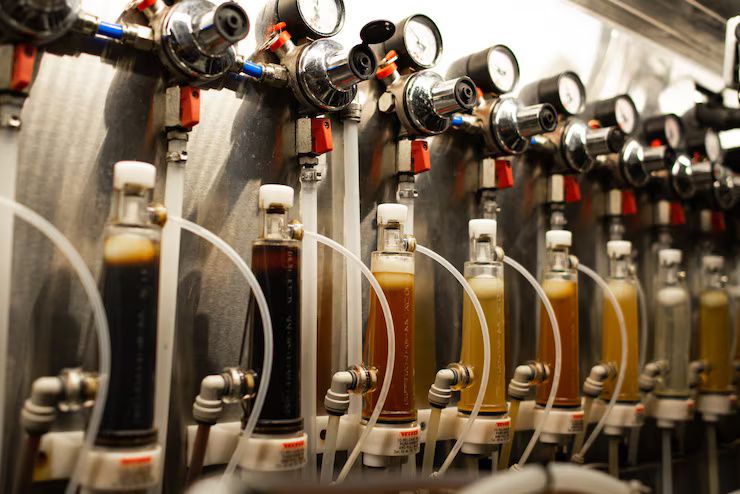
Why Beverage Filling Systems Matter
Filling is one of the key stages between beverage processing and final packaging. The system must deliver the required volume while coordinating product flow, container movement, closure application, and hygienic conditions.
A beverage filling line can include:
- Container depalletizing
- Bottle or container rinsing
- Product filling
- Cap or lid feeding
- Capping or sealing
- Fill-level inspection
- Labeling
- Date and batch coding
- Conveying
- Secondary packaging
- Palletizing
Different beverages require different filling technologies. Still beverages may use a different system from carbonated beverages, hot-filled products, or aseptically packaged products.
Beverage Filling Technologies
Gravity Filling
Gravity filling uses the pressure created by the liquid's own head to transfer product into containers.
It can be used for suitable low-viscosity beverages where controlled filling conditions are sufficient.
Volumetric Filling
Volumetric systems dispense a predetermined quantity of beverage into each container.
This approach can provide controlled filling volumes and can be adapted to different product and container requirements.
Isobaric Filling
Isobaric or counter-pressure filling is commonly associated with carbonated beverages.
The container is pressurized before or during filling to reduce excessive carbon dioxide loss and support controlled transfer of the carbonated product.
Piston Filling
Piston fillers use piston movement to measure and dispense product.
They are particularly useful for beverages or liquid products with higher viscosity, suspended particles, or formulations requiring controlled dosing.
Hot Filling
Hot filling involves filling a product at an elevated temperature into compatible containers, followed by controlled closure and cooling.
It can be used for selected juices, fruit beverages, sauces, and other products where the process and packaging are designed for hot-fill conditions.
Aseptic Filling
Aseptic filling systems are designed to fill commercially sterile products into appropriately sterilized packaging under controlled conditions.
They are used for certain shelf-stable beverages, dairy products, juices, and other liquid foods.
Major Types of Beverage Filling Machines
| Machine Type | Main Function | Typical Applications |
|---|---|---|
| Water Filling Machine | Fills treated water | Bottled water |
| Juice Filling Machine | Fills fruit-based beverages | Juice and nectar |
| Carbonated Beverage Filler | Fills carbonated liquids | Soft drinks and sparkling beverages |
| Aseptic Filling Machine | Fills under controlled sterile conditions | Shelf-stable beverages |
| Hot-Fill Machine | Fills products at elevated temperature | Selected juices and beverages |
| Bottle Filling Machine | Fills rigid containers | Water, juice, beverages |
| Can Filling Machine | Fills metal cans | Soft drinks, energy drinks |
| Carton Filling Machine | Fills cartons | Milk and liquid beverages |
| Pouch Filling Machine | Fills flexible packaging | Juices and liquid products |
| Cup Filling Machine | Fills and seals cups | Dairy and specialty beverages |
| Monoblock Filling System | Combines multiple operations | High-throughput beverage lines |
Beverage Filling System Manufacturing Process
Manufacturing a beverage filling system involves mechanical engineering, hygienic design, filling technology, automation, fabrication, assembly, testing, and commissioning.
A simplified manufacturing sequence is:
Process Requirements → Machine Design → Engineering → Material Selection → Component Fabrication → Frame Assembly → Filling-System Integration → Automation → Testing → Factory Acceptance Testing → Installation → Commissioning
Food-contact components are commonly manufactured using materials selected for corrosion resistance, cleanability, mechanical performance, and compatibility with the beverage being processed.
Bottle Filling Systems
Bottle filling is one of the most widely used beverage packaging configurations.
A typical bottle filling line may include:
Depalletizer → Bottle Rinser → Filler → Capper → Labeler → Inspection → Date Coder → Case Packer → Palletizer
The exact sequence varies by beverage and packaging requirements.
Bottle fillers can be designed for different container sizes and shapes. Automatic changeover systems may be incorporated where multiple formats are processed on the same line.
Carbonated Beverage Filling
Carbonated beverages require specialized filling conditions because dissolved carbon dioxide can escape when pressure and temperature are not appropriately controlled.
Counter-pressure filling systems can equalize pressure between the beverage container and filling environment before product transfer.
Important operating considerations include:
- Product temperature
- Carbonation level
- Filling pressure
- Container material
- Closure design
- Filling speed
- Foam control
- Sealing performance
The filling equipment should be designed around the beverage formulation and carbon dioxide characteristics.
Aseptic and Hygienic Filling
Aseptic beverage filling requires coordinated control of product, packaging, equipment surfaces, and the filling environment.
The system may include:
- Product sterilization
- Packaging sterilization
- Sterile product pathways
- Controlled filling environment
- Sterile closure application
- Automated process monitoring
Hygienic filling systems are also important for products that do not require aseptic processing. Equipment should support appropriate cleaning and sanitation procedures.
Automation and Process Control
Modern beverage filling systems can use PLC-based controls, sensors, servo drives, flow meters, pressure sensors, and human-machine interfaces.
Automation can monitor:
- Filling volume
- Product flow
- Pressure
- Temperature
- Container position
- Conveyor speed
- Cap presence
- Fill level
- Machine speed
- Production counts
Vision systems can also inspect containers for missing caps, incorrect labels, fill-level variation, damaged packaging, and other production issues.
Cleaning and CIP Systems
Beverage filling equipment must be compatible with appropriate cleaning and sanitation procedures.
Where applicable, clean-in-place (CIP) systems circulate cleaning solutions through product-contact pathways without requiring complete equipment disassembly.
CIP design can involve controlled water flow, cleaning solutions, temperature, circulation time, and rinsing stages. The exact procedure depends on the beverage, equipment configuration, cleaning chemistry, and applicable hygiene requirements.
Global Beverage Filling System Manufacturers and Suppliers
The international market includes companies supplying filling machines, processing equipment, complete beverage lines, packaging systems, and automation technologies.
Krones develops beverage filling, processing, packaging, and automation systems for different beverage categories and container formats.
Tetra Pak provides beverage processing and filling technologies, including solutions for liquid foods, juices, dairy beverages, and aseptic applications.
KHS provides filling and packaging systems for beverages, including technologies for bottles, cans, and other packaging formats.
Sidel supplies PET packaging, filling, blowing, labeling, and integrated beverage production technologies.
SIPA provides PET container manufacturing, filling, and packaging technologies for beverage applications.
Other equipment manufacturers and engineering companies operate across water filling, carbonated beverage filling, aseptic filling, hot filling, canning, bottling, and secondary packaging.
Supplier selection depends on beverage characteristics, production capacity, packaging format, hygiene requirements, automation, regional standards, and the complete line configuration.
How to Select Beverage Filling Systems
1. Identify the Beverage
Determine whether the system will fill water, juice, carbonated drinks, dairy beverages, sports drinks, energy drinks, or another formulation.
Viscosity, carbonation, particulate content, acidity, temperature, and sensitivity to oxygen can influence the filling technology.
2. Select the Packaging Format
Determine whether the beverage will be packaged in PET bottles, glass bottles, cans, cartons, pouches, or cups.
Each format requires different container handling and sealing equipment.
3. Define Production Capacity
Production requirements are often expressed in containers per hour or containers per minute.
Higher throughput may require multiple filling valves, automated container handling, high-speed conveyors, and integrated inspection systems.
4. Determine the Filling Method
Choose between gravity, volumetric, counter-pressure, piston, hot-fill, aseptic, or another technology according to the beverage characteristics and packaging process.
5. Evaluate Hygiene Requirements
Consider product-contact materials, cleaning procedures, CIP compatibility, drainage, hygienic fittings, and accessibility.
6. Consider Automation
Determine the desired automation level for filling, capping, labeling, inspection, coding, secondary packaging, and palletizing.
7. Plan Changeovers
If multiple beverage types or container sizes will be processed, evaluate changeover time, format flexibility, recipe management, and tooling requirements.
Beverage Filling System Cost and Pricing Factors
The beverage filling system cost varies according to machine capacity, filling technology, beverage type, container format, automation, materials, and line configuration.
Major factors include:
- Filling speed
- Number of filling heads
- Container type
- Beverage characteristics
- Carbonation requirements
- Aseptic or hot-fill capability
- Capping and sealing system
- Automation
- Inspection technology
- CIP integration
- Conveyor configuration
- Labeling and coding
- Secondary packaging
- Installation and commissioning
A standalone filling machine has a substantially different configuration from a complete automated bottling and packaging line.
When comparing equipment pricing, it is useful to evaluate the entire production system rather than focusing only on the filler.
Industrial Beverage Applications
Beverage filling systems are used for:
- Bottled water
- Fruit juice
- Fruit drinks
- Carbonated soft drinks
- Energy drinks
- Sports drinks
- Dairy beverages
- Plant-based beverages
- Tea and coffee beverages
- Functional beverages
- Flavored water
- Specialty liquid beverages
Each category can require different processing, filling, sealing, and packaging configurations.
Best Practices for Beverage Filling Systems
Reliable beverage filling requires appropriate equipment operation, sanitation, inspection, and preventive maintenance.
- Maintain filling accuracy.
- Monitor product temperature and pressure where required.
- Inspect filling valves and nozzles.
- Maintain pumps and product-transfer systems.
- Verify cap and seal integrity.
- Keep conveyors correctly aligned.
- Follow appropriate CIP and sanitation procedures.
- Monitor sensors and automation systems.
- Calibrate measurement equipment periodically.
- Inspect packaging materials and containers.
- Maintain production and maintenance records.
Frequently Asked Questions
What are beverage filling systems?
Beverage filling systems are machines or integrated production lines that transfer beverages into bottles, cans, cartons, pouches, cups, or other containers and may include sealing, capping, inspection, labeling, and packaging.
What types of beverage filling machines are available?
Common types include water fillers, juice fillers, carbonated beverage fillers, hot-fill machines, aseptic fillers, bottle fillers, can fillers, carton fillers, pouch fillers, and cup filling machines.
What filling machine is used for carbonated beverages?
Carbonated beverages commonly use counter-pressure or isobaric filling systems designed to control pressure and reduce excessive carbon dioxide loss during filling.
What is an aseptic beverage filling system?
An aseptic filling system fills commercially sterile products into appropriately sterilized packaging under controlled conditions designed to maintain product safety and shelf stability.
How do I choose a beverage filling system?
Consider the beverage formulation, viscosity, carbonation, temperature, container format, filling volume, production capacity, hygiene requirements, automation level, and packaging process before selecting equipment.
Conclusion
Beverage filling systems connect beverage processing with final packaging and can range from individual fillers to fully integrated production lines. Technologies such as gravity filling, volumetric filling, counter-pressure filling, hot filling, piston filling, and aseptic filling serve different beverage and packaging requirements.
The appropriate system depends on the beverage formulation, container format, production capacity, filling technology, hygiene requirements, automation, and downstream packaging equipment. Evaluating the complete line can help manufacturers develop a coordinated filling and packaging system for their specific industrial application.