
Industrial automation engineering is transforming how industries operate. From manufacturing plants to logistics centers, automation is helping businesses improve efficiency, reduce errors, and increase productivity.
Instead of relying only on manual processes, modern industries are adopting smart systems that can perform tasks with speed and precision. This shift is not just about machines—it’s about creating intelligent systems that work seamlessly together.
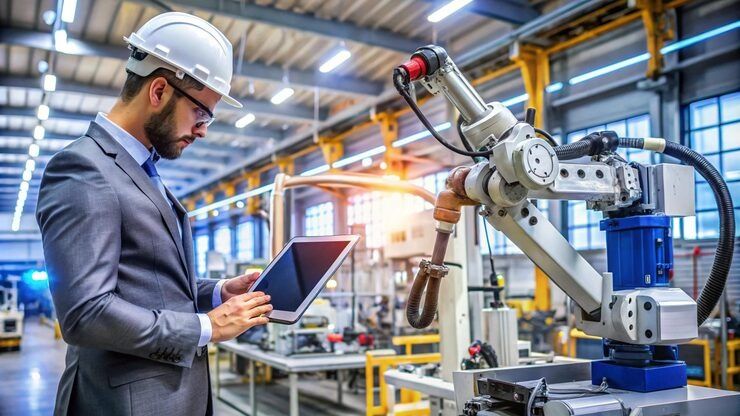
In this guide, we’ll explore industrial automation engineering, the technologies behind it, and how it supports modern manufacturing solutions.
What Is Industrial Automation Engineering?
Industrial automation engineering focuses on using technology to control and monitor industrial processes. It involves integrating machines, software, and control systems to perform tasks automatically.
The goal is to improve efficiency, accuracy, and consistency while reducing human intervention in repetitive or complex tasks.
At its core, automation engineering combines:
- Mechanical systems
- Electrical components
- Software and control logic
These elements work together to create a smooth and reliable production environment.
Why Automation Is Important in Modern Industries
Industries today face increasing demand for speed, quality, and consistency. Manual processes alone cannot meet these expectations efficiently.
Automation helps address these challenges by enabling faster and more reliable operations.
Key Advantages
- Improved production efficiency
- Reduced human error
- Consistent product quality
- Better use of resources
For example, an automated assembly line can produce products at a much faster rate compared to manual work, while maintaining uniform quality.
Core Components of Industrial Automation Systems
Automation systems are built using several interconnected components. Each part plays a specific role in ensuring smooth operation.
Sensors and Actuators
Sensors collect data from the environment, such as temperature, pressure, or motion. Actuators convert signals into physical actions like movement or rotation.
These components act as the “eyes and hands” of an automation system.
Control Systems
Control systems process the data received from sensors and decide how the system should respond.
Common control systems include programmable logic controllers (PLCs) and distributed control systems (DCS).
Human-Machine Interface (HMI)
HMI allows operators to interact with machines. It provides visual data, system status, and control options in a user-friendly format.
Industrial Software
Software plays a key role in monitoring and managing operations. It helps analyze data, optimize performance, and improve decision-making.
Types of Industrial Automation
Different industries use different types of automation depending on their needs.
1. Fixed Automation
This type is used for high-volume production where tasks are repetitive. It is efficient but less flexible.
2. Programmable Automation
Used in batch production, this type allows changes in the production process by modifying programs.
3. Flexible Automation
Flexible automation can adapt to different tasks with minimal changes. It is ideal for industries with varying product requirements.
Key Technologies in Industrial Automation
Modern automation relies on advanced technologies that enhance performance and connectivity.
Internet of Things (IoT)
IoT connects machines and devices, allowing them to share data in real time. This improves monitoring and control.
Artificial Intelligence (AI)
AI helps systems learn from data and make intelligent decisions. It is used for predictive maintenance and process optimization.
Robotics
Robots are widely used in manufacturing for tasks like assembly, welding, and packaging. They provide speed and precision.
Cloud Computing
Cloud platforms store and process large amounts of data. This enables remote monitoring and better data analysis.
Industrial Automation in Manufacturing
Automation plays a crucial role in modern manufacturing. It helps streamline production processes and improve efficiency.
Applications in Manufacturing
- Assembly line automation
- Packaging and labeling
- Quality inspection
- Material handling
For example, automated inspection systems can detect defects more accurately than manual checks, ensuring higher product quality.
Benefits of Industrial Automation
Automation offers long-term advantages that go beyond immediate efficiency gains.
It helps industries stay competitive and adapt to changing market demands.
Key Benefits
- Increased productivity
- Improved safety in workplaces
- Reduced operational errors
- Better resource utilization
These benefits contribute to overall growth and sustainability.
Challenges in Industrial Automation
Despite its advantages, implementing automation comes with certain challenges.
Industries need to plan carefully to ensure successful integration.
Common Challenges
- High initial investment
- Complex system integration
- Need for skilled professionals
- Maintenance and system upgrades
Addressing these challenges requires proper planning and continuous improvement.
Future Trends in Industrial Automation
The future of industrial automation is driven by innovation and digital transformation.
Emerging Trends
- Smart factories with connected systems
- Advanced robotics and automation
- Data-driven decision-making
- Sustainable manufacturing practices
These trends are shaping the next generation of industrial operations.
Practical Example of Automation in Action
Consider a manufacturing plant that uses automated systems for production. Sensors monitor each stage of the process, while control systems adjust operations in real time.
If a defect is detected, the system can immediately take corrective action. This reduces waste and improves overall efficiency.
Such systems demonstrate how automation enhances both productivity and quality.
Tips for Understanding Automation Systems
If you are new to industrial automation, start by focusing on the basics. Understanding how different components work together is key.
Pay attention to real-world applications and observe how industries use automation in daily operations.
Learning gradually helps build a strong foundation in this field.
Conclusion
Industrial automation engineering is a key driver of modern manufacturing. It combines technology, innovation, and efficiency to create smarter and more reliable systems.
As industries continue to evolve, automation will play an even bigger role in shaping the future. Understanding its processes, technologies, and applications provides valuable insight into how modern industries operate.
With the right approach, automation not only improves productivity but also supports long-term growth and sustainability.