Industrial mixing is an important part of manufacturing because many products depend on achieving a consistent blend of liquids, powders, solids, or semi-solid materials.
From chemicals and food ingredients to coatings, pharmaceuticals, and construction materials, the mixing process can directly influence product uniformity, quality, processing time, and production efficiency.
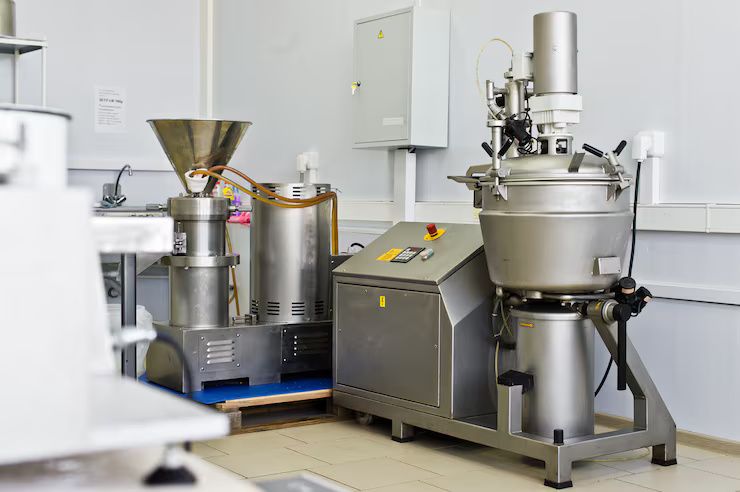
Industrial mixers are designed for different material characteristics and operating conditions. A system suitable for low-viscosity liquids may perform poorly with thick pastes, while a mixer designed for heavy materials may be unnecessary for simple liquid blending. Understanding these differences is therefore essential when evaluating industrial mixing equipment.
This guide explains how industrial mixing systems work, the major mixer categories, material characteristics that influence selection, and the key factors to consider when choosing industrial mixer equipment for a particular process.
What Are Industrial Mixers?
Industrial mixers are mechanical systems used to combine two or more materials into a consistent mixture. Depending on the application, they may blend liquids, disperse powders, suspend solids, combine viscous compounds, or support chemical reactions.
Industrial mixing machines generally consist of a vessel or processing chamber, a drive mechanism, a shaft, and one or more mixing elements. The exact configuration depends on the material being processed and the desired result.
Unlike simple household or laboratory mixers, industrial systems are engineered for continuous or repeated production, larger material volumes, demanding operating environments, and specific process requirements.
Why Mixing System Selection Matters
The mixing process is not simply about moving material around. The mixer must generate the appropriate flow pattern and energy level to achieve the intended result without unnecessarily damaging the material.
An unsuitable system may create problems such as:
- Inconsistent blending
- Excessive processing time
- Poor powder incorporation
- Unwanted air entrainment
- Material degradation
- Excessive heat generation
- Uneven particle suspension
- Difficult cleaning and maintenance
The right industrial mixing equipment is therefore determined by the relationship between material properties, process objectives, equipment configuration, and operating conditions.
Understanding Material Characteristics
Before selecting industrial mixers, it is important to understand the physical and chemical characteristics of the materials involved.
Viscosity
Viscosity describes how strongly a material resists flow. Water-like liquids require relatively little mixing energy, while products such as adhesives, gels, creams, and heavy pastes require much greater mechanical force.
As viscosity increases, mixer geometry, motor capacity, shaft design, and impeller configuration become increasingly important.
Density
Differences in material density can affect how quickly components separate or settle. A suitable mixing system must create enough circulation to maintain uniformity throughout the vessel.
Particle Size
When powders or solid particles are introduced into liquids, particle size influences dispersion and suspension behavior. Fine powders may require different mixing conditions from larger or heavier particles.
Solids Concentration
A mixture containing a small quantity of suspended solids behaves differently from a highly concentrated slurry. Higher solids loading generally requires greater consideration of mixing intensity and equipment durability.
Shear Sensitivity
Some materials can be damaged by excessive mechanical force. In these applications, the objective is to create sufficient circulation and blending without exposing the product to unnecessarily high shear.
Major Types of Industrial Mixing Systems
Different industrial mixing systems are designed around different flow patterns and material requirements.
Propeller Mixers
Propeller-based systems are commonly associated with relatively low-viscosity liquids. They create strong axial movement and are useful when rapid circulation throughout a vessel is required.
These systems can be appropriate for blending, liquid circulation, and maintaining certain suspended materials under suitable conditions.
Turbine Mixers
Turbine mixing elements generate more complex flow patterns and can be used for blending, gas dispersion, and suspension applications.
Their configuration can be adjusted according to the required balance between circulation and shear.
Paddle Mixers
Paddle designs provide relatively gentle mixing and are useful for applications where excessive shear is undesirable. They can support blending operations involving liquids, powders, or moderately viscous materials depending on the configuration.
Anchor Mixers
Anchor-style mixing elements are commonly associated with high-viscosity materials. Their geometry allows the mixer to move material near the vessel walls and improve circulation within thick products.
Applications can include pastes, creams, coatings, and other viscous formulations.
High-Shear Mixers
High-shear industrial mixer equipment is designed to generate intense localized mixing. These systems are frequently used when rapid dispersion, emulsification, particle-size reduction, or difficult material incorporation is required.
Because high shear can influence material structure and temperature, process requirements should be carefully evaluated before selecting this type of equipment.
Choosing Industrial Mixing Machines for Different Processes
The appropriate mixer depends heavily on what the process is intended to accomplish.
| Process Requirement | Suitable Mixer Considerations | Main Objective |
|---|---|---|
| Liquid blending | Propeller or turbine configurations | Uniform composition |
| Powder dispersion | High-shear or specialized dispersing elements | Rapid incorporation |
| Solid suspension | Axial-flow configurations | Keep particles distributed |
| High-viscosity blending | Anchor or specialized elements | Move thick materials |
| Emulsification | High-shear systems | Create stable dispersion |
| Gentle blending | Paddle or low-shear designs | Protect sensitive materials |
These categories provide general guidance rather than universal rules because actual mixer selection depends on material properties and operating conditions.
Batch and Continuous Mixing
Industrial mixing systems can generally be organized around batch or continuous processing.
Batch Mixing
Batch systems process a defined quantity of material at a time. They provide flexibility when multiple formulations or different production conditions are required.
Batch mixing is commonly useful for products that require controlled formulation changes, variable production quantities, or specific processing sequences.
Continuous Mixing
Continuous systems introduce and process materials continuously. They can be suitable for high-throughput manufacturing where consistent material flow and stable operating conditions are required.
The choice between batch and continuous operation depends on production requirements, formulation characteristics, process control, and facility layout.
Important Equipment Selection Factors
Several technical factors should be evaluated before selecting industrial mixing equipment.
Mixing Volume
The vessel capacity affects the required shaft length, mixing element dimensions, motor characteristics, and overall equipment configuration.
Motor and Drive Requirements
Motor selection depends on material resistance, mixing intensity, operating speed, and process conditions. High-viscosity applications generally require substantially different drive characteristics from low-viscosity liquid blending.
Mixing Speed
Higher speed does not automatically mean better mixing. The appropriate speed depends on material sensitivity, desired flow pattern, shear requirements, and the risk of air entrainment.
Vessel Geometry
Tank diameter, liquid height, bottom shape, internal surfaces, and the presence of baffles can significantly influence mixing behavior.
Temperature and Pressure
Some processes operate under elevated temperatures, vacuum conditions, or increased pressure. Industrial mixing machines must be compatible with the intended operating environment.
Material Compatibility
Mixer components should be compatible with the materials being processed. Chemical exposure, temperature, corrosion potential, and cleaning procedures can all influence material selection.
Industrial Mixers Across Different Industries
Industrial mixers are used across a broad range of manufacturing environments.
In food processing, mixers may combine ingredients, sauces, beverages, or thick formulations.
Chemical manufacturing uses mixing systems for blending liquids, dispersing solids, and supporting controlled reactions.
Pharmaceutical production places particular emphasis on uniformity, process control, hygiene, and repeatability.
Paint and coating production often requires systems capable of dispersing pigments and maintaining consistent formulations.
Construction-material manufacturing may involve high-viscosity compounds, cementitious mixtures, adhesives, and other demanding materials.
These industries demonstrate why industrial mixer equipment cannot be selected solely by capacity. The characteristics of the material and the purpose of the mixing operation are equally important.
Common Mixing Challenges
Several problems can occur when a mixing system is poorly matched to the process.
Dead zones may develop when certain areas of a vessel receive insufficient circulation. Powder buildup can occur when solids are not incorporated effectively. Excessive shear can alter sensitive products, while excessive speed may introduce unwanted air.
Another challenge is scale-up. A mixing process that works effectively in a small vessel may not behave identically when transferred to a much larger system. Changes in vessel geometry, fluid behavior, and power distribution can influence the final result.
For this reason, process testing and engineering analysis are important when moving from laboratory or pilot-scale operations to larger industrial mixing systems.
Improving Mixing Process Efficiency
Efficiency involves more than reducing operating time. A well-designed mixing process should produce consistent results while using appropriate mechanical energy and minimizing unnecessary material handling.
Useful considerations include:
- Matching the mixer to material viscosity
- Maintaining suitable operating speed
- Avoiding unnecessary overmixing
- Optimizing vessel geometry
- Monitoring temperature during processing
- Reducing material buildup
- Planning appropriate cleaning procedures
- Using suitable process instrumentation
Automation can also improve consistency by monitoring variables such as temperature, speed, torque, pressure, and processing time.
Future Developments in Industrial Mixing
Industrial mixing technology continues to move toward greater process control and data-driven operation.
Modern systems increasingly incorporate sensors, automated controls, variable-speed drives, digital monitoring, and predictive maintenance capabilities. These technologies can help operators understand how equipment behaves during production and identify changes that may affect process consistency.
Advanced computational modeling is also becoming increasingly useful for studying fluid movement, particle distribution, heat transfer, and mixing behavior before equipment is deployed at full production scale.
The broader direction is toward industrial mixing machines that provide greater control while using equipment and energy more efficiently.
Frequently Asked Questions
What are industrial mixers used for?
Industrial mixers combine liquids, powders, solids, and semi-solid materials to achieve consistent blending, dispersion, suspension, emulsification, or other controlled processing objectives.
How do I select industrial mixing equipment?
Selection depends on material viscosity, density, particle size, solids concentration, required shear, batch volume, processing method, temperature, pressure, and the desired mixing result.
What is the difference between batch and continuous mixing?
Batch mixing processes a defined quantity of material at a time, while continuous mixing introduces and processes materials continuously. The appropriate approach depends on production and process requirements.
Are high-speed mixers always better?
No. Mixing speed should match the material and process objective. Excessive speed can cause unwanted shear, heat generation, or air entrainment in some applications.
Why is viscosity important when selecting an industrial mixer?
Viscosity determines how easily material moves within a vessel and how much mechanical force may be required to create effective circulation. Higher-viscosity materials often require specialized mixing configurations.
Conclusion
Selecting the right industrial mixer requires a clear understanding of the material, process objective, operating environment, and desired level of mixing. Industrial mixing equipment ranges from relatively simple liquid-blending systems to specialized machines designed for high-viscosity materials, powder dispersion, emulsification, and demanding industrial processes.
By evaluating viscosity, density, solids concentration, shear sensitivity, vessel geometry, mixing volume, operating conditions, and process requirements, manufacturers can better match industrial mixing systems to their applications. As automation, sensors, modeling, and process monitoring continue to develop, industrial mixer equipment is becoming increasingly integrated with modern manufacturing systems, supporting greater consistency, control, and process understanding.