
Industrial motors are the driving force behind modern manufacturing and industrial automation. From operating conveyor systems and production machinery to powering pumps, compressors, fans, and robotic equipment, electric motors convert electrical energy into mechanical motion that keeps industrial processes running efficiently. Their reliability, versatility, and energy efficiency make them one of the most essential components in factories, processing plants, and infrastructure projects.
As industries adopt automation and smart manufacturing technologies, industrial motors have evolved beyond simple rotating machines. Today's motors integrate with intelligent drive systems, sensors, and digital monitoring platforms that improve performance, reduce energy consumption, and support predictive maintenance. These innovations help manufacturers optimize production while maintaining consistent operational reliability.
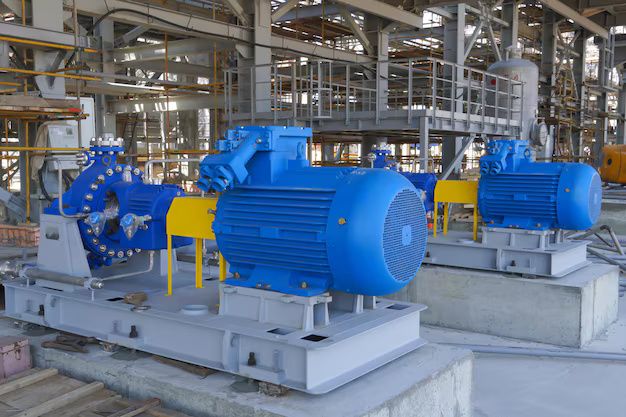
This guide explains how industrial motors work, the different motor technologies available, efficiency standards, drive systems, and their growing role in modern industrial applications.
What Are Industrial Motors?
Industrial motors are electrical machines that convert electrical energy into mechanical energy through electromagnetic principles. The rotational motion produced by these motors powers industrial equipment used in manufacturing, material handling, water treatment, mining, agriculture, and many other sectors.
Industrial motors are designed to operate continuously under demanding conditions while providing consistent torque, speed, and efficiency. Their size, power rating, and design vary depending on the application and operating environment.
A typical industrial motor system consists of several important components:
- Stator
- Rotor
- Shaft
- Bearings
- Cooling system
- Motor housing
- Electrical terminals
Together, these components ensure reliable and efficient operation throughout the motor's service life.
Why Industrial Motors Are Important
Almost every industrial process depends on electric motors to perform mechanical work. Without them, manufacturing equipment, production lines, and automated systems would not function efficiently.
Modern industrial motors improve productivity while reducing manual effort and supporting continuous operations. They also contribute significantly to energy savings when combined with efficient drive technologies.
Some important advantages include:
- Reliable continuous operation
- High energy efficiency
- Improved production productivity
- Reduced maintenance requirements
These advantages make industrial motors a fundamental part of industrial infrastructure worldwide.
Types of Industrial Motors
Industrial motors are available in several designs, each developed for specific operating conditions and performance requirements.
AC Motors
Alternating Current (AC) motors are the most widely used industrial motors because of their reliability, simple construction, and long operating life.
They are commonly installed in conveyor systems, pumps, fans, compressors, and manufacturing equipment requiring continuous operation.
DC Motors
Direct Current (DC) motors provide excellent speed control and high starting torque.
Although less common than AC motors in modern factories, they remain useful in applications requiring precise speed adjustment, such as rolling mills, elevators, and certain manufacturing equipment.
Induction Motors
Induction motors are the most popular type of AC motor used in industry.
They operate through electromagnetic induction without requiring direct electrical contact with the rotor. Their rugged construction, low maintenance requirements, and dependable performance make them ideal for continuous industrial operations.
Synchronous Motors
Synchronous motors rotate at a constant speed that matches the frequency of the electrical power supply.
They are commonly used in applications requiring precise speed control, high efficiency, and power factor improvement.
Servo Motors
Servo motors provide highly accurate position, speed, and motion control.
These motors are widely used in robotics, CNC machines, automated assembly systems, and precision manufacturing equipment.
Stepper Motors
Stepper motors move in precise angular increments, making them suitable for positioning applications.
They are frequently used in automation equipment, laboratory instruments, medical devices, and electronic manufacturing.
How Industrial Motors Work
Although motor designs differ, most industrial motors operate using the same basic electromagnetic principles.
Electrical Power Supply
The process begins when electrical energy is supplied to the motor windings.
This creates a magnetic field inside the motor.
Electromagnetic Interaction
The interaction between magnetic fields generated by the stator and rotor produces rotational force, commonly known as torque.
This torque drives the motor shaft.
Mechanical Power Transmission
The rotating shaft transfers mechanical energy to connected equipment such as pumps, conveyors, compressors, mixers, or production machinery.
Couplings, gears, or belt drives are often used depending on the application.
Continuous Operation
Modern motor control systems continuously monitor operating conditions to maintain stable speed, efficient performance, and reliable operation under changing loads.
Electric Motor Technologies
Advances in electrical engineering have significantly improved industrial motor performance.
Permanent Magnet Motors
Permanent magnet motors use high-strength magnets to improve efficiency while reducing energy losses.
These motors are increasingly used in applications requiring compact design and superior performance.
Brushless Motor Technology
Brushless motors eliminate mechanical brushes, reducing wear and maintenance requirements.
They provide smooth operation, improved efficiency, and longer service life.
High-Efficiency Windings
Advanced winding materials reduce electrical resistance and improve motor efficiency.
These improvements help minimize energy consumption during continuous operation.
Smart Motor Sensors
Modern industrial motors incorporate temperature, vibration, and current sensors that continuously monitor operating conditions.
These sensors support predictive maintenance and improve equipment reliability.
Drive Systems Used with Industrial Motors
Drive systems regulate motor performance according to production requirements.
Variable Frequency Drives (VFDs)
Variable Frequency Drives control motor speed by adjusting the frequency of the electrical supply.
VFDs improve energy efficiency while providing smooth acceleration and precise speed control.
Soft Starters
Soft starters gradually increase motor voltage during startup.
This reduces mechanical stress, minimizes electrical surges, and extends equipment life.
Motor Controllers
Motor controllers manage starting, stopping, reversing, and overload protection.
They also coordinate motor operation with automated production systems.
Smart Drive Systems
Modern drive systems integrate digital communication, remote monitoring, and diagnostic capabilities that support intelligent manufacturing environments.
Efficiency Standards for Industrial Motors
Energy efficiency has become a major focus in industrial motor design.
International efficiency classifications help manufacturers select motors that reduce electricity consumption while maintaining reliable performance.
Common efficiency classifications include:
- IE1 – Standard Efficiency
- IE2 – High Efficiency
- IE3 – Premium Efficiency
- IE4 – Super Premium Efficiency
- IE5 – Ultra Premium Efficiency
Higher efficiency motors reduce operating costs, generate less heat, and contribute to sustainable industrial operations.
Comparison of Common Industrial Motors
Different motor technologies are suitable for different industrial applications.
| Motor Type | Power Supply | Typical Applications | Speed Control | Efficiency |
|---|---|---|---|---|
| AC Motor | Alternating Current | Pumps, conveyors, fans | Moderate | High |
| DC Motor | Direct Current | Rolling mills, elevators | Excellent | Medium |
| Induction Motor | AC | Manufacturing equipment | Moderate | High |
| Synchronous Motor | AC | Compressors, generators | Constant Speed | Very High |
| Servo Motor | AC/DC | Robotics, CNC machines | Excellent | Very High |
| Stepper Motor | Pulse Control | Positioning systems | Precise | High |
Industrial Applications
Industrial motors support countless manufacturing and processing operations.
Manufacturing
Factories use motors to power assembly lines, machine tools, conveyors, mixers, and automated production equipment.
Material Handling
Conveyor systems, cranes, elevators, and automated storage systems rely on industrial motors for efficient material movement.
Water and Wastewater Treatment
Pumps, filtration systems, and aeration equipment depend on electric motors to maintain continuous operation.
Food and Beverage Processing
Industrial motors operate mixers, packaging machines, filling equipment, refrigeration systems, and conveyor lines while supporting hygienic production.
Mining and Heavy Industry
Mining operations use heavy-duty motors to drive crushers, conveyors, ventilation systems, and mineral processing equipment.
Renewable Energy
Electric motors support manufacturing equipment used in wind turbine production, solar panel manufacturing, and battery manufacturing facilities.
Benefits of Industrial Motors
Modern industrial motors provide several operational advantages.
Some important benefits include:
- High operational reliability
- Excellent energy efficiency
- Reduced operating costs
- Consistent production performance
- Long service life
These advantages make electric motors one of the most valuable assets in industrial production.
Challenges in Industrial Motor Operation
Although industrial motors are highly reliable, maintaining long-term performance requires proper installation, monitoring, and preventive maintenance.
Common challenges include overheating, bearing wear, insulation aging, vibration, electrical imbalances, and contamination from dust or moisture.
Routine inspections, lubrication, vibration analysis, and thermal monitoring help extend motor life while minimizing unexpected downtime.
Recent Developments (2024–2026)
Recent advancements have significantly improved industrial motor technology.
Manufacturers are increasingly adopting high-efficiency IE4 and IE5 motors to reduce energy consumption and improve sustainability. Smart motors equipped with built-in sensors now provide real-time monitoring of temperature, vibration, current, and operating conditions.
Artificial intelligence and Industrial Internet of Things (IIoT) platforms enable predictive maintenance by identifying potential faults before failures occur. Digital twin technology is also being used to simulate motor performance and optimize operating conditions.
Another important trend is the growing adoption of integrated motor-drive packages that simplify installation while improving overall system efficiency.
Safety Standards and Industry Guidelines
Industrial motors operate under recognized electrical and machinery safety standards to ensure reliable performance and operator protection.
Important safety practices include:
- Proper electrical grounding
- Overload and short-circuit protection
- Regular insulation testing
- Temperature monitoring
- Scheduled preventive maintenance
Manufacturers commonly design industrial motors to comply with international performance, safety, and energy efficiency standards. In India, applicable Bureau of Indian Standards (BIS) requirements and electrical safety regulations are also considered during installation and operation.
Tools and Resources
Several technologies support efficient motor operation and maintenance.
Common resources include:
- Motor monitoring software
- Vibration analysis equipment
- Thermal imaging cameras
- Energy management systems
- Predictive maintenance platforms
- Motor sizing and selection software
These tools help improve reliability, reduce maintenance costs, and optimize industrial motor performance.
Frequently Asked Questions
What are industrial motors used for?
Industrial motors convert electrical energy into mechanical motion to power machinery such as pumps, conveyors, compressors, fans, mixers, and manufacturing equipment.
What is the difference between AC and DC motors?
AC motors are commonly used for continuous industrial operation because of their simplicity and durability, while DC motors provide better speed control for specialized applications.
Why are Variable Frequency Drives important?
Variable Frequency Drives improve energy efficiency by controlling motor speed according to process requirements, reducing unnecessary power consumption.
What do IE efficiency ratings mean?
IE ratings classify motor energy efficiency. Higher ratings such as IE4 and IE5 indicate lower energy losses and improved operational efficiency.
Which industries use industrial motors?
Industrial motors are widely used in manufacturing, mining, logistics, food processing, water treatment, chemical processing, renewable energy, and automated production facilities.
Future Trends in Industrial Motors
Industrial motor technology continues to advance through smart automation, digital connectivity, and energy-efficient engineering.
Future motors will increasingly incorporate artificial intelligence, wireless diagnostics, edge computing, and self-monitoring capabilities that improve reliability and reduce maintenance requirements. Integration with smart factories, robotics, and digital manufacturing platforms will further enhance production efficiency while supporting sustainable industrial operations.
As industries continue their transition toward intelligent manufacturing, industrial motors will remain at the center of automated production systems, providing dependable power for the next generation of industrial innovation.
Conclusion
Industrial motors are the foundation of modern manufacturing, providing the mechanical power needed to operate machinery, automated systems, and production equipment across countless industries. Advances in electric motor technologies, intelligent drive systems, and high-efficiency standards have transformed these machines into smart, energy-efficient assets that support productivity and operational reliability.
As automation, Industry 4.0, and sustainable manufacturing continue to evolve, industrial motors will play an even greater role in powering intelligent factories, reducing energy consumption, and enabling more efficient industrial processes worldwide.